What safety issues can an outdated panel cause?
Overheating conductors can signal loose connections, overloaded circuits, arc faults, or damaged panel parts. We inspect the panel, breakers, conductors, and circuit load to find the cause.
A fuse bypass can also remove the protection the circuit needs. San Bernardino Electrician explains whether the safest scope is a repair, panel replacement, or wider service upgrade.
What does the crew look at first during a panel upgrade?
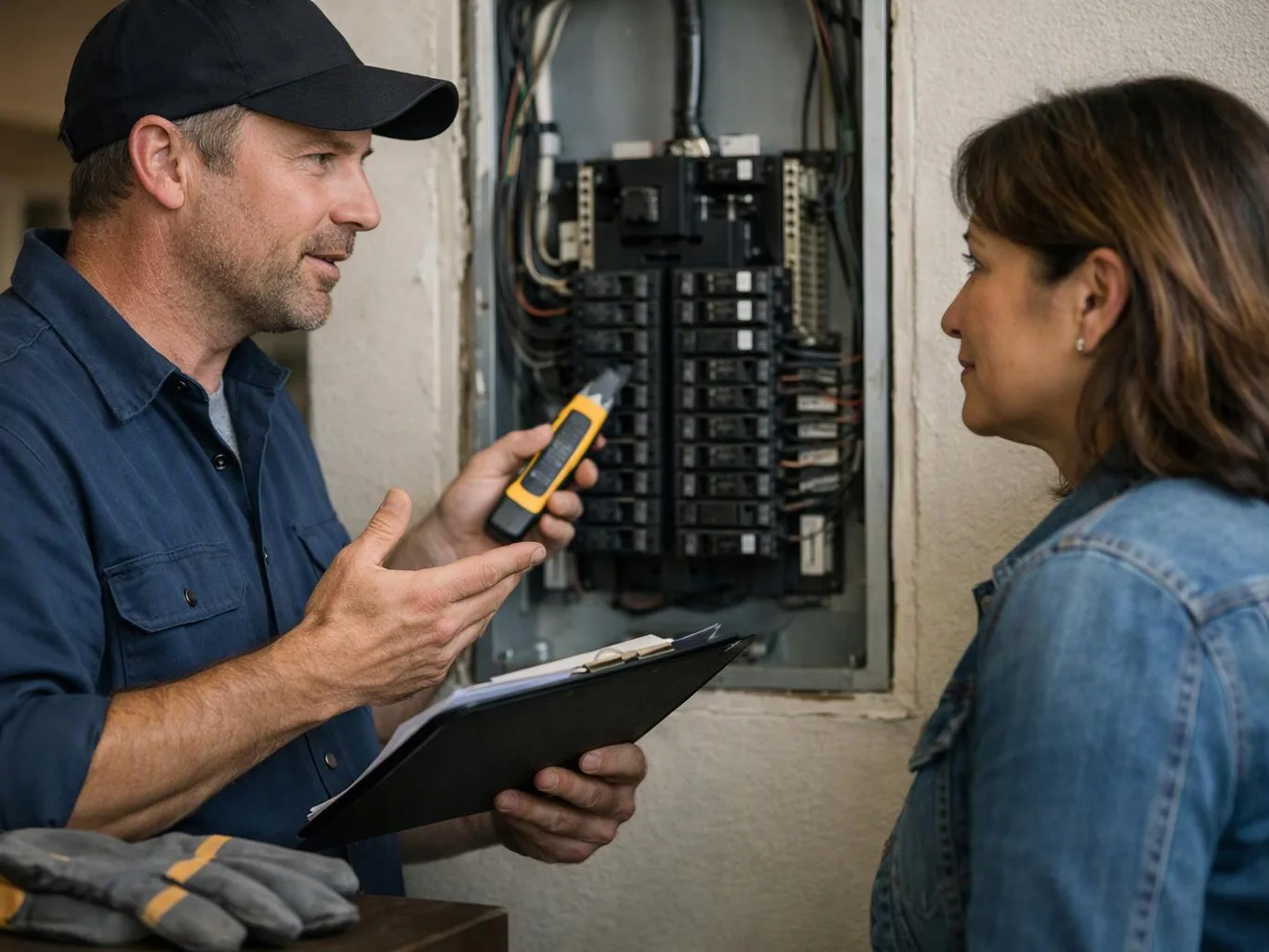
The panel enclosure, breakers, connections, conductors, and grounding are checked first. We look for heat marks, corrosion, loose parts, damaged insulation, and signs of arc faults.
Circuit tracing follows the visual check. That step shows which loads each breaker serves and helps us set a safe work scope.
What should be checked before panel work is scheduled?
The existing panel condition, circuit demand, grounding, service entrance, and planned electrical loads should be checked first.
We also need the property type and the main symptoms, such as repeated trips or a buzzing panel. Those details help us decide whether panel work fits or whether a branch-circuit repair comes first.
Who is a good fit for a panel upgrade, and who needs another service?
Homeowners and businesses with outdated panels, limited capacity, or repeated breaker problems are good candidates for an assessment.
A single dead outlet, utility outage, or isolated switch failure may need a different repair. We diagnose the source before setting the scope, so the requested work matches the actual fault.
Which panel problems change the quote for this work?
Panel condition, circuit count, conductor damage, grounding, available capacity, and service entrance work change the quote.
The property may need more than a panel enclosure and breakers if circuits are damaged or poorly identified. We review those parts during the estimate and explain each recommended item before work begins.
How do you check whether a panel can support new equipment?
A load calculation compares the property's connected electrical demand with the panel and service capacity.
We review existing breakers and circuits, then consider planned loads such as equipment or EV charging. A panel with limited capacity may need an upgrade before a new circuit is installed.
Why does a breaker keep tripping after it is reset?
A repeated trip usually points to overload, a short, a ground fault, a damaged breaker, or a wiring problem.
Resetting it again does not identify the cause. We isolate the affected circuit, inspect the panel and connected wiring, then explain whether the issue needs circuit repair or panel work.