Why can faulty wiring affect a home?
Circuit overheating can damage insulation, interrupt power, create shock risks, and raise fire concerns. San Bernardino Electrician checks the circuit path, connections, outlets, switches, and panel. Customers should stop using a circuit that smells hot, buzzes, sparks, or repeatedly trips until it is assessed.
What should I ask before agreeing to wiring repair?
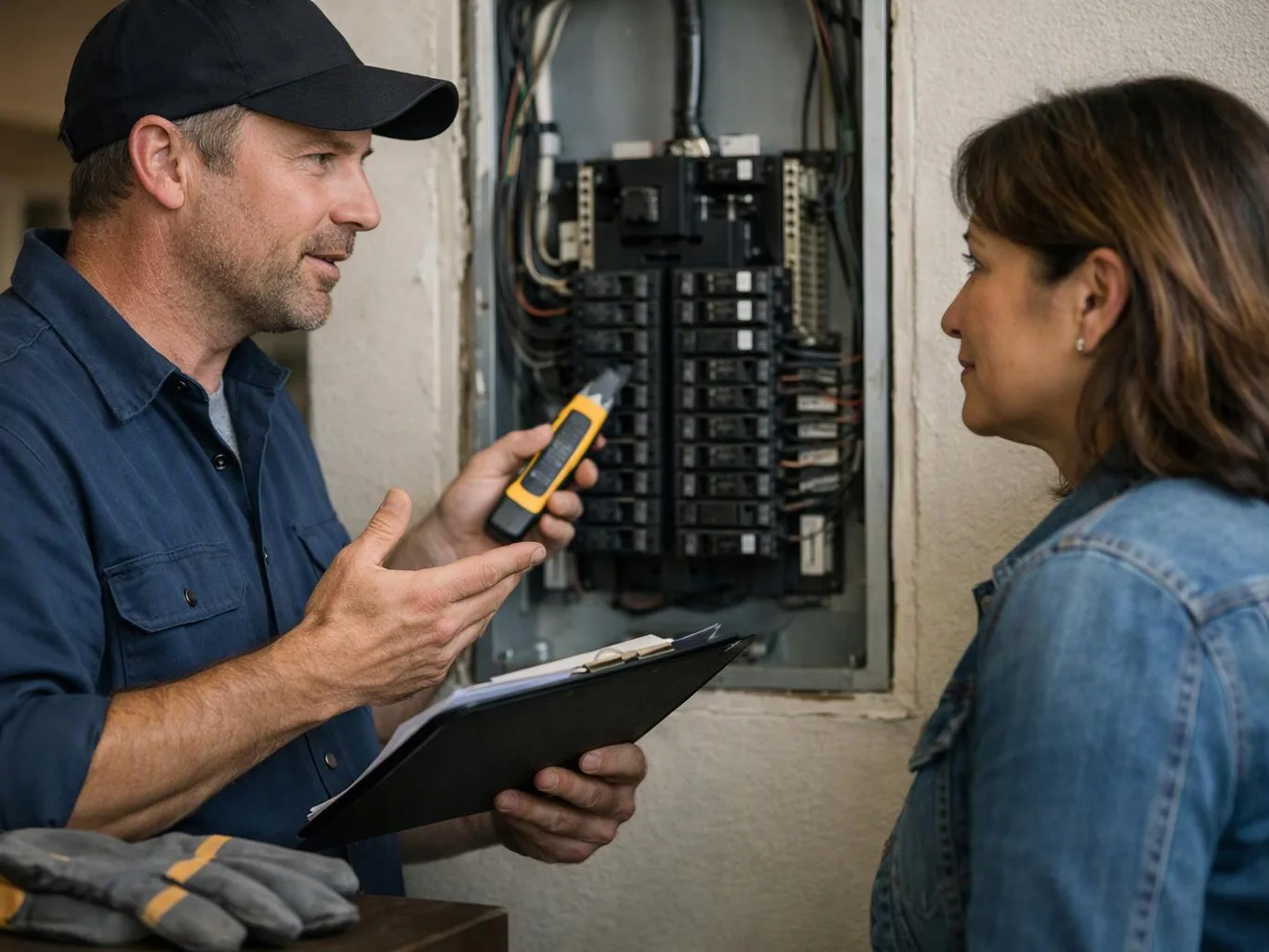
The repair scope should state which circuit or part needs work and how it will be tested. Ask whether the estimate includes circuit tracing, damaged wire replacement, outlet or switch work, and testing. We explain these points before work begins so customers understand the planned repair.
Which property condition changes the repair time?
Limited access to wiring changes the time needed for inspection and repair. Concealed conductors, blocked junction points, damaged insulation, and panel access can expand the work. We check access first, then explain whether the fault needs a targeted repair or broader rewiring.
How is wiring repair matched to a property?
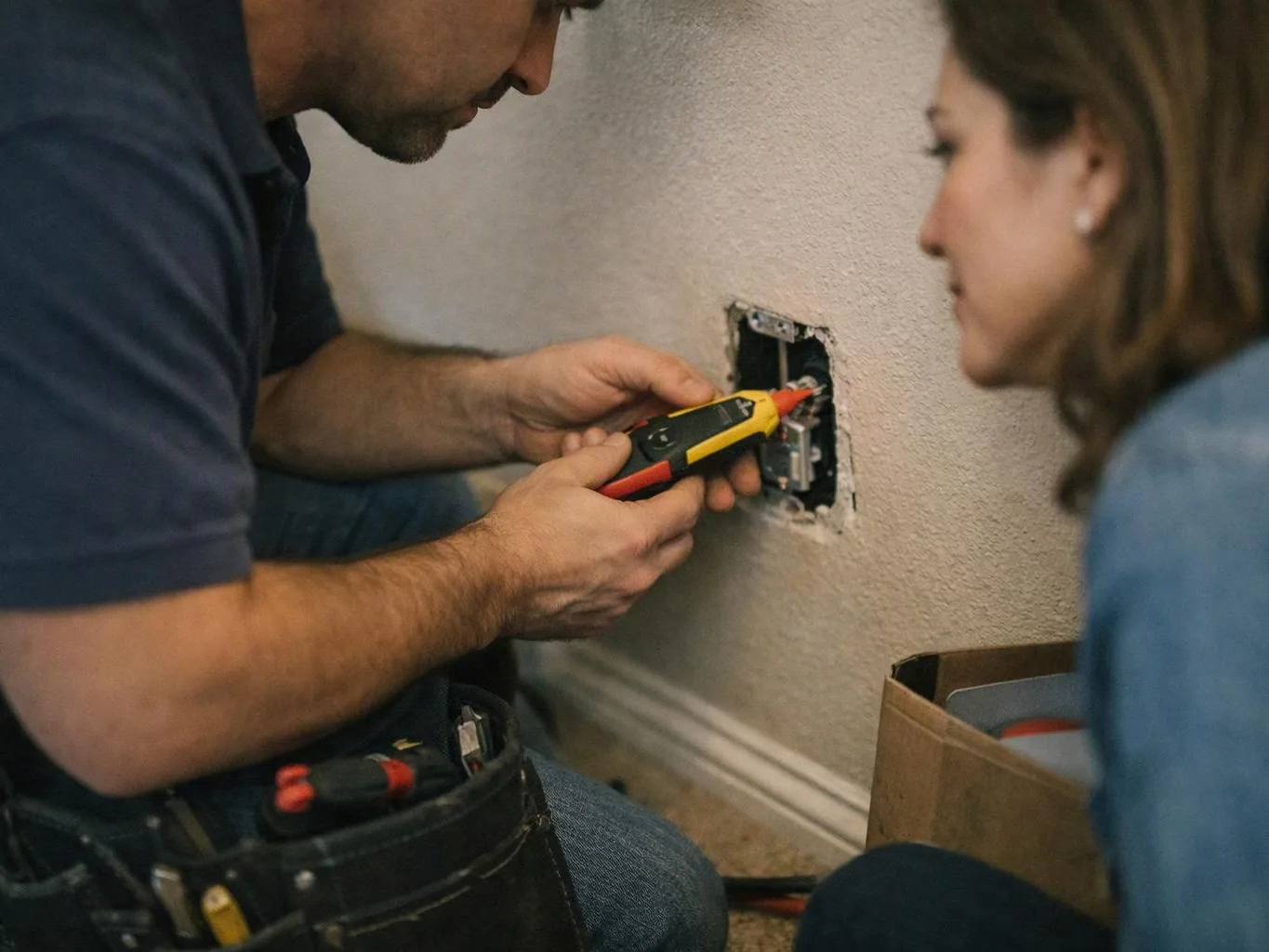
The property's circuit layout, electrical load, wiring condition, and access determine the repair approach. We trace the affected circuit and inspect its outlet, switch, breaker, and panel connections. That check helps separate a wiring fault from a panel upgrade or new circuit need.
When should I stop using an affected circuit?
Stop using the circuit when an outlet sparks, a switch plate feels warm, or the panel buzzes. We inspect the affected wiring and isolate the unsafe section before repair. Customers should not open outlets or panels themselves while the fault remains active.
Can wiring repair fix repeated breaker trips?
Wiring repair can fix repeated trips when a damaged connection or conductor causes the fault. We trace the circuit and check the breaker, outlets, switches, and connected load. If the circuit lacks capacity, we explain whether a new circuit or panel upgrade fits better.
What information should I provide about a wiring fault?
The most useful details are the affected room, outlet or switch, recent power changes, breaker behavior, heat, noise, sparks, and burning smells. We use those details to focus the initial inspection. Customers should leave damaged or hot electrical points unused until they are checked.