
What Is Line Voltage?
Line Voltage is the electrical pressure supplied by a power system to operate equipment, lighting, and receptacles. The term usually describes voltage present on a building circuit before a device changes it for a specific function. Electricians assess line voltage at conductors, terminals, or outlets to confirm that power reaches the intended equipment.
Quick Facts About Line Voltage
Category
Electrical measurement
Used for
Powering building equipment and lighting
Common confusion
Confused with low-voltage control power
Also called
Mains Voltage
Often discussed with
Electrical Safety Inspection
Key Takeaways About Line Voltage
- Line voltage comes from the building’s electrical supply.
- A meter can check voltage at circuits, terminals, and receptacles.
- Line voltage is not the same as low-voltage control power.
How Line Voltage Works
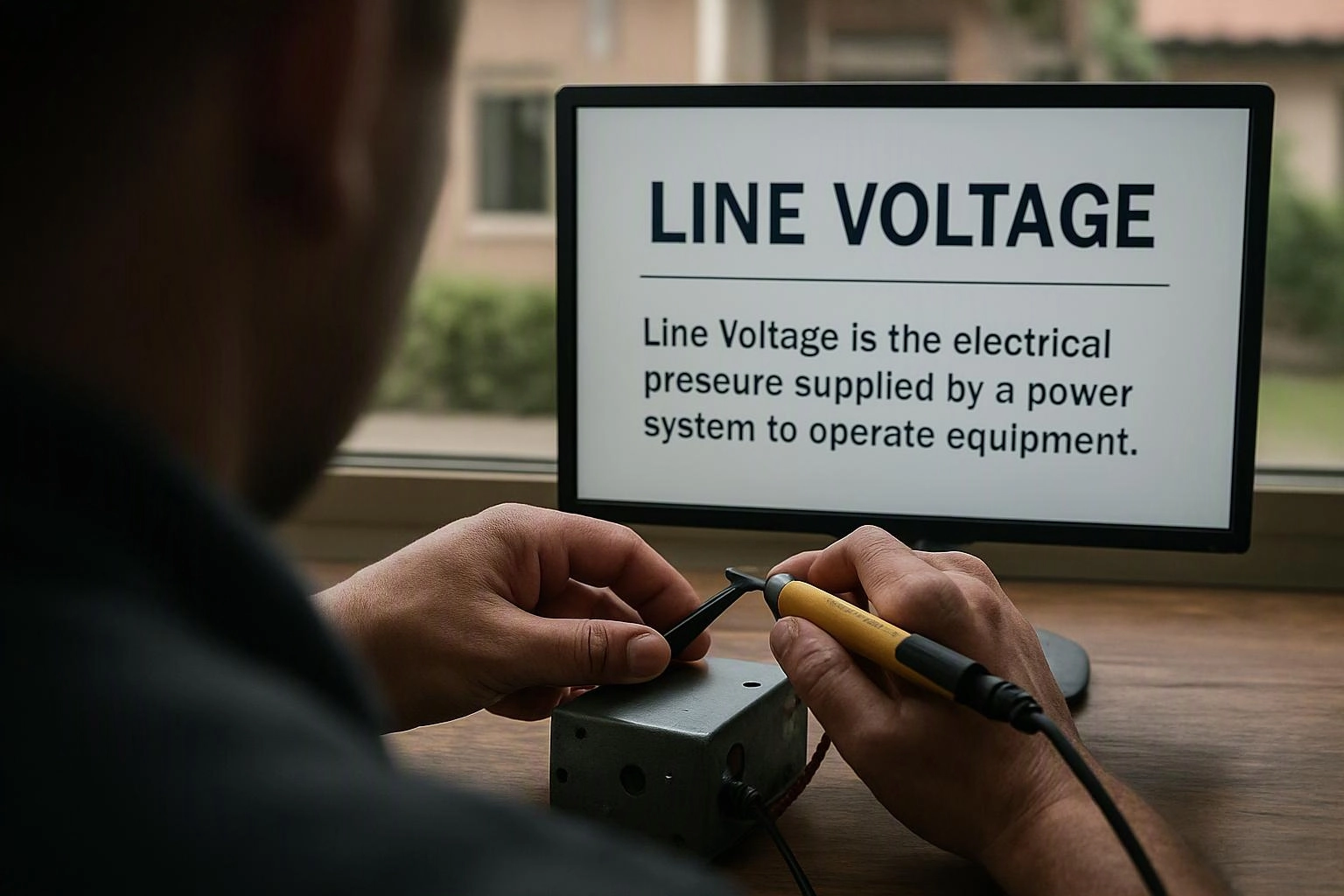
Line Voltage is the supply present on conductors that deliver power from an electrical panel to connected equipment. A voltage tester or multimeter measures the electrical potential between selected conductors. The reading helps show whether power reaches a circuit, outlet, switch, or equipment connection.
Related glossary terms: Branch Circuit, Current, Electrical Load.
Equipment may use line voltage directly, or a transformer and control circuit may change it into a lower voltage for signaling and controls. For example, a lighting circuit can carry line voltage to a fixture while a control component manages switching. During an inspection, the measured value is considered with conductor connections, circuit condition, and the equipment served.
From the San Bernardino Electrician team
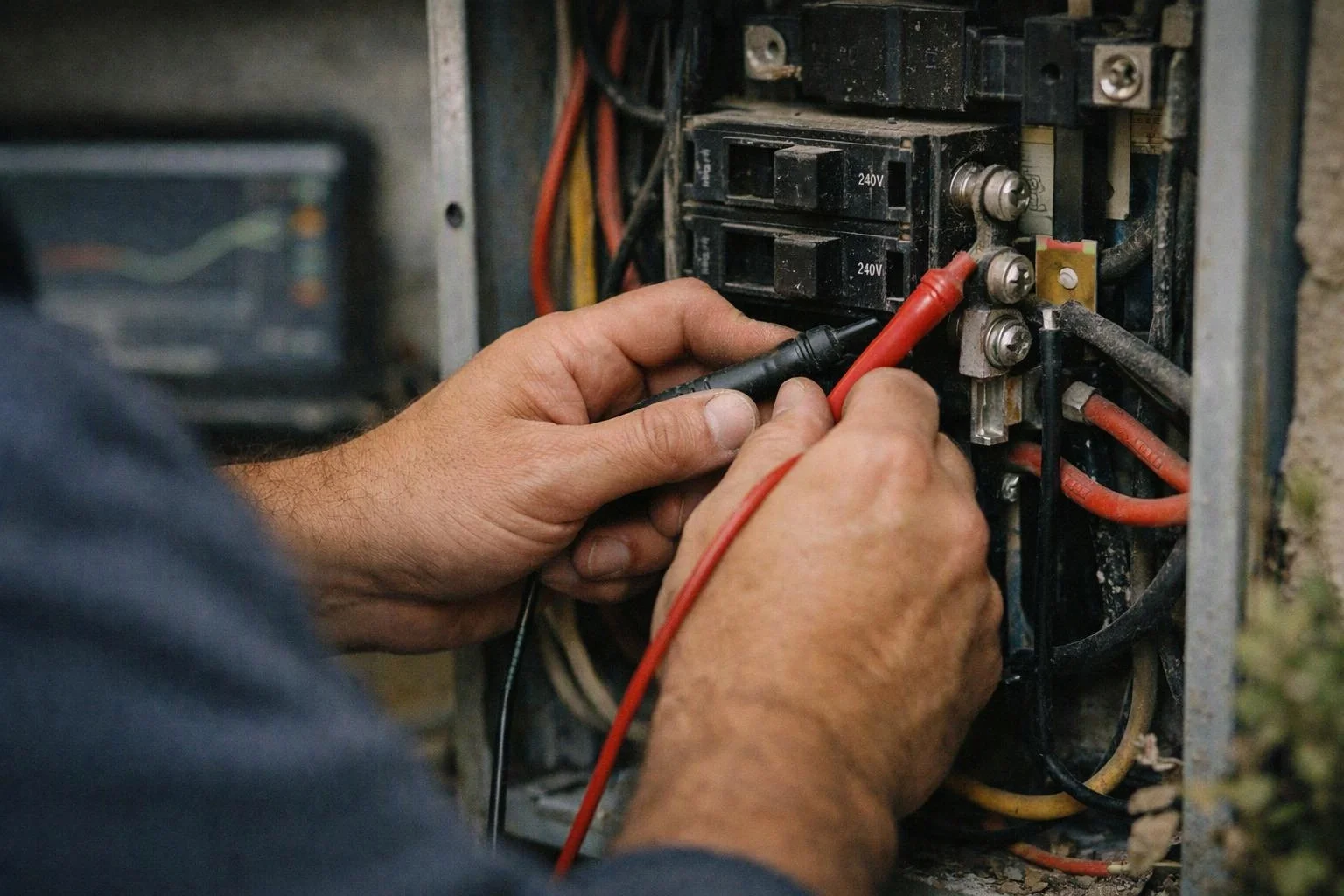
When we inspect line voltage, we identify the circuit, check the relevant conductors, and compare readings at accessible points. We also look for loose terminations, damaged insulation, and connections that do not match the equipment. Our team records practical findings in the context of the complete electrical safety inspection.
Line Voltage in Practice: A Real-World Example
During an electrical safety inspection, a technician checks line voltage at a receptacle serving a fixed appliance. The reading helps show whether the circuit supplies power consistently at that location.
Related Services
Related Terms
Branch Circuit
A branch circuit is the portion of an electrical system that carries power from a panelboard…
Current
Current is the movement of electric charge through a conductor, such as a wire, circuit path…
Electrical Load
Electrical Load is the amount of electrical power a device, circuit, or building draws while operating…
Neutral Wire
A Neutral Wire is a current-carrying conductor that returns electricity from a load to the electrical…
San Bernardino Electrician
Have Questions About Line Voltage?
Contact San Bernardino Electrician for practical guidance on Line Voltage and related 24 hour electrician work in San Bernardino.