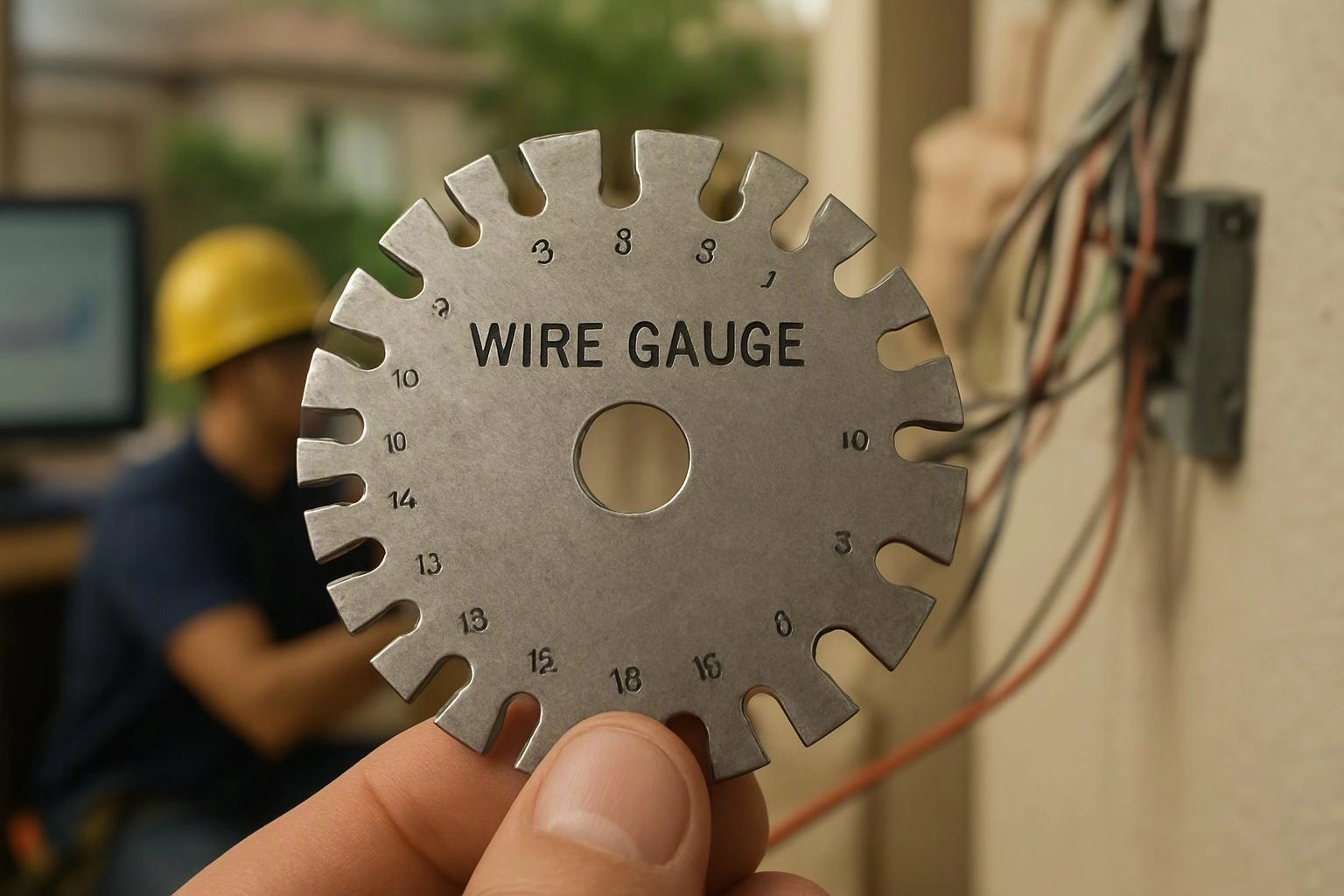
What is Wire Gauge?
Wire Gauge is a numbering system that identifies the diameter and current-carrying capacity of electrical wire. In the American Wire Gauge system, a smaller gauge number means a larger conductor, while a larger number means a smaller conductor.
Quick Facts About Wire Gauge
Category
Electrical measurement system
Measured by
Conductor diameter or cross-sectional area
Used for
Selecting conductors for electrical circuits
Common confusion
A smaller gauge number means thicker wire
Also called
American Wire Gauge, AWG
Often discussed with
Circuit Breaker Repair
Key Takeaways About Wire Gauge
- Smaller American Wire Gauge numbers mean thicker conductors with more current capacity.
- The right gauge depends on amperage, wire material, insulation, installation method, and circuit length.
- A wire that is too small can overheat, harm insulation, and create a fire hazard.
- Longer circuits may need larger conductors to control voltage drop.
- Gauge markings do not replace load calculations or electrical code requirements.
Understanding Wire Gauge

Wire Gauge is a size designation for an electrical conductor. In North America, electricians commonly use American Wire Gauge, or AWG, for wire. This system covers solid and stranded copper or aluminum wire. The number describes conductor size. It doesn't describe the complete cable's outside diameter. Insulation, sheathing, and conduit don't change the conductor gauge.
Related glossary terms: Branch Circuit, Electrical Code, National Electrical Code.
AWG numbers work in reverse. A 10 AWG conductor is larger than a 14 AWG conductor. A 14 AWG conductor is larger than a 20 AWG conductor. Larger conductors generally carry more current. They also have less electrical resistance. The final selection depends.circuit amperage, conductor material, and insulation temperature rating. It also depends on ambient temperature and installation conditions.
How Wire Gauge Works, Is Measured, or Is Used?
The AWG system follows a geometric size sequence. Each increase of three gauge numbers produces about half the area. This area measures the conductor's cross section. Each decrease of three numbers produces about twice the area. Electricians may identify size from the insulation's printed marking. They may also use a wire gauge tool or product packaging. A measurement must focus on the metal conductor, not the insulation.
Wire selection starts with the circuit load and protective device. A technician checks the expected current and breaker rating. The technician checks conductor material and insulation rating. They also check the wiring method against.National Electrical Code. Copper and aluminum conductors of the same gauge don't have identical ampacity. Ampacity means the safe current capacity. A long circuit may need a larger conductor to limit voltage drop. This need is greater with motors, air-conditioning equipment, or sensitive electronics.
- Identify the load and expected operating current.
- Match the conductor ampacity to the circuit protection.
- Check temperature, bundling, conduit, and installation conditions.
- Review voltage drop when the circuit travels a long distance.
Why Wire Gauge Matters?

Correct wire gauge controls heat and electrical performance. Current flowing through resistance produces heat. An undersized conductor can run hotter than its insulation can safely handle. It can also heat connection points beyond safe levels. Repeated overheating may loosen terminals or damage insulation. It may trip a breaker or start a fire. A properly sized conductor lets the overcurrent device protect the circuit.
Gauge also affects equipment operation. Excessive resistance creates voltage loss along the circuit. This loss can make lights dim and motors run hot. It can also make motors fail to start. Oversized conductors usually reduce resistance. However, they cost more and may not fit rated terminals or devices. Good design balances ampacity, voltage drop, terminal ratings, installation space, and code requirements.
When Wire Gauge Matters Most?
Wire gauge deserves close attention during new circuits and remodels. It also matters during panel changes and appliance installations. Gauge matters during troubleshooting, too. High-load equipment often needs larger conductors. Examples include electric ranges, heat pumps, welders, and electric vehicle chargers. Ordinary lighting or receptacle circuits may need smaller conductors. The distance from the panel to the load can change the recommended size. This can happen even when the breaker rating stays the same.
Gauge checks also matter when someone replaces a fuse, breaker, receptacle, or cable. A larger breaker mustn't be installed just because a smaller breaker trips. Existing conductors may not support the higher current. Look for faded markings, warm receptacles, and discolored insulation. Also look for repeated trips and poor terminal connections. These signs can point to an overloaded circuit or loose connection. They can also show damaged wiring or an incorrect conductor size.
How to Evaluate Wire Gauge?
- Read the conductor marking and confirm the AWG size, material, insulation type, and temperature rating.
- Compare conductor ampacity with the breaker or fuse rating under the applicable installation conditions.
- Check whether circuit length creates excessive voltage drop for motors, heating equipment, or sensitive electronics.
- Inspect terminals for heat damage, discoloration, loose connections, or conductors that do not fit securely.
- Confirm that the selected conductor matches National Electrical Code requirements and equipment terminal ratings.
Related Concepts Compared
Wire Gauge vs. American Wire Gauge
American Wire Gauge is the specific numbering system commonly used to describe wire size in North America. Wire gauge may also refer generally to other sizing systems used for different conductors.
Wire Gauge vs. Ampacity
Ampacity is the maximum current a conductor can carry safely under stated conditions. Wire gauge describes physical conductor size, while ampacity depends on size, material, insulation, temperature, and installation.
Wire Gauge vs. Wire Diameter
Wire diameter is a physical measurement of conductor width. Wire gauge converts conductor size into a standard number, with lower AWG numbers representing larger conductors.
Wire Gauge vs. Cable Size
Cable size may describe the number and gauge of conductors inside a cable assembly. Wire gauge normally identifies the size of one conductor, not the full outside diameter of the cable.
Expert Note
The printed gauge is only one part of a safe selection. Terminal temperature limits, conductor material, ambient heat, conduit fill, bundling, and voltage drop can change the acceptable size. A gauge that works in free air may not have the same ampacity inside a crowded raceway.
Common Mistakes or Myths About Wire Gauge
- Assuming a higher gauge number means a thicker wire.
- Choosing wire size from breaker rating alone without checking installation conditions.
- Ignoring voltage drop on long circuit runs.
- Measuring the insulated cable instead of the metal conductor.
- Replacing a tripping breaker with a larger breaker without confirming conductor capacity.
Wire Gauge in Practice: A Real-World Example
A 20-amp kitchen receptacle circuit may use 12 AWG copper conductors under common installation conditions. A 15-amp lighting circuit may use 14 AWG copper. A long kitchen circuit may need a larger conductor to lower voltage drop and improve appliance performance.
Sources & Further Reading on Wire Gauge
Related Services
Related Terms
Branch Circuit
Branch Circuit is the portion of an electrical system that carries power from the final overcurrent…
Electrical Code
Electrical Code is a set of enforceable safety rules for designing, installing, inspecting, and maintaining electrical…
National Electrical Code
National Electrical Code is a safety standard published by the National Fire Protection Association that sets…
Voltage
Voltage is the electrical potential difference that pushes electric charge through a circuit. Measured in volts…
SanBernardino-Electrician.com
Have Questions About Wire Gauge?
Contact SanBernardino-Electrician.com for practical guidance on Wire Gauge and related 24 hour electrician work in San Bernardino.