Attic Fan Benefits in San Bernardino: Cooling, Ventilation, and Roof Protection
Attic fan installation in San Bernardino provides attic cooling, ventilation, and roof protection, and San Bernardino Electrician installs and repairs attic fans after checking the roof space, airflow path, and electrical connection.
Get a Free EstimateWhat Benefits Can an Attic Fan Provide in San Bernardino?
An attic fan can move trapped attic air, reduce heat buildup, support ventilation, and help protect roof components from persistent heat and moisture conditions. We review the attic layout and electrical connection before recommending a powered attic ventilator.
Attic cooling works best when the fan matches the existing roof ventilation. Our team checks how air enters and leaves the space so the fan supports useful airflow.
How Attic Fans Help Cool the Attic
Attic fans help cool the attic by moving air heated by solar heat gain away from the roof deck. This can reduce heat buildup in the space and may ease the home cooling load when the attic holds less trapped heat.
We check the fan location, roof space, and airflow path before installation. A roof-mounted attic fan or gable-mounted attic fan must be placed where it can exhaust air without creating a blocked or uneven ventilation path.
How Attic Fans Improve Ventilation
Attic fans improve ventilation by supporting air circulation between intake vents and exhaust vents. Balanced airflow gives warm, damp air a path out of the attic.
Our crew checks whether the existing intake vent and exhaust vent layout can support the fan. We also look for conditions that may affect moisture control, including blocked openings and poor airflow.
How Attic Ventilation Supports Roof Protection
Attic ventilation supports roof protection by helping limit heat and moisture conditions around roof decking and roof insulation. Better airflow can also reduce the conditions that contribute to condensation.
We inspect the roof deck, insulation, fan housing, and roof flashing during the assessment. If moisture damage is already present, we identify the electrical and ventilation concerns that need attention before proceeding.
Why San Bernardino Attic Conditions Matter
Hot, dry summers in lower-elevation developed areas can increase heat in attic spaces and electrical demand, so attic fan planning should account for airflow and circuit condition.
Our team checks whether the electrical circuit can support the planned fan and whether the wiring and switch control are suitable for the installation. We also consider roof access and the way the attic connects with the rest of the home.
What We Check Before Installing an Attic Fan
An attic inspection helps us match the ventilation equipment to the roof space and electrical system. We review each part of the installation before selecting the fan location.
When the project needs a new electrical path, we explain the work before installation begins. You can contact us through Attic Fan Installation to arrange an assessment.
When Attic Fan Repair Is the Better Next Step
Attic fan repair is appropriate when an existing fan has stopped operating correctly, makes unusual noise, loses power, or no longer supports effective airflow.
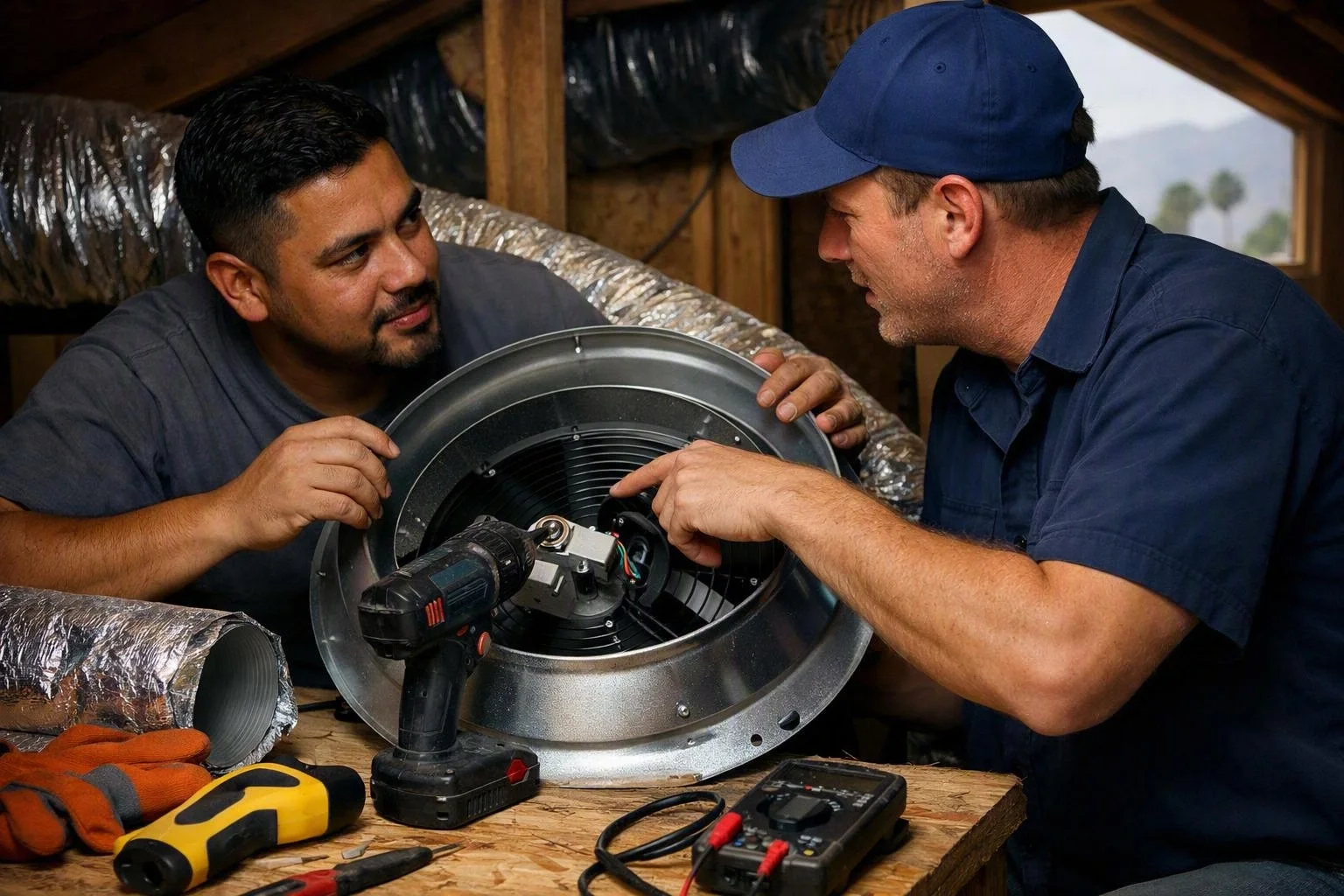
Our team checks the fan motor, fan housing, switch, wiring, and electrical connection to locate the fault. We also inspect the airflow path because a working motor cannot correct blocked or poorly arranged ventilation.
Intermittent operation can point to a loose connection, control problem, circuit issue, or failing motor. We test the system and explain whether repair addresses the problem or whether installation work is needed.
What Changes the Cost of Attic Fan Installation?
The cost of attic fan installation depends on the fan type, installation location, electrical connection, roof access, and condition of the existing ventilation system. We review those factors and provide a free estimate.
Roof-mounted, gable-mounted, solar, and electric attic fans can require different installation steps. Our estimate explains the selected equipment, access needs, wiring work, switch control, and ventilation adjustments.
San Bernardino Electrician can review the project on site so the quote reflects the actual roof space and circuit condition. We do not base the recommendation on the fan alone.
How to Decide Whether an Attic Fan Fits Your Home
An attic fan may fit your home when the attic has heat buildup, a workable airflow path, and an electrical system that can support the equipment. Our assessment connects the fan choice to the condition of the roof and ventilation system.
We use those concerns to guide the inspection and explain the available installation or repair path. If the attic already has effective ventilation, we can determine whether an additional fan adds useful airflow.
Request an Attic Fan Assessment in San Bernardino
San Bernardino Electrician can assess the attic ventilation layout, electrical requirements, and fan condition before recommending installation or repair.
We inspect the airflow path, roof access, fan components, and electrical connection during the assessment. Free Estimates Available for attic fan installation and repair planning.
Contact San Bernardino Electrician to discuss attic cooling, roof protection, or an attic fan that needs service.
Questions About Attic Fan Benefits and Service
Can an attic fan replace air conditioning?
San Bernardino Electrician does not treat an attic fan as a replacement for air conditioning because the fan moves attic air rather than directly cooling living spaces. We check whether attic cooling can support the home cooling load and improve comfort around the roof space.
Can an attic fan work with existing attic vents?
Yes, an attic fan can work with existing attic vents when the intake and exhaust layout supports a clear airflow path. We inspect the vents and roof ventilation before connecting the fan.
What are the signs that an attic fan needs repair?
Signs that an attic fan needs repair include unusual noise, intermittent operation, loss of power, and weak airflow. We test the fan motor, controls, wiring, and electrical connection to identify the cause.
Can an attic fan create an electrical problem?
Yes, an attic fan can create an electrical problem when the circuit, wiring, switch, or connection is not suitable for the equipment. We check the circuit condition and electrical connection before installation or repair.
Does an attic fan help with attic moisture?
Yes, an attic fan can help with attic moisture when it supports proper air circulation between intake vents and exhaust vents. We look for condensation, blocked vents, and other conditions that affect moisture control.