Bathroom Fan Installation Mistakes: Venting, Wiring, and Moisture Problems to Avoid
Bathroom fan installation mistakes often involve incorrect vent routing, unsafe wiring, poor sealing, and inadequate airflow; San Bernardino Electrician checks these conditions and corrects the installation safely.
Get a Free EstimateWhat Makes a Bathroom Fan Installation Safe and Effective?
A safe and effective bathroom exhaust fan installation moves humid air outdoors, uses suitable electrical connections, and seals the opening against moisture.
We check the ventilation path from the fan housing to the exterior termination. Our team also reviews the electrical safety of the circuit, the quality of the ceiling seal, and the airflow through the duct.
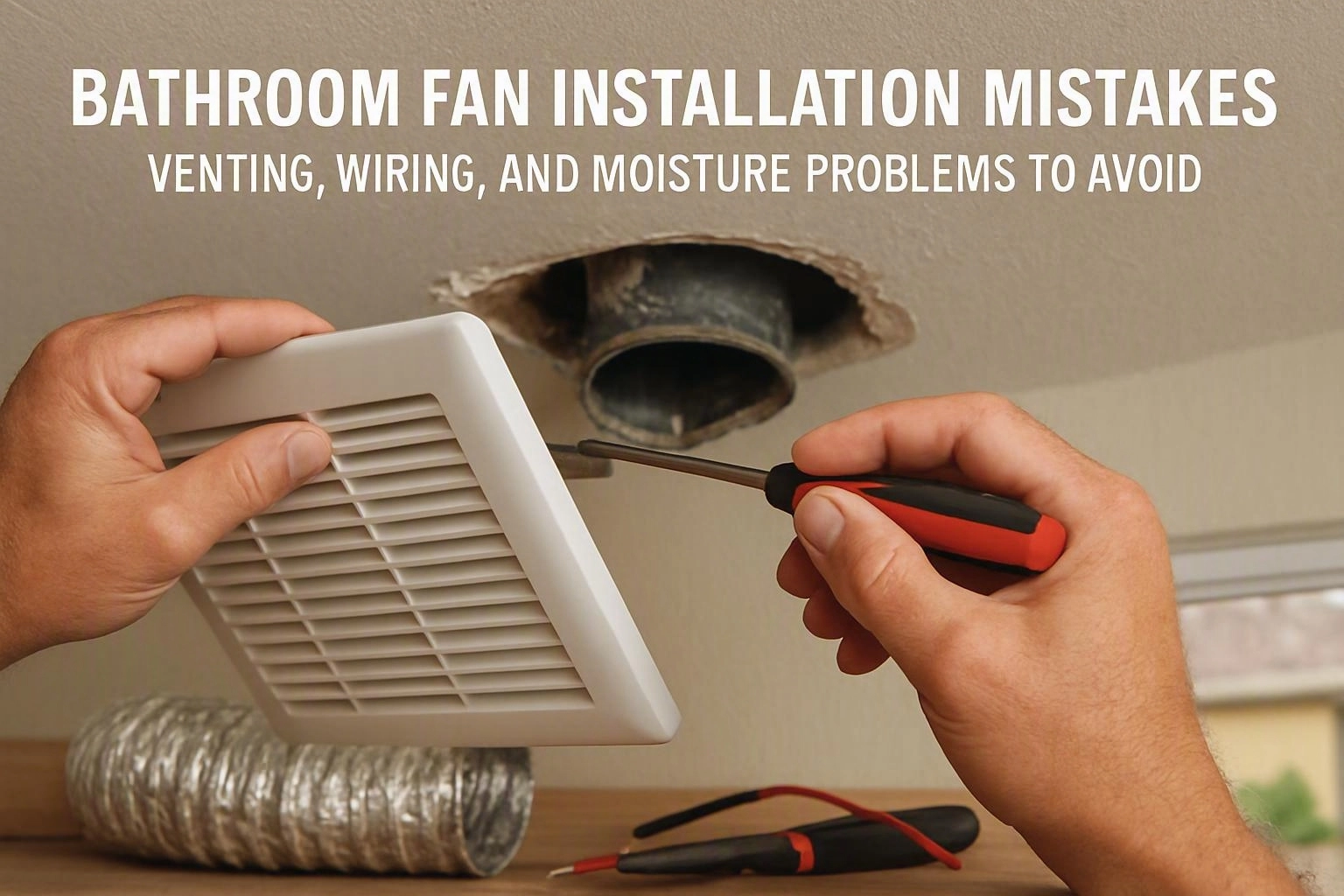
The Most Common Bathroom Fan Installation Mistakes
Common installation errors affect bathroom ventilation, electrical safety, and moisture control at the same time. A fan can appear to run normally while hidden problems cause ceiling moisture, duct leakage, or electrical risk.
We inspect the complete installation before recommending an installation correction. That approach helps us identify the source of moisture damage instead of focusing only on the grille or fan motor.
Mistake: Venting the Fan Into the Attic or Ceiling Cavity
Venting a bathroom fan into the attic or ceiling cavity sends humid air into an enclosed building space. The moisture can condense on cold surfaces, wet insulation, and support mold growth.
We route the exhaust duct to a suitable duct termination outdoors. The correction cost depends on access, the existing route, and whether condensation has damaged insulation, framing, or the ceiling.
Mistake: Using a Short, Crushed, or Poorly Routed Duct
A short, crushed, or sharply bent exhaust duct restricts airflow and can increase fan noise. Flexible duct can also sag or leak when it lacks support.
We inspect the duct routing and reconnect or replace damaged sections as needed. Rigid duct can provide a smoother path, while properly supported flexible duct may work when the route and connection are suitable.
The correction cost depends on duct access, the amount of routing work, and the condition of the exterior termination.
Mistake: Choosing a Fan Without Matching the Room and Duct Path
A fan must match the bathroom size and the resistance created by the duct path. A fan motor with insufficient capacity may produce weak air exchange when the duct is long, bent, or obstructed.
We assess the room, the duct resistance, and the existing airflow before selecting replacement ventilation equipment. The correction cost depends on whether the current fan can remain and whether the duct path also needs work.
Mistake: Connecting the Fan to an Unsafe Electrical Circuit
An unsafe branch circuit connection can create shock, overheating, or nuisance-tripping risks. Problems may include loose cable connections, an unsuitable junction box, or missing ground fault protection where required by the installation.
We trace the circuit, inspect the junction box, and test the electrical connection before reconnecting the fan. The correction cost depends on wiring access, circuit condition, and the work needed to make the connection safe.
Mistake: Skipping Grounding, Strain Relief, or Wire Protection
Missing grounding, strain relief, or wire protection can allow movement or damage at the fan connection. Exposed or pinched wire insulation can turn a small installation error into an electrical hazard.
We verify the grounding conductor, secure the cable, and protect the wire inside a suitable electrical enclosure. The correction cost depends on the condition of the cable and whether the junction box can be safely reused.
Mistake: Leaving Gaps Around the Housing and Ceiling Opening
Gaps around the fan housing or ceiling cutout allow conditioned air and humid air to move through the ceiling assembly. Unsealed edges can contribute to ceiling moisture, air leakage, and insulation problems.
We align the fan housing, seal the ceiling opening with suitable materials, and check the fan housing seal. The correction cost depends on the size of the opening and any ceiling repair required around it.
Mistake: Installing the Wrong Switch or Control
A wall switch, timer switch, or humidity sensor must match the fan and the wiring arrangement. An incompatible switch leg can prevent proper operation or leave the fan running in an unwanted pattern.
We test the switch leg and match the fan control to the selected equipment. A timer control or humidity sensor may improve humidity control when the wiring and fan support that function.
The correction cost depends on the control type, wiring access, and compatibility with the fan motor.
Mistake: Ignoring Condensation, Backdrafts, and Exterior Dampers
Condensation and backdrafts can occur when the exterior vent cap is blocked, poorly sealed, or missing a working backdraft damper. Cold air infiltration can also bring moisture into the duct and ceiling area.
We inspect the exterior vent cap, damper movement, duct insulation, and signs of moisture. The correction cost depends on exterior access, the condition of the damper, and any damage caused by repeated condensation.
Mistake: Replacing the Fan Without Checking the Existing Wiring and Duct
Fan replacement without an existing wiring and duct inspection can leave the main installation defect in place. A new fan may still have weak airflow, unsafe electrical compatibility, or a leaking duct.
We inspect the ceiling opening, fan housing, existing wiring, and duct before installing replacement equipment. The correction cost depends on whether the old opening, circuit, and duct can be reused without causing ceiling damage.
For complete planning, see our Bathroom Fan Installation service information.
How We Check a Bathroom Fan Installation for Problems
Our bathroom fan inspection follows the complete path from the wall control to the exterior vent cap. We use the findings to separate an airflow problem from a wiring, moisture, or equipment problem.
Which Bathroom Fan Problems Need Attention First?
Repair priority depends on whether the problem creates an immediate electrical hazard or allows continuing moisture damage. We address unsafe electrical conditions and active water or condensation problems before cosmetic concerns.
The table shows how common symptoms guide our inspection and correction plan.
| Problem | Why it matters | Typical correction focus |
|---|---|---|
| Electrical hazard | Unsafe wiring can cause shock, overheating, or circuit problems. | Circuit testing, grounding, cable protection, and junction box correction. |
| Moisture damage | Persistent moisture can damage the ceiling and surrounding materials. | Moisture inspection, duct repair, sealing, and exterior termination work. |
| Blocked duct | A blockage reduces airflow and may increase condensation. | Duct inspection, obstruction removal, routing correction, or replacement. |
| Fan noise | Noise may point to vibration, loose parts, motor wear, or duct resistance. | Fan housing, motor, grille, and duct path inspection. |
| Weak airflow | Weak suction can leave bathroom humidity and mirror moisture behind. | Fan capacity review, duct testing, damper inspection, and sealing. |
What Changes the Cost of Correcting a Bathroom Fan Installation?
The cost of correcting a bathroom fan installation depends on the fan condition, wiring access, duct route, exterior termination, and any moisture or ceiling damage.
Access to the ceiling can affect the work needed to inspect or replace the duct. Wiring correction may require work at the switch, junction box, or branch circuit. Duct replacement and exterior termination work can also change the scope.
We explain the needed correction, the materials involved, and any related ceiling repair before preparing a quote. Contact us for Free Estimates Available and a site assessment based on the actual installation.
When to Call San Bernardino Electrician for Bathroom Fan Help
Call San Bernardino Electrician when a bathroom fan problem involves unsafe wiring, concealed moisture, difficult access, or an installation that does not operate correctly. We handle bathroom fan repair, bathroom fan installation, and electrical inspection as part of the complete evaluation.
How to Request a Bathroom Fan Installation Quote
Requesting a bathroom fan installation quote starts with a site assessment of the fan, wiring, duct route, ceiling opening, and exterior termination. We use that review to define whether the work involves bathroom fan repair, installation correction, duct replacement, or fan replacement.
Tell us about weak airflow, fan noise, condensation, ceiling damage, or recent electrical changes. Our team can then prepare a clear scope of work that separates needed safety corrections from optional equipment changes.
San Bernardino Electrician reviews the installation with you and explains the correction plan before work begins. Use the contact link to request your assessment.
Questions About Bathroom Fan Installation Mistakes
Can a bathroom exhaust fan vent through the roof?
Yes, a bathroom exhaust fan can vent through the roof when the duct route, roof penetration, flashing, and exterior termination are suitable. San Bernardino Electrician checks the duct connection and roof termination so humid air reaches the outdoors without creating a leak or condensation problem.
Why is a bathroom fan noisy after installation?
A bathroom fan may be noisy after installation because of housing vibration, loose parts, duct resistance, a damaged grille, or motor problems. We inspect the fan housing, mounting, motor, and duct path to identify the source.
Why does a bathroom fan still leave the mirror wet?
A bathroom fan may leave the mirror wet when airflow is weak, the duct is blocked, the fan is undersized for the room, or the fan does not run long enough. We test the fan, inspect the duct, and check the control before recommending a correction.
Can an existing bathroom fan duct be reused during replacement?
Yes, an existing bathroom fan duct can be reused when its size, condition, route, connections, and exterior termination suit the replacement fan. We inspect the duct before reconnecting it so hidden leakage or airflow restriction does not remain.
What makes correcting a bathroom fan installation more expensive?
Correcting a bathroom fan installation becomes more involved when ceiling access is difficult, the duct route needs replacement, wiring needs correction, the exterior termination needs work, or moisture has damaged the ceiling. We review those conditions during the site assessment and explain the scope before preparing a quote.
How can I tell whether bathroom fan moisture is damaging the ceiling?
Bathroom fan moisture may be damaging the ceiling when you see staining, bubbling paint, soft drywall, peeling finishes, mold growth, or damp insulation. We complete a moisture inspection and trace the problem through the fan, duct, ceiling opening, and exterior vent cap.