Ceiling Fan Repair and Installation: Common Problems and Preparation
Ceiling fan repair concerns include wobbling, unusual noise, poor airflow, failed controls, and electrical symptoms; San Bernardino Electrician checks the fan, mounting, controls, and wiring before recommending repair or installation.
Get a Free Estimate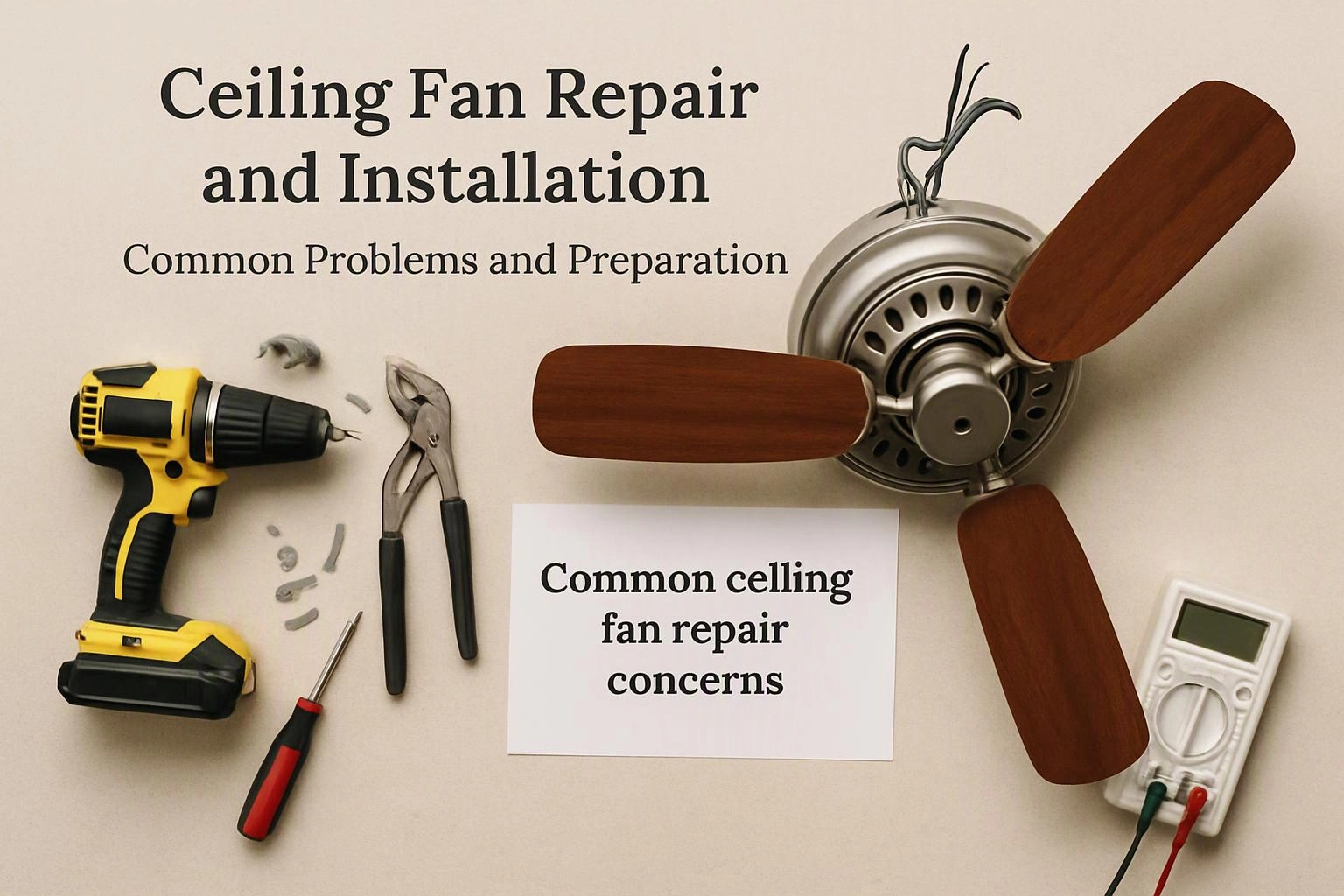
What Are the Most Common Ceiling Fan Repair Concerns?
Common ceiling fan repair concerns include wobbling, unusual noise, poor airflow, failed controls, intermittent operation, visible damage, and electrical symptoms.
We use these signs to decide whether the issue involves the fan assembly, the controls, the ceiling support, or the electrical wiring.
What Causes Ceiling Fan Problems?
Ceiling fan problems commonly result from loose mounting, unbalanced blades, worn components, faulty connections, or incompatible controls.
Our team traces the symptom to the related fan part or circuit before selecting a repair or replacement approach.
When Is a Ceiling Fan Repair a Safety Concern?
A ceiling fan repair becomes a safety concern when the fan sparks, smells burned, overheats, trips a circuit breaker, or moves at the ceiling.
Turn off the circuit breaker when you see these symptoms, and do not operate the fan until we inspect it. We check for an electrical shock hazard, heat damage, loose wiring, and a ceiling box or mounting bracket that cannot hold the fan securely.
Burning smell and sparking can indicate damaged insulation, a failed control, or an overloaded connection. Our crew can also review related concerns such as a breaker that keeps tripping when the fan shares a branch circuit with other loads.
How Should You Prepare for Ceiling Fan Installation?
Ceiling fan installation preparation starts with choosing the location, clearing access, identifying the controls, and confirming that the ceiling support can accommodate the fan.
Good preparation helps us inspect the work area safely and identify questions before fan setup begins.
What Should You Clear Before Electrical Work in an Occupied Home?
Electrical work in an occupied home is safer when the furniture, decorations, pets, and children are moved away from the work area.
We also need clear ladder access, floor protection, and safe power access before beginning work. Keep people and pets outside the work area while we isolate power and inspect the ceiling fan.
How We Check a Ceiling Fan Before Repair or Installation
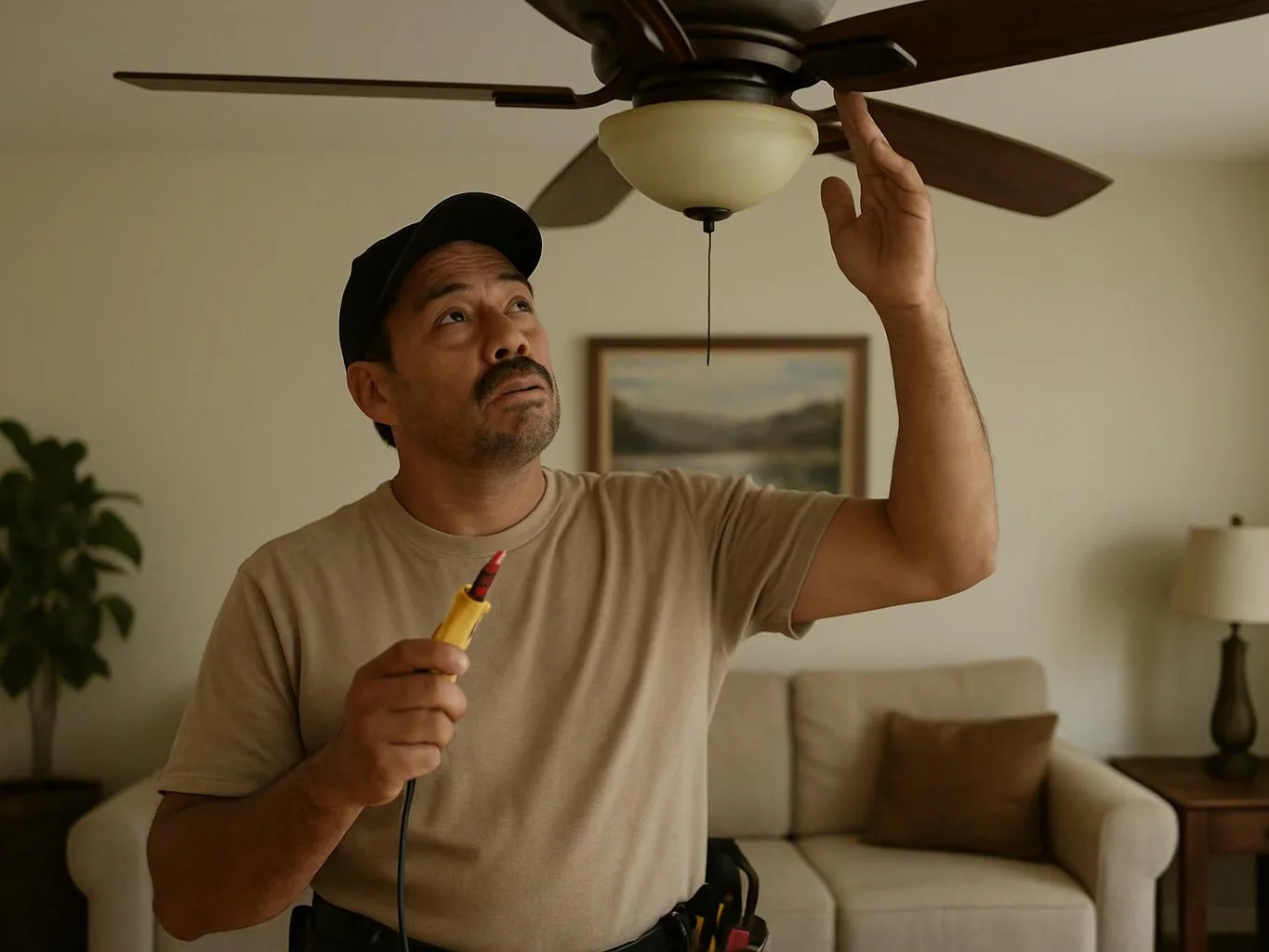
San Bernardino Electrician checks the fan assembly, ceiling support, controls, and electrical connections before selecting a repair or installation approach.
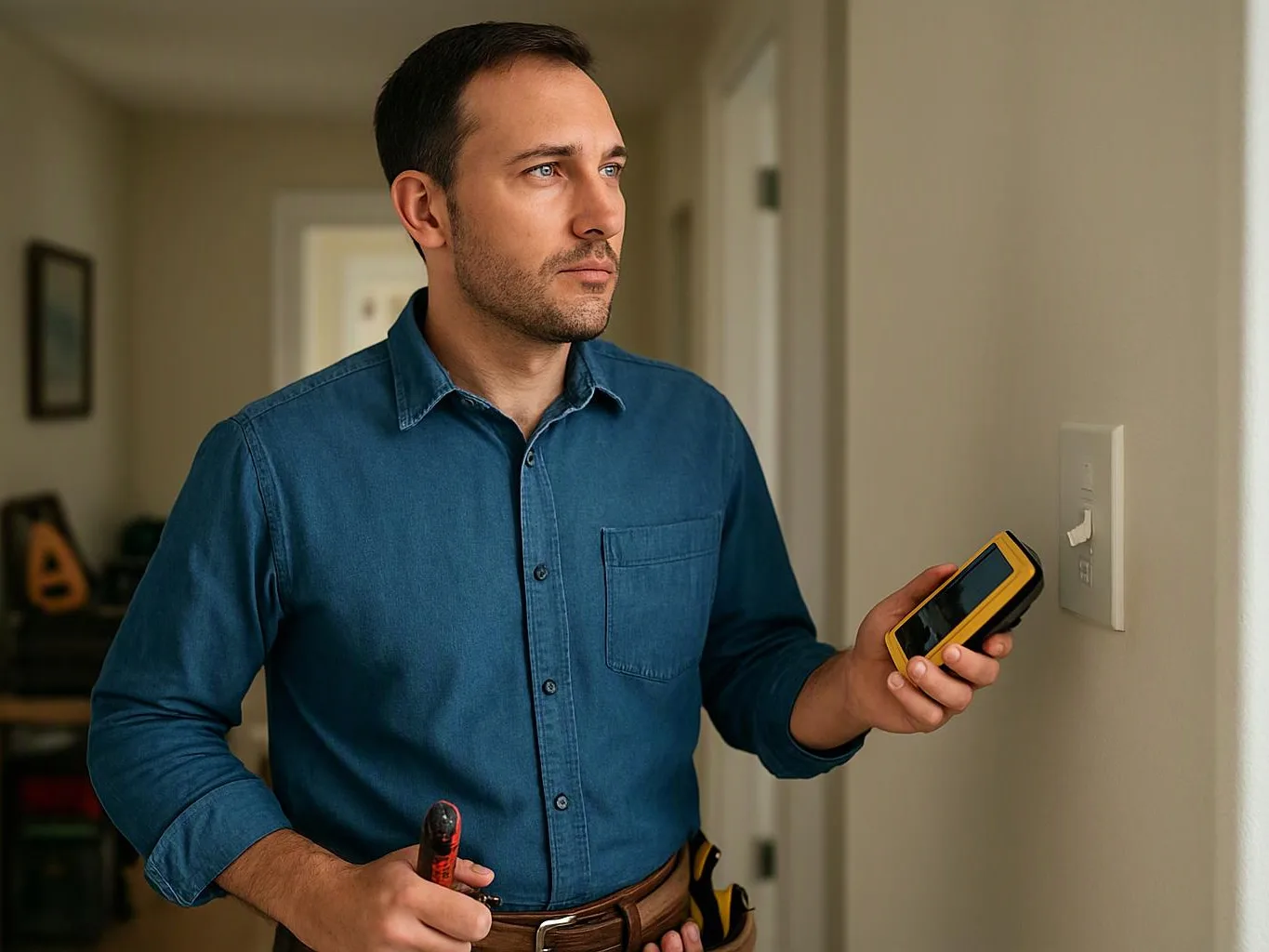
We inspect the mounting bracket and ceiling electrical box for secure support. We also trace the branch circuit, switch wiring, and remote receiver when the fan uses electronic controls.
Our team tests the fan motor and reviews how the fan responds to each control. These checks help separate a fan repair from a control repair, wiring correction, or ceiling fan replacement.
When you need Ceiling Fan Repair, we use the inspection findings to explain the work and the replacement parts that may be required.
What Does a Ceiling Fan Repair or Installation Quote Depend On?
The cost of ceiling fan repair or installation depends on the fan type, access, support, wiring condition, controls, and parts required; San Bernardino Electrician can provide Free Estimates Available.
We review whether the existing ceiling box supports a fan, whether the wiring is usable, and whether the control configuration matches the selected fan. Ceiling height, ladder access, installation preparation, and replacement parts can also change the work included in the quote.
Our estimate explains the repair or installation tasks, the condition of the support and wiring, the control work, and the parts needed. Requesting a quote after inspection gives you an exact scope for your ceiling fan project.
How Can You Prevent Recurring Ceiling Fan Problems?
Ceiling fan problems are easier to prevent when the fan stays clean, mounting hardware remains secure, blades stay balanced, controls match the fan, and electrical symptoms receive prompt attention.
We can inspect the fan support and electrical connections when cleaning or tightening does not resolve a symptom.
Questions About Ceiling Fan Repair and Installation
Can a noisy ceiling fan be repaired?
Yes, San Bernardino Electrician can repair a noisy ceiling fan when the cause is a loose part, unbalanced blade, worn motor component, control issue, or electrical connection. We inspect the fan before deciding whether repair or replacement is appropriate.
Why does a ceiling fan wobble after installation?
A ceiling fan can wobble after installation when the blades are unbalanced, the blade arms are loose, or the mounting bracket and ceiling electrical box are not secure. We check the blade assembly and fan support to locate the movement.
Why does a ceiling fan stop working when the wall switch still has power?
A ceiling fan can stop working with power at the wall switch when the fan control, remote receiver, motor, or wiring connection has failed. We test the switch wiring and fan components to identify where operation stops.
Can you install a ceiling fan where a light fixture is located?
Yes, we can install a ceiling fan at a former light fixture location when the ceiling electrical box, support, wiring, and controls are suitable for the fan. We inspect the existing setup before beginning ceiling fan installation.
Should I use the existing ceiling box for a new ceiling fan?
Use the existing ceiling box only when it is rated and secured to support the selected ceiling fan. We inspect the box, mounting bracket, and surrounding support before approving it for a new fan.
San Bernardino Electrician can inspect your ceiling fan, explain the repair or installation scope, and help you prepare the occupied home work area.
Contact San Bernardino Electrician