Lightning Rod Installation Benefits for Homes and Commercial Buildings
Lightning rod installation benefits homes and commercial buildings by providing a planned path for lightning current, reducing electrical fire and surge risks, and supporting protection for structures, wiring, and connected equipment. San Bernardino Electrician assesses the building, designs the grounding path, and installs the system for the property.
Get a Free Estimate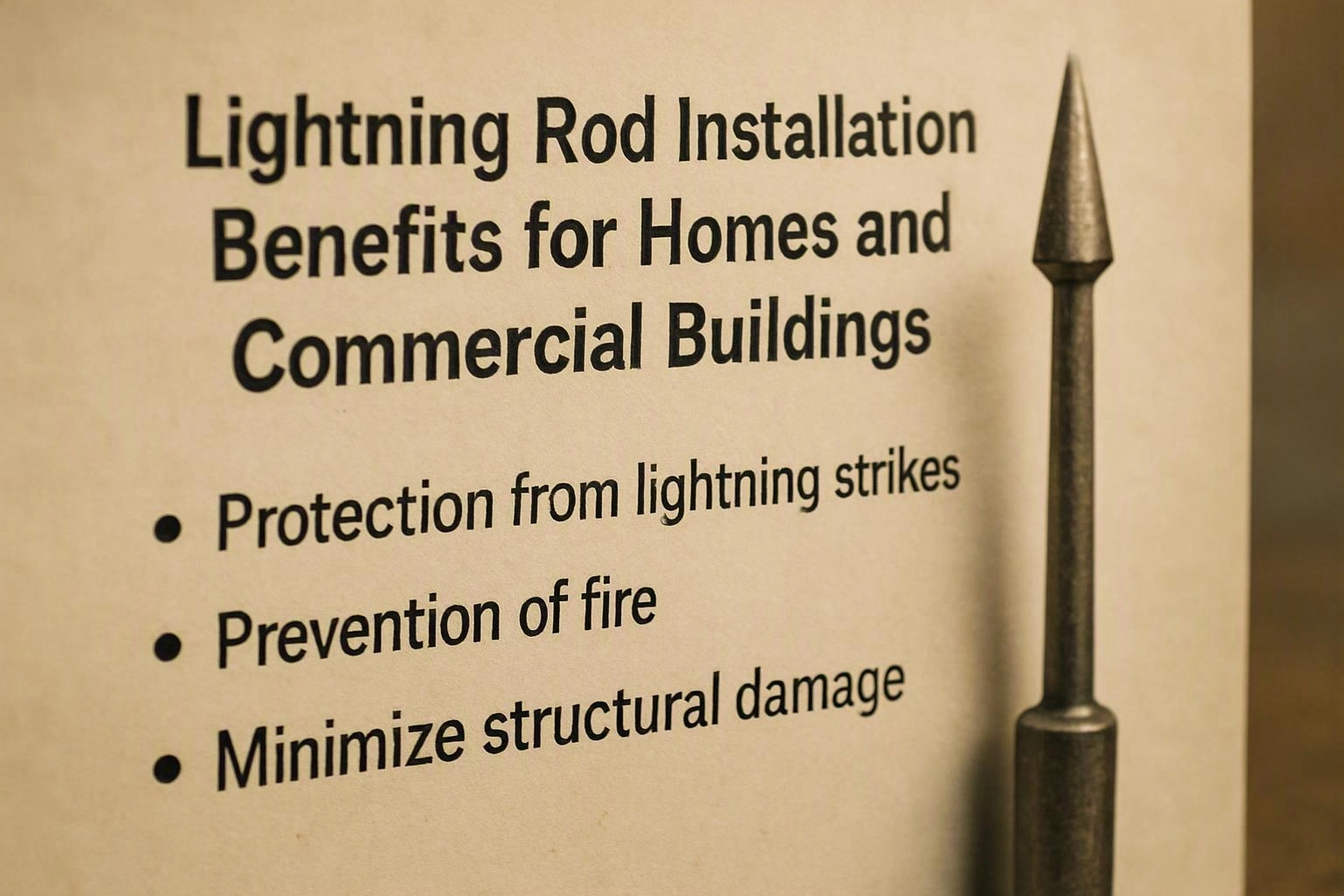
What Are the Main Benefits of Lightning Rod Installation?
Lightning protection installation gives lightning current a deliberate path to ground, helping reduce damage risks to the building and its electrical systems.
A complete protection system helps control where lightning energy travels after a lightning strike. Our team plans the grounding system around the building structure, electrical system, and available path to ground.
This approach can reduce electrical fire risk and limit damage to roofing materials, wiring, and connected equipment. We connect the protection components so the system works as one planned installation.
How Does a Lightning Protection System Reduce Building Damage?
A lightning protection system connects air terminals, conductors, bonding points, and grounding components so lightning energy can move through an engineered path.
An air terminal provides a roof-level point for the protection system. We route each down conductor along a suitable path and connect it to grounding electrodes that carry current into the earth.
Bonding connects conductive building parts so dangerous differences in voltage are less likely to develop. We also check electrical continuity across the system because a break can interrupt the intended grounding path.
Which Parts of a Home or Commercial Building Can Lightning Protection Help Protect?
Lightning protection can support several parts of a property when roof components, conductors, grounding, and surge controls are designed together. We assess the building and connect the protection plan to its construction and electrical needs.
Why Is Surge Protection Part of the Installation Decision?
Surge protection complements lightning protection by helping limit voltage disturbances that can travel through electrical, communication, and data pathways.
An electrical surge can enter through the service panel or move along connected equipment pathways. We evaluate whole-building surge protection and select locations that support the building's electrical system.
Surge protection can also matter for data and communication systems because sensitive equipment may connect to more than one pathway. Our team considers those connections when planning protection for electronic equipment.
What Are the Benefits for Homes Compared With Commercial Buildings?
Residential and commercial buildings can both benefit from a complete protection path, but the design changes with occupancy, layout, equipment, and building use. We adapt the installation to the property rather than applying one standard arrangement.
| Building type | Primary planning focus | Protection considerations |
|---|---|---|
| Residential building | Occupant safety and protection for the home structure | Roof shape, household wiring, appliances, electronics, and property layout |
| Commercial building | Business operations and continuity of building systems | Building occupancy, critical equipment, communication systems, roof access, and service equipment |
Commercial properties may have more interconnected systems and varied occupancy areas. We map those relationships so the grounding and surge protection plan supports the way the property operates.
When Is Lightning Rod Installation Especially Worth Considering?
Lightning rod installation deserves closer consideration when a building is exposed, has prominent roof features, contains sensitive equipment, or faces significant disruption from electrical damage.
An exposed building, tall structure, or isolated property may have a greater need for a planned protection path. We also review metal roofs, chimneys, antennas, and solar panels because these features can affect air terminal placement and conductor routing.
Valuable electronics and critical building systems can make surge control an important part of the decision. Our team connects the roof protection plan with grounding and whole-building surge protection where the property requires it.
How We Assess a Building for Lightning Rod Installation
Our building inspection identifies the roof, grounding, bonding, and electrical conditions that shape the protection design. We use the assessment to plan a complete path from the roof to the grounding system.
What Does a Lightning Rod Installation Quote Need to Include?
A lightning rod installation quote should reflect the building layout, roof access, conductor routing, grounding requirements, bonding work, and any complementary surge protection; San Bernardino Electrician provides Free Estimates Available.
Our quote explains air terminal placement, the grounding method, and how conductors will move from the roof to the grounding electrodes. We also account for the building configuration and any work needed around roof penetrations.
To request an exact quote, contact us with the property type and any known roof, electrical, or equipment concerns. We review the building before we define the installation scope.
How Can You Maintain a Lightning Protection System?
Lightning protection system maintenance checks visible components, grounding connections, and changes to the building that could interrupt the designed protection path.
We inspect for corrosion, damaged conductors, loose grounding connections, and roof alterations that may affect the system. Electrical upgrades can also change how bonding and surge protection should be arranged.
A post-storm inspection helps identify visible damage after a suspected lightning strike. Our team also reviews the system after roof work, antenna changes, solar panel installation, or other building alterations.
What Should You Know Before Choosing Lightning Rod Installation?
A complete lightning protection system requires more than a rod on the roof because protection depends on the full grounding path and connected components. We review the electrical risk and building use before planning the work.
Questions About Lightning Rod Installation Benefits
Do lightning rods attract lightning?
Lightning rods do not create lightning; they provide a planned path for lightning current when a strike occurs. San Bernardino Electrician designs the air terminals, down conductors, bonding, and grounding system to manage that path.
Can lightning rod installation protect electronics?
Yes, lightning rod installation can support electronic equipment protection when the system includes coordinated grounding and surge protection. We review the service panel, connected equipment, and data or communication pathways.
Does a lightning rod protect the whole house?
Yes, a complete lightning protection system can support protection for the whole house when roof components, conductors, grounding, bonding, and surge controls are designed together. We assess the residential building as a connected system.
Can commercial buildings use the same lightning protection approach as homes?
Commercial buildings can use the same complete protection principles, but the design must reflect building occupancy, property layout, critical equipment, and business operations. We adapt conductor routing, grounding, bonding, and surge protection to the commercial building.
What happens if a roof is changed after lightning protection is installed?
Roof changes can interrupt conductor routing, air terminal placement, or bonding connections. We perform an inspection after roof alterations and update the protection path when the building configuration changes.
San Bernardino Electrician assesses your building, explains the protection scope, and prepares an installation plan for the roof, grounding system, and connected electrical equipment. Contact us to request an exact estimate for your property.