What causes a ceiling fan to make noise?
Blade drag is a common cause of ceiling fan noise, but worn bearings, loose housing, motor hum, and electrical buzzing can also create sound. San Bernardino Electrician checks the fan speed, blades, housing, motor, switch, and wiring. Turn the fan off if the sound includes sparking, a burning smell, or a warm switch.
What does the crew look at first during a fan repair?
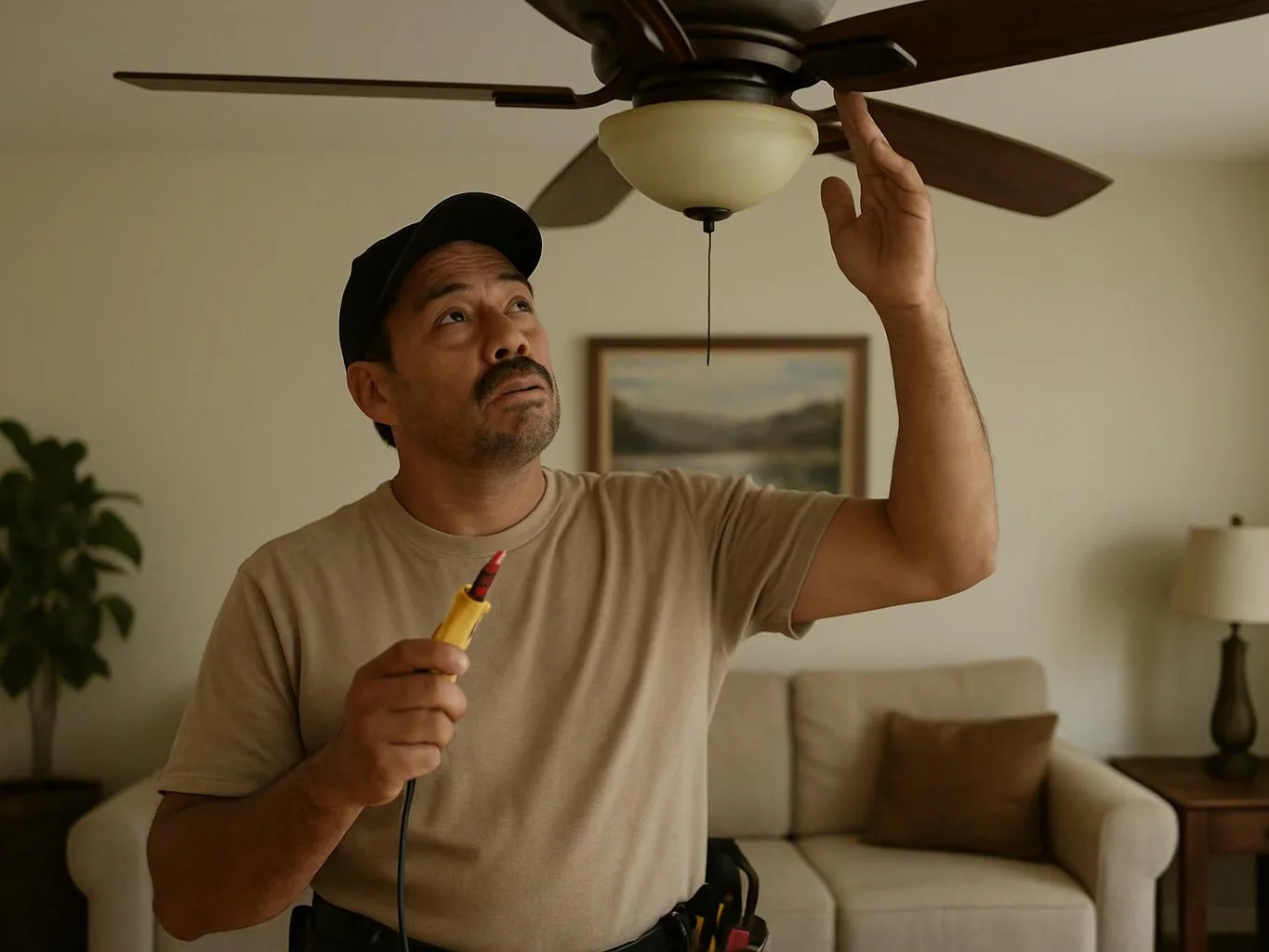
The fan’s sound, blade movement, and visible housing movement guide the first inspection. We check for rubbing, loose screws, canopy movement, and signs of electrical heat. The initial check helps separate a mechanical fault from a motor or wiring problem before the repair scope is set.
How does each stage of a ceiling fan repair work?
The repair process starts with symptom review and ends with testing after the work.
- We identify when the noise starts.
- We inspect blades, housing, and mounting.
- We test the motor, switch, and wiring.
- We explain the estimate and repair scope.
- We test fan operation after the repair.
Which fan parts can create a grinding or clicking sound?
Worn bearings, loose housing, blade fasteners, and motor parts can create grinding or clicking sounds. Our team checks each area based on the sound and fan speed. A damaged motor or housing may make replacement more suitable than repair, and we explain that decision before work begins.
When should a noisy ceiling fan be turned off?
A noisy ceiling fan should be turned off when it sparks, smells burned, heats a switch plate, or produces sharp electrical buzzing. We inspect the fixture, switch, connections, and mounting before any further use. In March Air Force Base, we provide this service for residential and commercial properties.
Why does a fan hum even when the blades look fine?
Motor wear, switch problems, loose connections, or electrical buzzing can cause a hum even when the blades look sound. We test the motor and wiring, then check the switch and housing. Blade adjustment alone will not correct a fault that comes from the electrical side.
What should be checked before fan repair is scheduled?
The fan’s sound, controls, visible movement, and electrical warning signs should be checked before scheduling. Note whether the noise changes with speed and whether the switch feels warm. Keep the fan off if you see sparks or smell burning, then share those details when requesting an assessment.