Skip to content

Ceiling Fan Repair in Muscoy, California

Blade drag can cause fan noise in Muscoy. We inspect the fan and repair the electrical fault or worn part.

Licensed & InsuredFree EstimatesWarranty AvailableUpfront, Transparent Pricing

Quick Summary: ceiling fan repair in Muscoy, California

Ceiling fan repair in Muscoy is provided by San Bernardino Electrician for noisy fans, blade drag, worn bearings, loose housing, motor hum, and electrical buzzing. We serve homeowners and businesses with troubleshooting, repairs, and clear explanations before work begins.

  • What we do: San Bernardino Electrician repairs noisy ceiling fans in Muscoy, California by checking blades, bearings, housing, motor sounds, and electrical connections.
  • What is included: We diagnose blade drag, worn bearings, loose housing, motor hum, and electrical buzzing.
  • What you get: The fan runs with the fault identified, the unsafe part repaired, and the next repair decision explained.

Why does blade drag make a ceiling fan noisy in Muscoy, California?

Blade drag creates extra resistance, which can make a ceiling fan hum, scrape, or vibrate. We check blade alignment, fasteners, the motor, and the mounting housing before choosing a repair.
Ceiling Fan Repair in Muscoy for Noisy Fixtures

A noisy ceiling fan needs a cause-based inspection, not a guess based on sound alone. Blade drag, worn bearings, loose housing, motor hum, and electrical buzzing each point to a different part of the fixture.

We check the fan's blades, screws, canopy, motor, switch, and wiring. The buyer's main decision is whether the fan needs a focused repair or whether a larger circuit or fixture issue needs attention.

  • Note whether the noise starts when the fan changes speed.
  • Check whether the sound is a scrape, hum, rattle, or electrical buzz.
  • Keep hands away from the fan until power is isolated.
  • Tell us about recent installation, switch work, or repeated breaker trips.
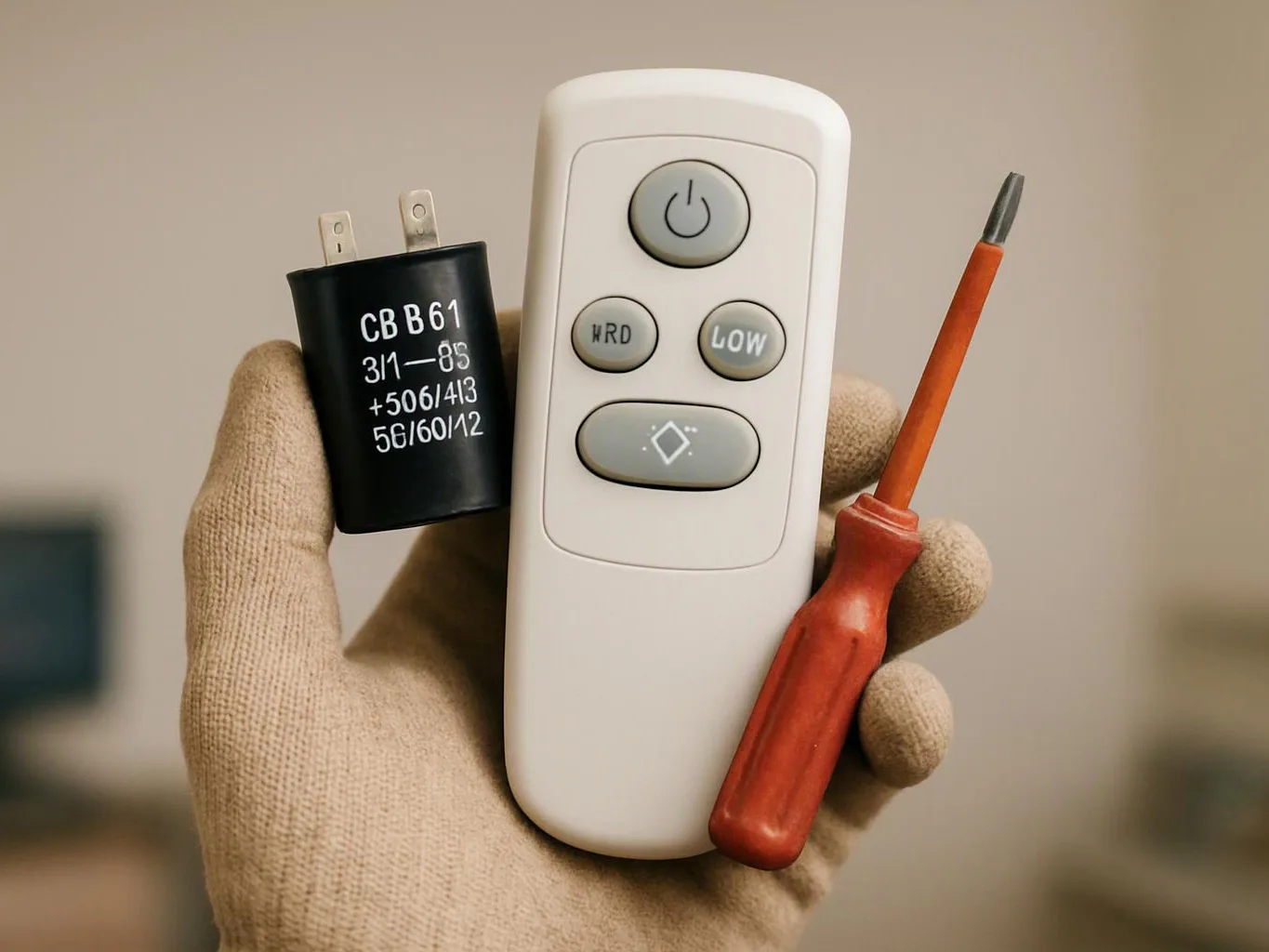
A gloved hand holds a white remote, a black capacitor, and a red screwdriver against a blurred indoor background

Service Overview

Ceiling fan repair is an electrical service that diagnoses and fixes noise, loose parts, worn bearings, motor faults, and wiring issues.

  • Fan repair focuses on the fixture and its circuit, while a lighting repair focuses on the light fixture and controls.
  • San Bernardino Electrician provides this service for homes and businesses in Muscoy.

What Ceiling Fan Repair Changes for Your Property

A focused diagnosis helps separate a loose mechanical part from an electrical fault.

Repairing a damaged connection can reduce the risk linked to buzzing or heat at the fixture.

Testing each speed gives you a clearer answer about the fan's working condition.

A written repair scope helps you decide between fixing the fan and replacing it.

Homeowners and businesses get clear explanations before work begins.

What Noisy Ceiling Fan Repair Includes

San Bernardino Electrician provides comprehensive Ceiling Fan Repair in Muscoy. Here's what you get:

  • We inspect the blades, blade brackets, fasteners, and fan housing.
  • We check bearings and the motor for wear or unusual noise.
  • We trace electrical buzzing through the switch, wiring, and fan connections.
  • We isolate power before opening the fixture or handling wiring.
  • We test fan speeds and controls after the repair.
  • We explain the repair scope before work begins.
Process

How We Complete Ceiling Fan Repair

1

Describe the fan noise

We note when the sound starts, which speed creates it, and whether the fan has a scrape, rattle, hum, or buzz.

2

Isolate power safely

We shut off the relevant power before opening the canopy, switch, or wiring enclosure.

3

Inspect the moving parts

We check the blades, brackets, screws, housing, bearings, and motor for wear or looseness.

4

Trace the electrical fault

We inspect the switch and fan connections when buzzing, heat, or a wiring concern is present.

5

Test the repaired fan

We run the fan through its controls and explain the result and any remaining work.

The scope this service is meant to handle

A typical home or business request involves a fan that grows louder at one speed. We isolate power, check blade drag and loose housing, inspect the bearings and motor, then test the switch and wiring. If the noise comes from a separate circuit fault, we explain that the job needs electrical troubleshooting beyond the fan.

What You Get From Our Ceiling Fan Repair

A cause-based fan diagnosis

The first inspection follows the sound to its source, such as a bearing, housing, motor, or wire. Our licensed and insured local electricians explain what they find before work starts.

Electrical checks with mechanical checks

A fan can make noise from a loose part or from its circuit. We check both sides so the repair scope matches the actual fault.

A clear repair boundary

Fan repair is the right service for fixture noise and related wiring faults. A panel upgrade, rewiring project, or separate lighting fault needs a broader electrical service.

Fan Noise Types and First Checks

The sound helps guide the first inspection, but testing confirms the repair scope.

Noise typeFirst checkPossible repair focus
ScrapeBlade clearance and bracketsBlade drag or loose hardware
RattleHousing and fastenersLoose mounting parts
HumMotor and bearingsWorn moving parts or motor fault
Electrical buzzSwitch and wire connectionsElectrical connection or circuit issue

The San Bernardino Electrician Standard

  • Urgent Electrical Assistance
  • Problem Diagnosis
  • Electrical Safety
  • Clear Communication

Questions About Noisy Ceiling Fan Repair

What causes a ceiling fan to make noise?

Blade drag can cause ceiling fan noise by adding resistance as the blades turn. San Bernardino Electrician checks the blades, brackets, bearings, housing, motor, switch, and wiring to find the source. A scrape or rattle points toward a mechanical issue, while a buzz can point toward an electrical connection. We isolate power before inspecting internal parts.

What does the crew look at first during fan repair?

The first check covers the noise pattern, fan controls, blade movement, housing, and visible fasteners. We then isolate power before opening the fixture or checking wiring. A sound that changes with speed can guide the inspection, but the motor and mounting parts still need direct testing. We explain the findings before setting the repair scope.

What should be checked before fan repair is scheduled?

The fan's sound, switch condition, access point, and recent electrical work should be checked before scheduling. Note whether the noise is a hum, scrape, rattle, or buzz, and stop using the fan if the switch feels warm. Photos can help describe the fixture, but they don't replace an electrical inspection.

Which fan noise means the electrical circuit needs attention?

Electrical buzzing, a burning smell, or heat at the switch means the circuit needs attention. Turn the fan off and keep the switch off until we inspect it. Our team checks the switch, wire connections, fan canopy, and related circuit. A loose blade alone does not explain heat or an electrical smell.

When is a ceiling fan repair the wrong service?

Ceiling fan repair is the wrong service when the main fault involves a panel, major rewiring, or a separate circuit failure. We can assess the fan and identify when a broader electrical service is needed. A panel upgrade or circuit installation requires a different scope, load review, and possible permit work.

How does access change the repair assessment?

Ceiling height, fixture location, and safe access change how the fan can be inspected. We need a safe working position before handling the housing or wiring. A fan over stairs, a business aisle, or occupied work space may need access planning. Share the fan's location when requesting an assessment.
Contact

Request a Ceiling Fan Repair Estimate in Muscoy

Ask San Bernardino Electrician for a ceiling fan repair estimate, and urgent requests get priority scheduling.

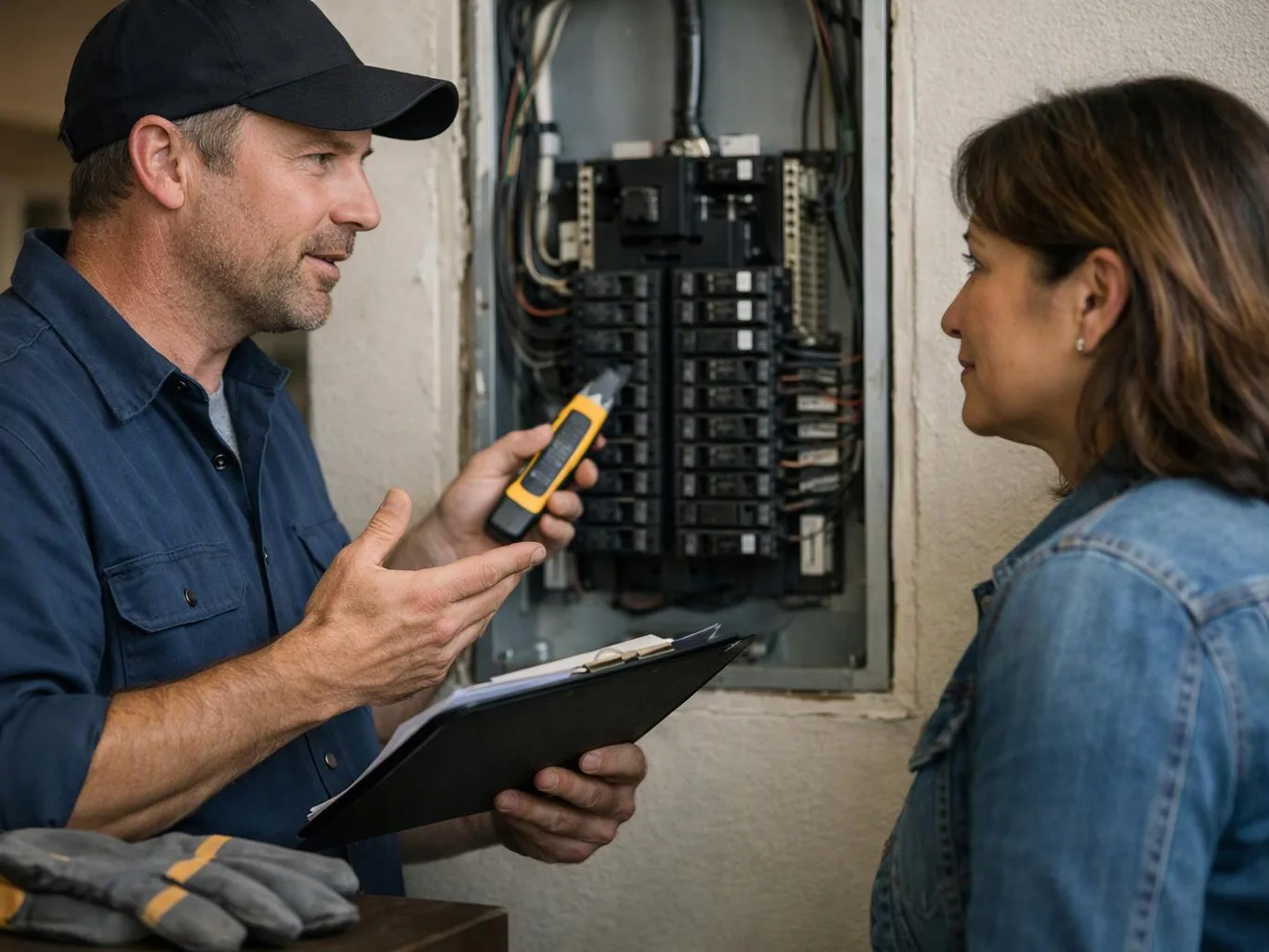
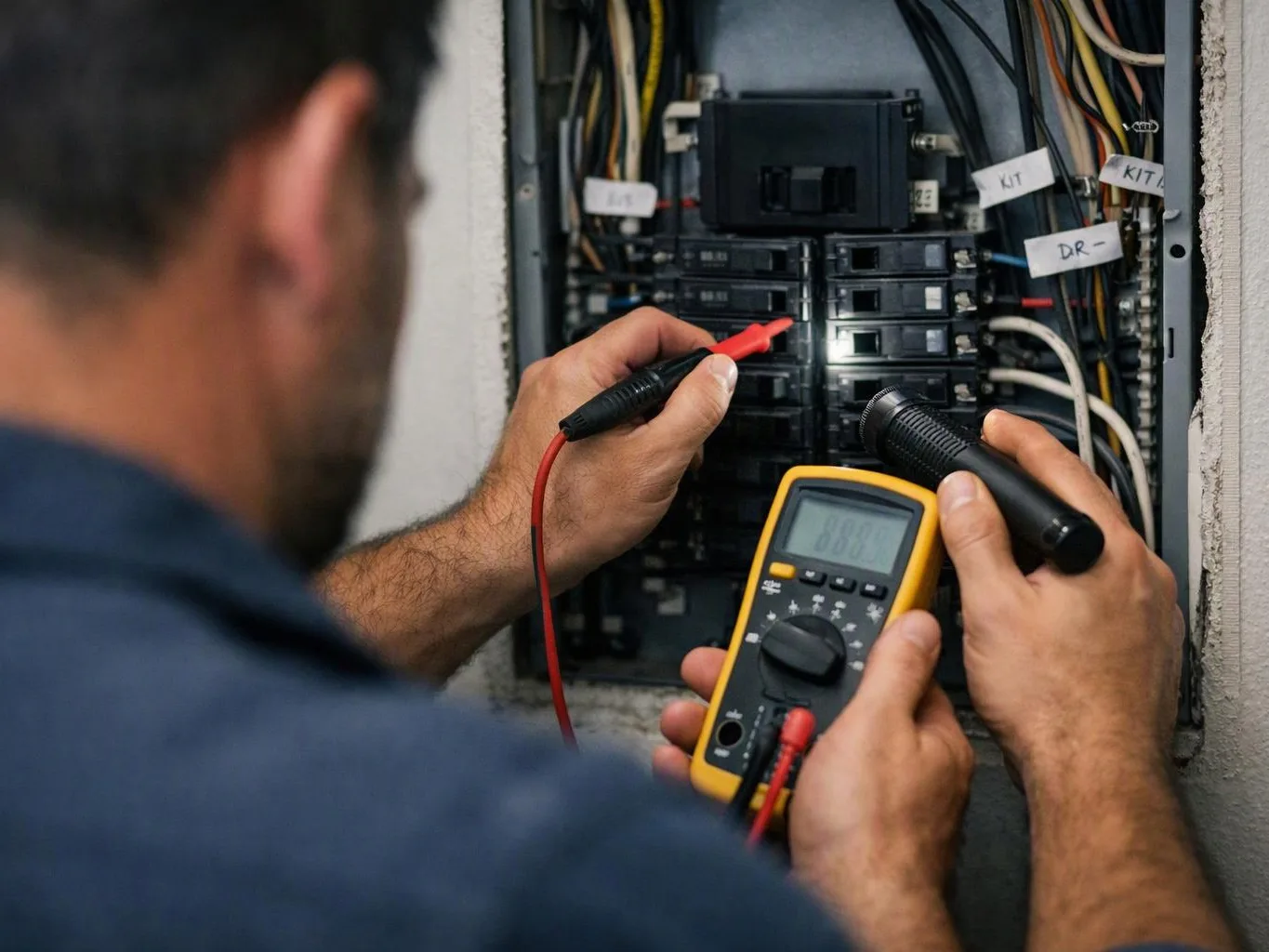
A technician tests a breaker panel with a multimeter and flashlight, with wires and labels visible inside the cabinet
(909) 271-0200