
Skip to content

Ceiling Fan Repair in Woodcrest, California

Blade drag causes noisy ceiling fans in Woodcrest and can strain the motor. We inspect the fan, find the source, and explain the repair.

Licensed & InsuredFree EstimatesWarranty AvailableUpfront, Transparent Pricing

Quick Summary: ceiling fan repairs in Woodcrest, California

Ceiling Fan Repair in Woodcrest is provided by San Bernardino Electrician for homes and businesses across San Bernardino and nearby Inland Empire communities. The service covers noisy fans, blade drag, loose housing, worn bearings, motor hum, and electrical buzzing.

  • What we do: San Bernardino Electrician repairs ceiling fans in Woodcrest, California by checking blades, bearings, housing, motors, and wiring.
  • What is included: noise diagnosis, blade adjustment, housing checks, bearing assessment, motor testing, and electrical fault checks.
  • What you get: The ceiling fan runs safely with the source of its noise repaired or clearly identified.

What causes a ceiling fan to make noise in Woodcrest, California?

Blade drag, worn bearings, loose housing, motor hum, and electrical buzzing can make a ceiling fan noisy. We inspect each source and isolate power before checking wiring or tightening parts.
Ceiling fan repair for noisy fixtures in Woodcrest

Noisy ceiling fans need a fault check before anyone replaces parts. Blade drag can come from contact, poor alignment, or a loose fitting, while worn bearings often create a rough or grinding sound.

We focus on the sound and the part producing it. A loose housing calls for a secure mounting check, but electrical buzzing calls for isolation and wiring tests.

This page fits buyers who already have a ceiling fan and need repair. If the property needs a new fan, ceiling fan installation is the better service choice.

  • Identify whether the sound is rubbing, humming, rattling, or buzzing.
  • Check blade clearance and blade mounting points.
  • Inspect the housing and support connection.
  • Assess bearings and motor operation.
  • Test wiring after power is isolated.
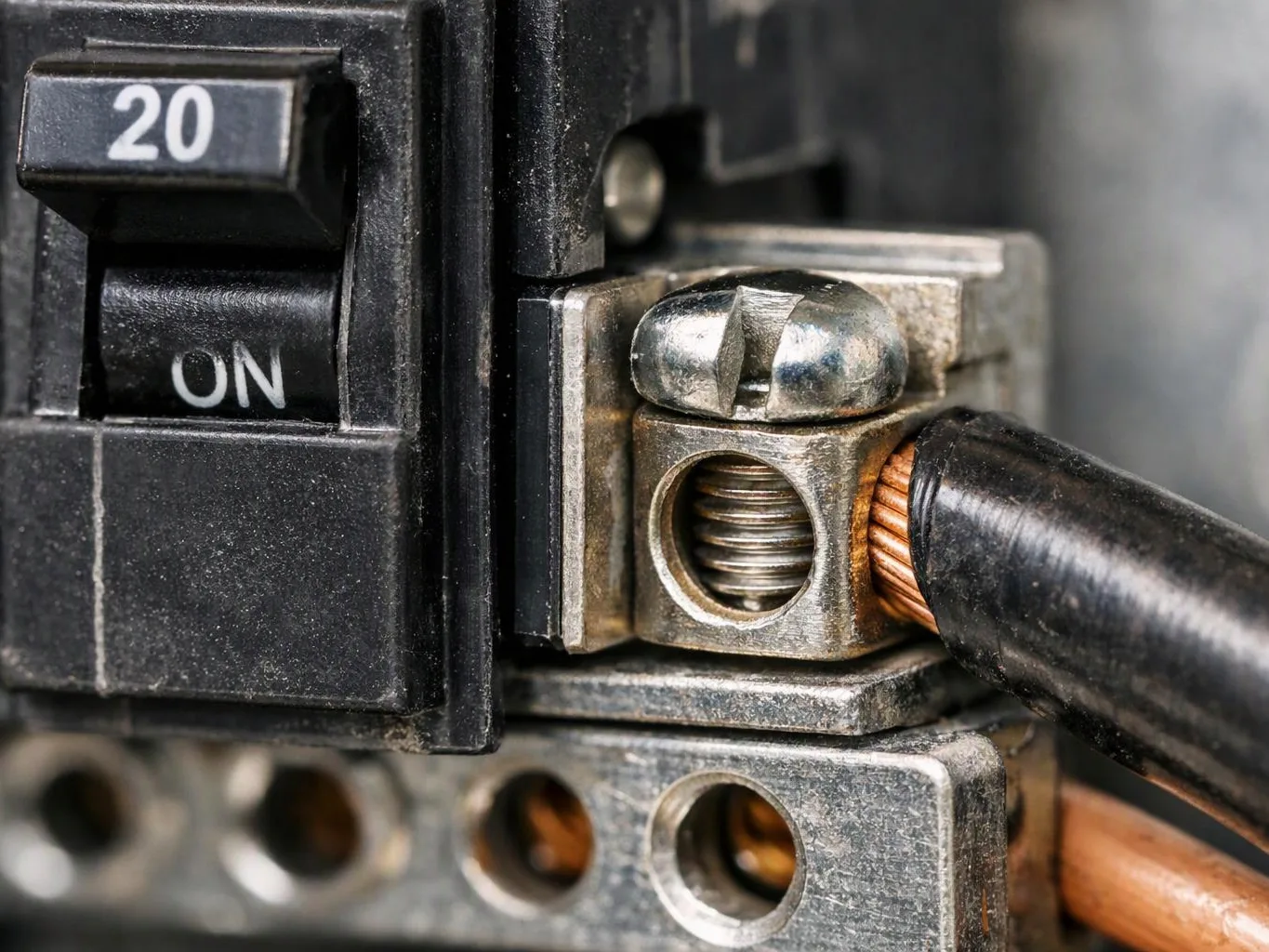
Close-up of a circuit breaker with a black cable clamped into a metal terminal block

Service Overview

Ceiling fan repair is a service that finds and corrects noise, movement, loose parts, worn bearings, motor faults, or wiring concerns.

  • Fan repair addresses the fixture and its electrical parts, while a new installation adds a fan where one does not exist.
  • San Bernardino Electrician provides ceiling fan repair for Woodcrest homes and businesses.
Process

How we repair a noisy ceiling fan

1

Listen to the fan sound

We identify whether the noise sounds like rubbing, rattling, grinding, humming, or buzzing.

2

Inspect blades and housing

We check blade clearance, fasteners, housing movement, and the support connection.

3

Assess bearings and motor

We examine the moving parts and motor when the fan produces rough or steady mechanical noise.

4

Isolate and test wiring

We turn off the circuit before checking accessible wiring, terminals, and switch connections.

5

Explain the repair scope

We describe the fault and explain whether repair or replacement is the safer fit.

How we approach noisy ceiling fan repairs

Noise source before repair

The sound guides the first check, but we still inspect related parts before setting the repair scope.

Safe electrical checks

We isolate power before examining wiring, terminals, or motor connections.

Repair or replacement decision

A repair fits a faulty part or connection. A replacement is the better job when the fan itself cannot be safely restored.

When this service is the right fit

A Woodcrest property with a noisy fan may need a focused check at the fixture, support, and circuit. We identify the sound, isolate power, inspect the fan, and explain whether repair or replacement fits the condition.

What noisy ceiling fan repair includes

San Bernardino Electrician provides comprehensive Ceiling Fan Repair in Woodcrest. Here's what you get:

  • We inspect the blades for drag, contact, and loose fasteners.
  • We check the fan housing and mounting connection for movement.
  • We assess worn bearings when the fan makes a rough or grinding sound.
  • We test the motor when the fan produces a steady hum.
  • We isolate the circuit and inspect wiring when buzzing suggests an electrical fault.

What a repaired ceiling fan changes

A focused diagnosis helps separate a loose housing from a motor or bearing problem.

Repair can address the source of noise without treating every sound as the same fault.

Electrical testing helps identify buzzing that should not be ignored.

Clear explanations help you decide between repair and replacement.

Common ceiling fan noise sources

These sound patterns point toward different checks, so the repair should follow the actual source.

Noise sourceWhat we checkLikely repair focus
Blade dragBlade clearance and contact pointsBlade position or mounting
Worn bearingsRough movement and motor noiseBearing or motor condition
Loose housingHousing and support connectionFasteners and secure mounting
Electrical buzzingSwitch, canopy, and wiringConnection and circuit safety

The San Bernardino Electrician Standard

  • Urgent Electrical Assistance
  • Problem Diagnosis
  • Electrical Safety
  • Clear Communication

Questions about noisy ceiling fans

What causes a ceiling fan to make noise?

Blade drag, worn bearings, loose housing, motor hum, and electrical buzzing cause most ceiling fan noise. San Bernardino Electrician listens to the sound and checks the related parts. We isolate power before inspecting wiring. A steady hum points toward the motor, while rattling often starts with the housing or blade mounts.

How is a fan repair matched to the property before work starts?

The fan location, mounting access, switch setup, and circuit connection guide the repair approach. We inspect the fixture and its support before choosing a repair method. High or hard-to-reach fixtures need an access plan. The fan's condition also decides whether repair makes sense.

What should be ready before ceiling fan repair starts?

Clear access below the fan helps us inspect the fixture and work safely. Move fragile items from the area and note when the noise occurs. The fan controls, circuit location, and any recent changes can help diagnosis. Leave electrical testing and fixture opening to our team.

Which fan parts can create a rattling sound?

Blade mounts, fasteners, the housing, and support connection can create rattling. We check each point for movement and contact. A loose housing needs a secure mounting check, while blade drag needs a clearance check. The repair scope follows the part that produces the sound.

When does fan noise become an electrical concern?

Buzzing from the fan, switch, or canopy makes the issue an electrical concern. Turn the fan off and avoid touching exposed wiring. We isolate the circuit and inspect accessible connections. A motor hum may be mechanical, but buzzing needs a wiring and connection check.

Why should I ask about the repair scope first?

The repair scope shows whether the problem involves a part, mounting point, motor, bearing, or circuit connection. Ask what caused the noise and what will be tested. We explain the finding before work begins. That discussion helps you compare repair with replacement when the fan is badly worn.
Contact

Request a ceiling fan repair estimate in Woodcrest

Ask San Bernardino Electrician for a free estimate on noisy ceiling fan repair, and urgent requests get priority scheduling.

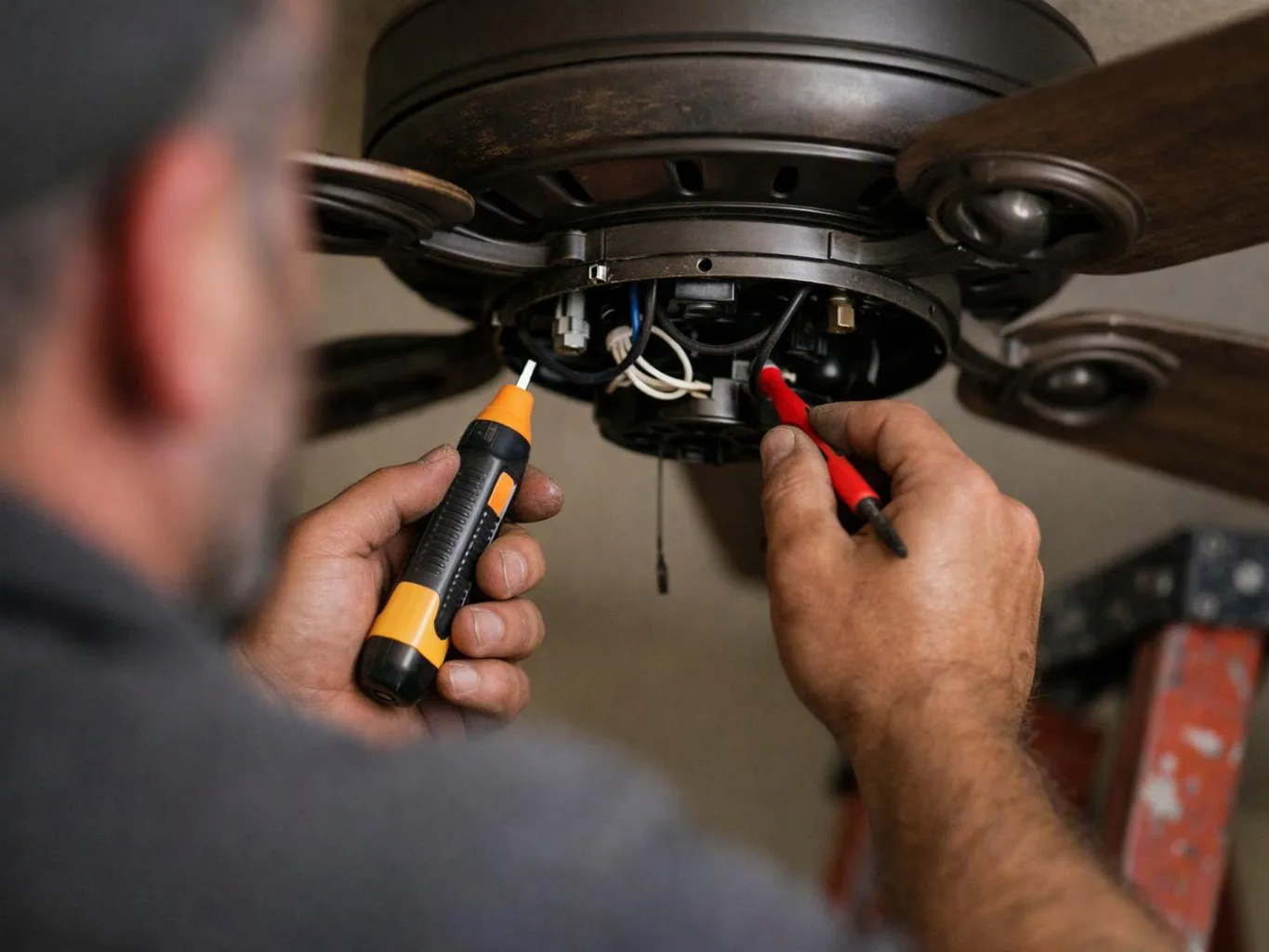
A person tests exposed wires inside a ceiling fan with two handheld tools
(909) 271-0200