What generator problems require repair?
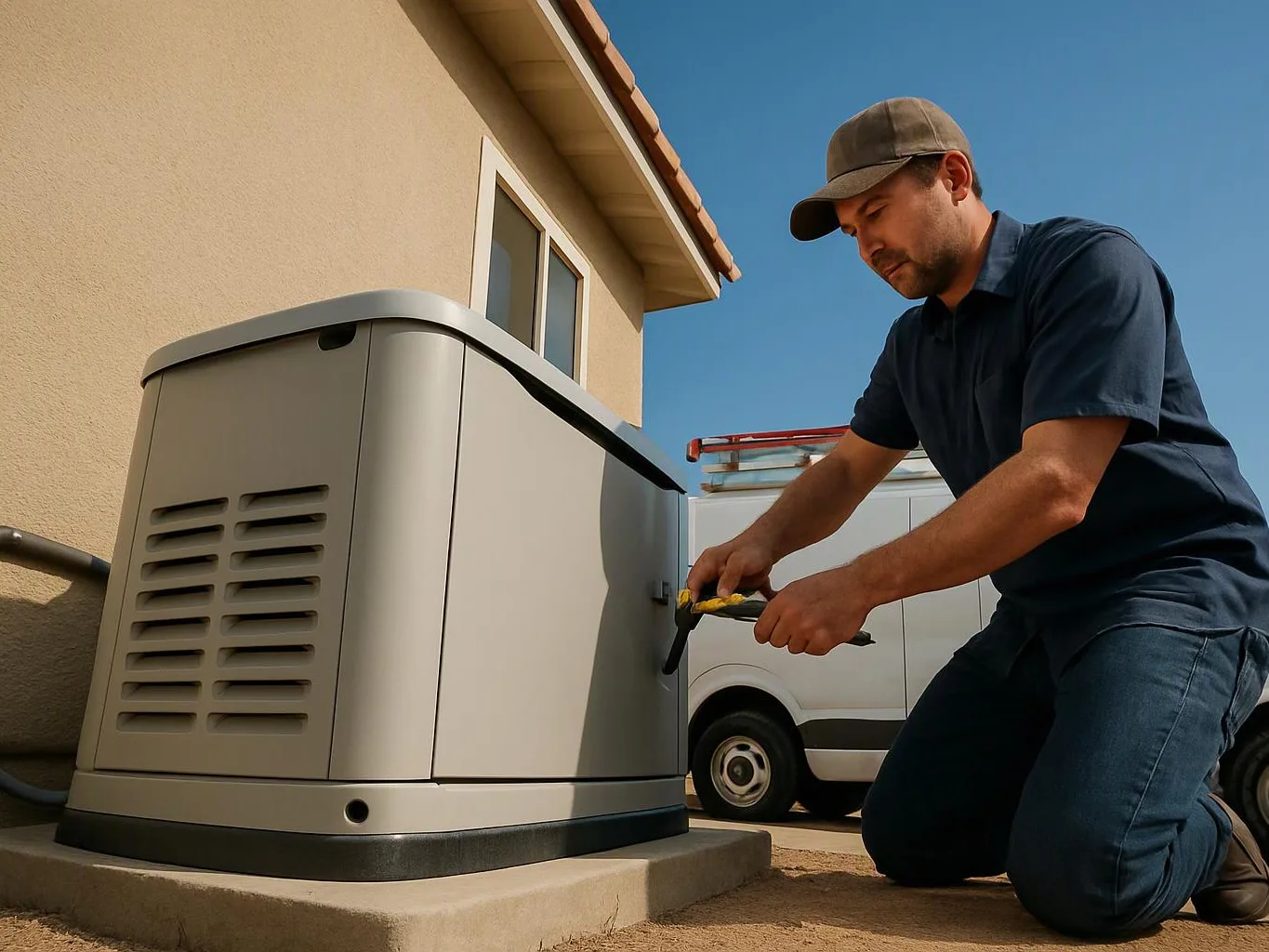
Starting failure, low voltage, fuel blockage, battery failure, and overheating require repair assessment. San Bernardino Electrician checks the symptom, tests related controls and connections, then explains the repair scope. Repeated start attempts can worsen a fault or drain the battery. Turn the unit off if you smell fuel, see sparks, or notice unsafe wiring.
How is generator repair matched to the property before work starts?
Property use, connected circuits, generator type, access, and wiring determine the repair approach. We ask what the generator powers and inspect its connections before setting the work scope. A home backup unit and a commercial backup system may need different tests. The estimate reflects the equipment and electrical work involved.
Which condition on the property changes the time for generator repair?
Limited access, damaged wiring, fuel restrictions, and connected load can change the time needed for repair. We inspect the generator and its access points before explaining the work. Equipment should remain off when wiring is damaged or the unit overheats. Clear access helps us test the battery, controls, fuel path, and output.
What should I ask before agreeing to generator repair?
Ask which fault was found, which parts need attention, and how the repair will be tested. We explain the diagnosis, repair scope, and estimate before planned work begins. You should also ask whether the issue affects the generator only or the building wiring. That distinction helps prevent an incomplete repair decision.
Why does a generator run but provide low voltage?
Low voltage can result from a control fault, wiring problem, connection issue, or generator output failure. We test voltage and inspect the related wiring before choosing the repair. Connected equipment should stay off until the output is checked. Running sensitive equipment on unstable power can create a separate electrical concern.
Can a generator repair include battery and fuel checks?
Yes, generator repair can include battery, terminal, fuel path, control, and output checks. Our team starts with the symptom and tests the systems tied to it. Battery work alone won't correct a blocked fuel path, and fuel service won't fix low voltage. The assessment connects the repair to the actual fault.
What information should I provide when requesting an assessment?
The generator model, recent symptom, starting behavior, warning message, and connected equipment help us plan the assessment. Photos of the generator and damaged wiring can also clarify access and safety concerns. Don't open fuel or electrical components yourself. Tell us if the unit cranks, starts briefly, runs hot, or produces no output.