Which features should I consider for smoke detector installation?
Hush controls, photoelectric sensors, test buttons, sealed batteries, and carbon monoxide alarms deserve review before installation. We match those features to the rooms, access, and customer goals. San Bernardino Electrician explains the choices before work begins, then tests each installed alarm. Customers should ask which features address nuisance alarms and which address a separate carbon monoxide risk.
How is smoke detector installation matched to my property?
Property layout, mounting surfaces, power access, and existing alarms guide the installation plan. We review each requested room and identify visible wiring or access limits. Homes and businesses may need different feature choices, so we set the scope after that review. Customers can help by listing alarm problems and rooms that need coverage.
What should be ready before smoke detector installation starts?
Room access and information about existing alarms should be ready before the visit. Customers should clear the work area, identify alarms that sound or fail tests, and share any known wiring concern. We then check the mounting surface and power source. Property managers should coordinate entry for every room included in the estimate.
What should I ask before agreeing to smoke detector installation?
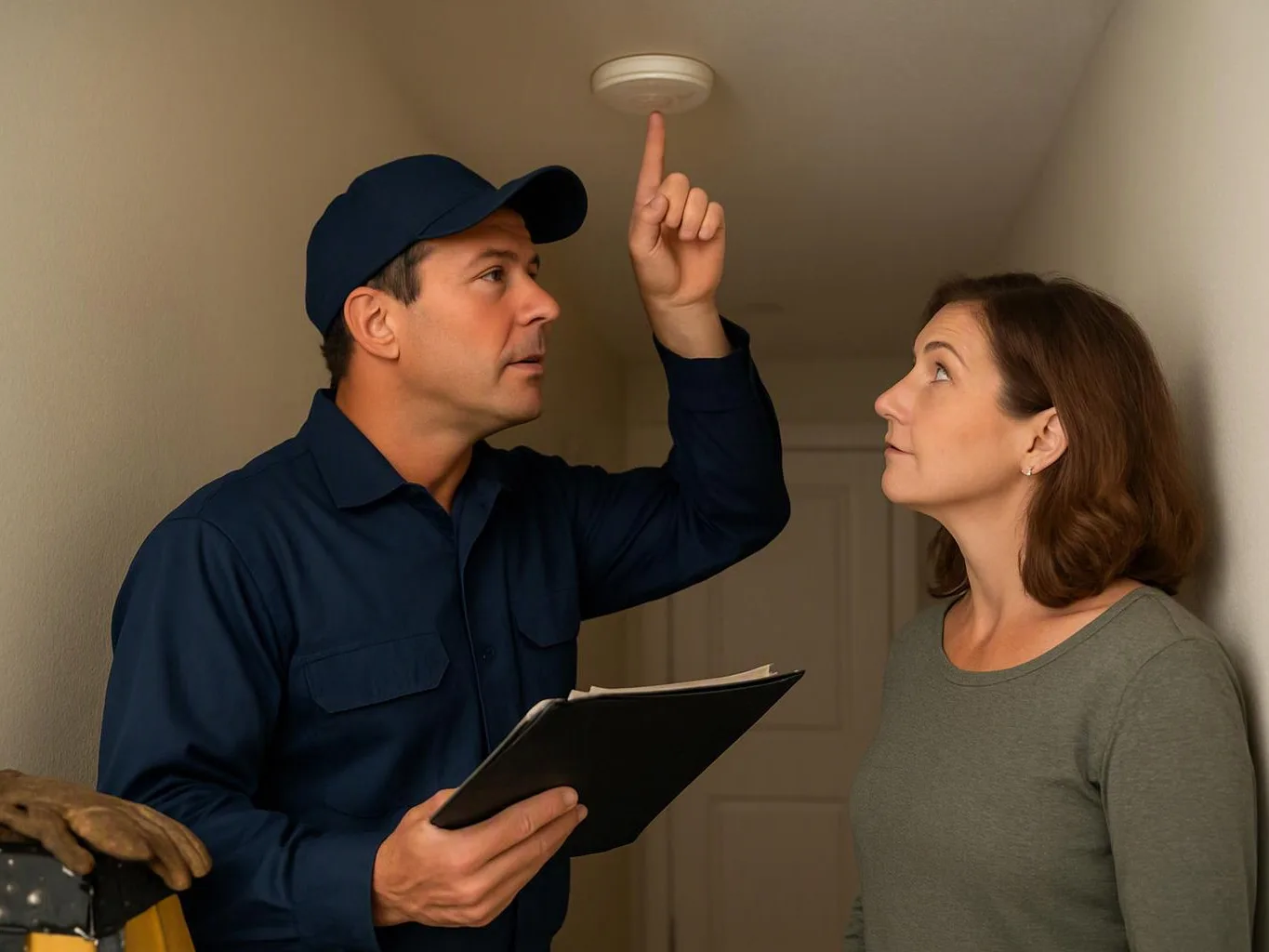
Ask which detector features fit the property, what the work includes, and how each alarm will be tested. We explain the selected sensor, battery design, test button, and any carbon monoxide alarm before approval. Customers should also ask whether a separate electrical fault needs repair, because detector installation does not repair a damaged panel or unsafe circuit.
When should a smoke detector be replaced instead of tested?
A detector should be replaced when it fails its test, gives repeated fault warnings, or has visible damage. We inspect the unit and its connection before recommending replacement. Repeated nuisance alarms also deserve diagnosis, because the issue may involve the sensor, dust, steam, placement, or a nearby electrical fault.
Why add carbon monoxide alarms during this work?
Carbon monoxide alarms detect a different hazard from smoke alarms. We discuss them when the customer wants broader alarm coverage for the property. The final choice depends on the rooms, existing devices, and requested scope. Customers should not treat a smoke detector as a substitute for a carbon monoxide alarm.
What changes the quote for this installation?
The number of alarm points, access, mounting surfaces, power connections, and selected features change the quote. We review those details before giving an estimate. Related wiring repairs or troubleshooting can add separate scope. Free estimates are available for customers who want the work reviewed before approval.