What is a Ballast?
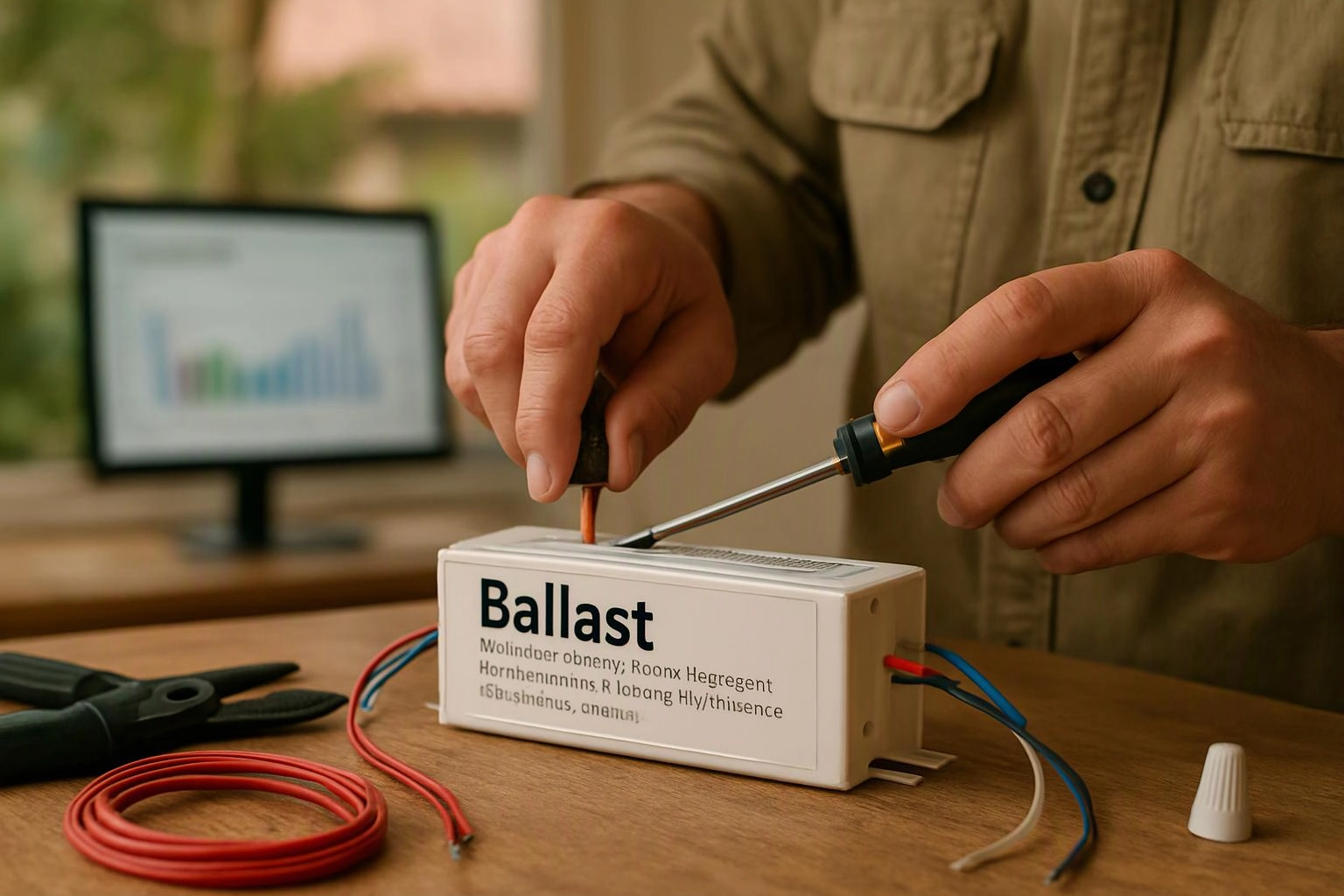
Ballast is an electrical device that limits current and controls voltage in certain light fixtures. Traditional fluorescent and high-intensity discharge lamps need a ballast to start and operate safely. Electronic ballasts may improve efficiency and reduce flicker, while older magnetic ballasts can hum, overheat, or contain hazardous materials.
Quick Facts About Ballast
Category
Lighting control device
Used for
Fluorescent and HID lamps
Common confusion
A ballast is not the same as an LED driver
Main risk
Overheating, incorrect wiring, or incompatible lamps
Also called
Lamp ballast, Fluorescent ballast
Often discussed with
Lighting Repair, Lighting Installation
Key Takeaways About Ballast
- A ballast controls current because many fluorescent and HID lamps cannot connect straight to line voltage.
- Electronic ballasts usually run more quietly and use less power than older magnetic ballasts.
- A failed ballast may cause flickering, slow starts, buzzing, dim light, or repeated lamp failure.
- LED replacement tubes may need a compatible ballast, ballast bypass wiring, or a dedicated LED driver.
- Turn off power before inspection because a ballast and fixture can hold hazardous electrical energy.
Understanding Ballast

Ballastis a control component inside or beside some light fixtures. It regulates electrical current. This lets.fluorescent lamp or high-intensity discharge lamp start and keep operating. Without current control, the lamp could draw excessive current. It could fail quickly or damage the circuit.
Related glossary terms: LED Driver, LED, Light Fixture.
Older fixtures commonly use magnetic ballasts. These contain a coil and may produce an audible hum. Newer fixtures often use electronic ballasts. These switch current at a higher frequency. Electronic designs usually reduce flicker and noise. They still require a compatible lamp type, voltage, and fixture wiring.
How Ballast Works, Is Measured, or Is Used?
A ballast first helps the lamp start. It then limits current after the lamp arc forms. Fluorescent fixtures may use a starter, electrodes, and a ballast. These parts establish the arc through the tube. HID fixtures use a ballast to control the arc. Examples include metal halide and high-pressure sodium lamps.
Technicians evaluate a ballast by checking several details. These include input voltage, lamp wattage, lamp count, and wiring diagrams. They also check the compatibility rating. The ballast label may list a model number and operating voltage. It may also list the rated frequency and supported lamps. A replacement must match the fixture design. A similar-looking part may produce the wrong current or starting voltage.
Some fluorescent fixtures support LED tubes with the existing ballast. Other LED tubes require ballast bypass wiring. Integrated LED fixtures use an internal LED driver instead. The product instructions determine whether the ballast stays in the circuit. Mixing wiring methods can create shock, fire, or equipment failure hazards.
Why Ballast Matters?

A suitable ballast protects the lamp and supports steady light. A failing unit may cause flickering, slow starting, or uneven brightness. It may also cause buzzing, darkened tube ends, or frequent lamp replacement. These symptoms can also come from loose connections or poor sockets. Incorrect lamps or low supply voltage can cause them too. Replacing the ballast without testing can miss the actual fault.
Ballast condition affects energy use and maintenance decisions. An old magnetic unit may consume more power than newer electronic designs. A damaged ballast can also overheat the fixture. Some older ballasts may contain polychlorinated biphenyls, known as PCBs. These units require careful handling under applicable disposal rules. The label and manufacturing date help identify this risk.
When Ballast Matters Most?
Ballast selection becomes critical during fluorescent fixture repair or lighting upgrades. It also matters when changing the lamp type. The installer must compare.line voltage, lamp rating, and ballast factor. They must also check the starting method and fixture wiring. A ballast designed for rapid-start lamps may not work with instant-start lamps. This can happen even when both lamps have the same length.
Safety also matters during diagnosis and disposal. Power should be disconnected at the circuit breaker. It should then be verified with an approved tester. Do this before opening the fixture. A replacement should carry a recognized safety mark. It must match the manufacturer instructions and applicable National Electrical Code requirements. Ballast bypass work changes the wiring path. It should be checked carefully before power is restored.
How to Evaluate Ballast?
- Read the ballast label and confirm the input voltage matches the branch circuit.
- Compare the ballast model with the exact lamp type, wattage, count, and starting method.
- Look for swelling, leaking material, burn marks, overheated wires, humming, or repeated lamp failure.
- Verify whether an LED replacement requires a compatible ballast, ballast removal, or an LED driver.
- Check for a recognized safety certification and follow the fixture and ballast manufacturer instructions.
Related Concepts Compared
Ballast vs. LED Driver
An LED driver regulates power for LEDs, which operate differently from fluorescent and HID lamps. Some LED retrofit lamps use the existing ballast, but many require a driver or ballast bypass wiring.
Ballast vs. Transformer
A transformer changes alternating-current voltage through magnetic coupling. A ballast controls lamp current and starting behavior, although some magnetic ballasts also include transformer-like functions.
Ballast vs. Dimmer
A dimmer changes the light output by controlling power delivered to a compatible load. A ballast primarily starts the lamp and limits operating current.
Expert Note
A ballast symptom does not prove that the ballast has failed. Check lamp type, sockets, supply voltage, and connections first. A mismatched LED tube can create the same flicker or no-start condition as a damaged ballast.
Common Mistakes or Myths About Ballast
- Replacing a ballast without checking the lamp type and input voltage.
- Assuming every LED tube works with the existing fluorescent ballast.
- Leaving the old ballast in place when the LED product requires bypass wiring.
- Discarding an older ballast without checking whether it contains PCBs.
- Ignoring buzzing, heat, flicker, or repeated lamp failure.
Ballast in Practice: A Real-World Example
A two-lamp fluorescent fixture starts buzzing, and both tubes flicker after several years of use. Testing shows correct supply voltage and worn lamp ends, while heat damaged the ballast. The repair needs a compatible replacement ballast or a correctly specified LED retrofit kit.
Sources & Further Reading on Ballast
Related Services
Related Terms
LED Driver
LED Driver is an electronic power supply that converts incoming electrical power into the controlled voltage…
LED
LED is a semiconductor device that produces light when electric current passes through it. In lighting…
Light Fixture
Light Fixture is a complete lighting assembly that holds a lamp or LED, directs light, connects…
Voltage
Voltage is the electrical potential difference that pushes electric charge through a circuit. Measured in volts…
SanBernardino-Electrician.com
Have Questions About Ballast?
Contact SanBernardino-Electrician.com for practical guidance on Ballast and related 24 hour electrician work in San Bernardino.