What is LED Driver?
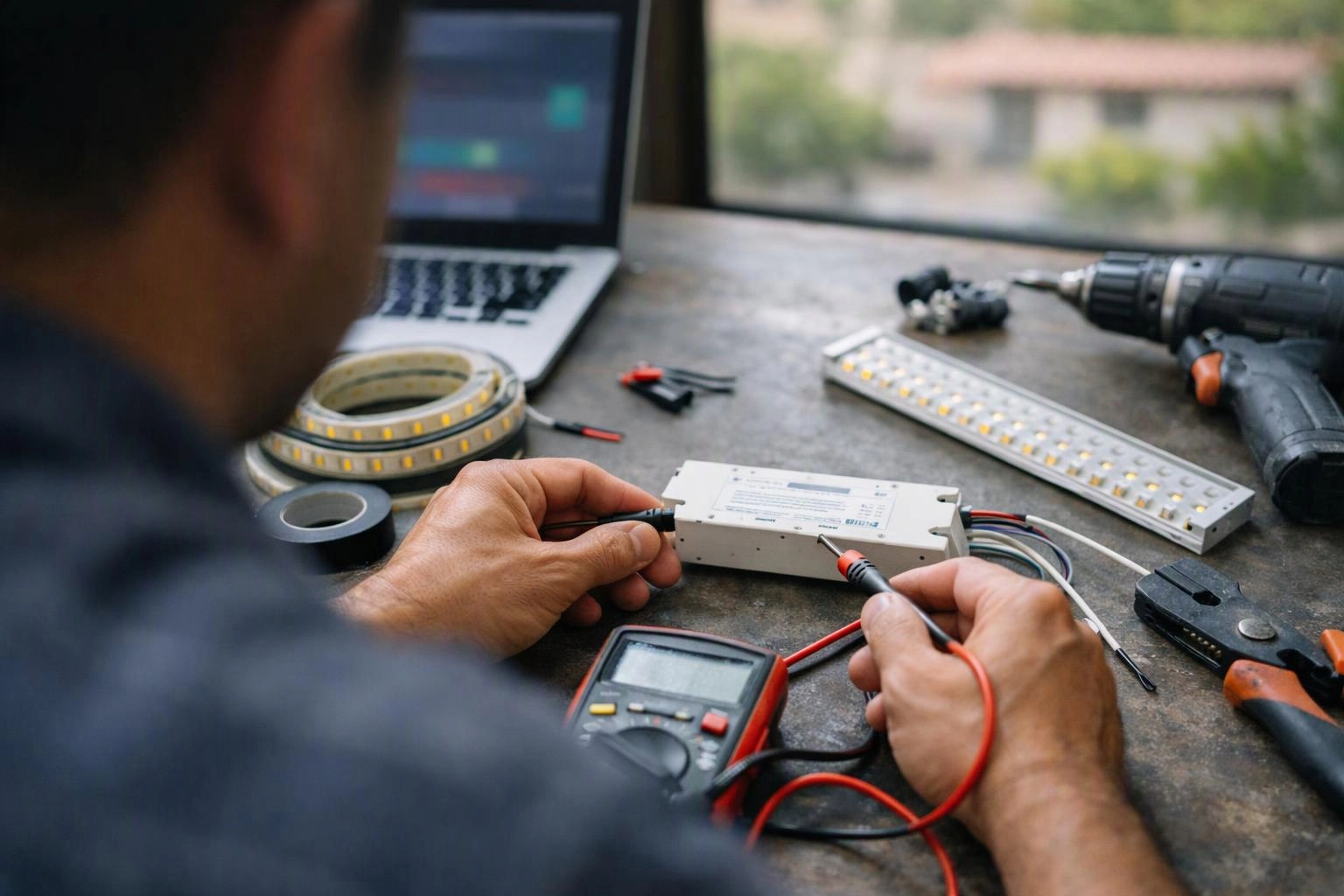
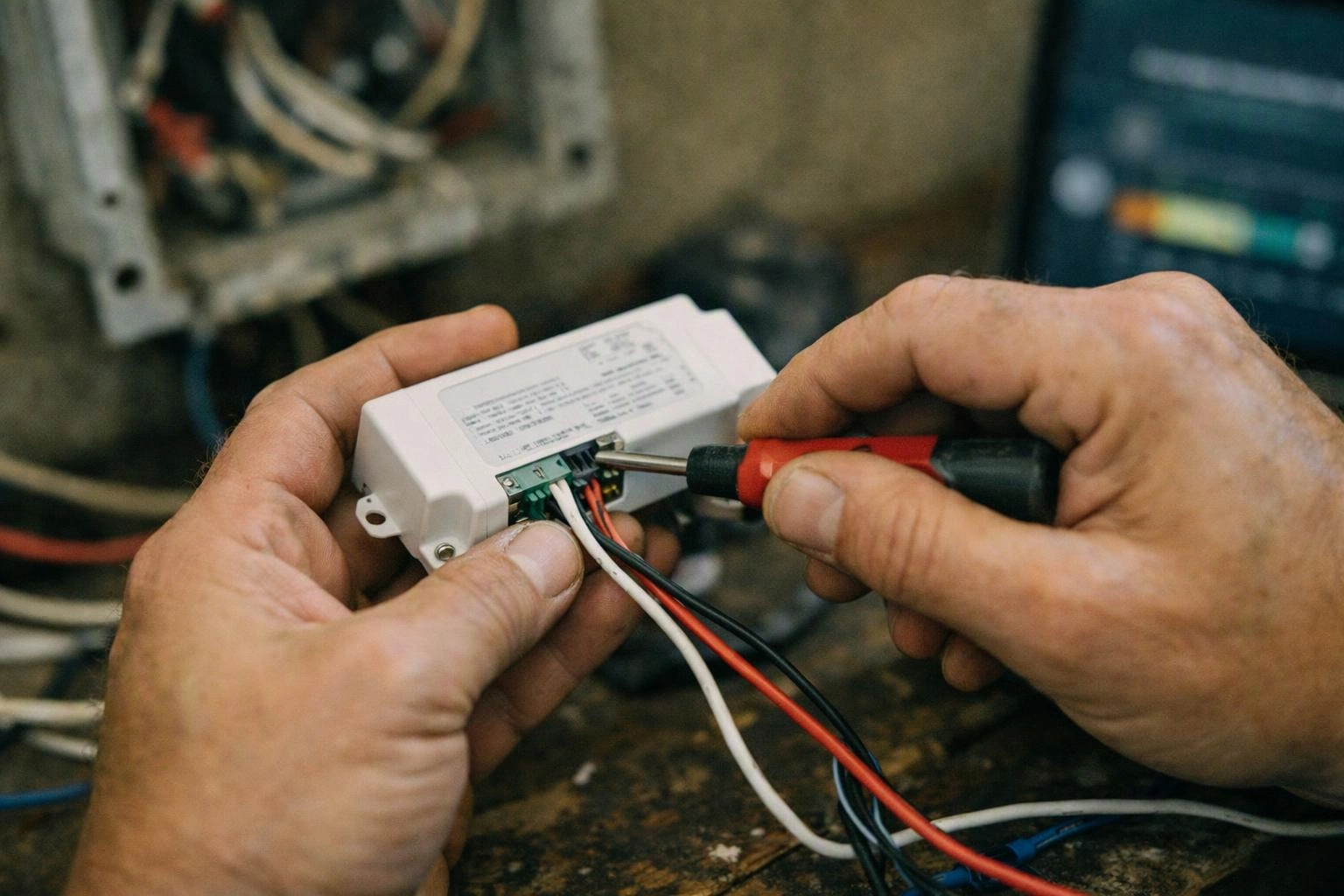
LED Driver is an electronic power supply that converts incoming electrical power into the controlled voltage or current an LED needs to operate safely. The driver regulates output, limits current, and may support dimming, switching, or communication controls. Drivers appear inside many LED lamps and fixtures, or in separate enclosures.
Quick Facts About LED Driver
Category
LED power supply and control component
Used for
Regulating power for LED lamps, strips, and fixtures
Measured by
Input voltage, output current, output voltage, and wattage
Common confusion
An LED driver is not always the same as a magnetic transformer
Also called
LED power supply, LED control gear
Often discussed with
Lighting Installation, Lighting Repair
Key Takeaways About LED Driver
- An LED driver changes available electrical power into the controlled power an LED requires.
- Constant-current drivers serve LEDs that need a specified current across changing voltage.
- Constant-voltage drivers supply systems designed for a fixed voltage, often 12 or 24 volts.
- A mismatched driver can cause flicker, overheating, poor dimming, or early LED failure.
- Driver labels should match the LED load, input power, output range, and dimming method.
Understanding LED Driver

LED Driver is the power-control device for an LED. It lets an LED run from an electrical supply. LEDs need controlled current. A building circuit may provide alternating current at higher voltage. The LED may not accept this voltage. The driver changes and controls that power. It then sends suitable power to the light-emitting parts.
Related glossary terms: LED, Light Fixture, Ballast.
Some drivers are built into a lamp or fixture. Others sit in a separate box above a ceiling, inside a cabinet, or near an LED strip. A driver may also include thermal protection, short-circuit protection, surge protection, and dimming controls. Its label lists input voltage, output voltage, output current, wattage, frequency, and approved control methods.
How LED Driver Works, Is Measured, or Is Used?
An LED driver first receives power from a branch circuit or another approved source. Its inner circuit changes that power. It controls the output so the LED gets the right electrical conditions. Constant-current drivers control amperes, which suits many individual LED modules. Constant-voltage drivers hold a fixed output. This output commonly measures 12 or 24 volts. It suits LED strips and fixtures made for that voltage.
To select a driver, compare the LED load with the driver's output rating. For a constant-voltage system, the load voltage must match the driver voltage. The driver's wattage should exceed the connected load. It shouldn't be greatly oversized. For a constant-current system, the needed current must fit the driver's rated range. The LED's forward-voltage range must fit the driver's output range. The power relationship is expressed as watts equals volts multiplied by amperes.
- Check the input rating against the supply, such as 120 volts AC or 277 volts AC.
- Match the output type, either constant current or constant voltage.
- Confirm the dimmer, control signal, and driver use compatible methods.
- Allow the driver to shed heat within its listed temperature range.
Why LED Driver Matters?

Driver performance affects light quality, service life, and electrical safety. A suitable driver keeps current stable. This helps prevent visible flicker and uneven brightness. A poor match can cause buzzing, color changes, repeated shutdowns, or LED board damage. Heat also matters. High temperatures can shorten the life of the driver and fixture.
Driver compatibility matters during replacement work. An LED fixture may look correct. Its driver may have the wrong current, voltage, dimming protocol, or environmental rating. A listed replacement must fit the electrical design and installation location. The enclosure, wiring method, grounding arrangement, and clearances must follow product instructions. They must also follow applicable electrical rules.
When LED Driver Matters Most?
Driver selection matters when an existing fluorescent or halogen fixture changes to LED. The old ballast or transformer may not provide the output the new LED needs. Some retrofit lamps require ballast removal. Dimming upgrades need another check. A standard wall dimmer may not work with an electronic driver. Flicker at low dimming levels often points to a control or compatibility problem.
Inspection helps when an LED fixture flickers, goes dark after warming up, trips a breaker, or shows a burnt odor. Record the driver's model, ratings, and wiring before replacement. Then compare those details with the LED load and control equipment.weather rating and enclosure needs. A licensed electrician can also check connections, heat buildup, and the supplying branch circuit. This check helps when the fault isn't limited to the driver.
How to Evaluate LED Driver?
- Read the label and confirm input voltage matches the supplying circuit.
- Verify constant-current or constant-voltage output matches the LED load design.
- Compare output current, voltage range, and total wattage with the fixture requirements.
- Check that the driver and dimmer list the same dimming method.
- Look for recognized product markings, correct enclosure ratings, and signs of heat damage.
Related Concepts Compared
LED Driver vs. Transformer
A transformer changes AC voltage through magnetic induction. An LED driver may include a transformer, but it also regulates current and can convert AC to controlled DC output.
LED Driver vs. Ballast
A ballast controls current for fluorescent or high-intensity-discharge lamps. An LED driver performs a similar power-control role for LEDs, but the electrical design and compatibility requirements differ.
LED Driver vs. Power Supply
Power supply is a broad term for equipment that provides electrical power. An LED driver is a power supply designed around the voltage, current, and control needs of LEDs.
LED Driver vs. LED
An LED is the light-producing semiconductor device. An LED driver supplies and controls the electrical power that lets the LED operate.
Expert Note
Do not choose a driver by wattage alone. Constant-current output, LED forward-voltage range, dimming protocol, enclosure rating, and heat conditions can determine whether a replacement works reliably.
Common Mistakes or Myths About LED Driver
- Assuming every LED driver works with every LED fixture.
- Matching wattage while ignoring constant-current or constant-voltage requirements.
- Connecting a 12-volt LED strip to a 24-volt driver.
- Pairing an electronic driver with a dimmer that uses an incompatible control method.
- Installing a driver in a hot or damp location without checking its rating.
LED Driver in Practice: A Real-World Example
A recessed LED fixture flickers after a standard dimmer is installed. The fixture label shows.700 mA constant-current driver, but the replacement dimmer is not rated for that driver type. Replacing the control with a compatible dimmer can correct the problem without replacing the LED module.
Related Services
Related Terms
LED
LED is a semiconductor device that produces light when electric current passes through it. In lighting…
Light Fixture
Light Fixture is a complete lighting assembly that holds a lamp or LED, directs light, connects…
Ballast
Ballast is an electrical device that limits current and controls voltage in certain light fixtures. Traditional…
Transformer
Transformer is an electrical device that transfers energy between circuits and changes alternating-current voltage. A transformer…
SanBernardino-Electrician.com
Have Questions About LED Driver?
Contact SanBernardino-Electrician.com for practical guidance on LED Driver and related 24 hour electrician work in San Bernardino.