
What Is an Overloaded Circuit?
An overloaded circuit is a branch circuit carrying more electrical current than its wiring or protective device is designed to handle. The excess demand often comes from several appliances, tools, or fixtures operating on the same circuit. The added load can trip the circuit breaker and may cause abnormal heat at wiring connections.
Quick Facts About Overloaded Circuit
Category
Electrical circuit condition
Used for
Identifying excessive branch-circuit demand
Common confusion
Often confused with a short circuit
Also called
Circuit overload
Often discussed with
Circuit Breaker Repair
Key Takeaways About Overloaded Circuit
- Several devices may draw power from the same branch circuit.
- Repeated breaker trips can indicate excessive electrical demand.
- An overload is different from a short circuit.
How Overloaded Circuit Works
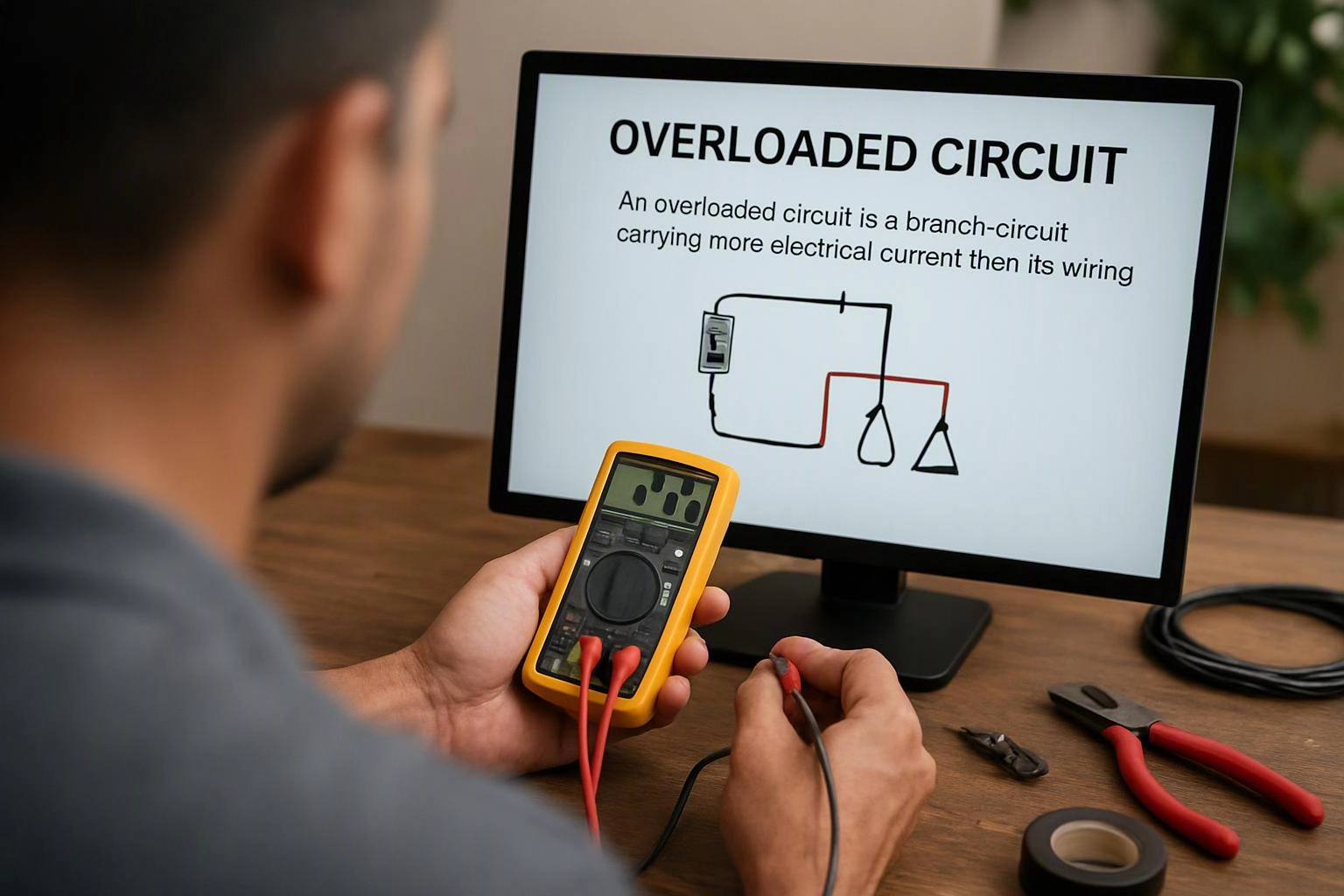
An overloaded circuit develops when connected equipment draws more current than the branch circuit can carry safely. Current rises as more electrical loads operate together. The circuit breaker senses the excess current and may open the circuit to stop power flow. A breaker that trips after several devices start at once can point to this condition.
Related glossary terms: Branch Circuit, Electrical Load, Current.
Electrical professionals assess the circuit by identifying connected loads, checking conductor size, and testing breaker operation. A large appliance may need its own branch circuit when shared demand repeatedly interrupts power. An overload differs from a short circuit, which creates an unintended low-resistance path and usually causes a faster protective response. The correction may involve reducing connected demand, repairing a connection, or changing the circuit design.
From the San Bernardino Electrician team
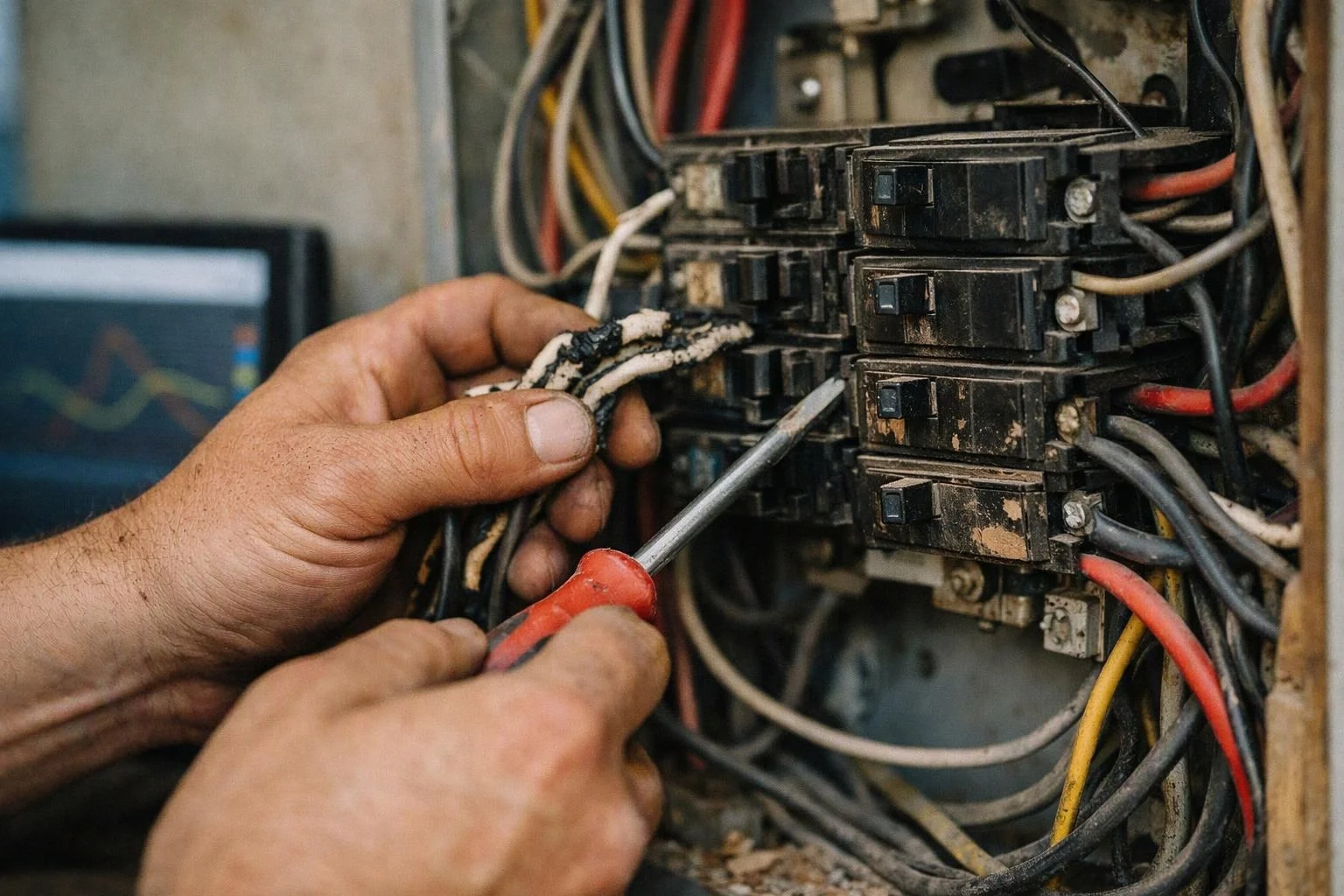
When we investigate an overloaded circuit, we identify which devices operate on the branch circuit and inspect the breaker, wiring, and connections. We also look for heat damage or loose terminations that can make normal demand unsafe. Our circuit breaker repair work addresses the protective device while we determine whether the underlying load requires correction.
Overloaded Circuit in Practice: A Real-World Example
A kitchen circuit may lose power when a portable heater and countertop appliance run together. During circuit breaker repair, the electrician checks the connected loads and wiring to determine whether the breaker is responding to excessive demand or another fault.
Related Services
Related Terms
Branch Circuit
A branch circuit is the portion of an electrical system that carries power from a panelboard…
Electrical Load
Electrical Load is the amount of electrical power a device, circuit, or building draws while operating…
Current
Current is the movement of electric charge through a conductor, such as a wire, circuit path…
Short Circuit
A Short Circuit is an unintended low-resistance path between electrical conductors that allows excessive current to…
San Bernardino Electrician
Have Questions About Overloaded Circuit?
Contact San Bernardino Electrician for practical guidance on Overloaded Circuit and related 24 hour electrician work in San Bernardino.