What is a Photocell?
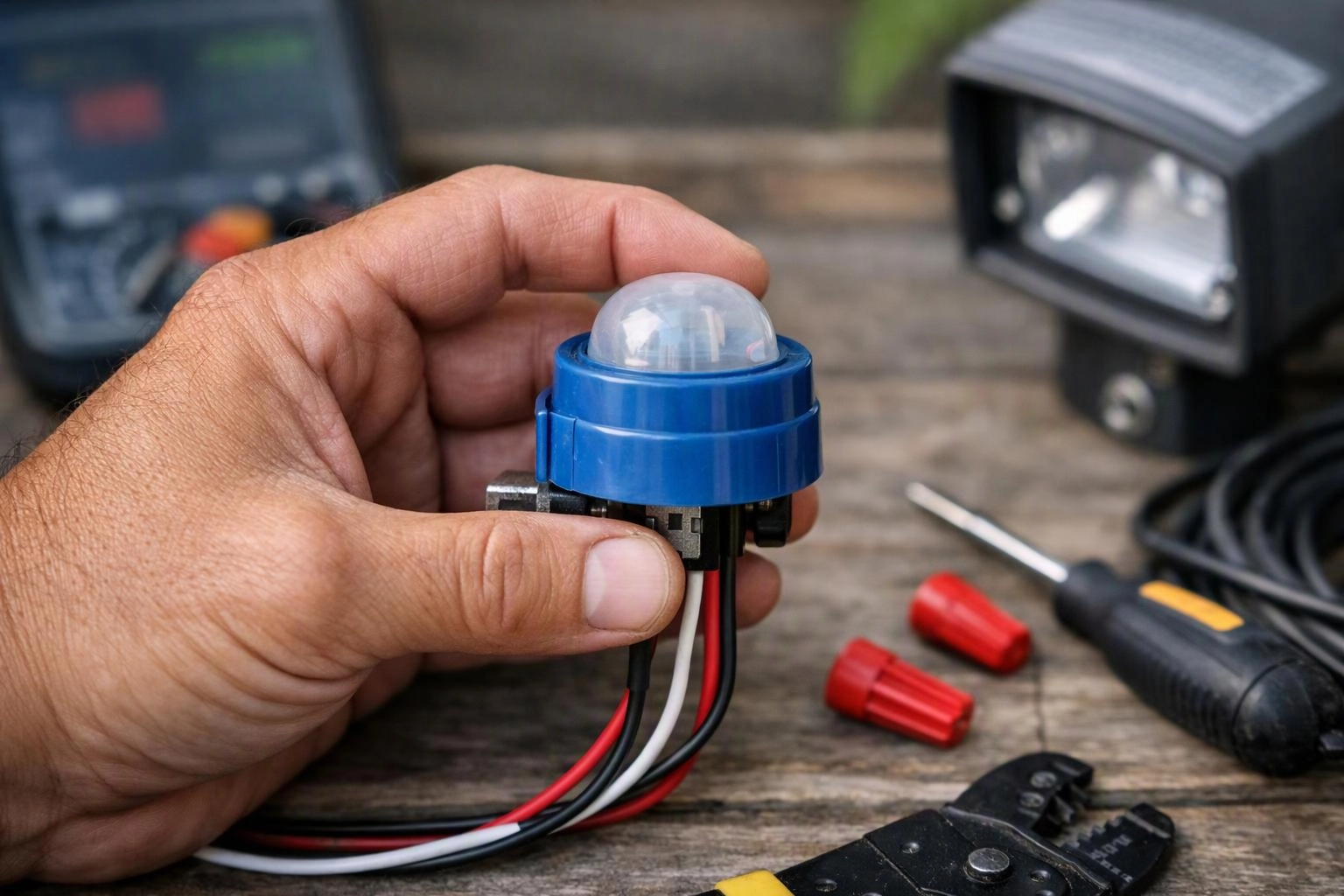
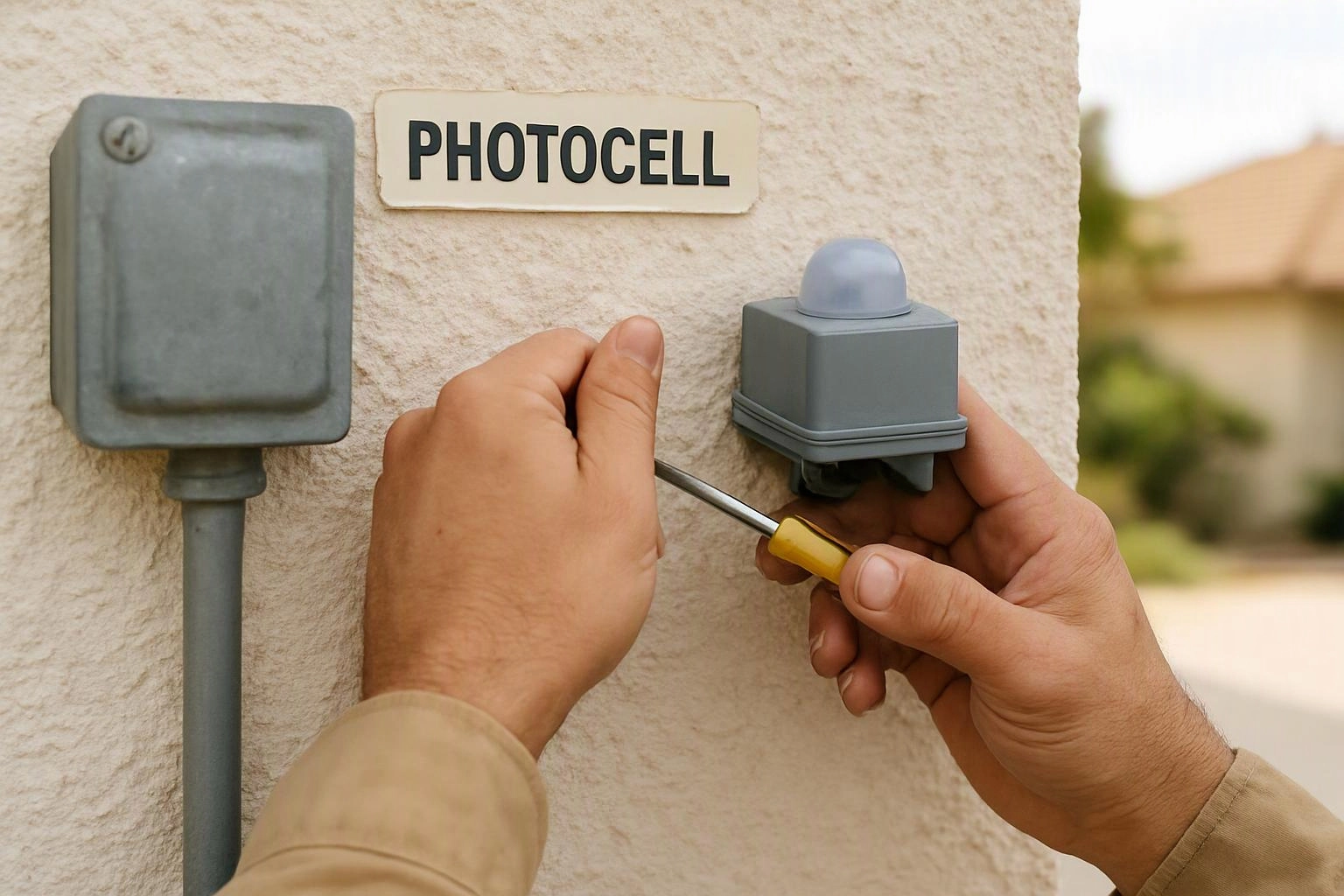
Photocell is a light-sensitive electrical control that detects surrounding brightness and switches a connected lighting circuit on or off. A photocell commonly turns outdoor lights on at dusk and off at dawn. The device uses a photoelectric sensor, control contacts, and a rated voltage and load capacity for safe operation.
Quick Facts About Photocell
Category
Light-sensitive electrical control
Used for
Automatic outdoor lighting control
Common confusion
A photocell is not the same as a programmable timer
Typical tool
Digital multimeter
Also called
Photocontrol, Dusk-to-dawn sensor
Key Takeaways About Photocell
- Photocells switch lights according to ambient brightness, usually turning them on at dusk.
- A photocell must match the circuit voltage, lighting load, and installation environment.
- Dirty lenses, shadows, and nearby light sources can cause incorrect switching.
- Photocells differ from timers because photocells respond to light instead of a fixed schedule.
- Outdoor photocells can reduce unnecessary nighttime operation and energy use.
Understanding Photocell

Photocellis a control device that changes an electrical circuit. It senses changes in light. Most outdoor lighting photocells contain.photoelectric sensor, switching contacts, and a protective housing. The housing protects these parts from weather. The sensor changes its electrical behavior as daylight rises or falls. This tells the contacts when to energize or interrupt the lighting circuit.
A typical dusk-to-dawn photocell turns a light on after the area becomes dark. It turns the light off after daylight returns. Installers commonly use photocells.wall-pack lights, parking-area fixtures, sign lighting, and scene lighting. Some devices control one fixture. Others connect to a lighting contactor that switches several fixtures from one point.
How Photocell Works, Is Measured, or Is Used?
During daylight, the sensor receives enough light to hold its daytime state. As light falls, the sensor reaches its switching threshold. It then changes the contact position. The connected fixture receives power if wired for dusk operation. At dawn, rising light reverses that action. Many devices include a short delay. This prevents rapid switching from clouds, headlights, or shadows.
Selection starts with the circuit voltage and lighting load. A photocell rated for a 120-volt, 15-amp resistive load may not suit large LED groups. LED inrush currentcan exceed normal running current. Check the device label for voltage, load type, maximum wattage, and wiring terminals.digital multimeter can help verify incoming voltage and output behavior. Testing exposed wiring requires safe electrical practices.
Placement affects accuracy. The sensor needs a clear view of the sky or outdoor brightness. The controlled fixture shouldn't shine directly onto the sensor. A nearby lamp can make the photocell sense returning daylight. This can cause repeated on-and-off cycling. Dust, paint, insects, tree growth, and shade can also alter light levels.
Why Photocell Matters?

A photocell provides automatic control without someone operating a switch each evening. The control can reduce unnecessary lighting hours and preserve lamp life. It can also keep outdoor areas lit during dark conditions. Actual energy savings depend on fixture wattage, operating schedule, and local daylight patterns. A 100-watt light running 10 fewer hours daily saves about 1 kilowatt-hour per 10 days. This estimate excludes system losses.
Reliability depends on matching the photocell to the lighting system. Older controls often switch incandescent or fluorescent loads. Modern LED fixtures may have electronic drivers with different starting traits. A mismatched rating can cause chattering, contact damage, or nuisance outages. It can also shorten the control's life. Proper wiring matters too. A photocell can't correct a loose neutral, damaged cable, failed driver, or tripped circuit breaker.
When Photocell Matters Most?
Photocells matter where lighting must follow daylight changes without daily attention. Common examples include exterior entrances, security lights, parking areas, signs, and scene lighting. They also help during seasonal changes. The switching point follows actual brightness, rather than a fixed clock setting. A timer may turn on a light while the sky remains bright.
Inspect the control when an outdoor light stays on during the day. Also inspect it when the light stays off after dark. Repeated cycling needs inspection too. First consider the sensor lens, direct fixture glare, nearby lighting, and obstructions. Next check the circuit voltage, photocell rating, connections, and fixture driver. Electrical work near energized conductors can cause shock or arc-flash injury. Testing and replacement should follow equipment instructions. They should also follow applicable National Electrical Code requirements.
How to Evaluate Photocell?
- Confirm that the photocell voltage rating matches the measured circuit voltage.
- Compare the rated LED, fluorescent, incandescent, or motor load with the connected fixture load.
- Check whether the sensor has a clear view and whether the fixture shines onto its lens.
- Observe whether switching occurs after a short delay instead of rapid cycling.
- Inspect weather seals, wiring terminals, and enclosure condition for moisture or corrosion.
Related Concepts Compared
Photocell vs. Timer
A timer switches lighting according to programmed times. A photocell responds to actual ambient light, so its switching time changes with the season and weather.
Photocell vs. Motion Sensor
A motion sensor reacts to movement in a detection area. A photocell reacts to brightness and does not require a person or vehicle to pass nearby.
Photocell vs. Photocontrol
Photocontrol is another common name for a photocell used in lighting systems. Both terms usually describe a light-sensitive switching device.
Photocell vs. Astronomical Timer
An astronomical timer estimates sunrise and sunset from location and date settings. A photocell measures light at the installation site, so obstructions and local shadows affect its response.
Expert Note
A photocell that cycles at night often has a placement or compatibility problem rather than a failed sensor. Check reflected light and LED driver inrush current before replacing the device. A contactor may be needed when one photocell controls a large lighting load.
Common Mistakes or Myths About Photocell
- Installing a photocell where the controlled light shines directly onto its sensor.
- Ignoring LED driver inrush current when checking the photocell load rating.
- Assuming a photocell will turn lights on when the circuit has a tripped breaker.
- Replacing a photocell without checking loose connections, moisture, or a failed light fixture.
- Covering the sensor during testing without allowing its built-in switching delay to finish.
Photocell in Practice: A Real-World Example
A parking-area fixture uses a 120-volt photocell mounted on the fixture housing. The photocell turns the LED light on after dusk and off after dawn. After a nearby sign is installed, reflected light reaches the sensor and causes nighttime cycling until the sensor is repositioned or shielded.
Sources & Further Reading on Photocell
SanBernardino-Electrician.com
Have Questions About Photocell?
Contact SanBernardino-Electrician.com for practical guidance on Photocell and related 24 hour electrician work in San Bernardino.