Skip to content
Glossary

What is Surge Protector?

Surge Protector is a device that limits short increases in electrical voltage and diverts excess energy away from connected equipment. Common types include plug-in power strips, receptacle-based protectors, and service-panel devices. Surge protectors help reduce damage from switching events and nearby lightning. But they can't prevent every power disturbance or replace proper grounding.

Sources reviewed: National Electrical Manufacturers Association, Surge Protective Devices, IEEE, Recommended Practice on Characterization of Surges in Low-Voltage AC Power Circuits

Quick Facts About Surge Protector

Category

Electrical protection device

Used for

Reducing transient-voltage damage

Measured by

Clamping voltage and joule rating

Common confusion

A surge protector is not the same as a circuit breaker.

Also called

Surge suppressor, Surge protective device

Often discussed with

Circuit Breaker Repair

Key Takeaways About Surge Protector

  • A surge protector limits brief voltage spikes that can harm sensitive electronic equipment.
  • Protection ratings often include clamping voltage, joule capacity, and response time.
  • A power strip is not always a surge protector unless its label confirms protection.
  • Panel-mounted devices protect more circuits than one plug-in unit.
  • Surge protection works best with proper grounding and suitable circuit wiring.

Understanding Surge Protector

SanBernardino-Electrician.com in San Bernardino — Understanding Surge Protector

Surge Protector is a protective device. It reduces voltage and energy reaching connected equipment during a short electrical surge. A surge may occur when a utility system switches loads, when a motor turns off, or when lightning affects nearby wiring. The device provides another path for excess energy. This lowers stress on electronics.

Related glossary terms: Voltage, Receptacle, Grounding Electrode.

Common designs include plug-in power strips, receptacle-based protectors, and panel-mounted surge protective devices. A basic unit often contains a metal oxide varistor. This part conducts more current when voltage rises above normal levels. This action doesn't make electricity harmless. It doesn't correct low voltage, overloads, or sustained overvoltage.

How Surge Protector Works, Is Measured, or Is Used?

A protector normally presents high resistance to the circuit. Ordinary current continues to the connected load. During a transient event, the protective component changes behavior. It diverts some energy toward the grounding path. The device then returns to a high-resistance state after the event ends. This happens if the surge hasn't damaged its components.

Several label values help you compare products. Clamping voltage shows when the device begins limiting the surge. The joule rating describes the energy the device can absorb over its service life. The response time describes how quickly protection begins. These figures support comparison. They don't predict speed during every real-world event.

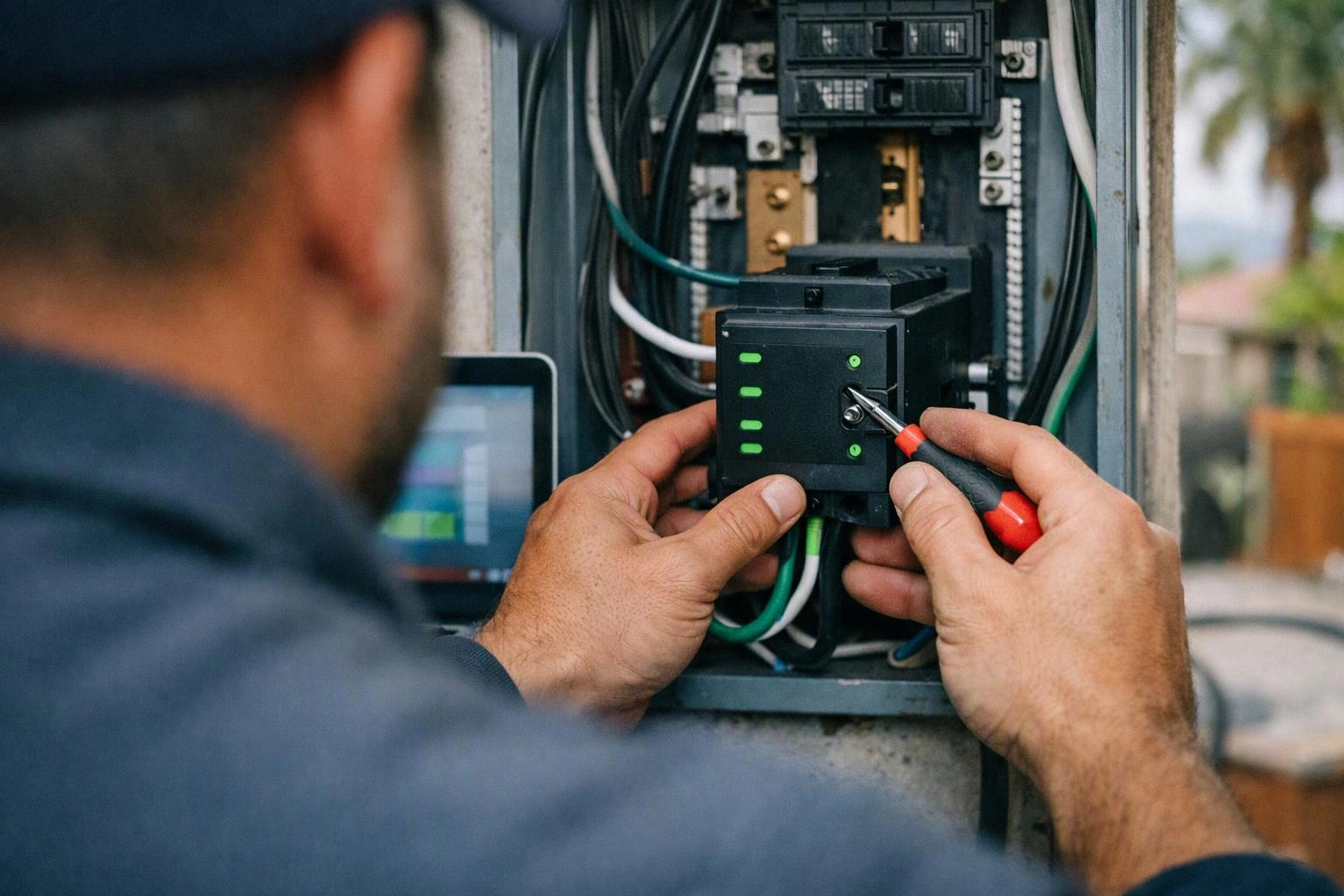
Installation method also affects coverage. A plug-in unit protects equipment connected to that unit. A panel-mounted device can protect multiple branch circuits when correctly installed.grounding pathcorrect conductor connections, and a compatible electrical panel are necessary. Diverted surge current needs a safe route away from the load.

Why Surge Protector Matters?

SanBernardino-Electrician.com in San Bernardino — service highlight — Why Surge Protector Matters?

Modern homes contain devices with small electronic controls. These include televisions, computers, appliances, garage-door openers, and heating equipment. These controls can suffer from repeated voltage transients. This can happen when no single event causes visible damage. A protector can reduce exposure. It can't guarantee that equipment will survive a direct lightning strike or severe utility fault.

Surge protection also supports better equipment planning. Sensitive devices should have protection matched to their location and risk. Large installations may need protection at more than one point. A protector with a status light or alarm can show active internal parts. However, that indicator doesn't prove correct grounding or full device protection.

When Surge Protector Matters Most?

Surge protection deserves attention where electronics have high replacement costs. It also matters where utility switching is frequent. Overhead lines and exposed wiring can increase transient event risks. Surge protection also matters during equipment upgrades, panel replacements, and repairs. These changes can affect the electrical system. A licensed electrician should verify compatibility before adding a panel-mounted device.

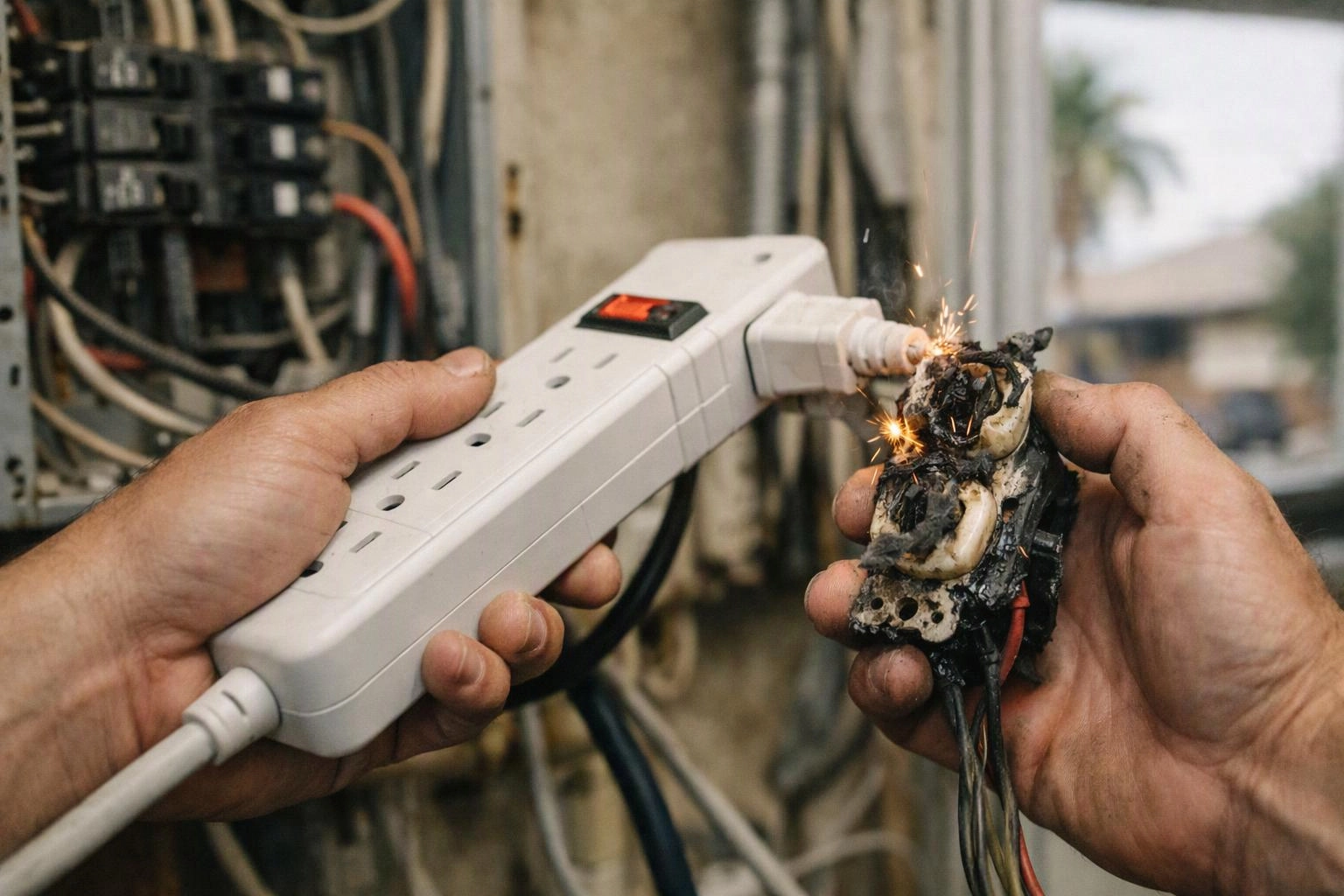
Inspect a protector after a major storm, nearby lightning, or an electrical fault. Replace a unit when its protection indicator shows failure. Replace it if its housing is cracked, smells burned, or shows overheating. Don't connect one power strip to another. Don't place a protector on a circuit with loose connections or no grounding path. These conditions can create safety risks.

How to Evaluate Surge Protector?

  • Check the label for a stated clamping voltage, joule rating, and recognized safety certification.
  • Confirm whether the device protects one outlet, one receptacle circuit, or multiple panel circuits.
  • Look for a working protection indicator or alarm and replace the device after a failure signal.
  • Verify that the receptacle grounding and electrical panel connections are correct.
  • Ask whether the protector matches the system voltage and the equipment being protected.

Related Concepts Compared

Surge Protector vs. Power Strip

A power strip provides multiple outlets but may offer no surge protection. A surge protector must include components and labeling designed to limit transient voltage.

Surge Protector vs. Circuit Breaker

A circuit breaker opens a circuit during excessive current from an overload or short circuit. A surge protector limits brief voltage spikes and does not replace overcurrent protection.

Surge Protector vs. Whole-house Surge Protection

Whole-house surge protection usually refers to a panel-mounted device that covers multiple circuits. A plug-in surge protector normally covers equipment connected at one location.

Surge Protector vs. Lightning Protection System

A lightning protection system directs lightning safely around a structure. A surge protector limits electrical transients and cannot safely intercept a direct lightning strike by itself.

Expert Note

A high joule rating alone does not prove good protection. Check the device's voltage rating, connection method, status indicator, and grounding path. A protector can fail after one major event while still allowing equipment to operate normally, so visual and indicator checks matter.

Common Mistakes or Myths About Surge Protector

  • Assuming every power strip contains surge protection.
  • Using a protector with an ungrounded or damaged receptacle.
  • Connecting multiple surge strips together.
  • Treating a surge protector as a replacement for a circuit breaker.
  • Ignoring a failed status light after a storm or electrical fault.

Surge Protector in Practice: A Real-World Example

A home office has a computer, monitor, router, and printer on a labeled surge protector. After a utility switching event, the equipment keeps working, but the protector's failure light appears. The equipment may still work. Yet replace the protector because its remaining protection is no longer confirmed.

Sources & Further Reading on Surge Protector

Related Terms

Voltage

Voltage is the electrical potential difference that pushes electric charge through a circuit. Measured in volts…

Receptacle

Receptacle is a wiring device that accepts a plug and provides electrical power to connected equipment…

Grounding Electrode

Grounding Electrode is a conductive object that connects an electrical system to the earth. Common examples…

Electrical Panel

Electrical Panel is the main enclosure that receives electricity from a utility service and distributes it…

SanBernardino-Electrician.com

Have Questions About Surge Protector?

Contact SanBernardino-Electrician.com for practical guidance on Surge Protector and related 24 hour electrician work in San Bernardino.

+1 (909) 271-0200