
What Is a Ground Fault?
A Ground Fault is an unintended electrical connection between an energized conductor and grounded metal, equipment, or earth. This connection allows current to follow an abnormal path. A ground fault may create shock and fire hazards, so protective devices such as ground-fault circuit interrupters can disconnect power when they detect the condition.
Quick Facts About Ground Fault
Category
Electrical fault condition
Used for
Electrical safety inspection
Common confusion
Not the same as a short circuit or overload
Often discussed with
Electrical Safety Inspection, Electrical Troubleshooting
Key Takeaways About Ground Fault
- The current leaves its intended circuit path.
- Moisture and damaged insulation can create fault paths.
- A ground fault is not the same as an overloaded circuit.
How Ground Fault Works
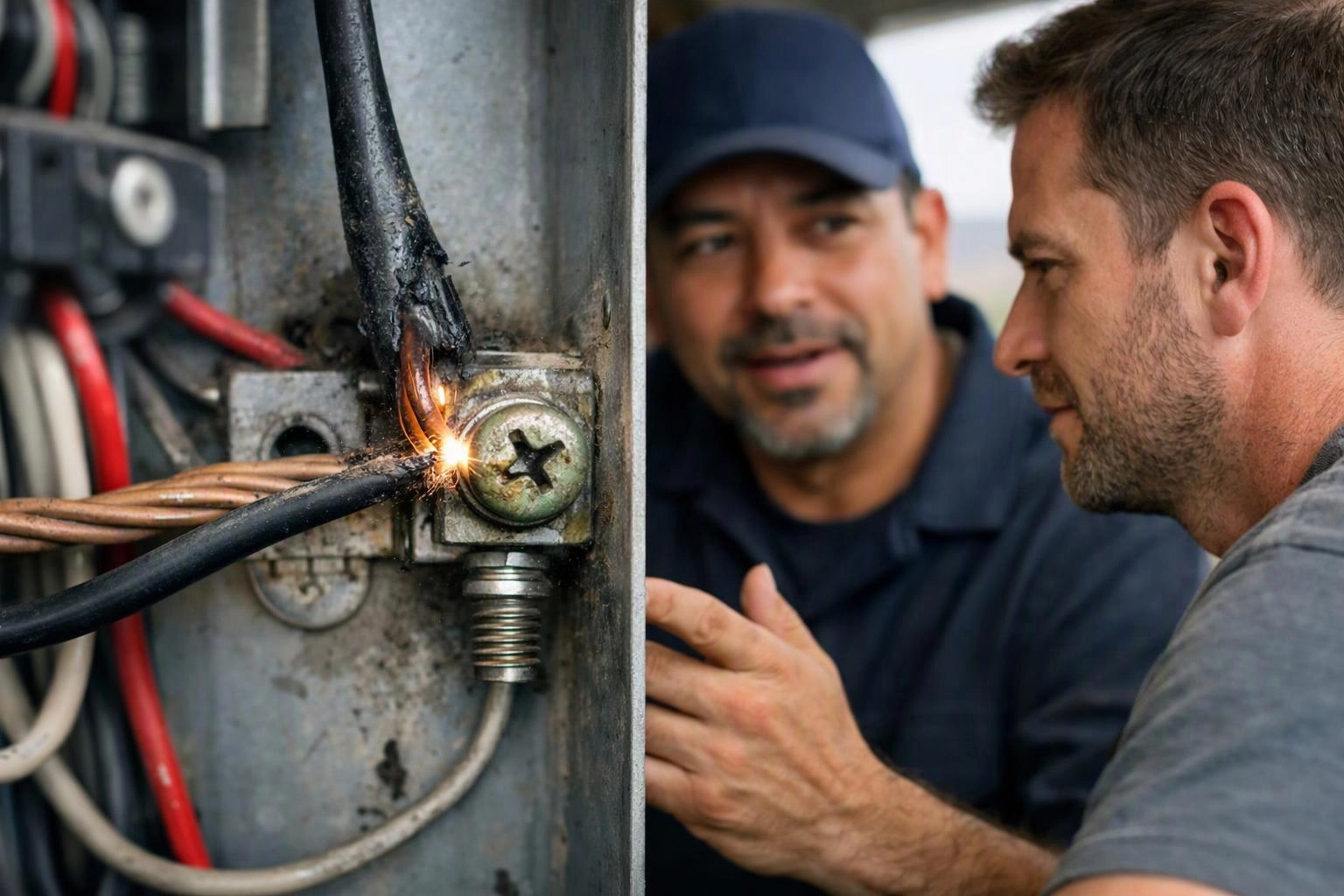
A Ground Fault occurs when electricity leaves its intended conductor and reaches a grounded surface or conductor. Damaged insulation, loose wiring, wet equipment, and defective appliances can create that path. The fault current may return through metal parts, grounding conductors, or a person who contacts the energized equipment.
Related glossary terms: Arc-Fault Circuit Interrupter, Branch Circuit, Continuity Test.
A ground-fault circuit interrupter compares current leaving a circuit with current returning through the circuit conductors. An imbalance signals that some current has taken another path, so the device opens the circuit. A short circuit also creates an unintended connection, but it commonly involves conductors contacting each other and may produce much higher current. During an inspection, testing can help identify tripping devices, damaged receptacles, moisture-related problems, or grounding issues linked to the fault.
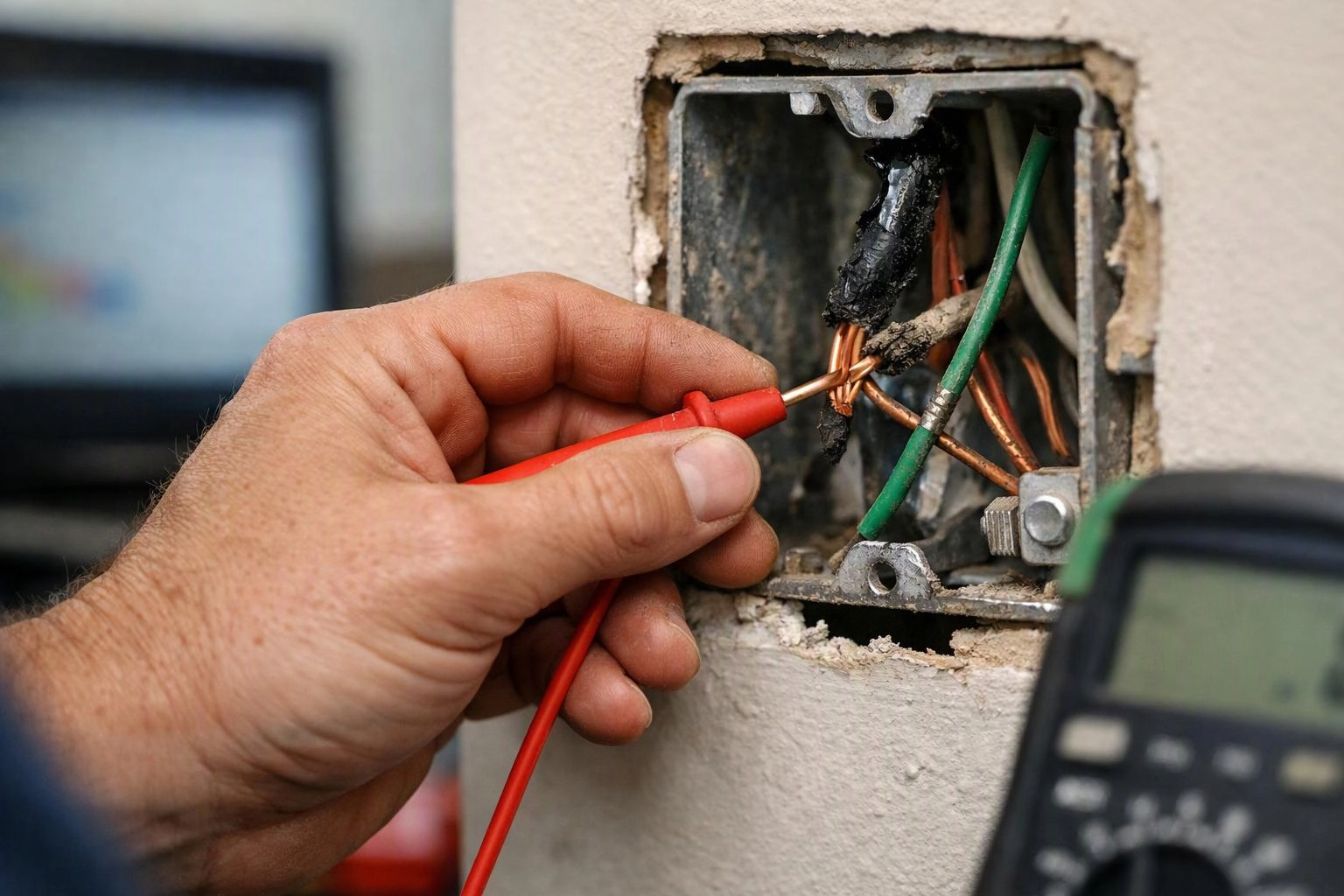
From the San Bernardino Electrician team
When we inspect for a ground fault, we check protective devices, receptacles, visible wiring, and grounding connections. We also consider moisture, damaged insulation, and equipment that causes repeated trips. Our team separates the fault source from the protective device so repairs address the underlying electrical condition.
Ground Fault in Practice: A Real-World Example
During an electrical safety inspection, a bathroom receptacle trips its protective device when a damp appliance is connected. Testing can help determine whether the appliance, receptacle, wiring, or moisture creates the unintended path.
Related Terms
Arc-Fault Circuit Interrupter
An Arc-Fault Circuit Interrupter is a protective device that monitors electrical current for patterns linked to…
Branch Circuit
A branch circuit is the portion of an electrical system that carries power from a panelboard…
Continuity Test
A continuity test is an electrical check that determines whether a complete conductive path exists between…
Current
Current is the movement of electric charge through a conductor, such as a wire, circuit path…
San Bernardino Electrician
Have Questions About Ground Fault?
Contact San Bernardino Electrician for practical guidance on Ground Fault and related 24 hour electrician work in San Bernardino.