Skip to content
Glossary

What is Three-Way Switch?

Three-Way Switch is a wall switch system that controls one light or electrical load from two separate locations. The system uses two three-way switches and traveler wires between them. Either switch can change the load's state. So the light can turn on or off from either end of a hallway, stairway, or room.

Quick Facts About Three-Way Switch

Category

Lighting control device

Used for

Controlling one light from two locations

Common confusion

It is not the same as a two-pole switch

Relevant standard

National Electrical Code, NFPA 70

Also called

Three-way light switch, Two-location switch

Often discussed with

Lighting Repair, Lighting Installation

Key Takeaways About Three-Way Switch

  • A three-way circuit controls one light from two switch locations.
  • The circuit requires two three-way switches, not two ordinary single-pole switches.
  • Traveler wires connect the switches and carry the switching path.
  • The common terminal differs from the traveler terminals and must be identified correctly.
  • Power should be turned off and verified before anyone handles the wiring.

Understanding Three-Way Switch

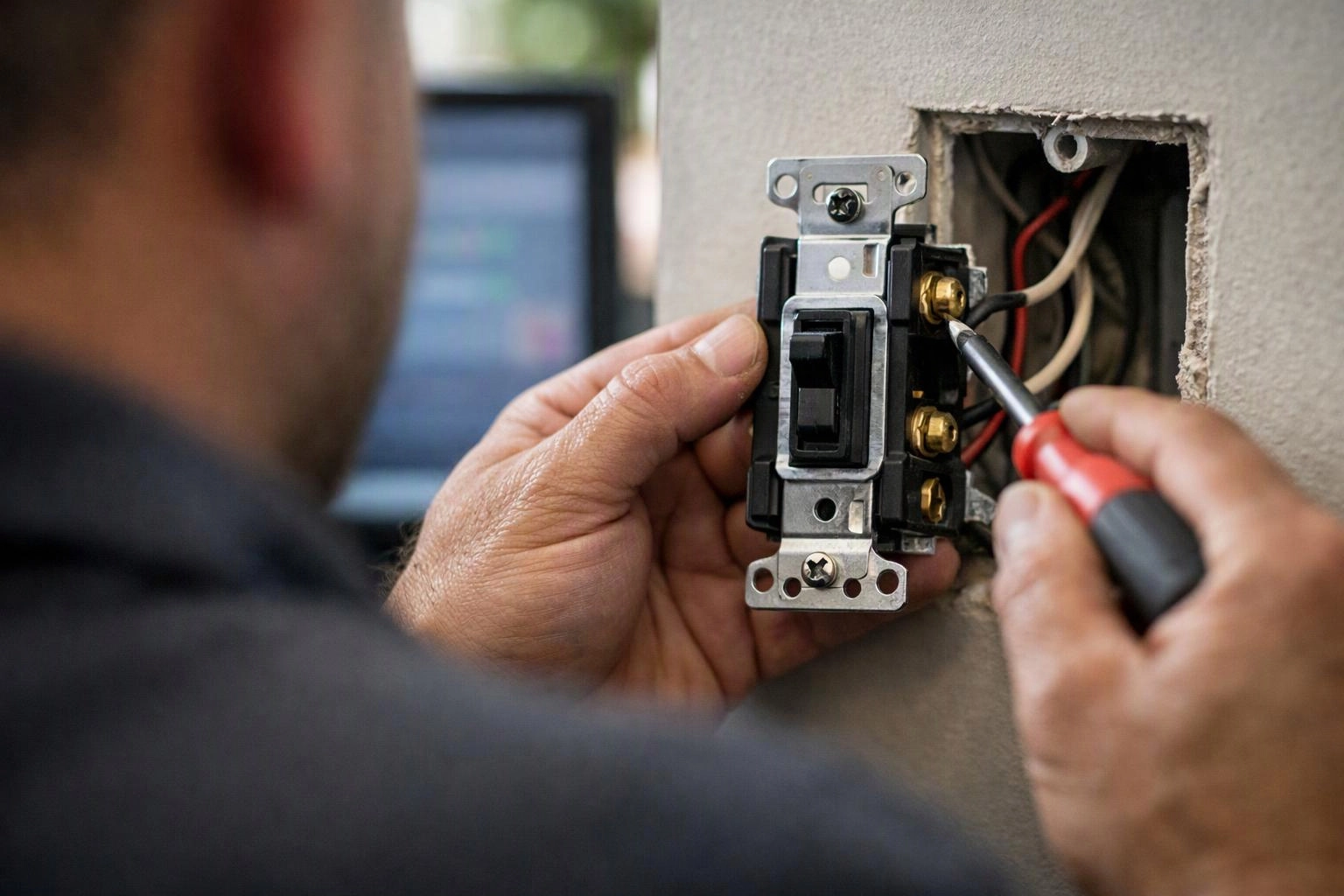
SanBernardino-Electrician.com in San Bernardino — Understanding Three-Way Switch

A Three-Way Switch is part of a lighting control system. It lets you operate one light from two locations. Common examples include both ends of a hallway. Other examples include the top and bottom of stairs. They also include two doors into the same room. The system doesn't mean one switch has three on and off positions. Instead, each device has one common terminal and two traveler terminals.

A typical circuit contains a power source, a light fixture, and two three-way switches. It also contains cable or conductors between the switches. Neither switch has a fixed on position. That position doesn't always match the other switch. The light turns on when both switches create a complete path. Changing either switch changes that path and the light's state.

How Three-Way Switch Works, Is Measured, or Is Used?

The first switch receives the incoming line conductor on its common terminal. Two traveler wires run between both switches' traveler terminals. The second switch sends power toward the light through its common terminal. This wire is the switched conductor. One traveler path is selected based on each switch position. The path either completes or interrupts power to the load.

Three-way switches don't have a simple up-is-on relationship. A technician identifies the common terminal by its darker screw. The manufacturer may also mark the common terminal. The technician then identifies the two traveler terminals.voltage tester can help check circuit conditions. Testing doesn't replace correct conductor identification. The circuit rating and wire size must suit the installation. Box fill and grounding connections must also suit the installation.

  • One location uses the line common, and the other uses the load common.
  • Traveler terminals connect to traveler conductors, not the equipment grounding conductor.
  • The green grounding terminal connects to the grounding path. It doesn't act as a traveler.

Why Three-Way Switch Matters?

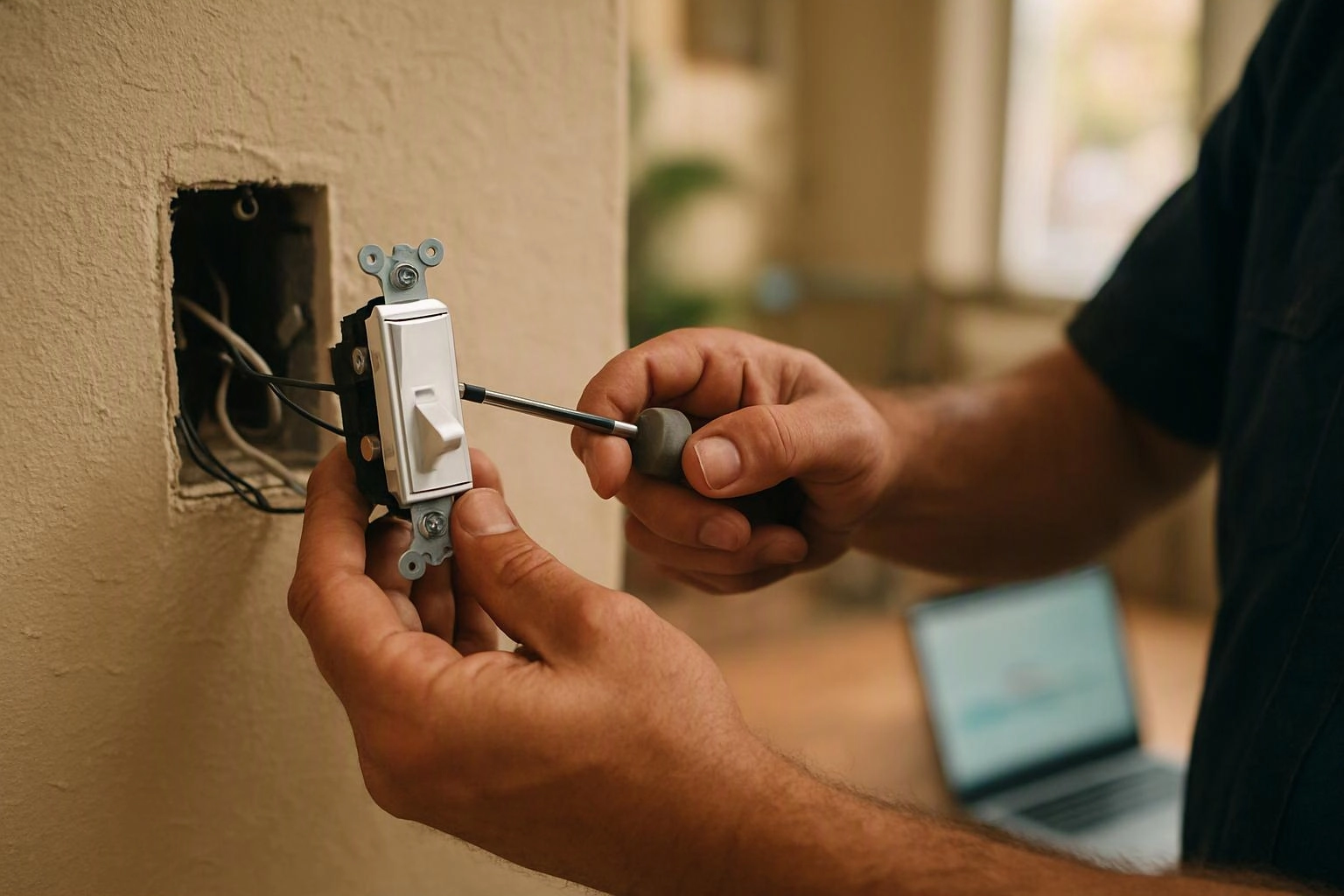
SanBernardino-Electrician.com in San Bernardino — service highlight — Why Three-Way Switch Matters?

Three-way control improves convenience and can reduce walking through dark areas. It also supports safer movement on stairs and through long passageways. A correctly wired lighting circuit gives you control from both locations. You won't need two separate light fixtures or a second branch circuit.

Incorrect wiring can leave the light stuck in one state. It can also cause confusing switch behavior. It may place energized conductors in unexpected locations. A loose terminal may create heat and arcing. A missing ground can reduce fault protection.equipment grounding conductor and secure connections support a safe installation.

When Three-Way Switch Matters Most?

This arrangement matters during remodeling and fixture replacement. It also matters when troubleshooting one light from two locations. A replacement switch must be a three-way model for two control points. A standard single-pole switch has two active terminals. It can't provide the same switching path.

Pay close attention to older installations with changed wiring or crowded boxes. Also check conductors with faded insulation. Local rules and the current National Electrical Code can affect grounding and box fill. They can also affect cable protection and work in finished walls. Turn off the breaker. Verify the circuit's de-energized with a properly rated tester. Preserve the original conductor function before disconnecting anything.

How to Evaluate Three-Way Switch?

  • Confirm that two three-way switches control the same light from separate locations.
  • Identify the common terminal on each switch before disconnecting any conductor.
  • Check that traveler conductors connect only to traveler terminals.
  • Verify that grounding conductors connect to the switch grounding terminals and metal boxes when required.
  • Test every switch position after installation, then check for loose terminals, heat, or buzzing.

Related Concepts Compared

Three-Way Switch vs. Single-Pole Switch

A single-pole switch controls a light from one location and normally has one line terminal and one load terminal. A three-way system uses two special switches for control from two locations.

Three-Way Switch vs. Four-Way Switch

A four-way switch adds a third control location to a three-way circuit. It must be installed between two three-way switches and has four switching terminals.

Three-Way Switch vs. Two-Pole Switch

A two-pole switch controls two ungrounded conductors together, often on a 240-volt circuit. It is not the device used to control one light from two locations.

Three-Way Switch vs. Dimmer Switch

A dimmer changes light output rather than simply switching power on or off. A three-way dimmer may work in a multi-location circuit only when the device is rated and wired for that arrangement.

Expert Note

Photograph or label each conductor before removing an old switch, but do not rely on wire color alone. Installers may have used a white conductor as an ungrounded conductor in older work. The terminal designation and tested circuit function provide better identification.

Common Mistakes or Myths About Three-Way Switch

  • Replacing one three-way switch with a single-pole switch without checking the circuit.
  • Connecting a traveler conductor to the common terminal.
  • Assuming the light is off means every conductor is de-energized.
  • Using the grounding conductor as a traveler.
  • Failing to secure conductors under the correct terminal screws.

Three-Way Switch in Practice: A Real-World Example

A staircase light has a switch at the lower floor and another at the upper floor. Either switch changes the light from off to on or from on to off, regardless of the other switch's position. That arrangement uses two three-way switches and traveler conductors.

SanBernardino-Electrician.com

Have Questions About Three-Way Switch?

Contact SanBernardino-Electrician.com for practical guidance on Three-Way Switch and related 24 hour electrician work in San Bernardino.

+1 (909) 271-0200