Skip to content
Glossary

What is Dimmer Switch?

Dimmer Switch is an electrical control that adjusts the amount of power delivered to a light fixture, changing the fixture’s brightness. Unlike a standard on-off switch, a dimmer can create different light levels for tasks, comfort, or energy management. The device must match the lamp type, electrical load, wiring method, and installation location.

Sources reviewed: National Electrical Manufacturers Association, Lighting Controls

Quick Facts About Dimmer Switch

Category

Lighting control device

Used for

Adjusting light brightness

Common confusion

A dimmer is not a standard switch

Main risk

Incompatible lamps or overloaded ratings

Also called

Light dimmer, Dimmer control

Often discussed with

Lighting Installation, Lighting Repair

Key Takeaways About Dimmer Switch

  • A dimmer changes light output instead of providing only an on or off function.
  • LED lamps require dimmer compatibility to prevent flicker, buzzing, or limited brightness.
  • The dimmer’s rated load must match the total wattage connected to the circuit.
  • Three-way dimmers control lighting from one location within a multi-switch circuit.
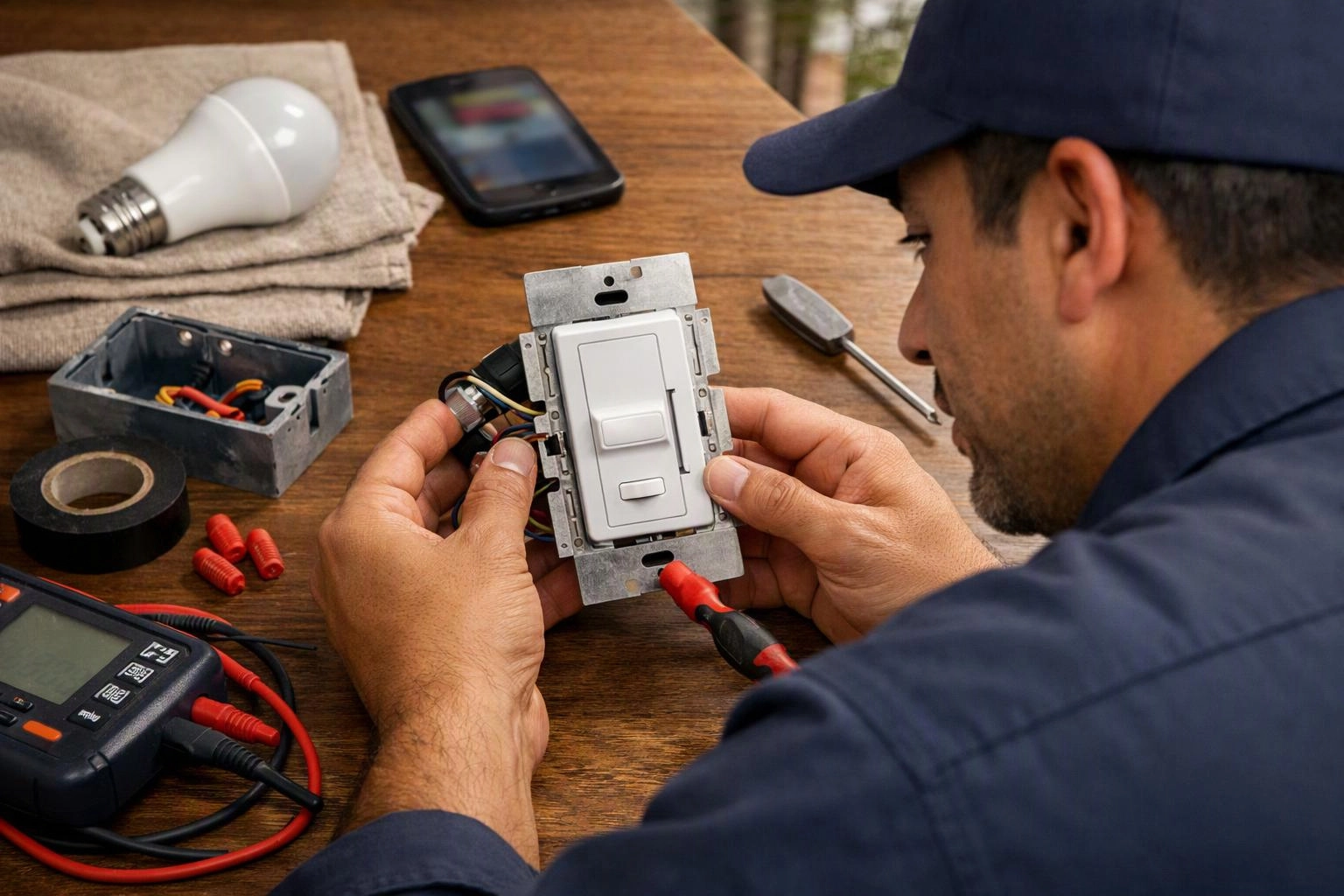
  • Turn off circuit power before installation, then verify power is absent with a tester.

Understanding Dimmer Switch

SanBernardino-Electrician.com in San Bernardino — Understanding Dimmer Switch

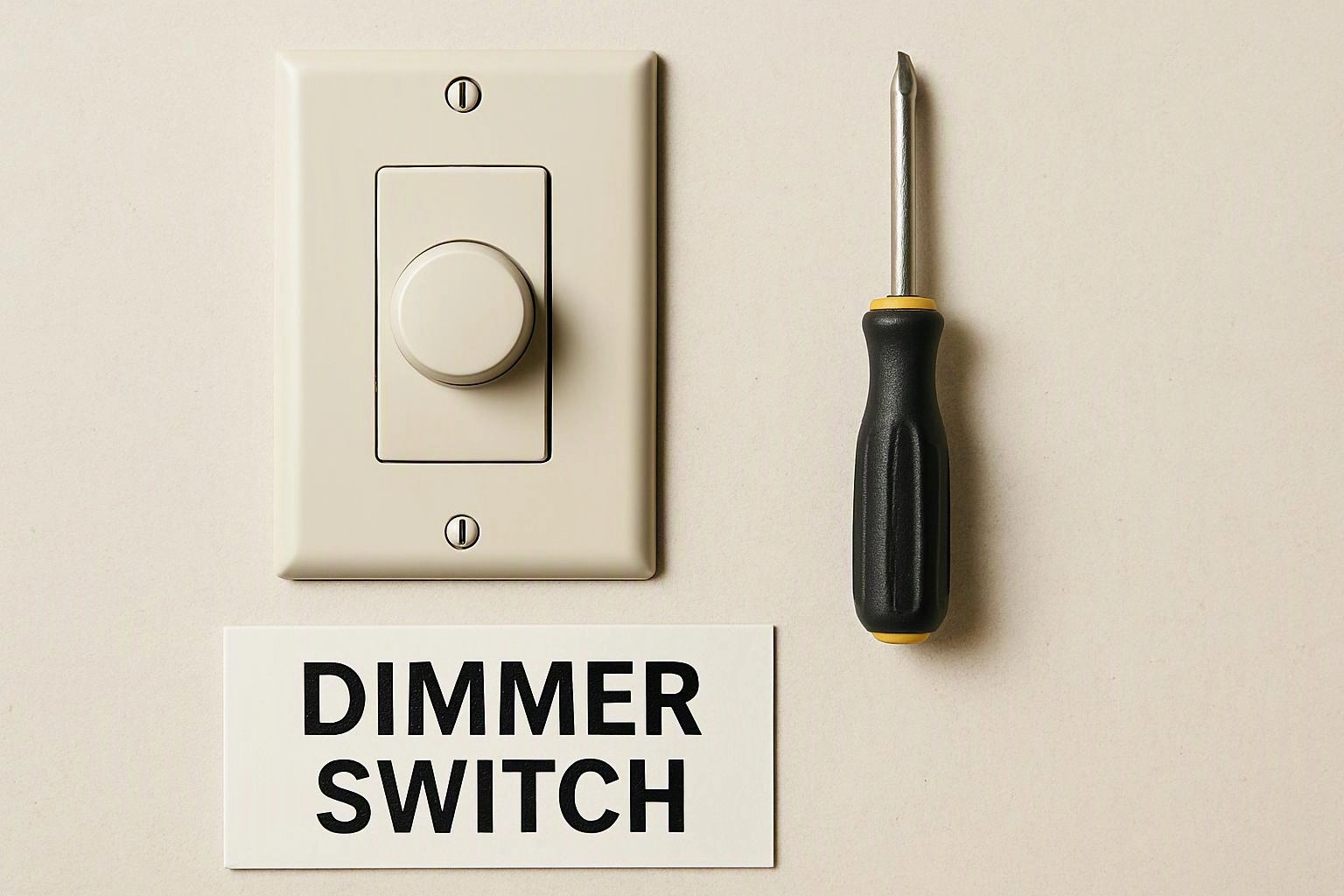
Dimmer Switch is a control device in a lighting circuit. It varies power sent to a lamp or fixture. A standard switch opens or closes the circuit. A dimmer offers many light levels. Common controls include rotary knobs, slide controls, push buttons, and smart wall controls.

Related glossary terms: LED, LED Driver, Light Fixture.

Older dimmers were made for incandescent lamps and halogen lamps. Many modern fixtures use LED lamps. LEDs need matching parts because they draw less current. They also respond in other ways to power changes. A matching dimmer can reduce flicker, buzzing, early lamp failure, and poor low-level performance.

How Dimmer Switch Works, Is Measured, or Is Used?

A traditional electronic dimmer quickly switches the alternating-current waveform on and off. It does this during each cycle. This process is called phase control. It changes the average power sent to the lamp. It doesn't change the circuit’s normal voltage. The control doesn't reduce voltage like a transformer does. Instead, it changes how long power reaches the load during each cycle.

Dimmer choice starts with the lamp type and total connected load. Add the wattage of all lamps controlled by one device. Then compare that total with the dimmer’s marked rating. LED ratings may appear apart from incandescent ratings. Use the correct value. A multi-location setup needs a matching three-way dimmer or companion control. It doesn't need two ordinary dimmers connected together.

Some dimmers include a neutral connection. Others work without one. Smart controls may also need a neutral wire, matching hub, or set control method. The wall box must have enough space for the device and its wires. Follow the product guide.National Electrical Code rules. These rules cover wire links and box size.

Why Dimmer Switch Matters?

SanBernardino-Electrician.com in San Bernardino — service highlight — Why Dimmer Switch Matters?

A well-chosen dimmer gives better control over task lighting, glare, and room comfort. Lower light levels can also cut lamp energy use. This works when the lamp and control work well together. The result depends on the fixture, lamp, dimmer design, and set light level. A dimmer isn't always an energy-saving device.

Compatibility affects both use and safety. A dimmer rated for incandescent loads may work poorly with an LED fixture. Too much load, loose links, heat buildup, or a poor case can harm the control. These issues can also create a fire risk. A warm faceplate can be normal with some loads. Odd heat, color change, smell, crackling, or repeat breaker trips need quick review.

When Dimmer Switch Matters Most?

Dimmer Switch choice matters during remodels, fixture swaps, and LED upgrades. It also matters when one light circuit serves many areas. These areas may have needs that differ. Bedrooms, dining rooms, theaters, and work areas often need set light levels. The control must fit the fixture and wiring setup.

Check the device before you replace a failed control or change lamps. Look for the lamp type, least and most load, and single-pole rating. Check the multi-location rating and neutral-wire need. Also check the list of matching parts. In San Bernardino homes, old wires and new fixtures may not match a smart dimmer. The box, wires, ground, and circuit safety parts need a check.

How to Evaluate Dimmer Switch?

  • Confirm that the dimmer lists compatibility with the exact LED, CFL, incandescent, or halogen lamp type.
  • Add every controlled lamp wattage and compare the total with the device rating.
  • Check whether the circuit is single-pole or three-way before selecting the control.
  • Watch for flicker, buzzing, delayed startup, heat, discoloration, or a narrow usable dimming range.
  • Verify that the product carries a recognized safety certification and installation instructions.

Related Concepts Compared

Dimmer Switch vs. Standard Light Switch

A standard light switch normally turns a circuit on or off. A dimmer switch changes the power delivered to a compatible lighting load so brightness can vary.

Dimmer Switch vs. Three-way Switch

A three-way switch allows one light to be controlled from two locations. A three-way dimmer adds brightness control, but the device must be designed for multi-location wiring.

Dimmer Switch vs. LED Driver

An LED driver converts and regulates electrical power for an LED fixture. A dimmer controls the fixture’s light level, while the driver manages the LED’s required operating power.

Dimmer Switch vs. Smart Lighting Control

A smart lighting control can provide dimming along with scheduling, remote operation, or automation. A basic dimmer usually provides local manual control without network features.

Expert Note

A dimmer’s maximum wattage rating does not guarantee good LED performance. Check the manufacturer’s compatibility list and minimum load rating, especially when one control operates only one or two low-wattage LED lamps.

Common Mistakes or Myths About Dimmer Switch

  • Installing an incandescent-only dimmer on an LED fixture.
  • Exceeding the dimmer’s total wattage or LED load rating.
  • Connecting two ordinary dimmers to control one light from two locations.
  • Ignoring the minimum load, which can cause flicker or failure to turn fully off.
  • Working on the wiring without switching off and verifying circuit power.

Dimmer Switch in Practice: A Real-World Example

A dining room has six 9-watt LED lamps, for a total load of 54 watts. The owner replaces a standard switch with an LED-rated dimmer that supports the lamp model and the circuit’s three-way arrangement. The lamps dim smoothly without flicker or buzzing.

Sources & Further Reading on Dimmer Switch

  • National Electrical Manufacturers Association, Lighting Controls

Related Terms

LED

LED is a semiconductor device that produces light when electric current passes through it. In lighting…

LED Driver

LED Driver is an electronic power supply that converts incoming electrical power into the controlled voltage…

Light Fixture

Light Fixture is a complete lighting assembly that holds a lamp or LED, directs light, connects…

Three-Way Switch

Three-Way Switch is a wall switch system that controls one light or electrical load from two…

SanBernardino-Electrician.com

Have Questions About Dimmer Switch?

Contact SanBernardino-Electrician.com for practical guidance on Dimmer Switch and related 24 hour electrician work in San Bernardino.

+1 (909) 271-0200