Landscape Lighting Benefits: Safety, Curb Appeal, and Outdoor Usability
Landscape lighting benefits include safer movement, clearer property features, and more usable outdoor areas. San Bernardino Electrician plans, installs, and repairs electrical lighting systems with attention to placement, connections, controls, and outdoor conditions. Free Estimates Available.
Get a Free EstimateWhat Are the Main Benefits of Landscape Lighting?
Landscape lighting improves outdoor visibility, highlights property features, and makes exterior areas more practical after dark. Outdoor lighting can support a residential property when electrical installation matches the layout and the way people use the space.
We plan light placement around walking routes, entrances, planting areas, and architectural details. Our team also reviews wiring, controls, and outdoor conditions so the finished system supports both appearance and daily use.
How Does Landscape Lighting Improve Outdoor Safety?
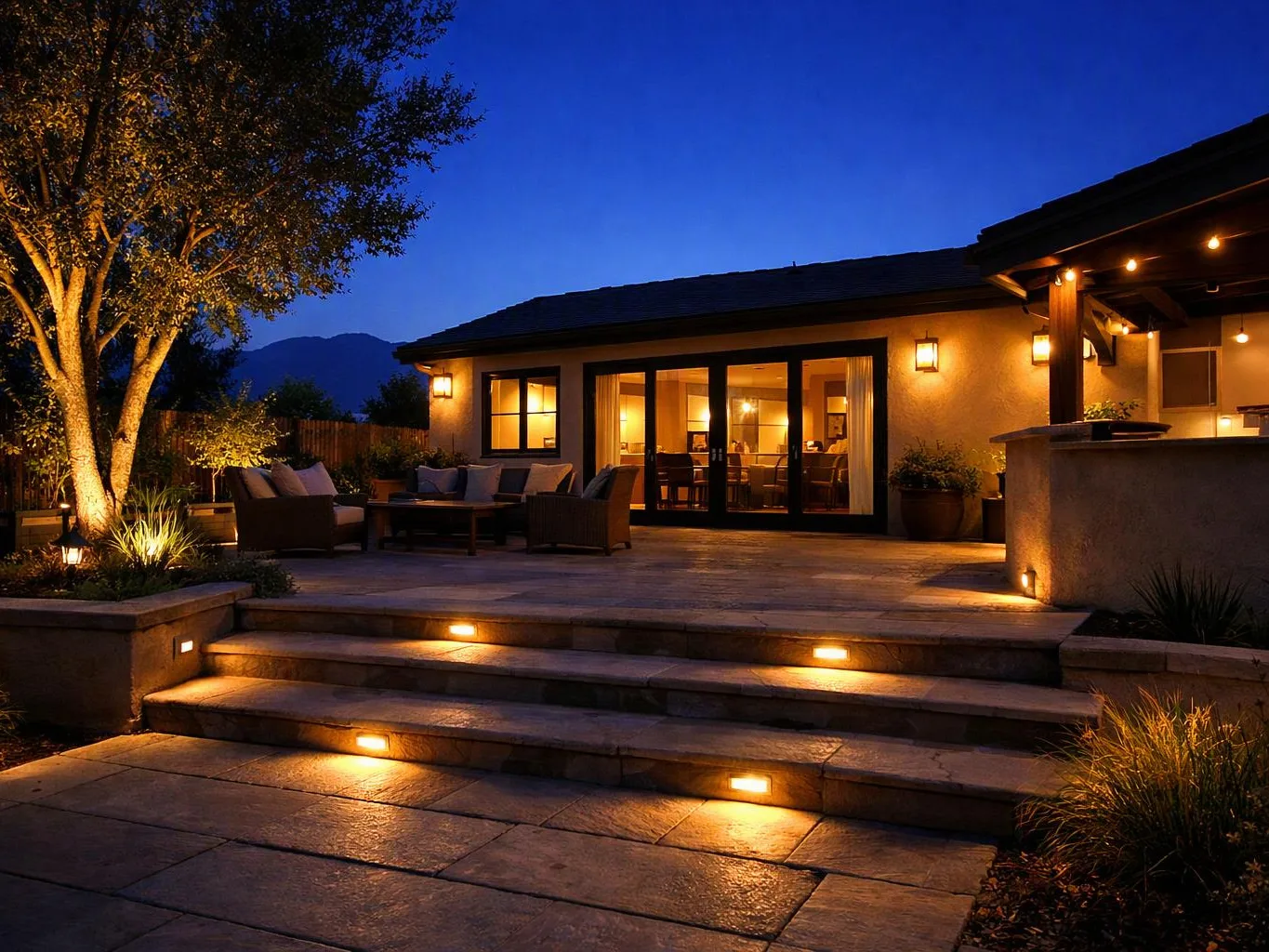
Landscape lighting improves outdoor safety by illuminating walking routes, changes in level, entrances, and potential obstacles. Better visibility helps people identify the edge of a walkway, the start of stairs, and changes around driveways.
We use path lighting, stair lighting, and entry lighting to guide movement without creating harsh glare. Our crew considers fixture height, beam direction, and glare control so light supports security visibility without shining directly into windows or people’s eyes.
How Does Landscape Lighting Enhance Curb Appeal?
Curb appeal improves when landscape lighting reveals architectural details and shapes how trees, planting beds, walls, and entry features appear at night. Exterior lighting can give a property depth by placing light on selected surfaces instead of washing every area with the same brightness.
We use facade lighting, architectural lighting, tree lighting, and garden lighting according to the feature being highlighted. Our team selects light color, beam direction, and beam angle to create balanced landscape illumination with controlled glare.
How Does Landscape Lighting Make Outdoor Areas More Usable?
Outdoor usability improves when landscape lighting supports movement, seating, dining, and other activities after daylight fades. Outdoor living areas can feel more practical when people can see surfaces, steps, furniture, and nearby paths.
We combine ambient lighting with task lighting around patios, decks, outdoor kitchens, seating areas, and entertaining areas. Our team keeps light placement focused on the activity so the space remains comfortable and easy to use.
Patio lighting can support conversation and movement, while task lighting can help people prepare food or manage items safely. We connect these choices to the electrical layout so the system works as one exterior electrical system.
Which Landscape Lighting Features Affect the Result?
The result depends on how the fixtures, wiring, power supply, and controls work together. We review each feature during planning because a strong fixture can still perform poorly when placement or electrical connections are unsuitable.
We check these details during an electrical inspection and adjust the design to suit the property layout. Our team also considers mounting stakes, connectors, junction boxes, and areas where moisture may affect the system.
How We Plan and Install Landscape Lighting
Landscape lighting installation is planned and completed by reviewing the property, mapping light placement, connecting the electrical system, and testing the finished installation. San Bernardino Electrician connects the design to the way each outdoor area will be used.
For a new system, you can request our Lighting Installation service. We use the site layout and your lighting goals to guide the work.
When Does Landscape Lighting Need Electrical Repair?
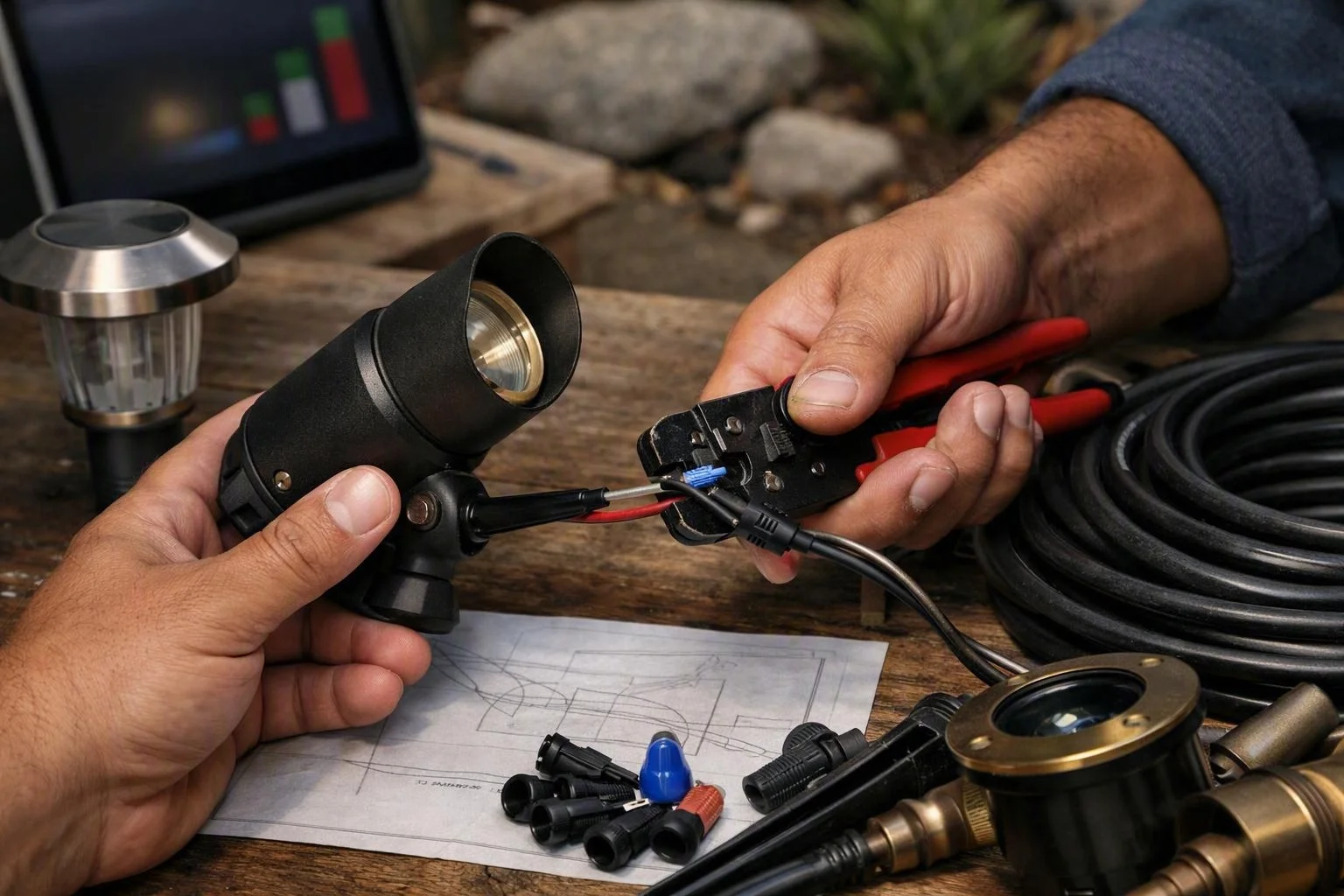
Landscape lighting repair is needed when fixtures flicker, sections stop working, circuits trip, or outdoor connections show damage or moisture. These symptoms can come from a damaged cable, corroded connection, failed transformer, or water intrusion.
We inspect the affected fixtures, cable paths, transformer, controls, and electrical connections to locate the fault. Our team repairs the cause and completes system testing so the working section is checked after the repair.
Partial outages can point to a problem in one branch of the system, while a tripped circuit can indicate an electrical issue that needs careful inspection. If landscape lighting becomes unsafe to access, we handle the inspection and repair without asking you to disturb outdoor wiring.
What Should You Review Before Requesting Landscape Lighting Work?
Before requesting landscape lighting work, review the areas that need visibility, the features you want to highlight, and how you plan to use the outdoor space. Your lighting goals should connect safety priorities, curb appeal, outdoor activities, and the property layout.
We use that information to discuss fixture locations, lighting controls, electrical access, and the type of illumination each area needs. Clear details about paths, stairs, patios, driveways, trees, and entry features help our team plan a useful electrical lighting system.
You can also note existing flickering lights, damaged fixtures, exposed cable, or controls that do not operate as expected. We include those concerns in the assessment so installation or repair work addresses the complete lighting layout.
Questions About Landscape Lighting Benefits
Can landscape lighting improve security?
Yes, landscape lighting can improve security visibility by illuminating paths, entries, driveways, and areas where obstacles may be difficult to see. San Bernardino Electrician plans light placement and glare control so the system supports visibility without creating distracting bright spots.
What areas should landscape lighting cover?
Landscape lighting should cover walking routes, stairs, driveways, entry areas, patios, seating areas, and selected landscape features. We match coverage to your safety priorities, curb appeal goals, and outdoor activities.
Is LED lighting suitable for landscape lighting?
Yes, LED lighting is suitable for landscape lighting when the fixtures, transformer, controls, and electrical connections match the design. We select LED fixtures based on the intended beam direction, light color, and location.
Can landscape lighting be controlled automatically?
Yes, landscape lighting can be controlled automatically with timers, photocells, or other compatible lighting controls. We set up the controls around the desired operating pattern and test their operation with the completed system.
Why do landscape lights flicker or stop working?
Landscape lights can flicker or stop working because of damaged cable, corroded connections, a failed transformer, water intrusion, or a tripped circuit. We inspect the affected part of the system and complete Landscape Lighting Repair based on the fault we find.
San Bernardino Electrician plans, installs, tests, and repairs landscape lighting with attention to outdoor safety, curb appeal, and outdoor usability. Request an assessment for your property and tell us which areas need better visibility or nighttime use.
Contact San Bernardino Electrician for landscape lighting work
Related Resources
Signs Your Outdoor and Landscape Lighting Has Electrical Damage in San Bernardino, CA
Who It's ForEmergency Lighting Repair for Seniors in San Bernardino, CA
Who It's ForRetail Store Lighting Repair and Circuit Service in San Bernardino, CA
Who It's ForEmergency Lighting Repair for Smart Home Owners