Landscape Lighting Repair or Upgrade: What Homeowners Should Do First
Landscape lighting repair or replacement should begin with a system diagnosis, not automatic fixture removal. San Bernardino Electrician checks the transformer, wiring, connections, controls, and fixtures, then repairs usable components or recommends an upgrade when the existing system cannot meet the lighting goal.
Get a Free EstimateShould You Repair or Replace Landscape Lighting First?
Landscape lighting should be diagnosed first because a wiring, connection, transformer, or control fault can make usable fixtures appear defective. San Bernardino Electrician uses electrical diagnosis to separate a repairable fault from a true replacement need.
Our team reviews the lighting system condition and the lighting layout before recommending work. That approach helps preserve usable equipment while identifying safety concerns, poor lighting coverage, and parts that no longer support the outdoor lighting goal.
What We Check Before Recommending Repair or Replacement
Landscape lighting diagnosis identifies whether the failure comes from the power source, wiring, controls, or fixtures before work is selected. We test the system in a logical order so one faulty part does not lead to unnecessary fixture replacement.
When Landscape Lighting Repair and Installation Work Together
Landscape lighting repair and lighting installation can be scoped together when part of the system remains useful and another part needs improvement. We first protect the working portions of the system, then plan new work around the existing wiring and lighting zones.
How Repair and Upgrade Work Together on One Project
Repair and upgrade work can follow one coordinated project scope when testing shows that some equipment is serviceable and other equipment needs replacement. Our team sequences the work so the final lighting installation matches the tested power supply and control system.
When Repair Makes More Sense Than a Full Landscape Lighting Upgrade
Repair is the practical choice when the system layout remains suitable and the fault is isolated to a serviceable electrical component. We focus on the failed part when the rest of the system can safely deliver the intended lighting.
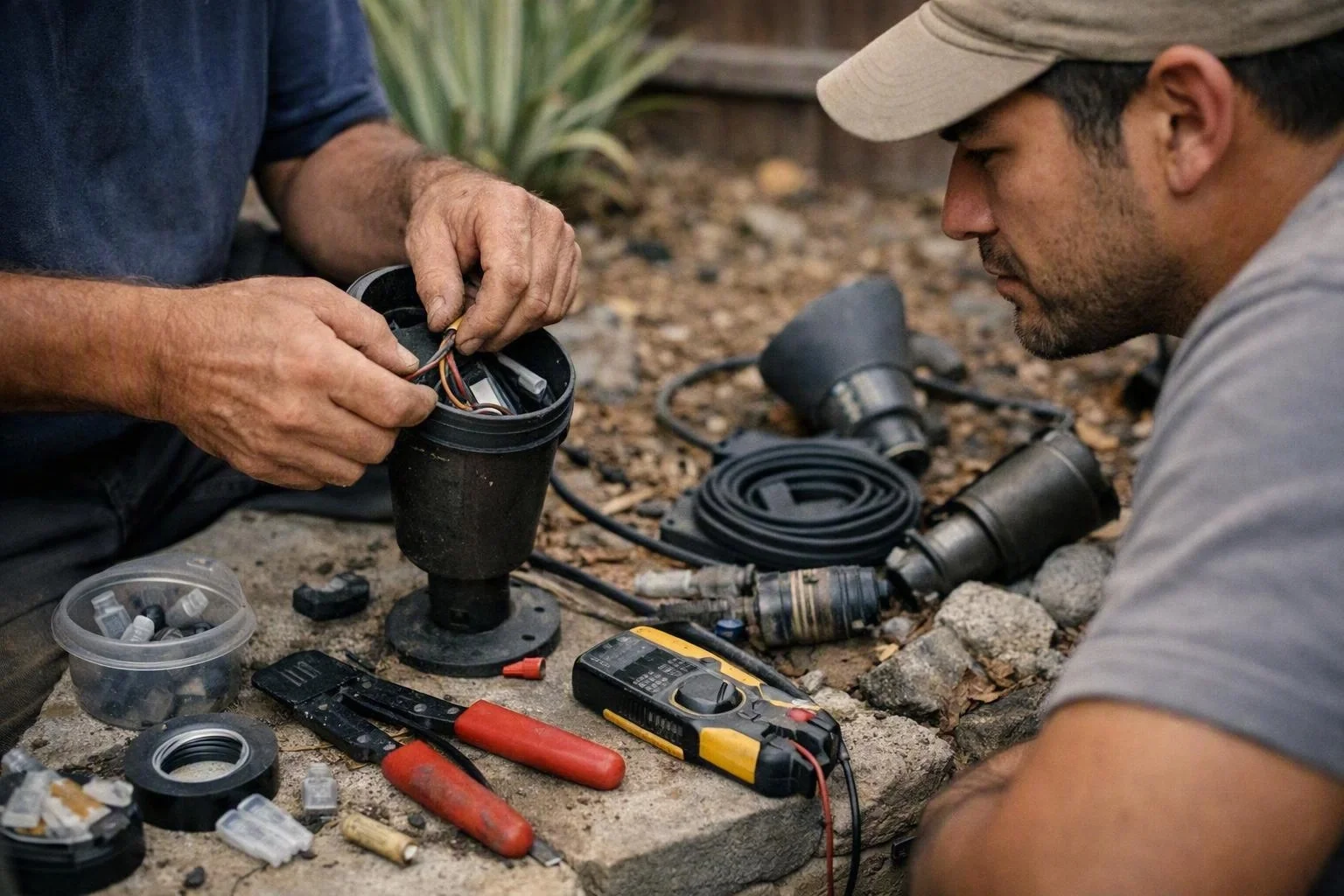
Intermittent lighting may come from loose connections, damaged cable, corrosion, or a failed transformer. We use voltage and continuity testing to locate the problem before deciding whether repairable fixtures can remain in place.
Repair also makes sense when fixture placement provides good coverage and the controls match the homeowner's needs. Our team checks the complete system layout so a local fault is not mistaken for a design problem.
When Replacement or New Lighting Installation Is the Better Choice
Replacement or new installation is the better choice when the existing equipment, wiring, or layout cannot safely or effectively deliver the desired lighting. We explain which parts require replacement and which parts may remain useful.
Obsolete fixtures can limit light quality, maintenance options, and control compatibility. Corroded wiring can create unreliable connections, while inadequate lighting coverage may require a revised lighting design.
LED landscape lighting can support a system upgrade when the fixtures, transformer capacity, and control system are planned together. We also assess system expansion needs before adding new zones or changing fixture placement.
What Changes the Cost of a Repair or Upgrade?
The cost of landscape lighting repair or replacement depends on the failed component, access to wiring, equipment selected, and whether the project changes the lighting layout. We prepare the scope around the condition found during testing and the lighting result the homeowner wants.
The main cost drivers are shown below. Each factor can shift the work toward a focused repair or a broader installation scope.
| Project factor | How it affects the work |
|---|---|
| Fault location | A transformer, control, connection, fixture, or buried cable fault calls for different testing and repair steps. |
| Transformer condition | The transformer may need repair, replacement, or capacity changes when the system load or layout changes. |
| Wire accessibility | Buried cable, landscaping, hard surfaces, and water intrusion can affect access and repair methods. |
| Fixture count and condition | The number of failed or unsuitable fixtures affects the balance between fixture repair and replacement. |
| Lighting coverage | Changing coverage or beam spread may require new fixture placement and additional lighting zones. |
| Control system | A photocell, timer, or other control change can add work beyond the fixture itself. |
| Installation scope | A focused repair has a different scope from a full system upgrade or new lighting installation. |
How to Prepare for a Landscape Lighting Service Visit
Preparing clear information helps us connect the reported symptoms with the system condition. You can gather the following details before our team reviews the outdoor lighting.
How to Request an Exact Landscape Lighting Estimate
An exact landscape lighting estimate requires reviewing the system condition, the repair or installation scope, access requirements, and the homeowner's lighting goals. We use an on-site assessment to identify the fault, review the lighting layout, and explain the work needed.
Our estimate can separate landscape lighting repair from fixture replacement, control work, wiring access, and new lighting installation. Free Estimates Available for homeowners who want the project scope reviewed before choosing the next step.
Contact Landscape Lighting Repair questions or to discuss a lighting upgrade with San Bernardino Electrician. We will help define a practical repair or replacement path based on the system's condition.
Questions About Landscape Lighting Repair or Replacement
Can one failed landscape light affect the rest of the system?
Yes, one failed landscape light can affect other fixtures when the system uses a shared connection, damaged cable, or overloaded power supply. San Bernardino Electrician tests the affected zone to determine whether the failure is isolated or connected to a wider fault.
Can landscape lighting wiring be repaired without replacing every fixture?
Yes, landscape lighting wiring can often be repaired without replacing every fixture when the fixtures remain serviceable and the fault is accessible. We test the cable and connections before deciding which components can stay.
What should I check when outdoor lights work during the day but not at night?
Outdoor lights that work during the day but not at night may have a photocell, timer, control setting, or power supply problem. You can review the timer and visible control settings, while we test the controls and circuit to locate the fault.
Can new landscape lights use existing low-voltage wiring?
Yes, new landscape lights can use existing low-voltage wiring when testing confirms that the cable condition, connections, and transformer capacity support the new fixtures. We verify the wiring and planned lighting zones before using it for a new installation.
Landscape lighting repair or replacement should follow testing, a clear lighting goal, and a defined project scope. San Bernardino Electrician can review the system and explain whether repair, fixture replacement, or lighting installation best fits the property.
Contact San Bernardino Electrician to request an assessment and discuss the next step for your landscape lighting system.
Related Resources
Signs Your Outdoor and Landscape Lighting Has Electrical Damage in San Bernardino, CA
Who It's ForEmergency Lighting Repair for Seniors in San Bernardino, CA
Who It's ForRetail Store Lighting Repair and Circuit Service in San Bernardino, CA
Who It's ForEmergency Lighting Repair for Smart Home Owners