Smoke Alarm Beeping or False Alarms: Repair and Service Options
Smoke alarm service from San Bernardino Electrician addresses recurring beeps and false alarms by checking the detector, power source, wiring, placement, and related electrical faults before recommending repair or replacement.
Get a Free EstimateQuick Picks
Smoke alarm problems can come from the detector itself, its power source, or the wiring that connects several alarms. The right service path depends on the symptom and the system type.
Options at a Glance
Each smoke alarm type has different service needs. We compare the main options by power source, system connection, and likely troubleshooting scope.
| Option / System | Best For | Typical Lifespan / Turnaround | Key Trade-Offs |
|---|---|---|---|
| Battery-operated smoke alarm | Standalone detector checks | Depends on battery condition and detector age | Simple power source, but no building wiring diagnosis |
| Hardwired smoke detector | Wiring and power-source troubleshooting | Depends on access, fault location, and replacement needs | Requires electrical testing when the fault is not at the battery |
| Interconnected smoke alarm | System-wide false alarm tracing | Depends on detector condition and alarm wiring | One failed unit or loose connection may affect other alarms |
What Does Repeated Smoke Alarm Beeping Mean?
Repeated smoke alarm beeping usually indicates a power, battery, sensor, wiring, or end-of-service issue that requires diagnosis before repair.
A chirp from a battery-operated smoke alarm may point to a low battery or a dirty smoke sensor. A hardwired alarm can also beep because of an electrical fault, loose connection, or interrupted power. We identify the source before deciding whether the alarm needs a reset, repair, or replacement.
Signs Your Smoke Alarm Needs Service
These symptoms show that a smoke detector needs closer attention when basic checks do not solve the problem.
Common Causes of Beeping and False Alarms
Beeping and nuisance alarms often come from conditions around the detector or from a fault inside the alarm system.
What You Can Check Safely Before Calling for Repair
You can complete several basic checks without opening electrical boxes or changing alarm wiring. Stop if the alarm condition suggests smoke or fire, and follow the manufacturer instructions for your device.
How to Prevent Recurring Smoke Alarm Problems
Regular care helps reduce nuisance alarms while keeping the life safety device ready to respond. We can also check the alarm system when recurring symptoms continue.
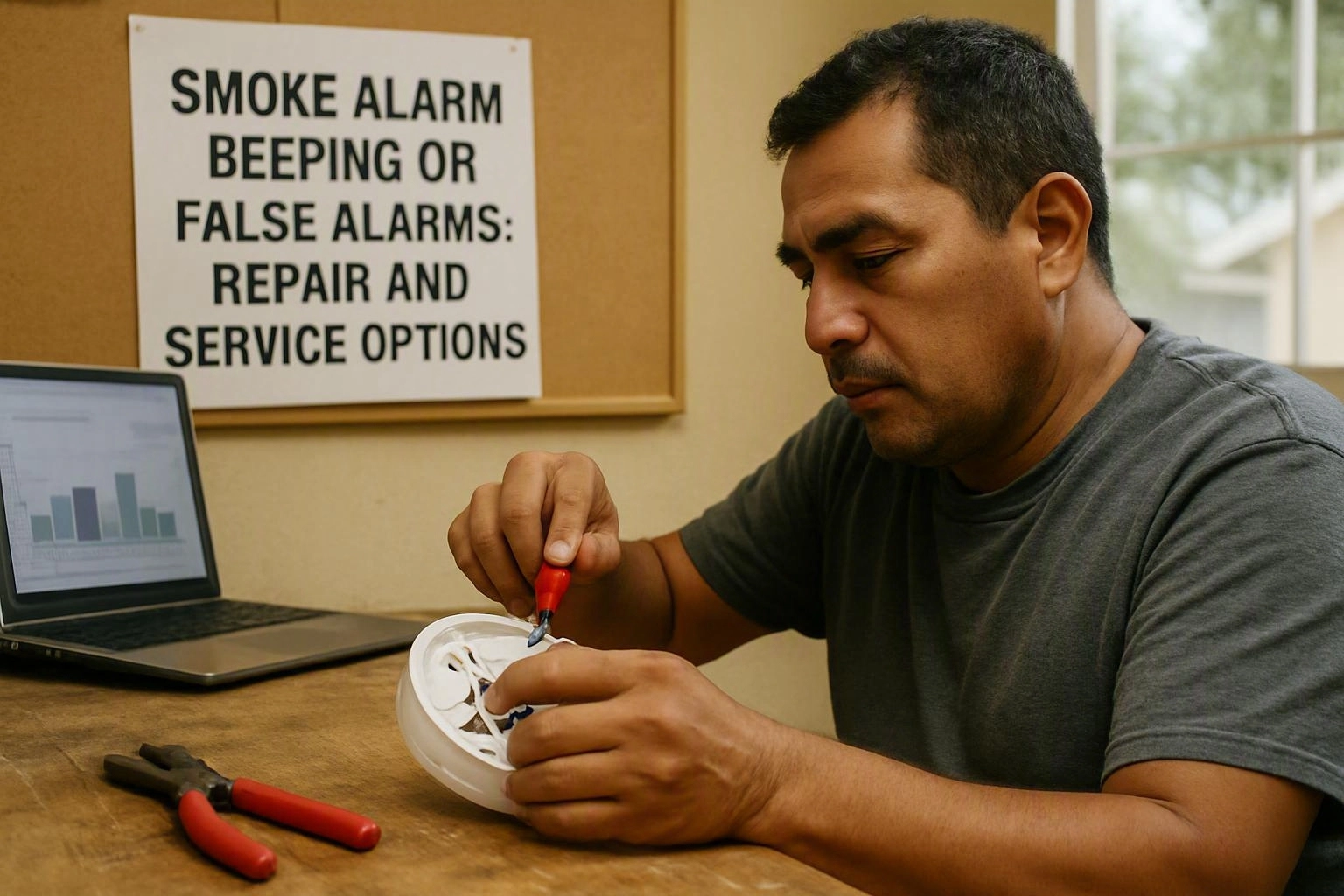
When Does a Beeping Smoke Alarm Need an Electrician?
A hardwired smoke alarm needs an electrician when battery replacement, cleaning, and resetting do not stop the beeping or false alarms, or when wiring and circuit problems are possible.
We inspect the branch circuit, junction box, alarm wiring, and circuit breaker when the detector does not receive stable power. We also trace interconnected alarm wiring when one unit may be causing the others to sound.
How San Bernardino Electrician Diagnoses and Repairs the Alarm
Our smoke detector service follows the symptom from the alarm face to the power source and connected wiring. The findings determine whether smoke detector repair or replacement is the safer option.
How to Choose the Right Smoke Alarm Service
Choosing service starts with matching the inspection to the alarm type and the symptom. These checks help define what the work should cover.
What Changes the Cost of Smoke Alarm Repair?
Smoke alarm repair cost depends on the detector type, the cause of the fault, wiring access, the number of affected alarms, and whether repair or replacement is appropriate; we provide Free Estimates Available.
A battery-operated alarm may require a focused detector check, while a hardwired or interconnected system can require electrical troubleshooting. We explain what the quote includes, such as inspection, voltage testing, wiring access, replacement parts, and any recommended detector replacement.
How to Request Smoke Detector Service
Smoke alarm service begins with a clear description of the symptom and the alarm system involved. Tell us whether the alarm is battery-operated or hardwired, whether other detectors sound, and what checks you have already completed.
Share the alarm model when available, along with any recent battery replacement, reset, breaker activity, or wiring concern. San Bernardino Electrician can use those details to plan the smoke detector repair or electrical inspection and explain the next step.
Smoke Alarm Service covers diagnosis of recurring beeps, false alarms, power issues, and related alarm wiring concerns.
Questions About Beeping Smoke Alarms
Why does my hardwired smoke alarm keep beeping after I change the battery?
San Bernardino Electrician checks the hardwired smoke alarm’s power connection, backup battery, wiring, and detector condition when beeping continues after a battery change.
Can dust or steam cause a smoke detector to trigger falsely?
Yes, dust in the smoke chamber and steam near the sensor can cause a smoke detector to trigger falsely. We check cleaning, placement, and sensor condition when those conditions are suspected.
Should I replace a smoke alarm that keeps giving false alarms?
A smoke alarm that keeps giving false alarms may need replacement when cleaning, resetting, placement checks, and power testing do not resolve the problem. We inspect the cause before recommending a replacement detector.
Can one faulty interconnected smoke detector make the others beep?
Yes, one faulty interconnected smoke detector or loose alarm wiring connection can affect the other alarms. We test each detector and the shared connections to locate the source.
What should I tell the electrician before scheduling smoke alarm repair?
Tell us the alarm type, model, symptom, affected locations, recent battery changes, breaker activity, and whether interconnected alarms sound together. Those details help us prepare for smoke detector repair and electrical inspection.
San Bernardino Electrician diagnoses smoke alarm beeping, false alarms, detector faults, and alarm wiring concerns. Request smoke alarm service and use our contact form to describe the system and symptoms.