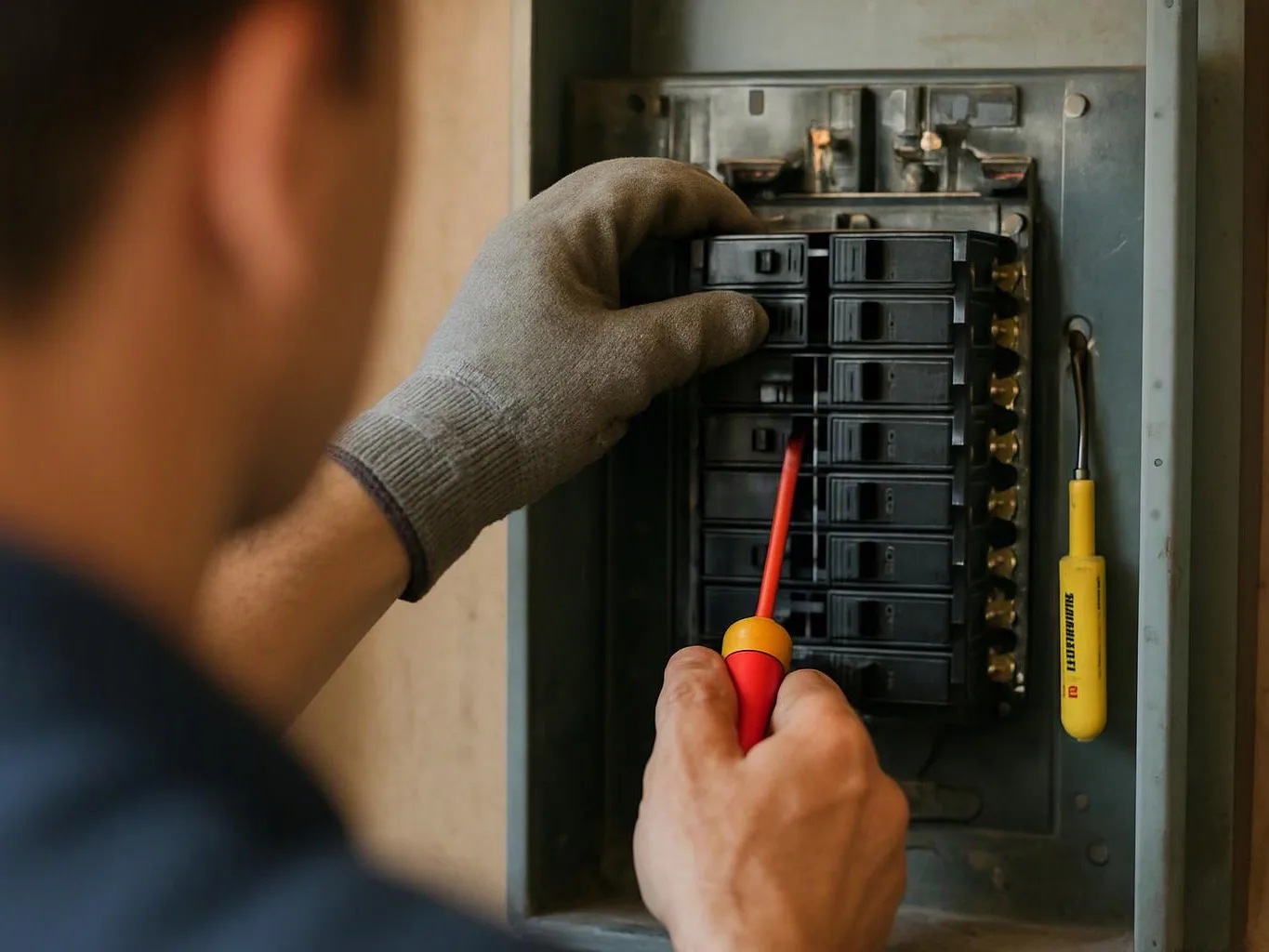
Smoke Detector and Fire Alarm Warning Signs That Need Electrical Service
Smoke detector and fire alarm warning signs such as repeated false alarms, chirping after battery replacement, damaged wiring, power interruptions, and interconnected alarms that fail together can indicate an electrical problem. San Bernardino Electrician checks the device, circuit, connections, and alarm communication path to determine whether repair or replacement is needed.
Get a Free EstimateWhich Smoke Detector Warning Signs Need Electrical Service?
Smoke detector warning signs need electrical service when the symptoms continue after basic battery and reset checks or point to power, wiring, mounting, or interconnected alarm faults.
Our team checks the alarm circuit when a warning does not clear through safe homeowner checks. The signs below can help you decide when an electrical inspection is appropriate.
San Bernardino Electrician traces the device, power source, wiring, and alarm communication path to identify the fault. We then explain whether smoke detector repair, device replacement, or broader fire alarm repair is appropriate.
What Repeated Chirping or False Alarms Can Mean
Repeated chirping or false alarms can indicate a depleted backup battery, contamination, end-of-life device, unstable power, or an electrical fault that needs inspection.
Dust near the alarm sensor can cause an alarm signal or false alarm, while a depleted backup battery can cause beeping even when the main power supply is present. We inspect the alarm sensor, battery compartment, and power connections before deciding whether cleaning, repair, or device replacement is suitable.
A chirp that returns after battery replacement can point to a power interruption, loose connection, or internal device fault. Our team checks the alarm history and operating signals so the underlying cause is not mistaken for a simple battery issue.
When Smoke Detector Wiring or Power Problems Need Repair
Smoke detector wiring or power problems need repair when a hardwired alarm loses power, shows heat or damage, has loose connections, or does not operate after the circuit is restored.
A hardwired smoke detector normally receives power through a branch circuit and may also have a backup battery. We check the circuit breaker, voltage, junction box, wire connection, and mounting box to locate a power or wiring problem.
Burn marks, a hot odor, exposed copper, or a damaged wire require electrical safety attention. Our crew isolates the affected circuit when needed, checks the connection points, and repairs the fault before completing alarm testing.
What to Check Before Requesting Electrical Service
Basic smoke detector checks can help identify a simple battery or reset issue before you request electrical service. Stop the check if you notice heat, burn marks, damaged wiring, or an unsafe ladder position.
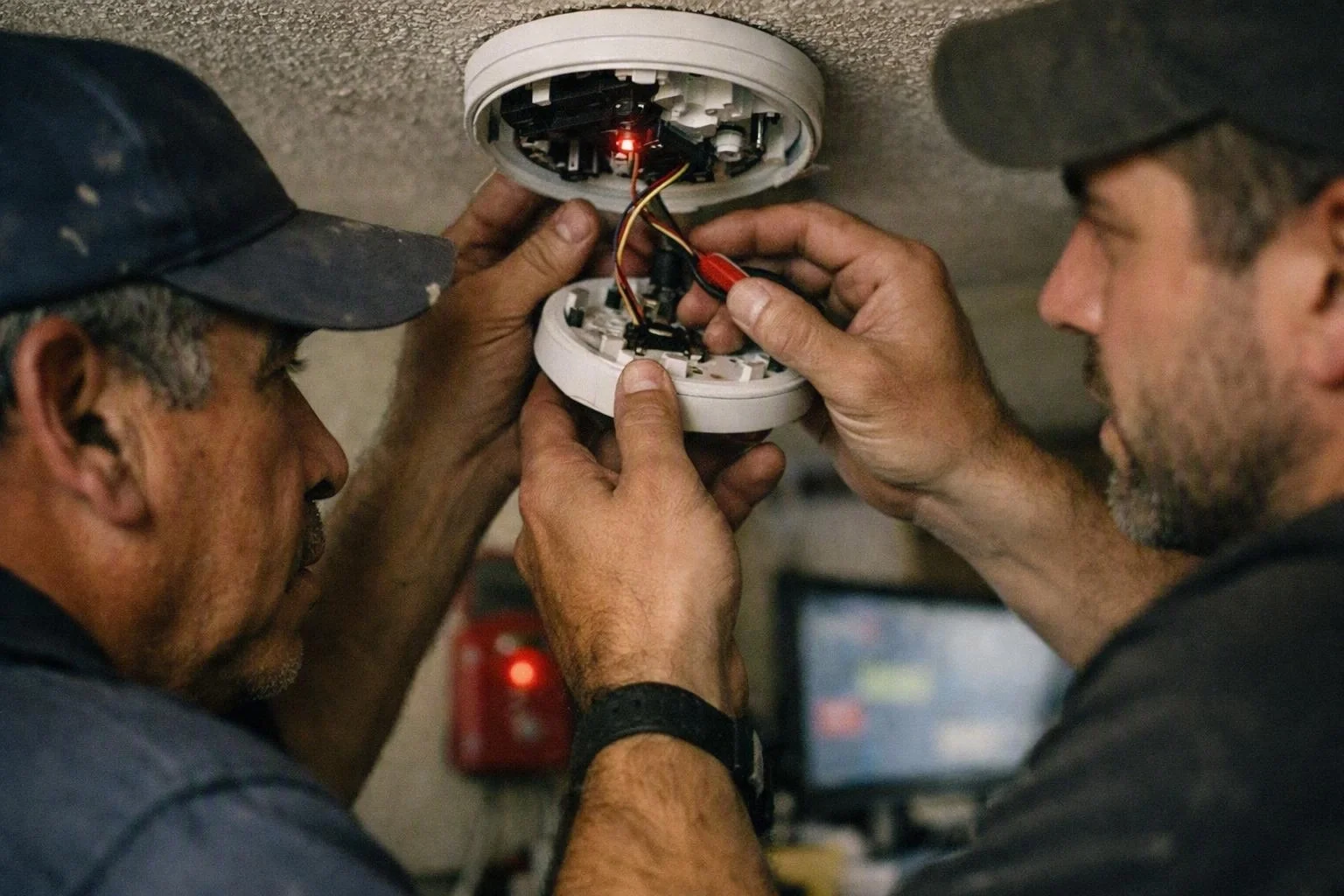
These checks do not confirm that alarm wiring or voltage is safe. If the alarm remains silent, chirps after battery replacement, or shows heat or damage, we complete the electrical inspection.
What We Check During Smoke Detector and Fire Alarm Service
Smoke detector and fire alarm service checks the device, power source, wiring, mounting, interconnection, and alarm operation to identify the cause of the warning sign.
During a smoke detector inspection, we examine the alarm body, sensor, backup battery, test button, mounting bracket, and mounting box. We also check for contamination, physical damage, an improper fit, and signs that the device has reached the end of its service life.
Our fire alarm inspection follows the power source and alarm wiring through the relevant circuit connection. We test the circuit breaker relationship, voltage, junction box connections, and communication between interconnected alarms.
Alarm testing confirms whether each device sounds, whether the interconnected alarms respond correctly, and whether a fire alarm control panel receives the expected signal. We explain the service scope before work proceeds, including any repair, replacement, or compatibility concerns.
DIY Smoke Detector Checks vs Calling San Bernardino Electrician
DIY smoke detector checks are suitable for simple battery, test, and reset tasks when the alarm is easy to reach and shows no damage. Calling San Bernardino Electrician is the safer choice when the issue involves a hardwired alarm, circuit fault, ladder safety, or alarm communication.
The comparison below shows where homeowner checks end and our electrical inspection begins. We use the warning sign and the affected alarm path to determine the appropriate repair.
| Factor | What you can do yourself | What we do |
|---|---|---|
| Battery | Replace the backup battery according to the alarm manual. | Check the battery compartment, contacts, device condition, and remaining chirp. |
| Testing | Press the test button and listen for the alarm sound. | Complete alarm testing across the device and connected alarm path. |
| Power | Check whether the circuit breaker appears tripped when the panel is safe to access. | Inspect voltage, circuit connections, power loss, and the hardwired alarm supply. |
| Wiring | Look for visible damage without removing electrical connections. | Inspect alarm wiring, junction boxes, mounting boxes, and loose connections. |
| Ladder safety | Avoid reaching or climbing when the alarm is difficult to access. | Our crew handles access and inspection when the location or equipment creates a safety concern. |
When Smoke Detector Replacement Is Not Enough
Smoke detector replacement is not enough when the underlying circuit, wiring, power source, mounting box, or interconnected alarm path remains faulty.
A new device can continue to chirp or fail when the electrical fault remains in the circuit. We inspect device compatibility, alarm wiring, the mounting box, and the alarm communication path before recommending device replacement.
An interconnected alarm may also need a broader review when one faulty device affects the other alarms. If a fire alarm control panel is involved, our team checks the panel signal and connected devices as part of the fire alarm repair scope.
How to Arrange Smoke Detector or Fire Alarm Service
Smoke detector or fire alarm service starts with a description of the warning sign so we can assess the affected devices, circuit, wiring, and repair requirements before providing an estimate.
Tell us whether the alarm is battery-operated or hardwired, whether the issue began after power loss, and whether other interconnected alarms are affected. Photos of visible damage and the alarm model can help us understand the service scope.
We explain what the electrical inspection covers and identify the work needed for smoke detector repair or fire alarm repair. Free Estimates Available applies when we review the requested work and prepare the estimate.
Contact San Bernardino Electrician to arrange smoke detector service and discuss the warning sign with our team.
Questions About Smoke Detector and Fire Alarm Warning Signs
Can a smoke detector chirp because of an electrical problem?
Yes, a smoke detector can chirp because of an electrical problem when battery replacement and a reset do not clear the warning. San Bernardino Electrician checks the power supply, alarm wiring, device connections, and backup battery to identify the cause.
Should I call an electrician for a hardwired smoke detector that has no power?
Yes, call for electrical service when a hardwired smoke detector has no power after you safely check the circuit breaker. We inspect voltage, the branch circuit, connections, and the alarm wiring.
Can one faulty smoke detector affect interconnected alarms?
Yes, one faulty smoke detector can affect interconnected alarms when the device, wiring, or alarm communication path disrupts the shared signal. We test the affected device and the connected alarms to locate the fault.
Is a smoke detector replacement safe to do without turning off the circuit?
No, smoke detector replacement is not safe to perform without following the device and circuit instructions for a hardwired alarm. We identify the power source and make the electrical connections safely before testing the replacement.
What should I do if a smoke alarm smells hot or shows burn marks?
Turn away from the damaged smoke alarm, avoid touching exposed wiring, and request electrical inspection. We check the device, circuit connection, mounting box, and alarm wiring to address the electrical safety concern.
Related Resources
Smoke Alarm Beeping or False Alarms: Repair and Service Options
Who It's ForEmergency Smoke Detector Repair for Homeowners in San Bernardino, CA
Who It's ForEmergency Lighting Repair for Seniors in San Bernardino, CA
Who It's ForEmergency Fire Alarm Repair for Commercial Properties in San Bernardino, CA