Signs You Need Circuit Breaker Repair in San Bernardino, CA
Signs You Need Circuit Breaker Repair in San Bernardino, CA include repeated trips, burning odors, unusual heat, buzzing, visible damage, and circuits that will not reset. San Bernardino Electrician diagnoses the breaker, panel, wiring, and connected load to determine whether repair or replacement is appropriate.
Get a Free EstimateWhat Signs Mean You Need Circuit Breaker Repair?
Circuit breaker repair is worth considering when repeated trips, heat, burning odors, buzzing, visible damage, or a breaker that will not reset affects safe electrical operation. San Bernardino Electrician inspects the circuit breaker and related wiring to identify the cause.
Why Does a Circuit Breaker Keep Tripping?
A circuit breaker keeps tripping when an overloaded circuit, short circuit, ground fault, faulty appliance, damaged wiring, or failing breaker interrupts safe current flow.
Connected appliances can draw more current than the circuit can safely carry. A short circuit creates an abnormal path, while a ground fault sends current toward ground through an unsafe route.
We use electrical troubleshooting to separate an appliance problem from a circuit wiring problem and a breaker-condition problem. Our team checks the circuit load, connections, and conductors before recommending repair or replacement.
When Is a Tripped Breaker Safe to Reset?
A tripped breaker is only reasonable to reset when there is no smoke, sparking, burning smell, visible damage, or unusual heat and the connected load can be safely disconnected.
Switch off or unplug the affected appliance if it can be reached without touching damaged equipment. Keep clear of the panel when conditions are unsafe, and contact San Bernardino Electrician for electrical safety guidance and testing.
Do not repeatedly reset a breaker that trips again. Repeated resets can hide a continuing fault in the appliance, circuit wiring, or panel.
What Can You Do Yourself and When Should You Call Us?
Limited visual checks and one cautious circuit breaker reset may be reasonable when there is no sign of danger. San Bernardino Electrician should handle breaker, panel, wiring, and recurring-trip diagnosis.
Use the comparison below to keep homeowner observations separate from work that requires electrical testing. Stop immediately if you see smoke, sparks, burning, heat, or visible damage.
| Factor | What you can do yourself | What we do |
|---|---|---|
| Circuit breaker reset | Disconnect a suspect appliance and make one cautious reset only when the panel appears safe. | We test why the breaker tripped and confirm whether the reset mechanism operates correctly. |
| Appliance inspection | Look for damaged cords, unusual heat, or signs that one appliance causes the trip. | We assess the circuit load and determine whether the appliance or circuit is the source. |
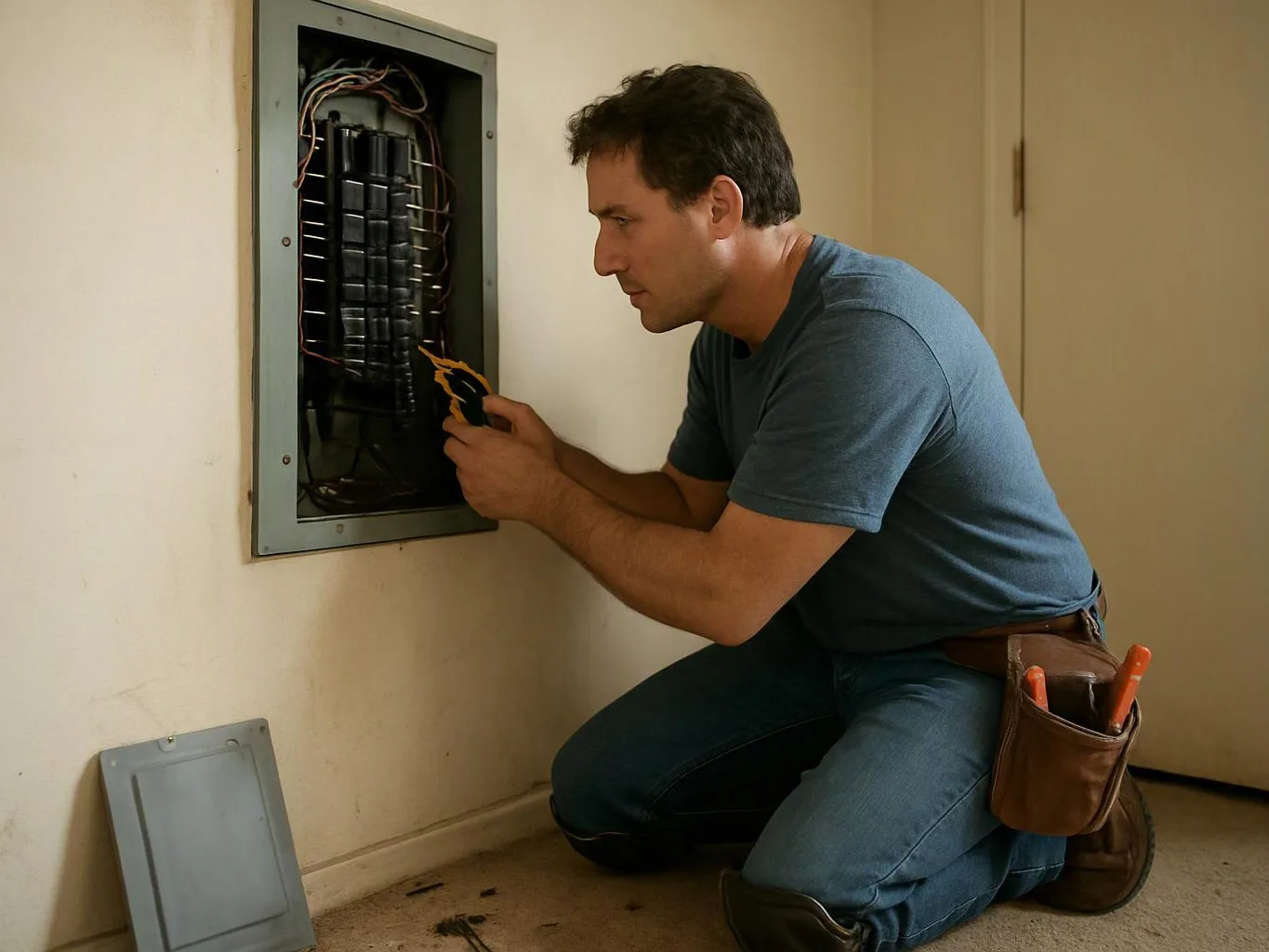
| Electrical panel inspection | Observe the panel from a safe position without removing its cover. | We inspect breaker terminals, panel connections, the bus bar, and related wiring. |
| Circuit breaker repair or wiring repair | Do not open the panel or work on energized parts. | We complete the required repair or recommend circuit breaker replacement when testing shows the breaker has failed. |
How We Diagnose a Faulty Circuit Breaker
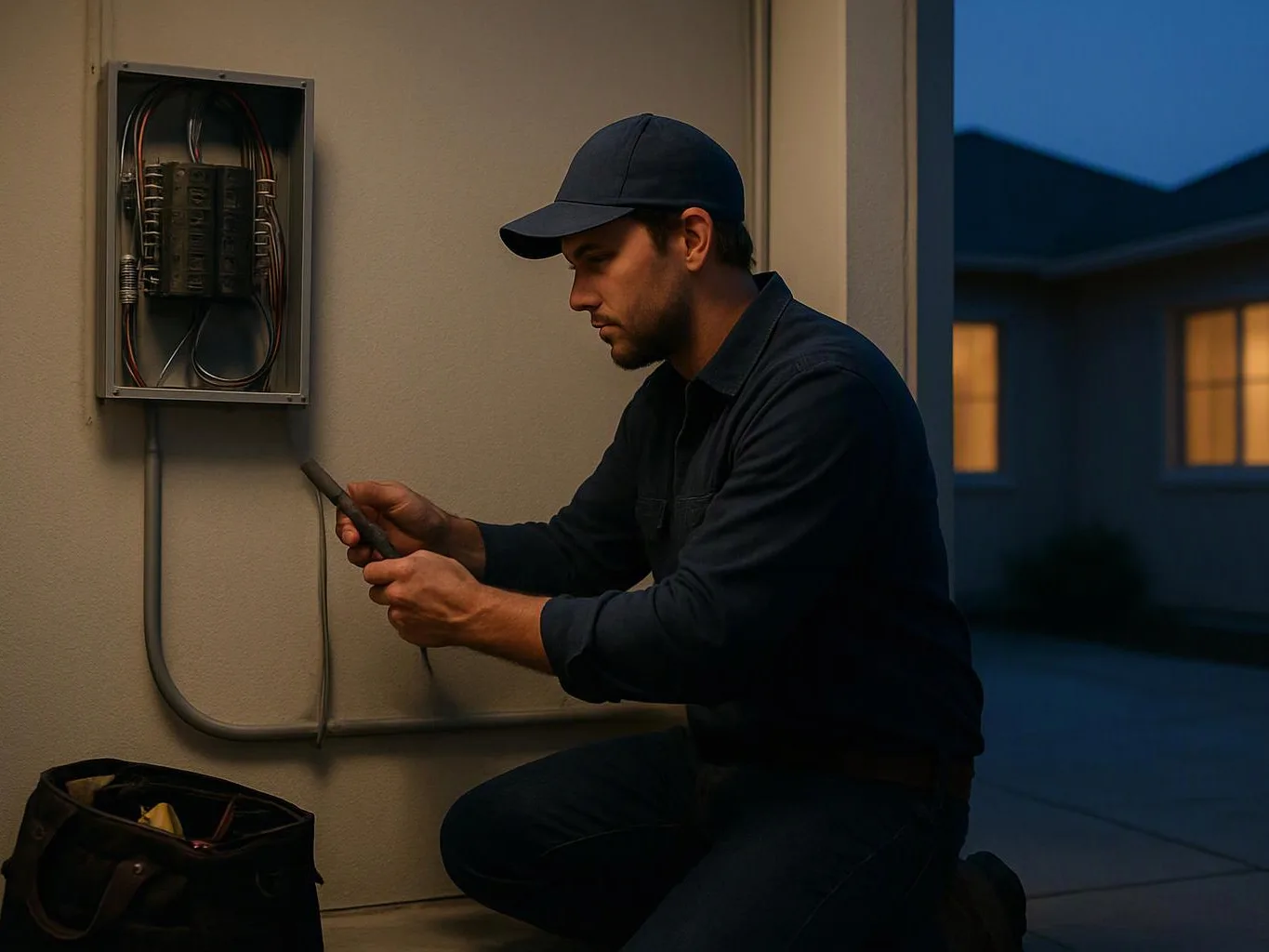
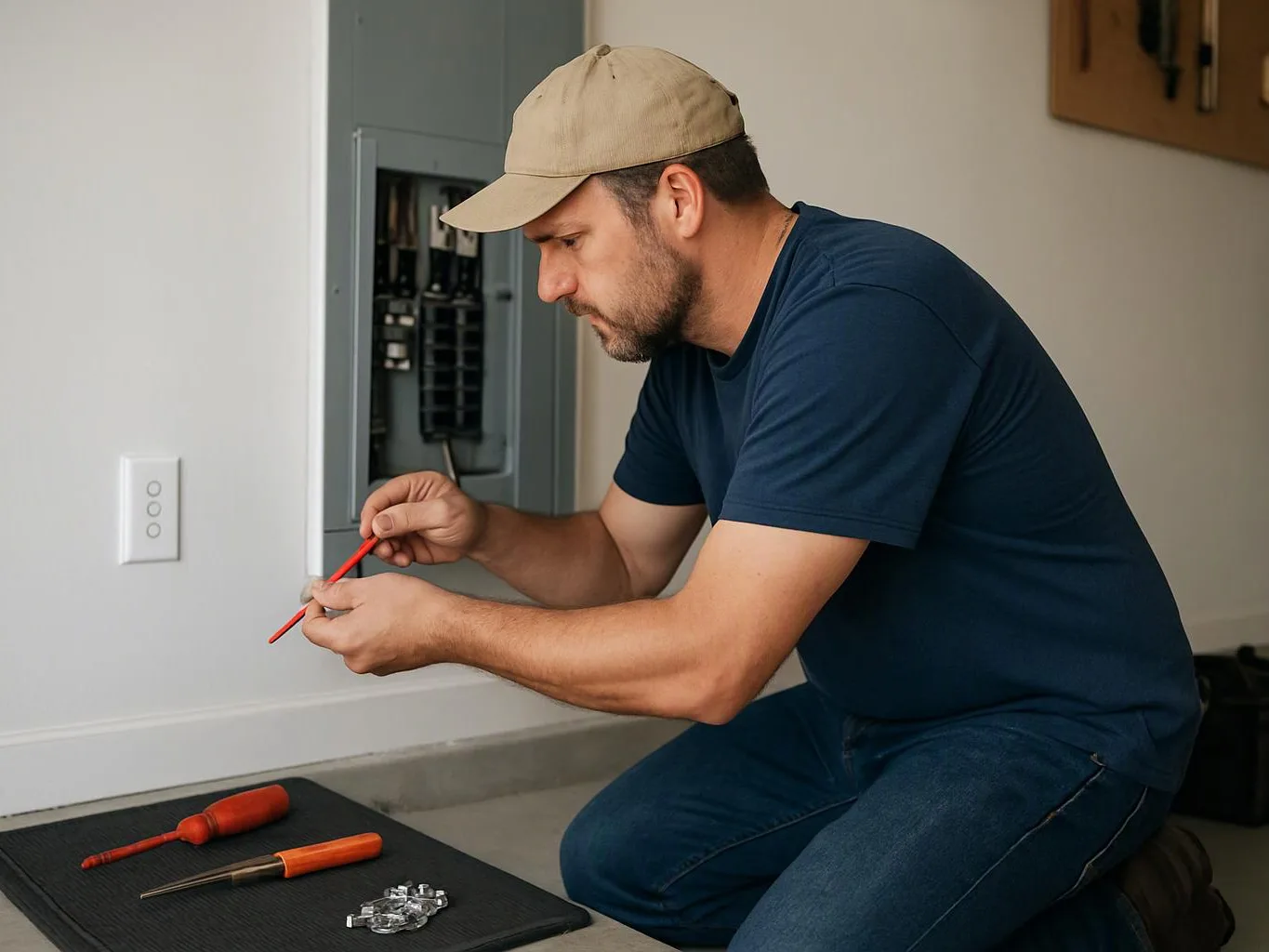
Electrical troubleshooting identifies the fault by combining panel inspection, circuit testing, connection checks, and an evaluation of the circuit load.
We inspect the breaker and panel connections for heat, looseness, corrosion, or visible damage. Our team checks circuit wiring and grounding paths to determine whether the interruption began at the breaker, the wiring, or a connected load.
Testing also helps us avoid replacing a breaker when a short circuit, ground fault, or faulty appliance is the real cause. We explain the finding before performing the appropriate electrical repair.
For more wiring-related symptoms, our guide titled Electrical Wiring Warning Signs: When San Bernardino Homes Need an Electrician offers additional context.
Does the Problem Point to the Breaker or the Electrical Panel?
Circuit breaker replacement is relevant when the breaker is damaged, will not reset, or fails circuit testing. Electrical panel repair or an upgrade becomes relevant when the panel, bus bar, connections, or available capacity creates the fault.
We inspect the breaker terminal and panel connections before choosing a repair path. Obsolete equipment, heat damage, or inadequate capacity can make panel work more appropriate than a single breaker change.
Our recommendation reflects the tested condition of the breaker, panel, circuit wiring, and connected load.
How San Bernardino Conditions Can Reveal Circuit Problems
Hot, dry summers in lower-elevation developed areas of San Bernardino can increase electrical demand and reveal weaknesses in breakers, panels, wiring, or dedicated circuits.
High-demand equipment may place extra stress on an existing circuit. We assess the dedicated circuit and panel capacity when seasonal use exposes repeated trips or heat.
Our inspection focuses on the electrical conditions at the property, including the load, connections, and wiring condition.
What Happens After We Inspect the Breaker?
After San Bernardino Electrician identifies the fault, we explain whether circuit breaker repair, replacement, wiring repair, or another electrical service addresses the problem; Free Estimates Available.
You can request a quote through our Circuit Breaker Repair service page.
Which Related Electrical Problems Should We Check?
Related electrical problems need checking when breaker symptoms involve more than one electrical component. We connect the symptoms across the system instead of treating an isolated reset as the complete repair.
Our team can assess smoke detector service, lighting repair, fuse box repair, outlet repair, light switch repair, and electrical grounding when those components share the affected circuit or show related symptoms.
Flickering lights, failed smoke detectors, warm outlets, and nuisance trips can point to a broader circuit or connection issue. The article When to Call an Electrician for Burning Smells and Hot Outlets in San Bernardino, CA covers related warning signs.
Questions About Circuit Breaker Repair
Can a bad circuit breaker cause lights to flicker?
Yes, a bad circuit breaker can contribute to flickering lights, but loose panel connections, damaged wiring, or an overloaded circuit can cause the same symptom. San Bernardino Electrician tests the affected circuit and panel before recommending repair.
Should I turn off the main breaker if I smell burning?
Turn off the main breaker only when you can do so without approaching smoke, sparks, visible damage, or unsafe heat. Leave the area and contact us when the panel or wiring appears dangerous.
What does a buzzing circuit breaker mean?
A buzzing circuit breaker can indicate vibration, arcing, a loose connection, or a breaker that is failing. Stop using the affected circuit when safe and arrange an electrical panel inspection.
Can circuit breaker problems affect smoke detectors or lights?
Yes, circuit breaker problems can interrupt power to smoke detectors or lights when those devices share the affected circuit. We check the breaker, circuit wiring, connections, and related devices.
What information should I provide when requesting a breaker repair quote?
Provide the affected circuit location, what equipment was running, how often the breaker trips, and whether you noticed heat, smoke, sparks, buzzing, or a burning smell. We use those details to plan the inspection and prepare a quote based on the tested condition.
When breaker symptoms include heat, burning odors, sparks, visible damage, or repeated trips, contact San Bernardino Electrician for circuit testing and a clear repair recommendation.
We inspect the breaker, electrical panel, circuit wiring, and connected load so you can address the actual fault safely.
Related Resources
Breaker Keeps Tripping? Causes, Risks, and Electrician Repairs
What It SolvesElectrical Sparks From an Outlet, Switch, or Panel: Emergency Repair Guide
What It SolvesDead Electrical Outlet With No Power: Troubleshooting and Repair
What It SolvesSmoke Alarm Beeping or False Alarms: Repair and Service Options