
Skip to content

Ceiling Fan Repair in Jurupa Valley, California

Blade drag gets checked first in Jurupa Valley when a ceiling fan makes noise. We inspect the fan's housing, motor, and wiring before recommending repair.

Licensed & InsuredFree EstimatesWarranty AvailableUpfront, Transparent Pricing

Quick Summary: ceiling fan repairs in Jurupa Valley, California

Ceiling Fan Repair in Jurupa Valley is provided by San Bernardino Electrician for noisy fans, loose housings, worn bearings, motor hum, and electrical buzzing. The service covers homes and businesses in San Bernardino and nearby Inland Empire communities, with clear explanations before work begins.

  • What we do: San Bernardino Electrician provides Ceiling Fan Repair for Jurupa Valley, California homes and businesses.
  • What is included: The service includes noise diagnosis, blade and housing checks, bearing assessment, motor checks, and electrical connection testing.
  • What you get: The fan operates safely with the repair scope clearly explained before work begins.

Why does a ceiling fan keep making noise after it starts?

Blade drag, worn bearings, loose housing, motor hum, or electrical buzzing can cause repeated fan noise. The sound type helps direct the inspection, but the fan should be switched off if the noise includes sparking, burning smells, or a harsh electrical buzz.
Ceiling Fan Repair in Jurupa Valley for Noisy Fans

Ceiling fan repair addresses a fan that grinds, hums, rattles, or buzzes during use. The work suits homeowners, landlords, offices, and other businesses with an existing ceiling fan that no longer runs as expected.

A noisy fan does not always need a new motor. Blade drag can point to contact or alignment trouble, while a loose housing can create a rattle through the ceiling. Worn bearings may create a rough sound, and electrical buzzing calls for a closer wiring and motor check.

San Bernardino Electrician diagnoses the sound and the fan's parts before setting the repair scope. If the issue involves the branch circuit, damaged wiring, or a wider electrical fault, we explain that work before proceeding. A new installation is the better fit when the existing fan is damaged beyond practical repair.

  • Identify whether the sound is rubbing, rattling, humming, or buzzing.
  • Check blade clearance, blade condition, housing, and mounting points.
  • Inspect the motor and bearings for signs of wear.
  • Test electrical connections when the noise suggests a wiring fault.
  • Confirm whether repair or replacement better fits the fan's condition.
A beige wall outlet with two sockets sits on a painted wall, close up

Service Overview

Ceiling Fan Repair is a service that finds and corrects mechanical or electrical faults in a ceiling fan.

  • The work differs from ceiling fan installation because it focuses on an existing fan's noise, movement, mounting, motor, or wiring.
  • San Bernardino Electrician provides this service for homes and businesses in Jurupa Valley.

What Ceiling Fan Repair Changes for You

A sound-based diagnosis helps identify whether the issue is mechanical or electrical.

A housing and mounting check can address rattles that spread through the ceiling.

Bearing and motor checks help separate a repairable fault from a replacement decision.

Electrical testing helps identify unsafe buzzing before the fan returns to regular use.

Clear explanations help homeowners and businesses choose the next repair step.

What You Get From Our Fan Repair Process

A repair scope based on the sound

The first check links the noise to a part, such as the blade, housing, bearing, motor, or wiring. A full ceiling fan replacement is the wrong job when the fault is limited to a repairable part.

Electrical concerns handled as electrical work

A motor hum differs from electrical buzzing, so we check the connection and related wiring when the sound points beyond the fan's moving parts.

Clear answers before work starts

We explain what we found, what the repair involves, and whether the existing fan is a sensible candidate for repair.

Process

Steps We Use To Repair A Noisy Ceiling Fan

1

Describe the fan noise

We note whether the sound is rubbing, rattling, humming, grinding, or buzzing, and when it begins.

2

Inspect blades and housing

We check blade clearance, housing fasteners, mounting points, and visible wear around the fan.

3

Check bearings and motor

We assess the motor and bearings for rough movement, excess noise, or signs that the fan needs replacement.

4

Test electrical connections

We inspect wiring and connections when the sound suggests an electrical fault, then isolate unsafe conditions.

5

Explain the repair scope

We describe the needed work and provide a quote before the repair begins.

What Noisy Ceiling Fan Repairs Include

San Bernardino Electrician provides comprehensive Ceiling Fan Repair in Jurupa Valley. Here's what you get:

  • We inspect the blades and housing for contact that creates blade drag.
  • We check mounting points and housing fasteners for looseness.
  • We assess the bearings and motor for rough sounds or unusual hum.
  • We inspect electrical connections when the fan produces a buzz.
  • We explain the repair scope and any related electrical concern before work begins.

Fan Noise Types And Likely Checks

The sound does not prove the fault, but it helps direct the first inspection.

Noise typeFirst checkRepair decision
Blade dragBlade clearance and nearby housingCorrect contact if the fan parts remain sound
Loose housingFasteners and mounting pointsSecure or repair the affected housing parts
Worn bearingsMotor movement and rough operationAssess repair against replacement
Motor humMotor and control connectionTest the motor and related electrical parts
Electrical buzzingWiring and electrical connectionsIsolate the electrical concern before use

The San Bernardino Electrician Standard

  • Urgent Electrical Assistance
  • Problem Diagnosis
  • Electrical Safety
  • Clear Communication

Questions About Noisy Ceiling Fans

What causes a ceiling fan to make noise?

Blade drag is a common cause of ceiling fan noise, but worn bearings, loose housing, motor hum, and electrical buzzing can also create sound. San Bernardino Electrician checks the fan's blades, housing, motor, and wiring to identify the source. Turn the fan off if the noise includes sparking, a burning smell, or a sharp electrical buzz.

How does a ceiling fan repair visit move from the first call to the last step?

A ceiling fan repair visit starts with the reported sound and ends with a explained repair scope.

  1. We record when the noise begins.
  2. We inspect blades, housing, bearings, and motor parts.
  3. We check wiring when buzzing suggests an electrical fault.
  4. We provide a quote before work begins.

The final step depends on the condition found during inspection.

How can a customer tell whether ceiling fan repair fits the property?

Ceiling fan repair fits a property when an existing fan has a noise, mounting issue, motor concern, or wiring symptom. Homes, offices, and businesses can all need this work. We inspect access, fan condition, and the suspected fault before confirming the repair scope. A new installation fits better when the existing fan cannot be repaired sensibly.

Which part of the property decides the scope of ceiling fan repair?

The ceiling fan's mounting point and connected wiring decide much of the repair scope. We check the housing, support connection, switch, motor, and branch-circuit connection when needed. Ceiling height and access also affect the work setup. We explain any added electrical repair before including it in the quote.

When does ceiling fan noise become an urgent electrical concern?

Electrical buzzing becomes urgent when it comes with sparking, a burning smell, heat, or a breaker that keeps tripping. Switch off the fan and avoid touching damaged parts. Our team checks the fan and related wiring to isolate the concern. We treat the symptom as an electrical issue until testing shows the source.

Why does a fan hum even when the blades look fine?

Motor hum can come from the motor, bearings, control parts, or an electrical connection. Blade appearance alone cannot identify the source. We inspect the motor and test the related connection before choosing repair work. A steady hum that worsens, heats the housing, or comes with a smell needs prompt attention.

What details should I provide when requesting a fan repair quote?

The fan's sound, location, start point, and recent changes help us prepare for the assessment. Mention whether the noise is a rub, rattle, hum, grind, or buzz. Photos of the fan and ceiling can show access conditions. We still inspect the unit before giving a quote because the sound can have more than one cause.
Contact

Request A Ceiling Fan Repair Estimate In Jurupa Valley

Get a clear repair scope for your noisy ceiling fan, and urgent requests get priority scheduling.

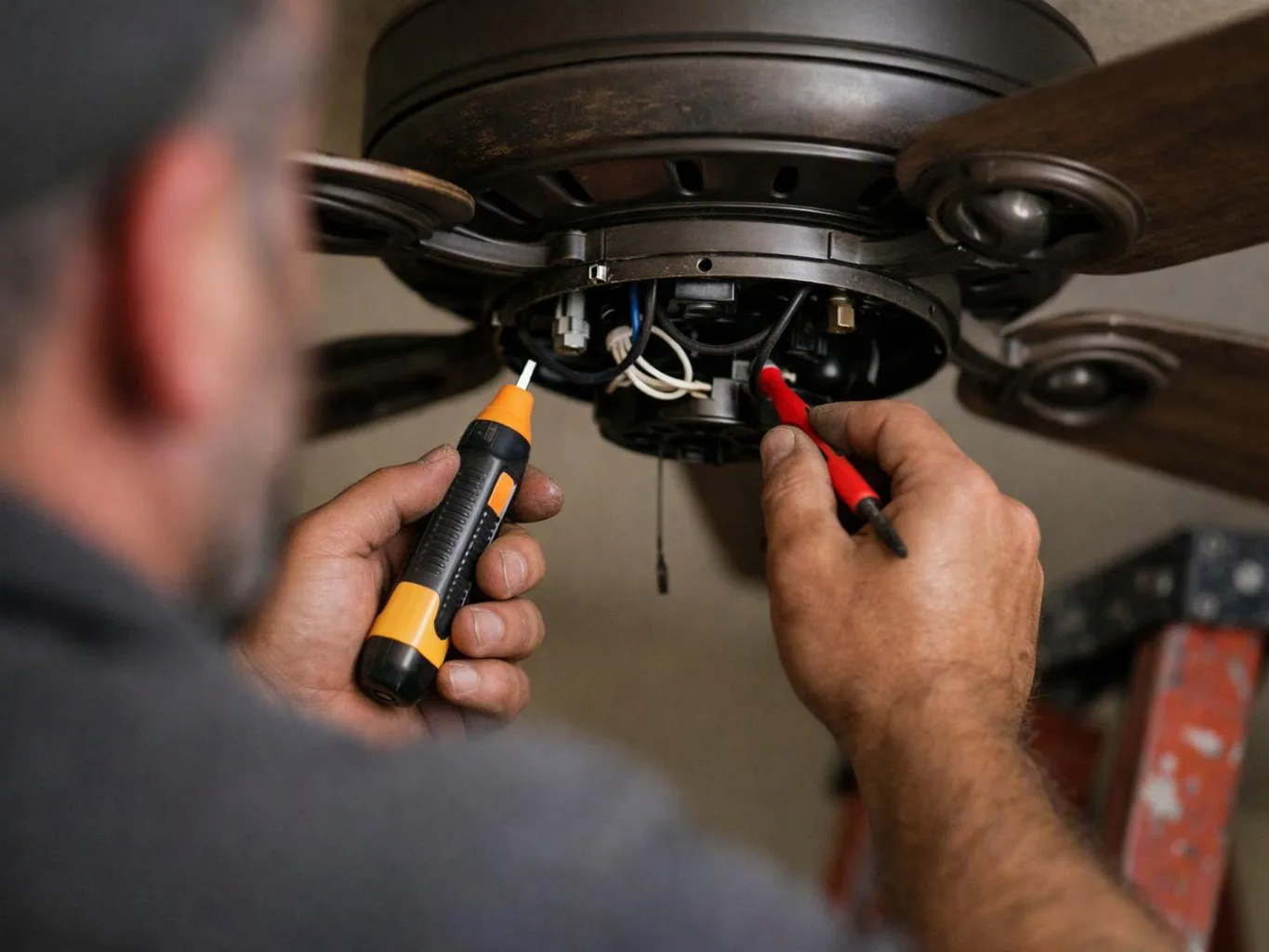
A person tests exposed wires inside a ceiling fan with two handheld tools
(909) 271-0200