Questions About Panel Upgrade Safety
How does a panel upgrade visit move from the first call to the last step?
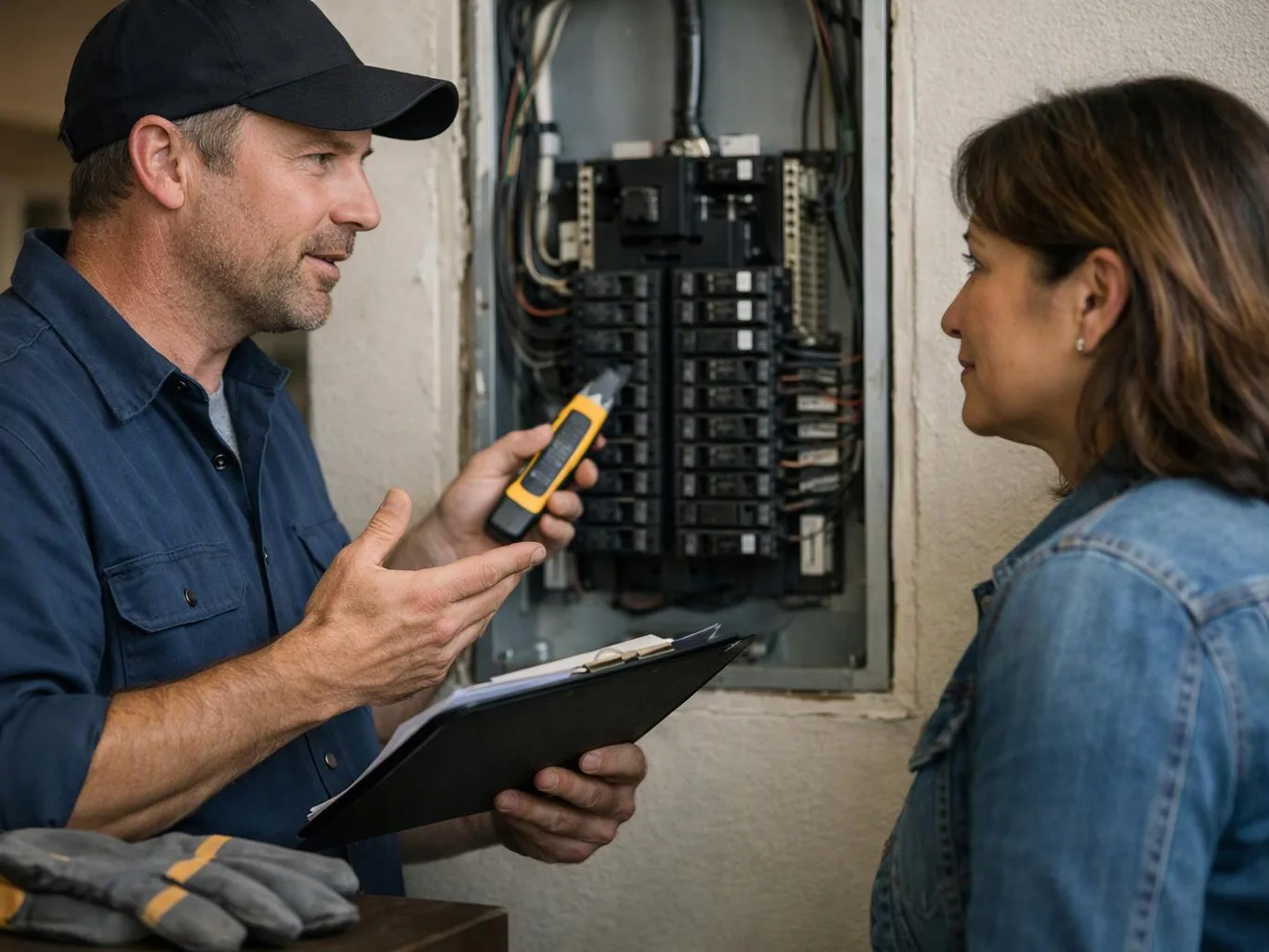
The visit moves from inspection to load review, scope approval, installation, and testing. We first examine the panel and trace circuits. Next, we explain the work and provide a free estimate. After approval, we complete the panel work, test the circuits, and review the result with you.
What signs show that a panel needs more than one breaker repair?
Repeated trips, heat marks, buzzing, damaged fuse holders, and limited capacity can point to a wider panel problem. We inspect the enclosure, bus connections, conductors, and grounding before choosing a repair. A single breaker replacement fits only when the rest of the panel remains sound.
Which part of the property decides the scope of panel work?
The existing service equipment and connected electrical load decide the panel scope. We review the panel rating, circuit layout, conductor condition, grounding, and equipment served. Added lighting, appliances, or other loads may change the work needed. We explain those findings before the estimate is approved.
How can a customer tell whether a panel upgrade fits the property?
A panel upgrade fits when the existing equipment cannot safely support the property's circuits or shows serious wear. We check capacity, breaker condition, fuse work, conductors, and grounding. If the problem stays within one outlet or branch circuit, targeted electrical repair may fit better.
What does the estimate include for this panel work?
The estimate describes the panel scope, related circuit work, materials, testing, and other known project needs. We base it on the inspection, load review, circuit tracing, and access conditions. Free estimates are available, and we explain the work before it begins.
Should I reset a tripped breaker before requesting an assessment?
A breaker that trips again should stay off until the cause is checked. We inspect the circuit for overloads, faults, damaged wiring, and panel problems. Do not keep resetting a breaker, especially when you notice heat, buzzing, smoke, or a burning smell.