What outlet safety issues require attention?
An open ground, reverse polarity, heat, sparks, moisture, and missing GFCI protection require attention. San Bernardino Electrician tests the receptacle and traces the circuit before choosing a repair. We also inspect loose terminals, damaged boxes, and signs of corrosion. Stop using an outlet with a burning smell, buzzing, visible sparks, or water nearby.
What does the crew look at first during an outlet repair?
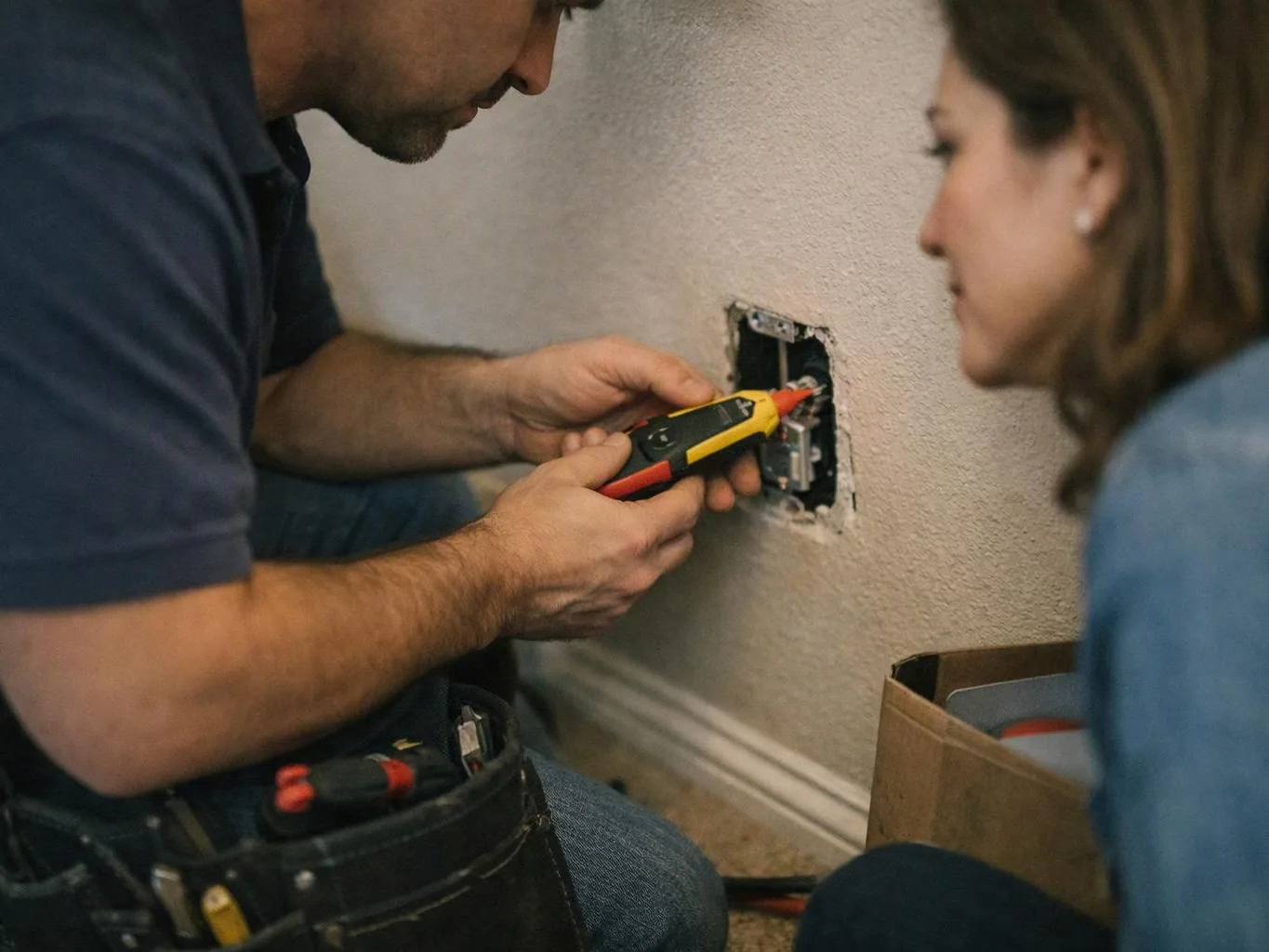
The visible outlet condition comes first, including heat marks, cracks, looseness, sparks, and moisture. We then test the receptacle and check the breaker, box, terminals, grounding path, and nearby outlets. This order helps us separate a damaged receptacle from a circuit fault that needs more investigation.
How does the outlet repair process work?
Outlet repair follows inspection, circuit testing, fault tracing, repair selection, and final verification.
- We document the symptom.
- We inspect the outlet and box.
- We test polarity, grounding, and GFCI operation.
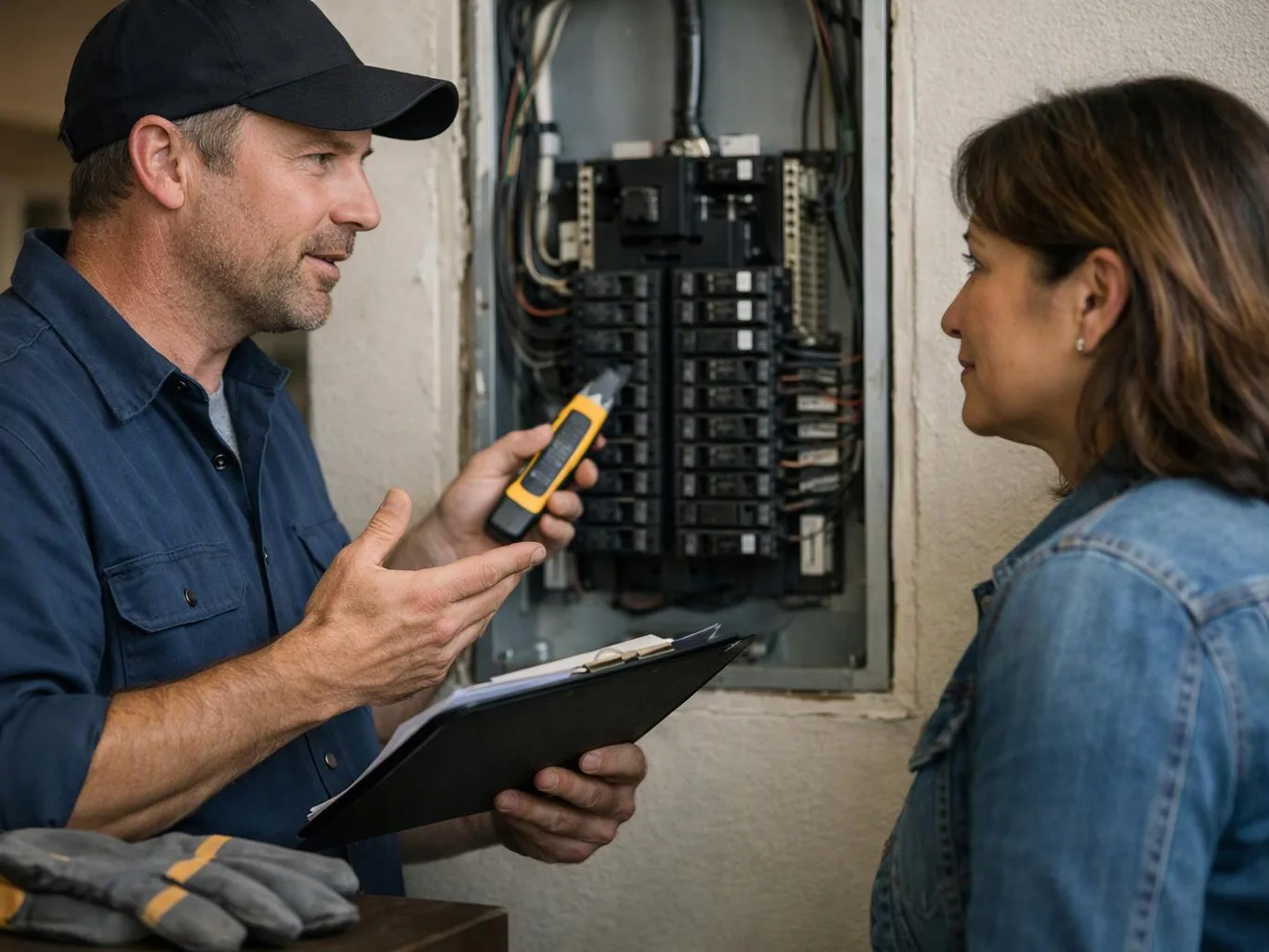
- We explain the estimate and complete the approved work.
- We test the repaired outlet again.
Which outlet parts affect the repair scope?
The receptacle, terminals, electrical box, branch-circuit wiring, grounding conductor, and GFCI device affect the repair scope. A worn receptacle may need a direct replacement, while damaged wiring or a poor grounding path can require circuit work. We identify the affected part before describing the repair.
When should I stop using a receptacle?
Stop using a receptacle when it sparks, smells burnt, feels hot, shows moisture, or trips the breaker repeatedly. Leave the device unplugged and avoid repeated resets while the condition is checked. We inspect the outlet and connected circuit to identify the hazard and explain the safe repair path.
Why can an outlet show power but still need repair?
An outlet can deliver power while still having reversed polarity, a missing ground, loose terminals, heat damage, or failed GFCI protection. A plug-in device alone cannot confirm every safety condition. We use electrical testing and visual inspection to check the receptacle and its circuit connections.
What should be checked before outlet repair is scheduled?
The outlet symptom, affected devices, breaker status, visible damage, and any heat, sparks, burning smell, or moisture should be checked first. Record which receptacles are affected, but don't remove the cover or handle exposed wiring. This information helps us prepare for the inspection and set a focused repair scope.