Skip to content
Glossary

What is Arc-Fault Circuit Interrupter?

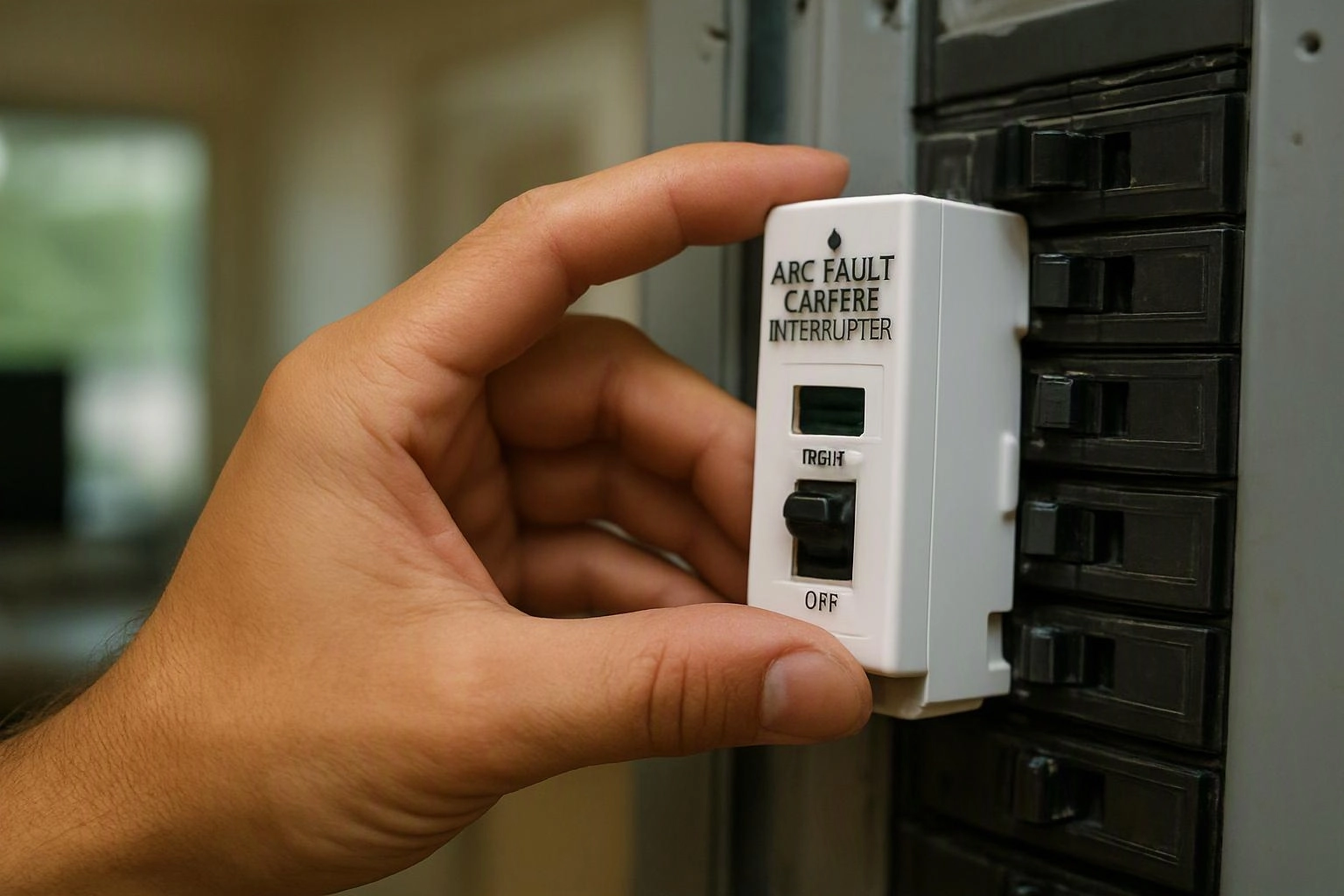
Arc-Fault Circuit Interrupter is a protective device that detects dangerous electrical arcing in branch-circuit wiring and disconnects power before the arc can start a fire. An AFCI monitors the current waveform for patterns linked to damaged conductors, loose connections, or crushed wires. AFCIs are installed as circuit breakers or receptacles.

Quick Facts About Arc-Fault Circuit Interrupter

Category

Electrical safety device

Used for

Detecting hazardous electrical arcs

Common confusion

AFCI protects against arcs, while GFCI protects against ground faults

Relevant standard

National Electrical Code, Article 210.12

Also called

AFCI, Arc-Fault Breaker

Often discussed with

Circuit Breaker Repair

Key Takeaways About Arc-Fault Circuit Interrupter

  • AFCIs find dangerous arcs that ordinary circuit breakers may not see.
  • The device cuts power when current patterns point to a dangerous arc.
  • AFCI protection may come from a breaker, receptacle, or combination device.
  • A tripping AFCI can point to damaged wiring, a loose connection, or a faulty appliance.

Understanding Arc-Fault Circuit Interrupter

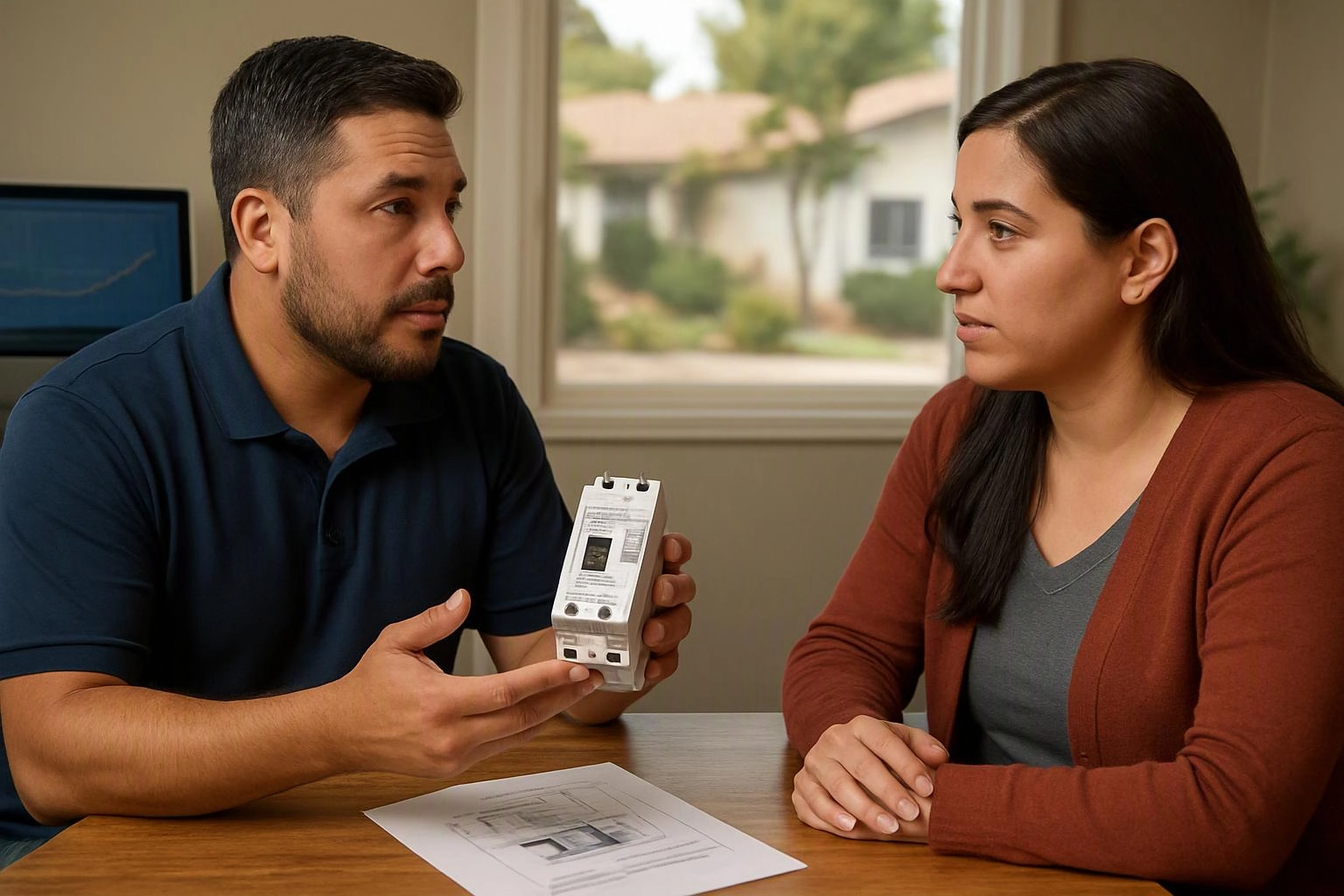
SanBernardino-Electrician.com in San Bernardino — Understanding Arc-Fault Circuit Interrupter

Arc-Fault Circuit Interrupter is a device designed to reduce fire risk. It protects against unwanted electrical arcing. An arc forms when electricity jumps across a gap. This often happens at a loose terminal, damaged wire, or broken conductor. Arc heat can damage insulation or ignite nearby materials.

Related glossary terms: Ground-Fault Circuit Interrupter, Branch Circuit, Electrical Code.

An AFCI differs from a standard circuit breaker. It studies electrical current shape and timing. It doesn't only measure current amount. A normal breaker mainly responds to overloads and short circuits. An AFCI looks for electrical noise and repeating patterns. These patterns may suggest arcing. Common forms include.AFCI circuit breaker, an AFCI receptacle, and a combination-type AFCI device.

How Arc-Fault Circuit Interrupter Works, Is Measured, or Is Used?

An AFCI continuously monitors current on a protected circuit. Its electronic sensing system compares current changes with arc patterns. These include series arcs and parallel arcs. A series arc occurs along one conductor path. A parallel arc occurs between conductors or between a conductor and ground. If the device finds a dangerous pattern, its trip mechanism opens the circuit.

Installation follows the circuit design, panel type, and conductor arrangement. It also follows the applicable electrical code edition. A breaker-type AFCI protects the branch circuit from the panel. A receptacle-type device protects wiring and outlets downstream. A qualified installer checks the panel listing, wire connections, and neutral routing. The installer also checks grounding and device instructions before testing.

Testing should follow the manufacturer's instructions. Most AFCI devices have a test button. The button creates an internal test condition and should disconnect power. A reset confirms that the mechanism can restore power. It doesn't prove that every wiring fault has been corrected. Repeated trips require diagnosis instead of repeated resets.

Why Arc-Fault Circuit Interrupter Matters?

Unfinished house interior with exposed wiring, breaker panels, and electrical tools across the floor

AFCI protection addresses an electrical hazard without a large overload. A loose connection can create heat at one point. The total circuit current can remain below a standard breaker's rating. Fire prevention, branch-circuit protection, and early fault detection are key reasons. Designers specify AFCIs for these reasons.

The device also helps guide troubleshooting. An AFCI may trip after connecting a new appliance. The appliance, cord, receptacle, or circuit may need inspection. The device may trip without an obvious load change. Damaged cable, moisture, or a loose termination may cause this. A neutral connection problem may also be involved. An AFCI reduces risk. But it can't repair damaged wiring. It can't replace safe installation practices.

When Arc-Fault Circuit Interrupter Matters Most?

AFCIs matter during new construction, remodeling, and panel replacement. They also matter during changes to existing branch circuits. The applicable edition.National Electrical Code determines where protection is required. Local amendments also affect these rules. Bedrooms, living areas, hallways, kitchens, and other dwelling spaces may have specific requirements. The project must review the exact location and wiring method.

They also matter in older homes with brittle insulation or crowded boxes. Loose receptacles or circuits may trip without an obvious overload. Stop resetting an AFCI if it trips repeatedly. Stop if it smells hot, feels warm, or shows discoloration. Turn off the circuit when safe. Keep damaged equipment disconnected. Have the fault located before restoring normal use.

How to Evaluate Arc-Fault Circuit Interrupter?

  • Check that the AFCI rating matches the panel, circuit voltage, conductor size, and connected load.
  • Press the test button according to manufacturer instructions and verify that the circuit disconnects.
  • Confirm that the device resets only after the test condition ends.
  • Look for heat damage, loose terminals, damaged insulation, or repeated unexplained trips.
  • Verify that installation follows the applicable National Electrical Code edition and local amendments.

Related Concepts Compared

Arc-Fault Circuit Interrupter vs. Ground-Fault Circuit Interrupter

A GFCI detects current leaking from the intended circuit path, which helps protect against shock. An AFCI detects electrical patterns linked to hazardous arcing and fire risk.

Arc-Fault Circuit Interrupter vs. Circuit Breaker

A standard circuit breaker usually responds to overloads and short circuits. An AFCI adds electronic arc detection to the circuit protection function.

Arc-Fault Circuit Interrupter vs. Short Circuit

A short circuit creates an unintended low-resistance path between conductors. An arc fault can involve a smaller current that still produces damaging heat.

Expert Note

A nuisance trip does not prove that the AFCI is defective. The cause may be a shared neutral, incorrect neutral routing, a loose connection, a damaged cord, or an appliance with an internal fault. Testing must include the wiring and connected equipment, not only the device.

Common Mistakes or Myths About Arc-Fault Circuit Interrupter

  • Treating an AFCI as a replacement for a GFCI when shock protection is required.
  • Resetting a repeatedly tripping AFCI without finding the cause.
  • Installing a breaker that is not listed for the specific electrical panel.
  • Leaving a loose neutral, damaged cable, or overheated receptacle in service.
  • Assuming the test button proves that the entire circuit is safe.

Arc-Fault Circuit Interrupter in Practice: A Real-World Example

A bedroom circuit has a loose receptacle terminal behind a wall plate. The loose connection makes arcs at times. The load stays below the standard breaker rating. An AFCI finds the odd current pattern and shuts off the circuit before heat can ignite nearby material.

Sources & Further Reading on Arc-Fault Circuit Interrupter

Related Terms

Ground-Fault Circuit Interrupter

Ground-Fault Circuit Interrupter is a protective device that monitors current flowing through a circuit and quickly…

Branch Circuit

Branch Circuit is the portion of an electrical system that carries power from the final overcurrent…

Electrical Code

Electrical Code is a set of enforceable safety rules for designing, installing, inspecting, and maintaining electrical…

National Electrical Code

National Electrical Code is a safety standard published by the National Fire Protection Association that sets…

SanBernardino-Electrician.com

Have Questions About Arc-Fault Circuit Interrupter?

Contact SanBernardino-Electrician.com for practical guidance on Arc-Fault Circuit Interrupter and related 24 hour electrician work in San Bernardino.

+1 (909) 271-0200