
What is National Electrical Code?
National Electrical Code is a safety standard published by the National Fire Protection Association that sets minimum requirements for electrical wiring, equipment, installation, and inspection. The code covers homes, commercial buildings, industrial sites, and special locations. Local governments adopt and enforce editions of the code through laws, permits, and inspections.
Quick Facts About National Electrical Code
Category
Electrical safety and installation standard
Used for
Designing, installing, permitting, and inspecting electrical systems
Common confusion
The NEC is a model code, not automatically federal law.
Published by
National Fire Protection Association
Also called
NEC, NFPA 70
Often discussed with
Circuit Breaker Repair, Fuse Box Repair
Key Takeaways About National Electrical Code
- The NEC sets minimum safety rules for electrical installations and equipment.
- The National Fire Protection Association publishes a revised NEC edition on a regular cycle.
- Local authorities choose which NEC edition applies and may add local requirements.
- Permits and inspections check that covered electrical work follows adopted code rules.
- The NEC does not replace design judgment, manufacturer instructions, or local regulations.
Understanding National Electrical Code
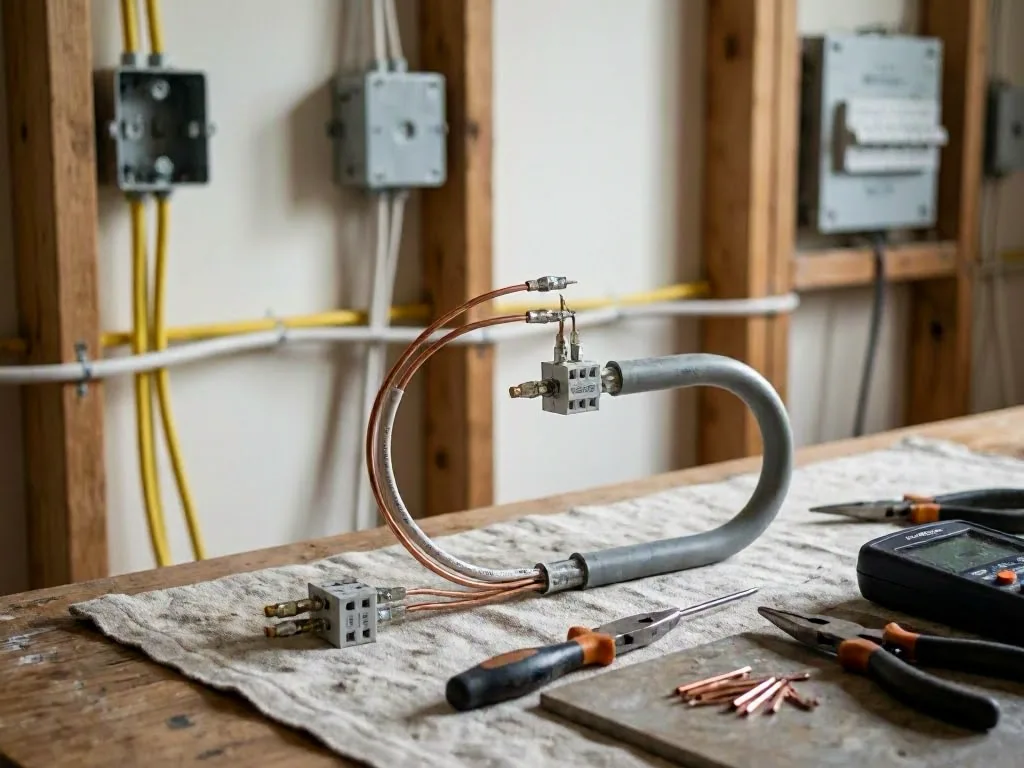
National Electrical Codeis a model code for safe electrical work. People often call it.NEC or NFPA 70. The National Fire Protection Association publishes it through public review and revision. Its rules address conductors, overcurrent protection, grounding, wiring methods, equipment, and special locations.
Related glossary terms: Electrical Code, Branch Circuit, Load Calculation.
The NEC isn't automatically law across the United States. A state, county, city, or other authority must adopt an edition. Inspectors can then enforce it as part of local law. The adopted code may include amendments. Requirements depend on project location, permit date, building type, and work scope.
How National Electrical Code Works, Is Measured, or Is Used?
Electrical designers and installers use the NEC as a rule set. They use it during planning and construction. They identify the circuit load and choose a suitable wire gauge. They select overcurrent protection and provide required grounding and bonding. They also check equipment listings and installation instructions. They check working clearances and conditions that affect conductor ratings.
Compliance is checked through documents, physical installation, and testing. A permit application may include a load calculation and circuit information. It may also include equipment details. During inspection, an authority checks items such as box fill and conductor connections. It checks cable protection, panel labeling, and receptacle placement. It checks protection from ground faults or arcs. The NEC doesn't produce one overall score. Each applicable rule must be satisfied for the installation to pass.
- Determine the authority having jurisdiction and the adopted NEC edition.
- Identify the electrical system voltage, available fault current, and connected loads.
- Apply the correct articles, tables, exceptions, and manufacturer instructions.
- Complete required permits, inspections, and corrections before covering concealed work.
Why National Electrical Code Matters?

The NEC reduces hazards linked to shock, fire, overheating, and equipment damage. Correct conductor sizing limits excess heat. Properly rated breakers stop abnormal current before wiring suffers damage. Ground-fault circuit interrupters help protect people in some locations. Contact with water or grounded surfaces raises shock risk. Arc-fault circuit interrupters address certain dangerous arcing conditions.
Code compliance gives inspectors and property owners a shared technical reference. It also helps future electricians. A compliant installation can support safer repairs and clearer maintenance decisions. It can also support smoother project approval. Compliance alone doesn't guarantee good design or proper operation. Equipment condition, workmanship, and later changes still affect safety.
When National Electrical Code Matters Most?
NEC requirements matter during new construction, service upgrades, and panel replacements. They matter during additions, remodels, and repairs that change wiring or protection. They also matter when a building changes use or adds equipment. Examples include electric vehicle chargers, heat pumps, generators, solar equipment, and large motors. These projects can change load calculations and conductor ratings. They can also change disconnect needs and available fault current.
Older wiring often creates a code question, not a simple pass-or-fail answer. Many areas allow existing installations to remain if they were legal when installed. Altered portions may need to meet current rules. An inspector or design expert checks the adopted code and local amendments. They also check permit scope and specific hazards. They then decide what must change. Emergency repairs should restore safe operation quickly. Required permits or corrections should follow when local rules call for them.
How to Evaluate National Electrical Code?
- Confirm the authority having jurisdiction and the NEC edition adopted for the project.
- Check whether the permit scope requires a load calculation or service capacity review.
- Verify conductor size, breaker rating, grounding, bonding, and equipment listing.
- Look for required GFCI, AFCI, disconnect, working-clearance, and labeling provisions.
- Ask whether local amendments or manufacturer instructions add requirements beyond the base NEC text.
Related Concepts Compared
National Electrical Code vs. Electrical Code
Electrical code is a broad term for enforceable electrical rules. The NEC is a specific model code that many jurisdictions adopt as their electrical code.
National Electrical Code vs. Building Code
A building code covers wider construction topics, including structure, fire safety, plumbing, and energy use. The NEC focuses on electrical installations and related hazards.
National Electrical Code vs. National Electrical Safety Code
The National Electrical Safety Code mainly addresses utility power systems, substations, and overhead or underground lines. The NEC mainly covers premises wiring inside buildings and similar sites.
National Electrical Code vs. Local Electrical Ordinance
A local electrical ordinance is enforceable law issued by a city or other authority. The ordinance may adopt the NEC and add local amendments or administrative requirements.
Expert Note
The applicable NEC edition is not always the newest published edition. Permit timing, local adoption, amendments, and project scope can change the rules that an inspector applies.
Common Mistakes or Myths About National Electrical Code
- Assuming the newest NEC edition automatically applies everywhere.
- Treating NEC guidance as federal law without checking local adoption.
- Sizing a breaker from the appliance label while ignoring conductor limits.
- Ignoring manufacturer instructions because the basic NEC rule appears satisfied.
- Covering wiring before required inspection or without documenting concealed work.
National Electrical Code in Practice: A Real-World Example
A homeowner adds a 50-ampere circuit for an electric range during a kitchen remodel. The installer checks the load, picks conductors and overcurrent protection, and provides grounding. The installer follows receptacle and GFCI rules in the locally adopted NEC. The authority having jurisdiction then inspects the permitted work.
Sources & Further Reading on National Electrical Code
Related Services
Related Terms
Electrical Code
Electrical Code is a set of enforceable safety rules for designing, installing, inspecting, and maintaining electrical…
Branch Circuit
Branch Circuit is the portion of an electrical system that carries power from the final overcurrent…
Load Calculation
Load Calculation is the process of estimating the electrical demand a building, circuit, or service will…
Ground-Fault Circuit Interrupter
Ground-Fault Circuit Interrupter is a protective device that monitors current flowing through a circuit and quickly…
SanBernardino-Electrician.com
Have Questions About National Electrical Code?
Contact SanBernardino-Electrician.com for practical guidance on National Electrical Code and related 24 hour electrician work in San Bernardino.