
What is Ground-Fault Circuit Interrupter?
Ground-Fault Circuit Interrupter is a protective device that monitors current flowing through a circuit and quickly disconnects power when some current takes an unintended path to ground. A GFCI helps reduce shock risk near water by comparing outgoing and returning current, then opening the circuit when the difference reaches its trip level.
Quick Facts About Ground-Fault Circuit Interrupter
Category
Electrical safety device
Used for
Reducing electric shock risk
Measured by
Current imbalance in milliamps
Common confusion
A GFCI is not the same as a circuit breaker
Relevant standard
NEC Article 210.8
Also called
GFCI, Ground-Fault Circuit-Interrupter
Key Takeaways About Ground-Fault Circuit Interrupter
- A GFCI compares current leaving a circuit with current returning through the circuit.
- The device opens the circuit when leakage indicates a possible shock path.
- GFCI protection is common near sinks, bathrooms, garages, outdoors, and wet locations.
- The TEST button should shut off power, while RESET should restore power after testing.
- A GFCI does not replace proper grounding, overcurrent protection, or AFCI protection.
Understanding Ground-Fault Circuit Interrupter

Ground-Fault Circuit Interrupter, often called a GFCI, protects people from electric shock. It watches current moving out on the ungrounded conductor. It compares that current with current returning on the grounded conductor. If the values differ, electricity may travel through a person, water, or equipment case. It may also travel through another unintended path.
Related glossary terms: Arc-Fault Circuit Interrupter, Branch Circuit, Electrical Code.
A GFCI responds faster than a person can react to dangerous shock. Common forms include.GFCI receptacle, a GFCI circuit breaker, and a portable GFCI device. The receptacle type usually has TEST and RESET buttons on its face. A breaker type protects an entire branch circuit.
How Ground-Fault Circuit Interrupter Works, Is Measured, or Is Used?
Inside the device, a sensing transformer compares current on the circuit conductors. Under normal conditions, outgoing and returning currents are nearly equal. Their difference is close to zero. If the imbalance reaches the device trip range, an internal mechanism opens the contacts. This range commonly measures 4 to 6 milliamps for personnel protection.
The basic relationship is simple. Leakage current equals outgoing current minus returning current. For example, 5.000 amperes leave a receptacle. Then 4.995 amperes return. The difference is 0.005 amperes, or 5 milliamps. A qualified installer places protection where the electrical code requires it. The installer also checks downstream receptacles for protection. This check applies when the circuit design calls for it.
Pressing TEST creates a small, planned imbalance. The device should then disconnect power. Pressing RESET should restore power. This works when the wiring and device operate correctly. A GFCI that won't reset may have no supply power. It may have a downstream fault, reversed line and load connections, or a failed device. A continuing leakage problem may also cause this issue.
Why Ground-Fault Circuit Interrupter Matters?
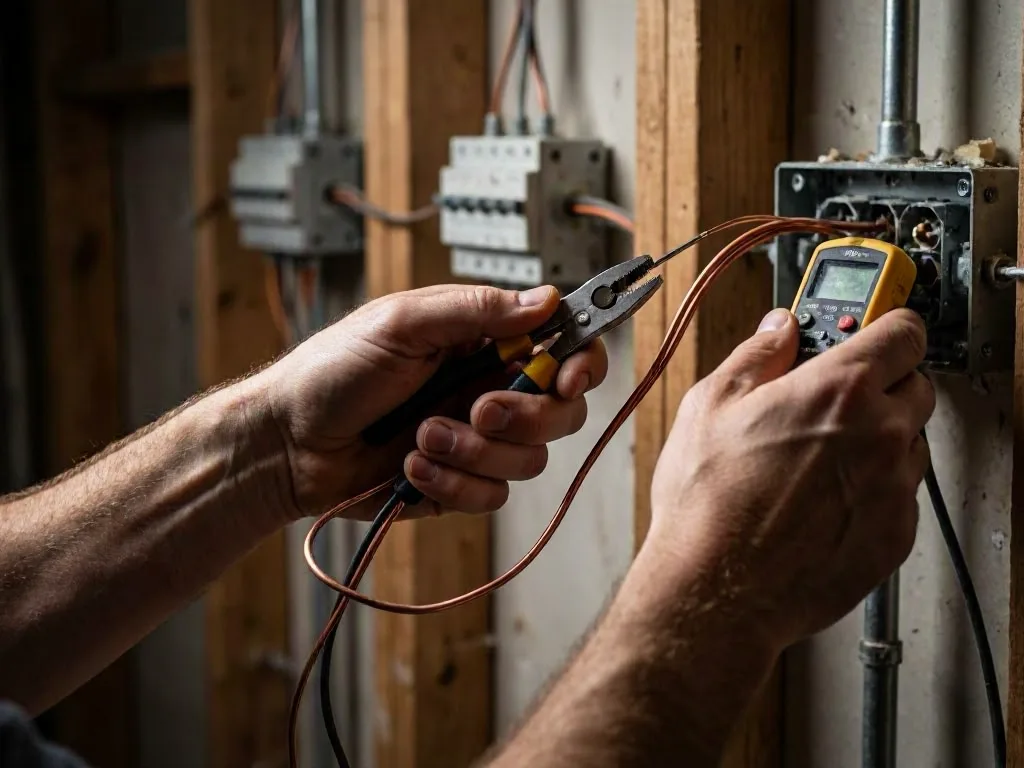
Electricity and water create a serious shock hazard. Wet skin can lower the body's resistance. A GFCI reduces that hazard by interrupting power before a fault continues. This protection helps.bathroom receptacles, kitchen counter outlets, outdoor receptacles, and garages. It also helps at other locations named by the National Electrical Code.
GFCI protection also helps find equipment and wiring problems. Repeated trips can point to moisture, damaged insulation, or a defective appliance. They can also point to wiring that lets current escape. Resetting the device again and again can leave a fault unresolved. It can damage equipment or increase shock risk.
When Ground-Fault Circuit Interrupter Matters Most?
GFCI decisions matter during new construction, remodeling, panel changes, and receptacle replacement. They also matter after rain or flooding exposes a basement, garage, patio, or outdoor circuit. Southern California conditions don't remove the need for protection. Protection matters where water, grounded surfaces, or outdoor equipment create a fault path.
Look for a GFCI when a receptacle is near a sink. Also look for one serving a wet-area appliance or outdoor equipment. Check whether one GFCI receptacle controls other outlets downstream. A single device may protect several locations. If TEST doesn't cut power, stop using the circuit. Also stop if RESET won't stay engaged. Stop if the device trips after removing a safe appliance. Have the cause checked before using the circuit again.
How to Evaluate Ground-Fault Circuit Interrupter?
- Press TEST and confirm that connected receptacles lose power.
- Press RESET and confirm that power returns without unusual heat, noise, or odor.
- Check whether the device has a visible trip indicator or a failed self-test warning.
- Identify whether the receptacle protects downstream outlets on the same branch circuit.
- Inspect for moisture, damaged cords, loose connections, or repeated unexplained trips.
Related Concepts Compared
Ground-Fault Circuit Interrupter vs. Arc-Fault Circuit Interrupter
An AFCI responds to dangerous arcing patterns that can start fires. A GFCI responds to current leaking from the intended circuit path, which creates a shock hazard.
Ground-Fault Circuit Interrupter vs. Circuit Breaker
A standard circuit breaker protects wiring from overloads and short circuits. A GFCI protects people from certain ground faults and may not trip during a modest overload.
Ground-Fault Circuit Interrupter vs. Grounding Conductor
A grounding conductor provides a low-resistance path for fault current. A GFCI detects an imbalance even when the fault current does not flow through that conductor.
Expert Note
A GFCI can trip even when the equipment grounding conductor is intact. Moisture, neutral-to-ground contact, and leakage from electronic equipment can all create an imbalance. Repeated trips require diagnosis rather than repeated resets.
Common Mistakes or Myths About Ground-Fault Circuit Interrupter
- Assuming a GFCI protects against every overload or short circuit.
- Replacing a tripping device repeatedly without checking for moisture or equipment leakage.
- Connecting wires to the LINE and LOAD terminals incorrectly.
- Assuming a reset button proves that the device passed its safety test.
- Using a GFCI as a substitute for proper grounding and correct wiring.
Ground-Fault Circuit Interrupter in Practice: A Real-World Example
A patio receptacle supplies a pressure washer after rain. Water reaches a damaged cord, and some current begins leaving the intended circuit path. The GFCI detects the imbalance and disconnects power before the fault can continue through a person standing on wet ground.
Sources & Further Reading on Ground-Fault Circuit Interrupter
Related Services
Related Terms
Arc-Fault Circuit Interrupter
Arc-Fault Circuit Interrupter is a protective device that detects dangerous electrical arcing in branch-circuit wiring and…
Branch Circuit
Branch Circuit is the portion of an electrical system that carries power from the final overcurrent…
Electrical Code
Electrical Code is a set of enforceable safety rules for designing, installing, inspecting, and maintaining electrical…
National Electrical Code
National Electrical Code is a safety standard published by the National Fire Protection Association that sets…
SanBernardino-Electrician.com
Have Questions About Ground-Fault Circuit Interrupter?
Contact SanBernardino-Electrician.com for practical guidance on Ground-Fault Circuit Interrupter and related 24 hour electrician work in San Bernardino.