
What is Electrical Code?
Electrical Code is a set of enforceable safety rules for designing, installing, inspecting, and maintaining electrical systems. The rules address wiring, equipment, grounding, overcurrent protection, clearances, and safe work practices. In the United States, the National Electrical Code provides the main technical model, while local authorities adopt and enforce a specific edition.
Quick Facts About Electrical Code
Category
Electrical safety regulation
Relevant standard
NFPA 70, National Electrical Code
Used for
Design, installation, inspection, and maintenance
Common confusion
The NEC model standard is not automatically local law
Also called
Electrical regulations, Electrical wiring code
Often discussed with
Circuit Breaker Repair, Fuse Box Repair
Key Takeaways About Electrical Code
- Electrical Code covers wiring methods, grounding, circuit protection, equipment setup, and required work clearances.
- The National Electrical Code is a model standard, not the law in every location.
- Local building departments adopt an edition and may add rules for local conditions.
- Permits and inspections help check that new or changed electrical work meets adopted rules.
Understanding Electrical Code
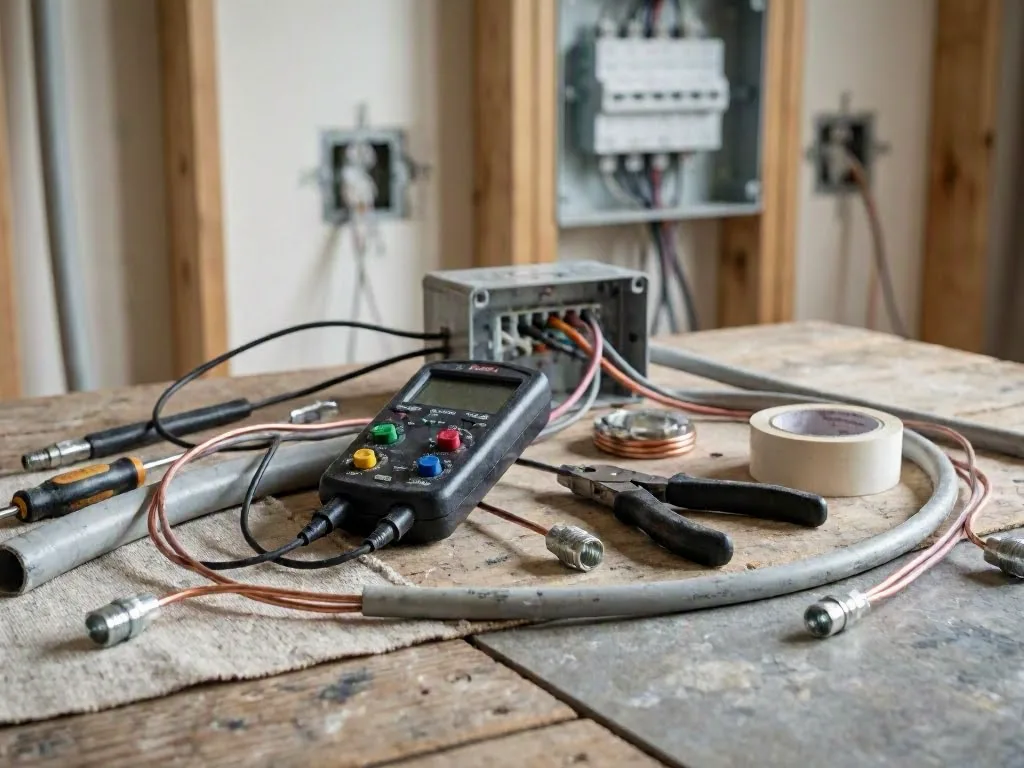
Electrical Code means enforceable rules for electrical work. These rules govern work in buildings and other property. They cover conductors, overcurrent protection, grounding, equipment, wiring methods, and access around electrical equipment. The goal is to reduce shock, fire, and equipment damage risks. These rules support safe and steady work.
Related glossary terms: National Electrical Code, Branch Circuit, Ground-Fault Circuit Interrupter.
The National Electrical Code, also called NFPA 70, guides electrical work in the United States. A state, county, or city must adopt the code before enforcement begins. The adopted edition and local amendments set the rules for each project. Permit rules and inspection policies also apply.
How Electrical Code Works, Is Measured, or Is Used?
Electrical Code uses design rules, installation needs, permits, and inspections. A designer or electrician first checks the electrical load, system voltage, and circuit type. They also check equipment ratings and building conditions. The design then selects the right wire gauge, circuit breakers, boxes, raceways, and protective devices.
Inspectors check visible work against the adopted code and approved plans. Typical checks include conductor size, box fill, and grounding continuity. They also check panel labels, working space, and protection in wet areas. They check protection where physical damage may occur. A permit record and inspection result show work approval by the authority having jurisdiction.
- Confirm the code edition adopted by the local building department.
- Match circuit protection to the conductor and equipment ratings.
- Verify required ground-fault circuit interrupter and arc-fault circuit interrupter protection.
- Keep required access and working clearance around panels and disconnects.
Why Electrical Code Matters?
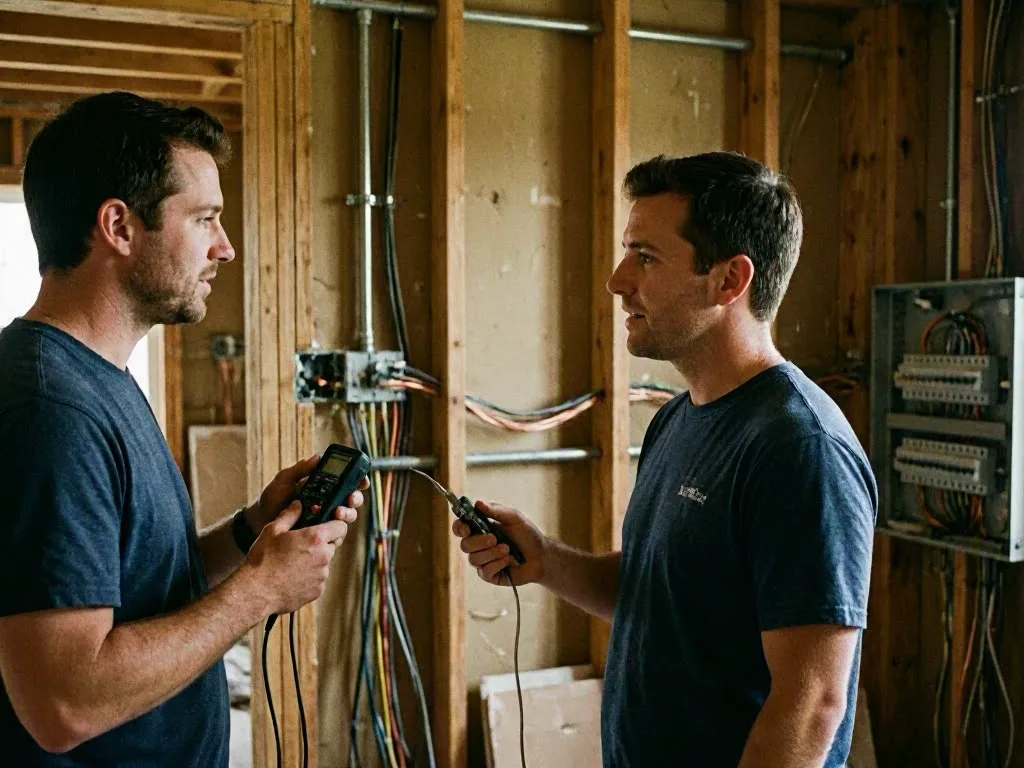
Code-compliant work lowers the risk of dangerous conditions. Overloaded circuits, loose connections, and damaged conductors can create these risks. Missing grounds can also create dangerous conditions. Requirements help electricians understand an installation. They also help electricians service it safely later. Proper bonding and grounding electrode connections give fault current a controlled path. This path lets protective devices work as intended.
Compliance also affects project approval, insurance questions, and property transactions. It affects future repairs too. An installation that passes inspection may become unsafe later. Equipment may be changed, damaged, or overloaded. Code rules provide a baseline for safety. Sound workmanship and listed equipment still matter. Correct maintenance and safe operation also matter.
When Electrical Code Matters Most?
Electrical Code matters during new construction, room additions, and service upgrades. It also matters during panel changes and remodeling. It matters after water intrusion, fire damage, or repeated breaker trips. It also matters after installing high-demand equipment. Examples include air conditioners and electric vehicle chargers. These projects can change circuit loads and available fault current. They can also change conductor sizes and needed protection.
Older wiring may have met the rules used during installation. It may still lack protection required for new work. A repair normally must address the affected portion. A major change may trigger more requirements. In San Bernardino, CA, the local authority having jurisdiction sets the requirements. It also sets the permit process and inspection steps for the property.
How to Evaluate Electrical Code?
- Identify the code edition and local amendments adopted by the authority having jurisdiction.
- Check that each circuit has conductors and overcurrent protection rated for the intended load.
- Verify grounding, bonding, panel labeling, and required GFCI or AFCI protection.
- Confirm that permits and final inspection records exist for permitted alterations.
- Look for heat damage, loose terminations, exposed conductors, overcrowded boxes, or blocked panel access.
Related Concepts Compared
Electrical Code vs. National Electrical Code
The National Electrical Code is a model standard published by NFPA. Electrical Code can refer to that standard or to the enforceable rules created when a jurisdiction adopts it.
Electrical Code vs. Building Code
Building Code covers the wider structure, including fire safety, exits, framing, and energy requirements. Electrical Code focuses on electrical systems and their safe installation.
Electrical Code vs. Electrical Inspection
An electrical inspection is the review of installed work. Electrical Code supplies the criteria used during that review.
Electrical Code vs. Electrical Standard
An electrical standard may provide recommended technical or product requirements without being law. Electrical Code becomes enforceable when the proper authority adopts it.
Expert Note
A code book does not replace engineering judgment or careful workmanship. The correct rule can depend on the building use, equipment listing, wiring method, local amendment, and edition adopted when work begins. Existing installations may be lawful under older rules but unsuitable for added loads.
Common Mistakes or Myths About Electrical Code
- Treating the latest NEC edition as automatically enforceable everywhere.
- Assuming a breaker protects a circuit correctly without checking conductor size and equipment ratings.
- Ignoring local amendments, permit requirements, or inspection requirements.
- Confusing a passed inspection with a guarantee that future modifications will remain safe.
- Installing equipment without confirming its listing, rating, and approved use.
Electrical Code in Practice: A Real-World Example
A homeowner replaces a kitchen circuit and adds new countertop receptacles. The plan must cover circuit load, wire size, box space, grounding, and required GFCI protection. The permit and inspection show if the finished work follows the locally adopted Electrical Code.
Related Services
Related Terms
National Electrical Code
National Electrical Code is a safety standard published by the National Fire Protection Association that sets…
Branch Circuit
Branch Circuit is the portion of an electrical system that carries power from the final overcurrent…
Ground-Fault Circuit Interrupter
Ground-Fault Circuit Interrupter is a protective device that monitors current flowing through a circuit and quickly…
Arc-Fault Circuit Interrupter
Arc-Fault Circuit Interrupter is a protective device that detects dangerous electrical arcing in branch-circuit wiring and…
SanBernardino-Electrician.com
Have Questions About Electrical Code?
Contact SanBernardino-Electrician.com for practical guidance on Electrical Code and related 24 hour electrician work in San Bernardino.