
What is a Watt?
Watt is the SI unit of power that measures how quickly electrical energy is used or produced. One watt equals one joule of energy per second. Electrical devices list watt ratings to show power demand, while utilities measure household energy use in kilowatt-hours, which combines power with operating time.
Quick Facts About Watt
Category
SI unit of power
Formula
Power equals voltage multiplied by current
Measured by
Watts, symbol W
Used for
Rating electrical power demand
Common confusion
Watts are not watt-hours
Also called
W, Electrical watt
Key Takeaways About Watt
- A watt measures electrical power, not the total energy consumed over time.
- One watt equals one joule of energy used or produced each second.
- Higher wattage usually means greater power demand during operation.
- Kilowatts equal 1,000 watts and help describe larger electrical loads.
- Watt-hours measure energy, while watts measure the rate of energy use.
Understanding Watt

Watt is the standard unit for measuring power. Power describes the rate of energy transfer. A 100-watt device transfers or uses energy faster than a 10-watt device. Both devices must operate under their stated conditions. The unit uses the symbol W and honors Scottish inventor and engineer James Watt.
Related glossary terms: Voltage, Load Calculation, Circuit.
Electrical power depends on voltage and current. A 120-volt circuit with 5 amperes delivers 600 watts because 120 times 5 equals 600. Actual equipment ratings can change during operation. A nameplate rating shows expected or maximum demand under set conditions.
How Watt Works, Is Measured, or Is Used?
The basic electrical formula is power equals voltage multiplied by current, written as P = V × I. Power can also be calculated as P = I² × R or P = V² ÷ R when resistance is known. These formulas help electricians estimate circuit loads and check equipment against available wiring and protection.
A power meter measures watt demand at a given moment. A device using 500 watts for two hours uses 1,000 watt-hours, or 1 kilowatt-hour. Utility bills normally charge for kilowatt-hours rather than watts. Operating time matters as much as the device rating.
- 1 kilowatt equals 1,000 watts.
- 1 megawatt equals 1,000,000 watts.
- Power factor affects the relationship between measured current and useful power in some AC equipment.
Why Watt Matters?
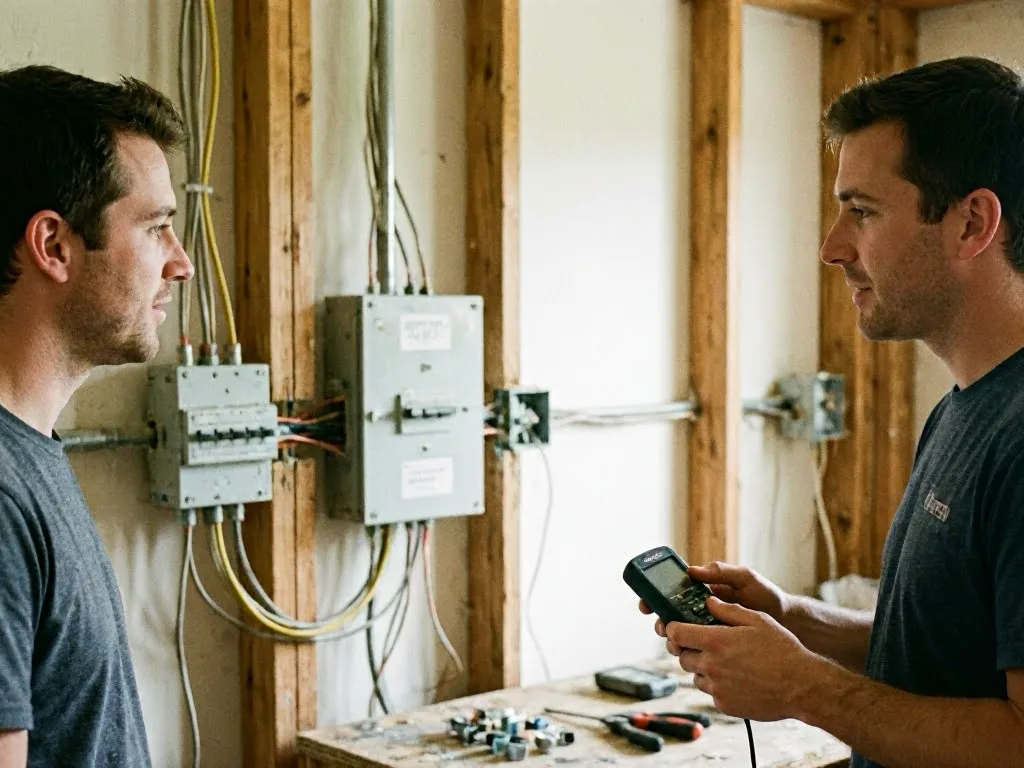
Watt ratings help you compare lighting, heating equipment, motors, appliances, and electronic devices. A higher rating may show stronger output, faster heating, or greater electrical demand. Wattage alone doesn't measure brightness, efficiency, or performance. For example, an LED lamp can produce similar light with fewer watts than an older incandescent lamp.
Electrical planning uses watt values to estimate load on a circuit, panel, or service. Excessive demand can trip a circuit breaker, overheat conductors, or cause voltage drop. These problems can happen when wiring doesn't suit the load. Accurate ratings support safer equipment selection and more reliable operation.
When Watt Matters Most?
Wattage becomes especially important when adding equipment to an existing circuit. Space heaters, air-conditioning equipment, electric water heaters, pumps, and large kitchen appliances can draw substantial power. Compare each nameplate rating with the circuit voltage, breaker rating, conductor size, and other loads. Check all loads that operate at the same time.
Watt values also guide energy and replacement decisions. A lower-watt device may reduce operating energy. Compare its useful output and expected operating hours, not wattage alone. During troubleshooting, an unusual watt reading can point to a failed component, a motor problem, or an inaccurate meter measurement.
How to Evaluate Watt?
- Check the equipment nameplate for rated watts, volts, amperes, and operating conditions.
- Calculate expected power with P = V × I when voltage and current are known.
- Compare the total connected load with the circuit rating and other simultaneous equipment.
- Separate watts from watt-hours when estimating energy use or utility costs.
- Investigate readings that differ substantially from the listed rating during normal operation.
Related Concepts Compared
Watt vs. Watt-hour
A watt measures the rate of power use at a moment. A watt-hour measures the total energy used over a period, such as 500 watts operating for two hours.
Watt vs. Volt
A volt measures electrical potential difference, similar to the pressure that drives current. A watt measures the resulting rate of energy transfer.
Watt vs. Ampere
An ampere measures the flow of electric charge. Watts combine current with voltage to describe electrical power.
Watt vs. Volt-ampere
A volt-ampere describes apparent power in an AC circuit. Watts describe real power delivered to useful work, and the two values can differ because of power factor.
Expert Note
A nameplate watt rating does not always equal continuous operating demand. Motors, compressors, and transformers can draw a higher starting current, so circuit planning should account for startup conditions and other loads operating at the same time.
Common Mistakes or Myths About Watt
- Treating watts as a measure of total energy instead of the rate of energy use.
- Assuming a higher-watt light source always produces more useful light.
- Adding device wattages without checking startup demand from motors or compressors.
- Confusing kilowatts with kilowatt-hours on an energy bill.
- Ignoring other equipment operating on the same circuit.
Watt in Practice: A Real-World Example
A 1,500-watt space heater operating for four hours uses 6,000 watt-hours, or 6 kilowatt-hours. A 10-watt LED lamp operating for the same period uses only 40 watt-hours.
Related Services
Related Terms
Voltage
Voltage is the electrical potential difference that pushes electric charge through a circuit. Measured in volts…
Load Calculation
Load Calculation is the process of estimating the electrical demand a building, circuit, or service will…
Circuit
Circuit is a complete path that carries electric current from a power source through connected equipment…
Wire Gauge
Wire Gauge is a numbering system that identifies the diameter and current-carrying capacity of electrical wire…
SanBernardino-Electrician.com
Have Questions About Watt?
Contact SanBernardino-Electrician.com for practical guidance on Watt and related 24 hour electrician work in San Bernardino.