
What is a Voltage?
Voltage is the electrical potential difference that pushes electric charge through a circuit. Measured in volts, voltage determines how much energy each unit of charge can transfer. Common systems include 120-volt household circuits and 240-volt circuits for larger equipment. Voltage exists between two points, not as a standalone property at one point.
Quick Facts About Voltage
Category
Electrical measurement
Formula
V = W ÷ A, or V = I × R
Measured by
Voltmeter or digital multimeter
Common benchmark
120 volts for many North American receptacles
Common confusion
Voltage is not the same as current or wattage
Also called
Electrical potential difference, Electric potential
Key Takeaways About Voltage
- Voltage is measured in volts and exists between two points in an electrical system.
- Higher voltage can transfer more energy. But it also increases shock and arc hazards.
- Current describes charge flow, while voltage describes the force that drives that flow.
- A multimeter measures voltage when its probes connect across two points.
- A circuit must match its equipment voltage rating for safe, reliable operation.
Understanding Voltage
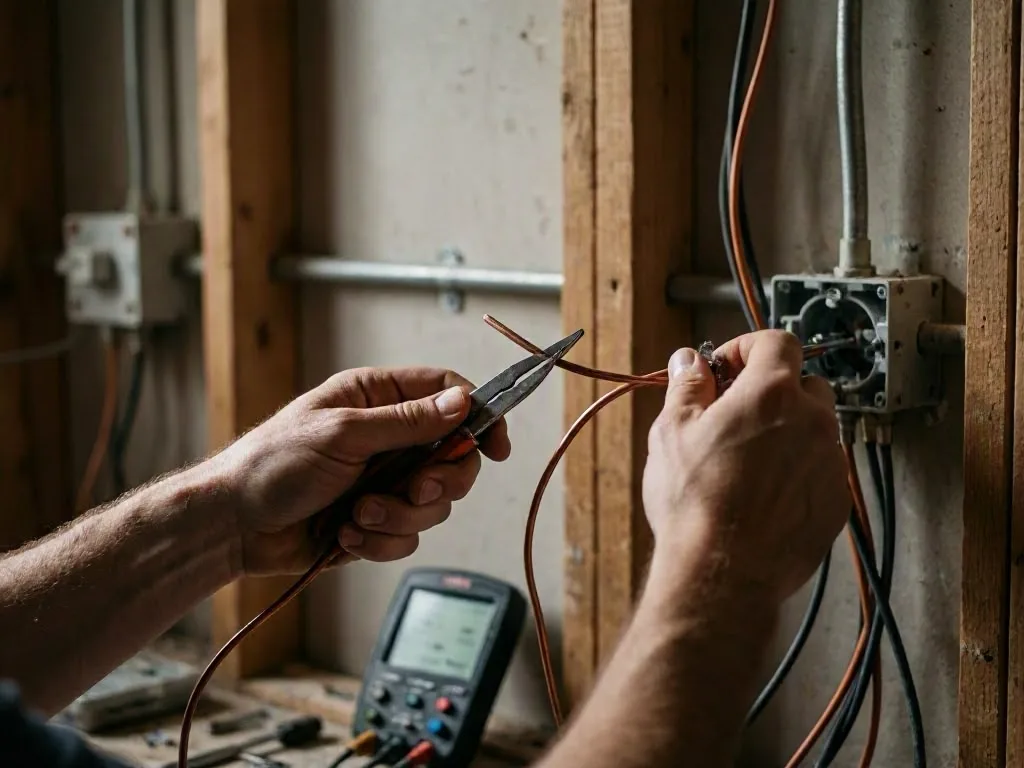
Voltageis the difference in electrical potential between two points. It gives charged particles force to move through a conductor. This is like pressure moving water through a pipe. The unit.volt. It honors physicist Alessandro Volta. A reading of 120 volts means each coulomb can transfer 120 joules. This energy moves between the measured points.
Related glossary terms: Circuit, Transformer, Watt.
Voltage only has meaning between two locations. These locations might include a hot conductor and neutral conductor. A circuit may also measure voltage between hot and ground. It may measure voltage across battery terminals. In a typical North American home, many receptacles supply about 120 volts. Some equipment circuits supply about 240 volts. The actual reading can vary slightly with load and system conditions.
How Voltage Works, Is Measured, or Is Used?
Voltage drives current through resistance. The basic relationship is Ohm's law. It's written as V = I × R. V means voltage. I means current in amperes. R means resistance in ohms. If resistance stays constant, higher voltage raises current. Electrical power follows P = V × I. Voltage and current together determine device power use.
A digital multimeter measures voltage with probes across two points. This is called a parallel connection. The meter must use the correct type. The types are alternating current voltage and direct current voltage. Its range must exceed the expected reading. A qualified worker also checks the meter on a known source. The worker checks it before and after testing. This practice shows that the tool worked during measurement.
Electrical systems use transformers to raise or lower alternating voltage. Utility equipment can send power at high voltage. It then reduces the voltage before electricity reaches buildings. Inside a building, circuit breakers, conductors, receptacles, and equipment must match system design. A nameplate may list a voltage range. One example is 208 to 240 volts. This range may replace one exact value.
Why Voltage Matters?
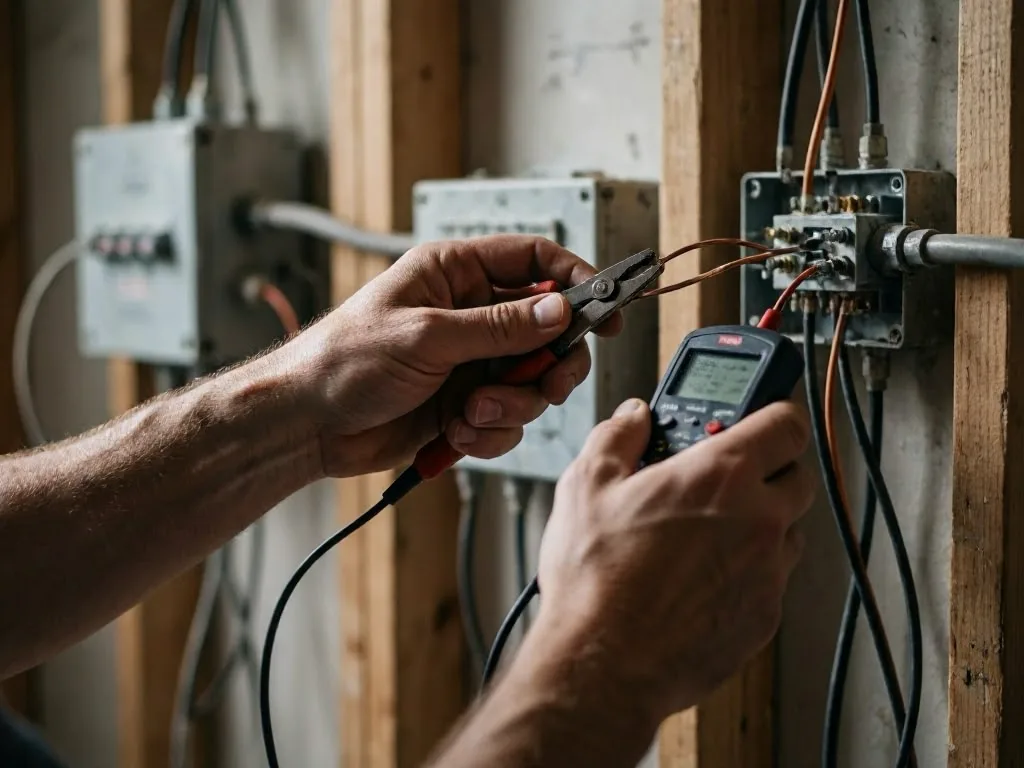
Voltage affects equipment performance, conductor heating, and personal safety. Too little voltage may make motors draw extra current. Motors may also start poorly or overheat. Too much voltage can damage insulation, electronics, lamps, and motor windings. The risk depends on the source and available fault current. It also depends on the body path and nearby conditions.
Voltage drop occurs when wiring resistance lowers voltage at a load. Long wire runs can increase the drop. Undersized conductors can also increase it. Loose connections and heavy loads can increase it too. A motor with low voltage may run hot or fail to start. Proper conductor sizing helps keep voltage within its rated range. Secure terminations also help protect the equipment.
When Voltage Matters Most?
Voltage ratings matter during installation, troubleshooting, equipment replacement, and inspection. Before connecting a device, compare its nameplate rating with the circuit rating. Confirm whether the device needs alternating or direct current. Check that the breaker, wire size, receptacle, disconnect, and transformer support the system. Never assume a circuit is safe because a switch is off. Another source may still energize part of the equipment.
Electrical safety matters around service panels, damaged cords, wet areas, generators, and unfamiliar wiring. A voltage test should follow an established procedure. Use properly rated test equipment and suitable personal protective equipment. Unexpected readings, heat, buzzing, burning odors, or repeated breaker trips indicate a fault. The fault requires prompt investigation. Local work must also meet the applicable electrical code and permit rules.
How to Evaluate Voltage?
- Compare the measured voltage with the equipment nameplate and the circuit label.
- Measure voltage at the source and at the load to identify possible voltage drop.
- Confirm that the meter setting matches AC or DC voltage before testing.
- Inspect for heat, discoloration, loose terminations, buzzing, or repeated breaker trips.
- Check conductor size, breaker rating, and disconnect rating against the system voltage.
Related Concepts Compared
Voltage vs. Current
Current is the movement of electric charge, measured in amperes. Voltage is the potential difference that drives that movement.
Voltage vs. Watt
A watt measures electrical power, or the rate of energy use. Voltage is one factor in power, which can be calculated as volts multiplied by amperes.
Voltage vs. Resistance
Resistance opposes current flow and is measured in ohms. Voltage, current, and resistance are connected by Ohm's law.
Voltage vs. Voltage Drop
Voltage drop is the reduction in voltage along a conductor or circuit component. Voltage is the broader measurement of electrical potential difference.
Expert Note
A voltage reading alone does not prove that a circuit can safely supply a load. Test under the actual operating condition when possible, because a loose connection may show normal voltage with no load and fail when current flows.
Common Mistakes or Myths About Voltage
- Assuming a circuit is de-energized because a wall switch is off.
- Confusing voltage with current, wattage, or voltage drop.
- Testing voltage with the meter set to the wrong function or range.
- Connecting equipment to a circuit with the wrong voltage rating.
- Ignoring low readings, heat, buzzing, or flickering lights.
Voltage in Practice: A Real-World Example
A portable air conditioner may be rated for 120 volts and 12 amperes. If a long extension cord or loose connection causes significant voltage drop, the unit may struggle to start and run hotter. Measuring at the receptacle and at the equipment while it operates can reveal the problem.
Sources & Further Reading on Voltage
Related Services
Related Terms
Circuit
Circuit is a complete path that carries electric current from a power source through connected equipment…
Transformer
Transformer is an electrical device that transfers energy between circuits and changes alternating-current voltage. A transformer…
Watt
Watt is the SI unit of power that measures how quickly electrical energy is used or…
Wire Gauge
Wire Gauge is a numbering system that identifies the diameter and current-carrying capacity of electrical wire…
SanBernardino-Electrician.com
Have Questions About Voltage?
Contact SanBernardino-Electrician.com for practical guidance on Voltage and related 24 hour electrician work in San Bernardino.