Smoke Detector Installation Mistakes That Can Leave a Home Unprotected
Smoke detector installation mistakes can leave a home unprotected when alarms are misplaced, unpowered, untested, incompatible or improperly maintained. San Bernardino Electrician identifies each failure, explains the safety impact and corrects installation, repair and service problems.
Get a Free EstimateHow Smoke Detector Installation Mistakes Leave a Home Unprotected
Smoke detector installation mistakes leave a home unprotected when an alarm cannot detect smoke, sound clearly, receive power or remain operational.
A smoke detector is a fire safety device that senses smoke and gives occupants an audible fire warning. We check the alarm location, power supply, sensor condition and communication with other alarms so home safety does not depend on guesswork.
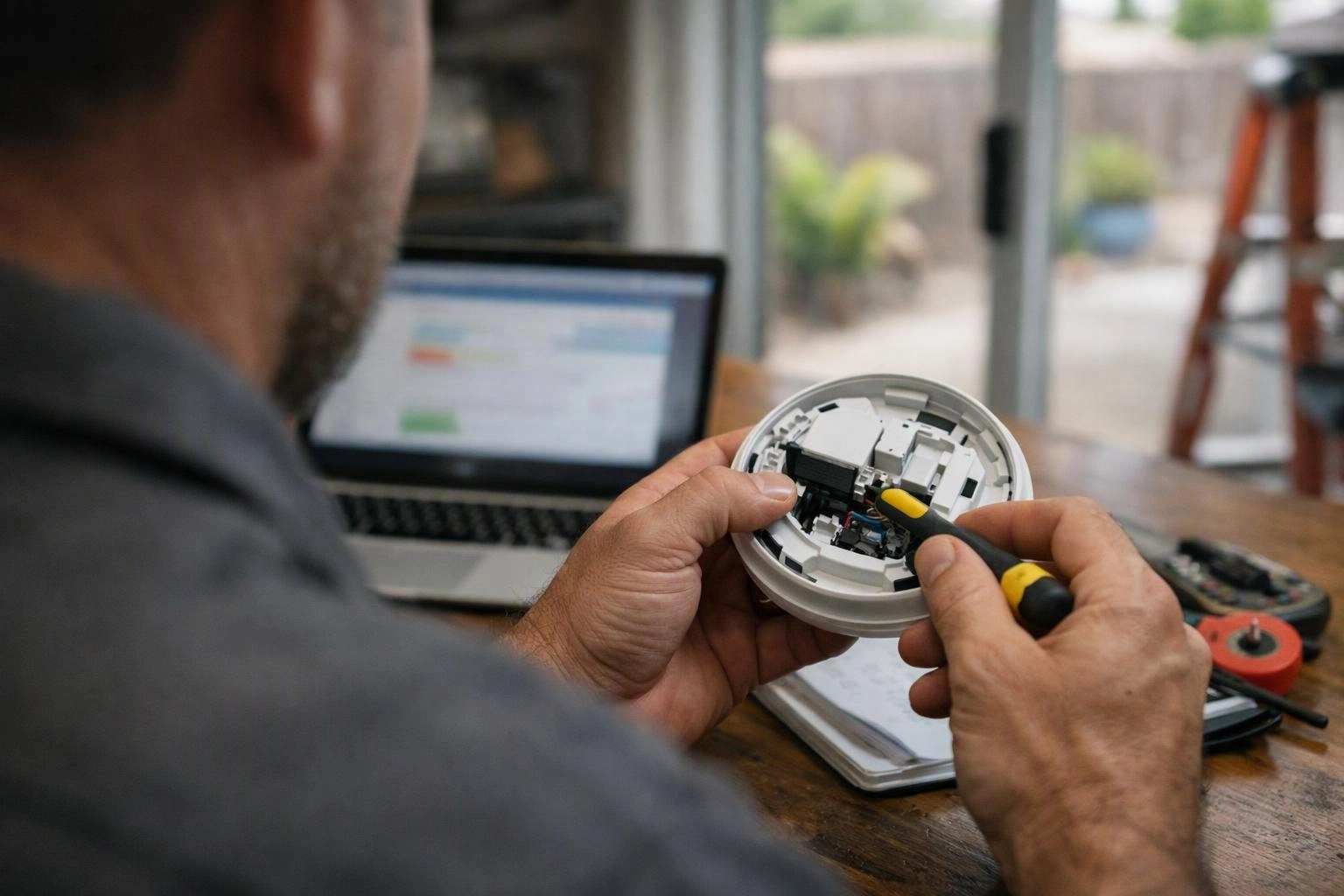
Installing Smoke Detectors in the Wrong Location
Smoke detector placement affects how quickly smoke reaches the sensor. Ceiling mounts usually provide broad coverage, while a wall mount must follow the unit's installation instructions and avoid dead air space.
Bedrooms and hallways need clear alarm coverage, while kitchens and bathrooms need careful positioning. We review each room, identify blocked or unsuitable locations and move the smoke alarm when the existing position limits smoke detection.
The correction cost depends on access, the mounting surface, wiring and whether the alarm must be relocated. Our quote explains the repair scope before we complete the work.
Placing an Alarm Too Close to Cooking or Steam
False alarms often occur when cooking smoke or steam reaches a detector too easily. Kitchens and bathrooms can create alarm nuisance conditions even when there is no fire.
We assess the distance from cooking appliances, showers and ventilation paths. We correct the location or recommend a suitable alarm type while keeping required fire detection coverage in place.
The correction cost depends on relocation access, electrical wiring and the detector selected for the room. We include those factors in the quote.
Leaving the Smoke Detector Without Reliable Power
A hardwired smoke detector needs a dependable power supply and a working backup battery. A battery-powered smoke detector also needs a fresh battery and a functioning battery compartment.
Loose electrical connections, a tripped circuit or a low-battery warning can leave an alarm unable to operate properly. We inspect the circuit, wiring connector, battery and power connection before repairing or replacing the unit.
The correction cost depends on the power fault, wiring condition, access and whether a replacement is needed. Our quote separates electrical repair from detector replacement.
Using the Wrong Detector for the Room
A photoelectric smoke alarm, ionization smoke alarm, heat detector and combination alarm respond to different room conditions. The wrong choice can increase nuisance alarms or reduce suitable fire detection.
We consider cooking smoke, steam, dust and the room's purpose before recommending a detector. Our team follows the product's installation instructions and matches the alarm to the conditions present.
The correction cost depends on the detector type, compatibility and installation access. We identify whether the existing wiring can remain in use.
Failing to Interconnect Smoke Alarms
Interconnected smoke alarms allow one alarm to notify occupants through other alarms in the system. This connection can matter in a multi-story home where occupants may be far from the initiating detector.
Hardwired interconnection uses electrical wiring, while wireless interconnection uses compatible communication between alarms. We verify compatibility, wiring and alarm notification across the system.
The correction cost depends on access, the interconnection method and the compatibility of existing units. Our quote explains any wiring or replacement scope.
Mounting the Alarm Without Checking Its Orientation
Smoke alarm orientation affects how the sensor, mounting bracket and alarm body sit after installation. Ceiling installation and wall installation can have different placement requirements.
We check the mounting bracket, sensor position and unit alignment against the installation instructions. We correct the mounting when the alarm is loose, angled incorrectly or placed on an unsuitable surface.
The correction cost depends on the mounting surface, access and any damage to the bracket or wiring. We include the needed repair or replacement in the quote.
Skipping Testing After Installation
A smoke detector test confirms that the test button activates the alarm sound and that the unit has usable power. Testing also checks battery status and, where applicable, interconnection.
We test each installed unit and confirm that connected alarms respond as intended. A failed smoke detector inspection can point to a wiring issue, battery problem, incompatible alarm or defective sensor.
The correction cost depends on the failed component and the amount of troubleshooting required. Our quote identifies the repair scope before work begins.
Keeping Damaged, Dirty or Expired Smoke Detectors
Dust buildup, insect contamination and physical damage can affect the sensor, alarm horn or battery compartment. An expired unit may also fail to provide dependable fire warning.
We inspect the housing, sensor openings, test button and electrical connection. We clean suitable components when appropriate and complete smoke detector repair or replacement when the unit cannot be trusted.
The correction cost depends on the detector condition, replacement needs and wiring compatibility. Our quote explains whether repair or replacement provides the safer result.
What Each Installation Mistake Can Cost and How to Fix It
The cost of correcting a smoke detector mistake depends on the alarm type, wiring condition, access, interconnection needs and whether repair or replacement is appropriate.
We inspect the installation before preparing a quote. The quote explains the electrical inspection, repair scope, replacement scope and testing needed for the completed work.
| Installation error | Safety concern | Typical repair decision |
|---|---|---|
| Wrong location | Smoke may not reach the sensor effectively. | Relocate the alarm and verify coverage. |
| Unreliable power | The alarm may not operate during a power fault. | Repair the electrical connection or replace the power component. |
| Failed interconnection | An alarm may not notify occupants throughout the home. | Correct wiring or install compatible interconnected alarms. |
| Dirty or damaged unit | The sensor or alarm sound may not work correctly. | Clean suitable parts or complete replacement. |
Requesting a quote from us gives you a job-specific explanation of the work. We account for access, electrical wiring, alarm compatibility and the final inspection.
How to Check Smoke Detectors After Installation
A post-installation check confirms that each smoke detector has power, responds to testing and communicates correctly with other alarms.
We complete smoke detector testing when a unit fails, when wiring has changed or when interconnected alarms do not respond together.
When to Call San Bernardino Electrician for Smoke Detector Service
Call San Bernardino Electrician when smoke detector work involves electrical connections, inaccessible mounting locations, repeated alarm faults or a detector that fails testing.
Some checks are simple, but ladder work and electrical wiring can create avoidable risks. Our crew handles the inspection, repair and testing when the installation is difficult to reach or does not operate correctly.
What Our Smoke Detector Service Includes
Our smoke detector service checks placement, power, condition, alarm communication and operation before we explain the recommended repair or replacement work.
We inspect the smoke detector, mounting bracket, battery compartment and electrical connection. We also review alarm placement and confirm that the selected unit suits the room.
Our team completes smoke detector testing after installation, repair or interconnection work. When a unit cannot provide reliable protection, we explain the replacement scope and the wiring requirements.
For help with a faulty or poorly installed alarm, contact Smoke Detector Service. San Bernardino Electrician provides a clear quote based on the actual condition of the installation.
Questions About Smoke Detector Installation Mistakes
Can a smoke detector be installed on a wall?
Yes, a smoke detector can be installed on a wall when the location follows the unit's installation instructions and avoids dead air space. We check the wall mount, room layout and sensor position before completing the installation.
Why does a newly installed smoke detector keep chirping?
A newly installed smoke detector may chirp because of a low battery, loose power connection, incompatible component or internal fault. We test the battery, wiring and alarm unit to locate the cause.
Can smoke alarms from different brands be interconnected?
Smoke alarms from different brands can be interconnected only when the manufacturers confirm compatibility. We check the product requirements and interconnection method before linking the alarms.
What should I do if a smoke detector fails its test?
If a smoke detector fails its test, check the battery status and avoid relying on that alarm for fire warning. We inspect the power connection, test button, sensor and interconnection before repairing or replacing the unit.
Should a hardwired smoke detector have a backup battery?
Yes, a hardwired smoke detector should have the backup battery required by its design and installation instructions. We check the battery compartment and confirm that the alarm receives power from the circuit.
Can I replace a damaged smoke detector without changing the wiring?
Yes, a damaged smoke detector can sometimes be replaced without changing the wiring when the new unit is compatible with the existing connection. We verify the wiring connector, alarm system and interconnection before installing the replacement.