Smoke Detector Replacement Checklist for Homeowners
Smoke detector replacement checklist guidance from San Bernardino Electrician covers identifying replacement needs, choosing compatible alarms, preparing safely, installing correctly, testing operation, and arranging Smoke Detector Service when wiring or access requires our crew.
Get a Free Estimate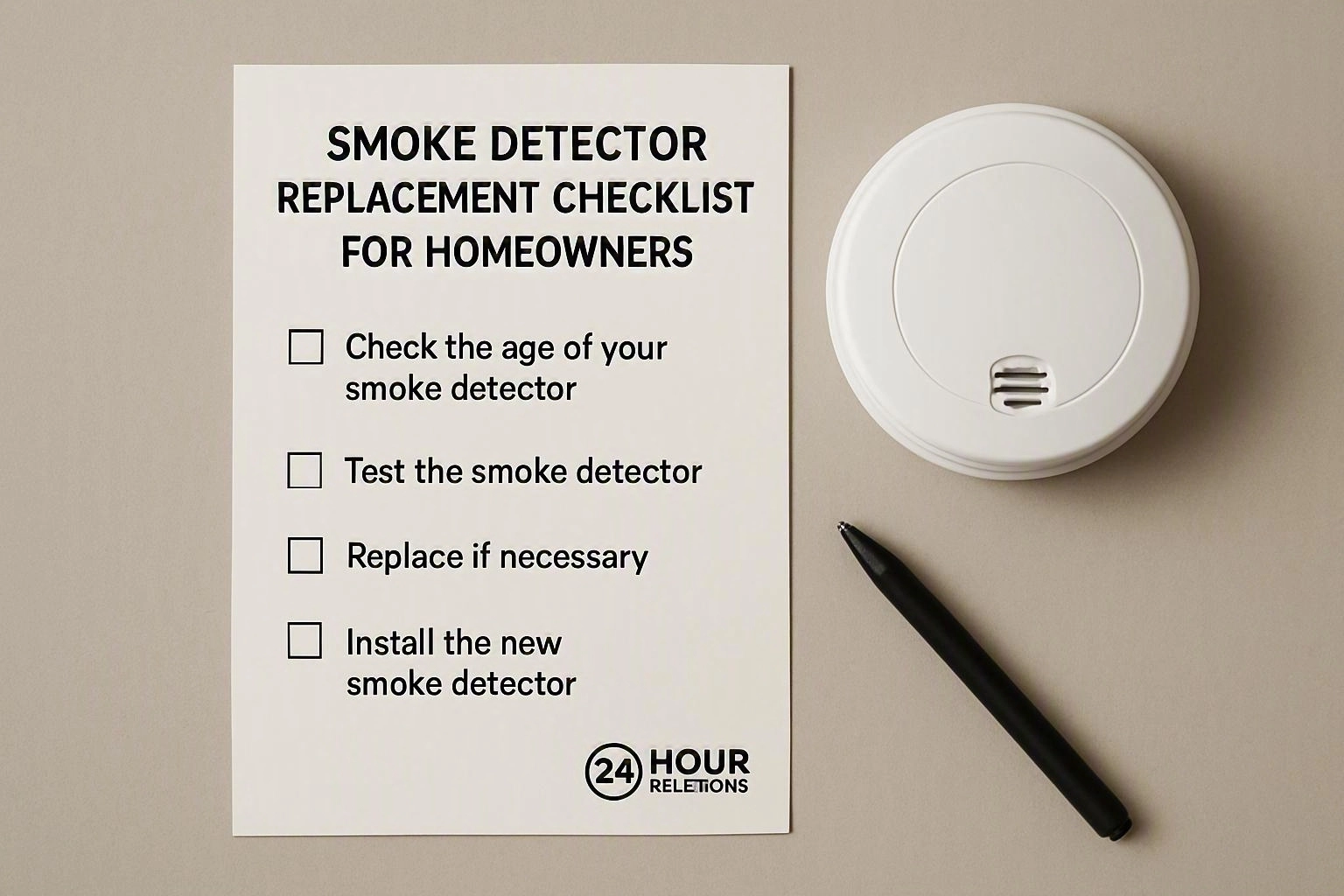
When Should You Replace a Smoke Detector?
Smoke detector replacement is needed when manufacturer guidance, condition, test response, or compatibility shows that continued use may be unreliable.
A smoke detector can become less dependable as its sensor chamber ages or its housing becomes damaged. We review the label, manufacturer instructions, replacement indicator, and alarm testing response before recommending the next step.
Replace a smoke alarm when it fails the test button, gives repeated false alarms, keeps chirping after basic checks, or cannot connect correctly with the existing system. We also check whether the replacement alarm matches the power source and interconnect wiring.
Before You Replace the Smoke Detector
Before replacement begins, confirm what is installed and what the new alarm must support. These preparation steps help protect the household and prevent an incompatible replacement.
Which Smoke Detector Should You Choose?
The correct replacement smoke detector matches the existing power method, interconnection system, sensing needs, location, and manufacturer compatibility requirements.
A photoelectric smoke alarm uses light-based sensing and may suit locations where smoldering-fire detection is a concern. An ionization smoke alarm uses a different sensing method, while a dual-sensor alarm combines both approaches in one device.
A carbon monoxide alarm adds protection from carbon monoxide, but it does not replace a smoke alarm unless the product is specifically designed as a combination unit. We confirm that the selected device fits the location and follows the manufacturer instructions.
A battery-powered smoke detector may be suitable where no hardwired connection is present. A hardwired smoke detector requires compatible wiring, a suitable electrical box, and the correct connector for the interconnected alarms.
During Smoke Detector Replacement
During replacement, work carefully around the power source, mounting surface, and wiring. We use the product instructions to keep the new alarm secure and compatible.
How Do You Check the Installation?
A replacement smoke detector installation is checked by confirming secure mounting, correct power, battery backup, alarm sound, indicator status, and interconnection response.
Press the test button and listen for a clear alarm sound. Check the indicator light and confirm that the backup battery is installed correctly when the product requires one.
Test each interconnected alarm according to the manufacturer instructions. We also check mounting stability and investigate any unit that does not respond, sounds weak, or shows an unexpected indicator.
After Smoke Detector Replacement
After replacement, keep the new alarm accessible and record the work for future maintenance. Clear household instructions help everyone respond correctly when an alarm sounds.
Smoke Detector Replacement Red Flags
Red flags show that a smoke detector may not be dependable or may need more than a simple device swap. We inspect the installation when a warning points to wiring, compatibility, or mounting problems.
When Does Smoke Detector Replacement Need Electrical Service?
Smoke detector replacement needs electrical service when the job involves inaccessible mounting, damaged wiring, hardwired connections, interconnect faults, or unsafe ladder access.
Smoke Detector Service includes checking the hardwired alarm, interconnect circuit, electrical box, and visible wiring before we install a compatible replacement. We use safe access methods when the ceiling installation cannot be reached safely.
Smoke Detector Repair may be appropriate when the existing alarm has a wiring fault, loose connection, or mounting problem that affects operation. If climbing feels unsafe or the circuit cannot be safely isolated, contact Smoke Detector Service so our crew can handle the electrical work.
What Does a Smoke Detector Replacement Quote Include?
A smoke detector replacement quote is shaped by the alarm type, power source, wiring condition, access, compatibility, and testing required; San Bernardino Electrician provides Free Estimates Available for the planned work.
Our review can include the replacement smoke detector, site assessment, compatibility check, mounting, wiring inspection, and testing. We explain what the Smoke Alarm Service includes before the work begins.
Hardwired connections, interconnected alarms, difficult ceiling access, damaged electrical boxes, and wiring faults can change the work involved. Contact us for an exact quote based on the installation conditions.
How Do You Keep Replaced Smoke Detectors Reliable?
Smoke detector reliability depends on regular testing, clean sensing openings, working power and backup batteries, clear access, and prompt replacement when an alarm becomes unreliable.
Use the test button according to the manufacturer instructions and keep dust away from the alarm openings. We check alarm access and operation when maintenance reveals chirping, false alarms, or a failed response.
Keep the household safety plan current so everyone knows what the alarm sound means and how to leave safely. Arrange Smoke Detector Repair when a replacement alarm remains unreliable or shows a wiring concern.
Questions About Replacing Smoke Detectors
Can I replace a hardwired smoke detector with a battery-powered model?
Usually, no; a battery-powered model may not preserve the existing interconnect circuit or required power arrangement. San Bernardino Electrician checks the alarm compatibility, wiring, electrical box, and manufacturer instructions before approving a change.
Why does a smoke detector keep chirping after replacement?
A smoke detector may keep chirping because of a low backup battery, incomplete power, an installation fault, contamination, or an incompatible device. We check the battery, power source, wiring, indicator light, and manufacturer instructions.
Should interconnected smoke alarms be replaced together?
Interconnected smoke alarms should be replaced together when the manufacturer requires matching units or when the existing system cannot support a compatible replacement. We test the interconnected system after installation.
What should I do with an old smoke detector after replacement?
An old smoke detector should be disposed of according to local disposal guidance and the product instructions. Remove batteries when directed and keep the old unit away from service once the replacement has passed testing.
Can smoke detector replacement expose an electrical wiring problem?
Yes, smoke detector replacement can expose loose connections, damaged conductors, an unsuitable electrical box, or an interconnect fault. We stop when the wiring is unsafe and complete the required Smoke Detector Repair before testing the alarm.
Smoke detector replacement is safest when the alarm, power source, wiring, placement, and final test all work together. San Bernardino Electrician can review the installation conditions and explain the next step for your home.
Contact us for Smoke Detector Service and an exact quote for the planned work.