What to Check After a Smoke Detector Alarm: Repair or Service Needed?
Smoke detector keeps going off problems can come from contamination, power faults, wiring, age, or a failing device. San Bernardino Electrician checks the alarm, connections, and surrounding conditions to determine whether smoke detector repair, service, or replacement is appropriate.
Get a Free Estimate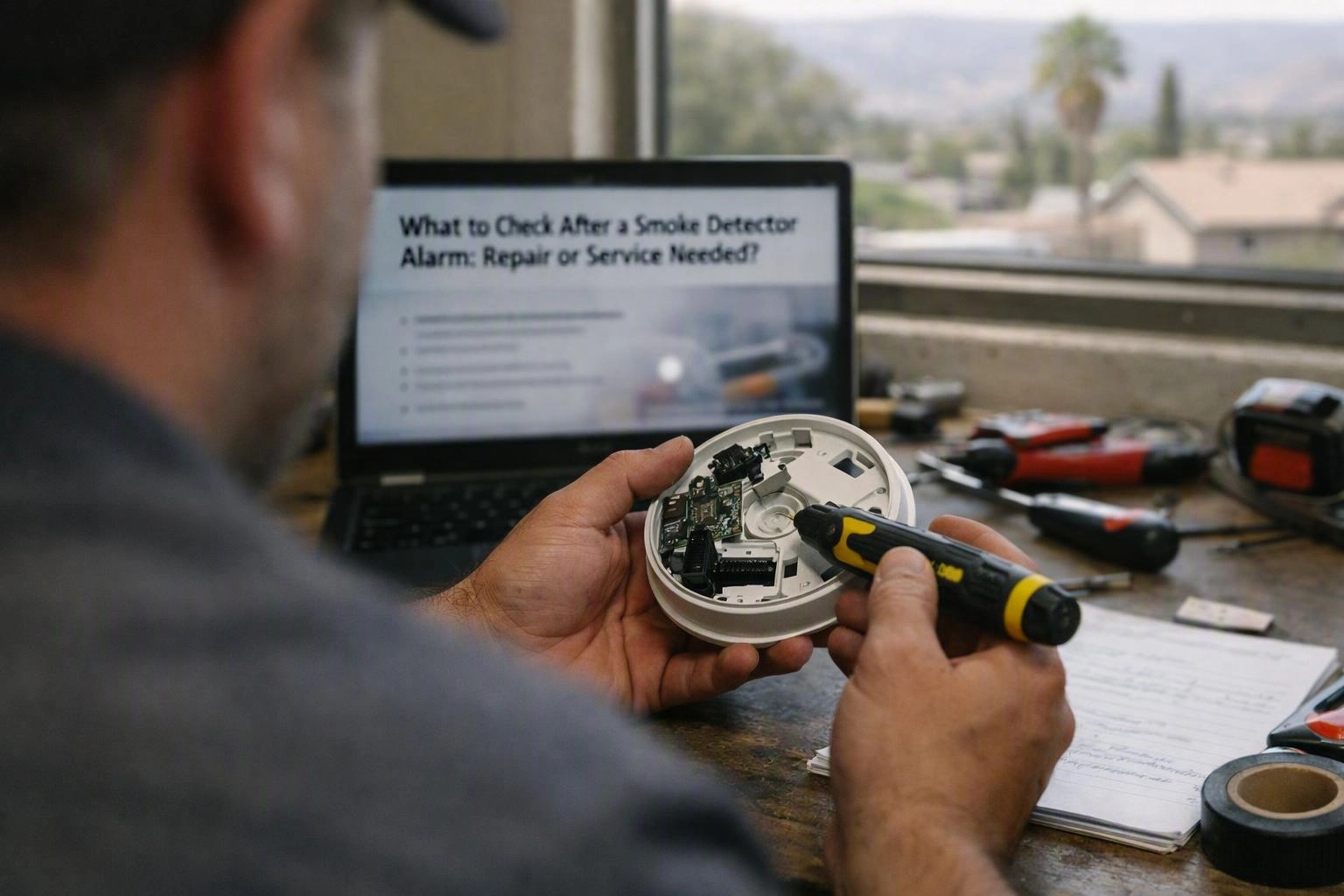
What Should You Check After a Smoke Detector Alarm?
A smoke detector alarm should be followed by a safety check, an inspection for visible causes, and a test of the detector only after the area is clear. We help identify whether the alarm reflects smoke, contamination, a power issue, or a device fault.
Why Does a Smoke Detector Keep Going Off?
A smoke detector keeps going off when contamination, environmental conditions, a weak battery, an electrical fault, or another interconnected alarm triggers the sensing system. A false alarm can come from dust, steam, cooking smoke, insects, or a problem inside the sensing chamber.
Low battery conditions may cause chirping or repeated activation, while a power fault can affect a hardwired smoke detector. We check the detector and its power source to separate an environmental nuisance from an electrical problem.
An interconnected alarm system can make several detectors sound when only one unit detects a problem. We identify the initiating alarm and test the communication path between the interconnected smoke detectors.
When Do Smoke Detector Repair and Service Belong Together?
Smoke detector repair and smoke detector service belong together when the recurring alarm involves both the detector condition and the electrical or installation system around it. Our inspection connects the device symptoms to the wiring, mounting, and alarm network.
We inspect the complete setup before deciding whether the work involves cleaning, a connection correction, replacement wiring, or a new detector. This approach helps keep the repair quote tied to the confirmed fault.
How Do Smoke Detector Repair and Service Work Together?
Smoke detector service identifies the cause, while smoke detector repair corrects the detector, wiring, or connection problem that the inspection confirms. We sequence the work so the final test checks the actual repair.
Our team can also connect this work with related electrical repairs when the detector shares a circuit or mounting area with other equipment. We keep the scope focused on life-safety operation and compatible system performance.
When Is Smoke Detector Replacement Safer Than Repair?
Smoke detector replacement is appropriate when the sensing unit is damaged, persistently unreliable, contaminated beyond cleaning, or incompatible with the existing alarm system. A damaged sensor or contaminated sensing chamber may not respond reliably after surface cleaning.
An aged or obsolete alarm can also create compatibility and maintenance problems. We select a compatible replacement and follow the manufacturer instructions for mounting, wiring, power, and interconnection.
Replacement is not based on the alarm sound alone. We inspect the device and system first so the recommendation addresses the confirmed cause.
What Does Our Smoke Detector Inspection Include?
Our smoke detector inspection checks the alarm history, detector condition, power source, wiring, mounting, and system response before we recommend smoke detector repair, service, or replacement. We explain the findings in plain language before work proceeds.
We also examine the junction box, wire connector, and test button when those parts affect alarm operation. The final alarm sound should be clear, and the interconnected system should respond as designed.
What Changes the Cost of Smoke Detector Repair or Replacement?
Smoke detector repair or replacement cost depends on the confirmed fault, detector type, wiring condition, access required, compatibility needs, and scope of testing. We determine the exact quote after inspection.
A simple device issue may require less work than a wiring fault involving ceiling access or an interconnected system. Replacement device requirements, electrical troubleshooting, and inspection findings also change the work involved.
We explain what the quote includes, including the device or repair work, wiring access, connection checks, and functional testing. You can request an exact quote through Smoke Detector Repair.
How Can You Prevent Repeated Smoke Detector Alarms?
Smoke detector maintenance reduces recurring alarms when the detector stays clean, powered, correctly placed, and tested according to its manufacturer instructions. We can inspect the device when routine care does not stop repeated activation.
Keep dust and insect debris away from the detector, replace the battery when required, and reduce steam or cooking smoke near the sensing area. Use ventilation to move normal household fumes away from the alarm.
Do not paint over a detector or block its openings. We check placement, alarm testing, and electrical connections when the surrounding conditions appear suitable but the nuisance alarm continues.
When Should You Call San Bernardino Electrician?
San Bernardino Electrician should inspect a recurring smoke detector alarm when the cause is unclear, the alarm is hardwired, multiple detectors activate, or ladder and electrical work are unsafe for you. Our crew checks the device, wiring, power, and alarm communication system.
Call us when cleaning and battery replacement do not resolve the problem. We also handle electrical troubleshooting when a loose connection, power fault, or remodeling change may affect the detector.
Smoke alarms are life-safety equipment, so do not disable a recurring alarm and leave the area unprotected. Contact us to arrange smoke detector service and discuss the safest repair or replacement path.
Questions About a Smoke Detector That Keeps Going Off
Can a low battery make a smoke detector keep going off?
Yes, a low battery can cause chirping or repeated alarm behavior, although it is not the only possible cause. San Bernardino Electrician checks the battery, power supply, detector condition, and wiring when replacing the battery does not resolve the alarm.
Why do interconnected smoke detectors all sound together?
Interconnected smoke detectors all sound together because the alarm network shares a trigger between its devices. We identify the initiating detector and test the interconnection wiring and compatible alarm communication.
Can I clean a smoke detector that keeps alarming?
Yes, you can remove surface dust according to the manufacturer instructions when the area is safe and the detector design permits cleaning. We inspect the sensing chamber and device response when cleaning does not stop the recurring alarm.
What should I do if a smoke detector alarms when there is no visible smoke?
Check for hidden fire risks, cooking smoke, steam, dust, insects, and a low battery, then leave the detector active until the cause is clear. We inspect the alarm, surrounding conditions, power source, and wiring when no visible smoke explains the activation.
Can a hardwired smoke detector keep going off because of an electrical problem?
Yes, a hardwired smoke detector can keep going off because of a power fault, loose connection, wiring damage, or an interconnection issue. We complete an electrical inspection and functional testing before recommending repair or replacement.