Ceiling Fan Not Working: Electrical Faults and Repair Solutions
Ceiling fan repair starts with checking the power supply, wall switch, controls, capacitor, motor, and wiring. San Bernardino Electrician diagnoses the electrical fault, explains the repair, and restores safe operation.
Get a Free EstimateWhat Are the Signs of an Electrical Ceiling Fan Fault?
A ceiling fan with no movement, inconsistent speed, unusual noise, burning odor, or intermittent operation may have an electrical fault. We use these symptoms to guide the first part of our inspection.
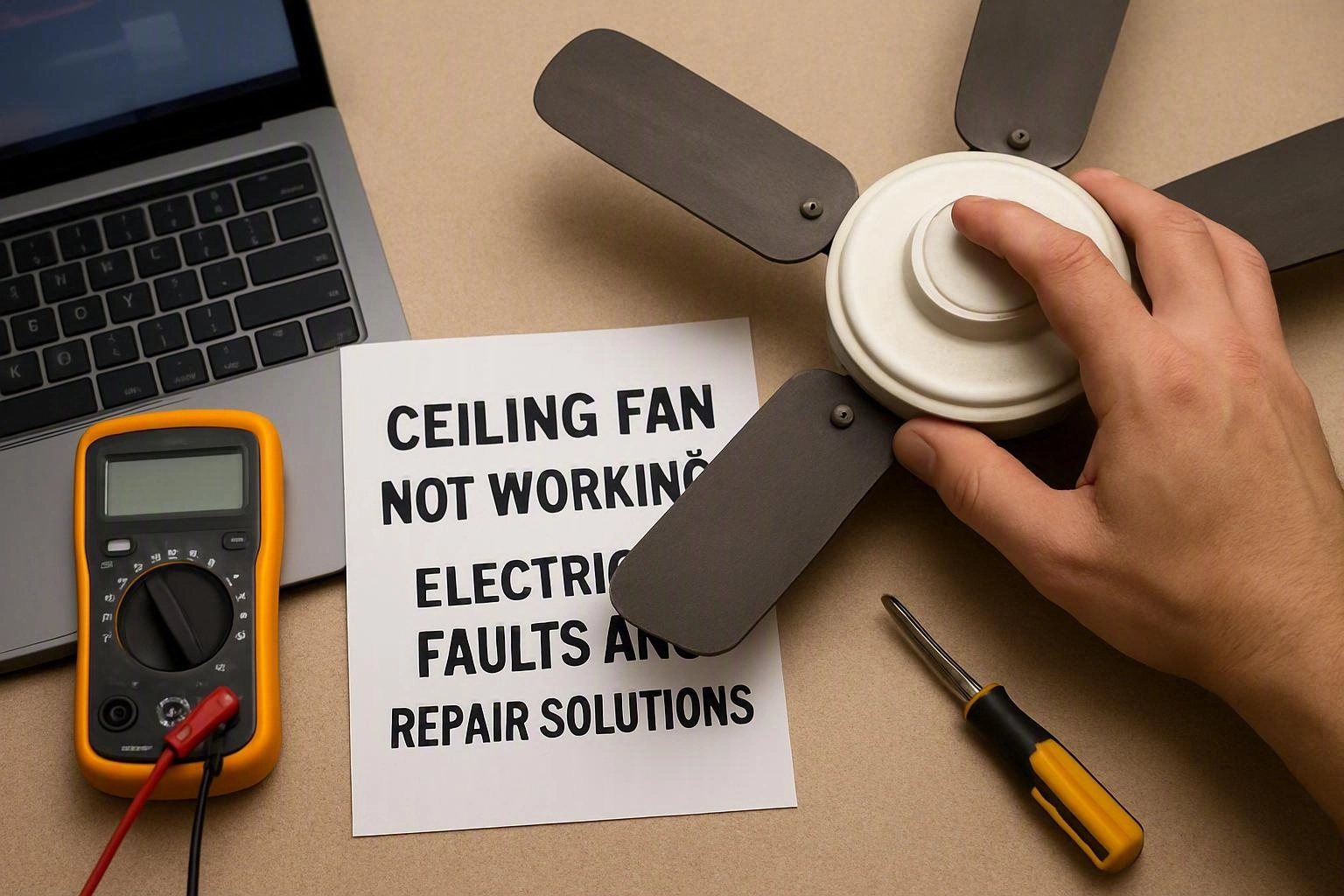
What Causes a Ceiling Fan to Stop Working?
A ceiling fan commonly stops working because of a power interruption, failed control, loose connection, damaged capacitor, or motor problem. Our team traces the fault instead of replacing parts without testing.
A remote receiver can also prevent commands from reaching the fan. We test the control path before deciding whether the receiver or another component needs replacement.
How Can You Safely Check a Ceiling Fan Before Repair?
You can safely check the circuit breaker, wall switch, remote batteries, and visible controls without opening the fan housing or handling live wiring. These checks can show whether the problem is limited to a simple control or power interruption.
Turn the wall switch on and check the remote control settings. If the fan has a pull chain, operate it only from a stable position and stop if the chain feels damaged. Do not remove covers, test exposed conductors, or reach into the fan housing.
Electrical safety becomes more important when you notice heat, a burning smell, sparks, damaged wiring, or repeated breaker operation. Switch the fan off and contact San Bernardino Electrician so our team can complete the live-wiring checks safely.
Which Ceiling Fan Faults Need Electrical Diagnosis?
Ceiling fan symptoms can come from the fan, its controls, or the circuit supplying it. We match the symptom with targeted testing so the repair addresses the electrical fault.
| Symptom | Possible fault | What we check |
|---|---|---|
| No power | Circuit breaker, wall switch, or wiring fault | Power supply, switch operation, and circuit connections |
| Humming motor | Capacitor or motor problem | Motor behavior, capacitor condition, and voltage supply |
| Intermittent operation | Loose connection, switch, receiver, or circuit fault | Connections, controls, and circuit stability |
| Single-speed operation | Fan speed control or capacitor fault | Control settings and component response |
| Light kit failure | Light control, lamp connection, or wiring fault | Lighting supply and connections |
How We Identify the Fault Behind a Nonworking Ceiling Fan
We identify a nonworking ceiling fan by tracing power from the circuit to the switch, controls, fan connections, and motor. Our electrical inspection follows the path of the fault instead of relying on the symptom alone.
Our team begins with voltage supply and circuit testing. We then check switch continuity, the fan control, the capacitor, and the motor. Circuit wiring and connections are inspected for looseness, damage, or signs of overheating.
When the fan has power but will not spin, we separate a control problem from a mechanical or motor fault. We explain the finding before completing a safe repair.
What Does a Ceiling Fan Repair Quote Include?
A ceiling fan repair quote depends on the failed component, wiring access, replacement parts, and whether the fault extends to the circuit; Free Estimates Available. We identify these factors during the inspection so the proposed work is clear.
A quote may cover the electrical inspection, circuit testing, component replacement, wiring repair, or circuit breaker repair. If the light kit also has a fault, we explain whether lighting repair is part of the same job.
Replacement components can include a capacitor, switch, remote receiver, or motor-related part. You can request a quote through our Casablanca Fan Repair service page.
How Can You Prevent Ceiling Fan Electrical Problems?
Ceiling fan maintenance can reduce electrical problems by keeping controls, connections, and circuit protection in good condition. We also recommend addressing unusual operation before a small fault affects other parts.
When Should a Ceiling Fan Be Repaired or Replaced?
A ceiling fan is usually a repair candidate when the housing and motor remain serviceable, while extensive motor damage, heat damage, or unsafe wiring can support replacement. We assess the fan housing, ceiling bracket, wiring, and available replacement parts before making that recommendation.
A capacitor, switch, remote receiver, or wiring connection may be replaceable without replacing the complete fan. A damaged fan motor can require a broader repair decision when compatible parts are not suitable or the housing has also been affected.
Electrical safety guides the final choice. We explain whether repair or replacement provides the safer path for the fan and its circuit.
How We Complete a Ceiling Fan Electrical Repair
We complete a ceiling fan electrical repair by isolating the circuit, testing the fan components, correcting the fault, and checking safe operation. Our process keeps the repair focused on the failed part and the surrounding electrical connections.
Free Estimates Available applies when you request our assessment and repair quote. We explain the work before proceeding.
Questions About a Ceiling Fan Not Working
Can a ceiling fan stop working because of the wall switch?
Yes, a ceiling fan can stop working because the wall switch or fan speed control has failed. San Bernardino Electrician tests the switch, connections, and power supply before replacing the control.
Why does a ceiling fan hum but not spin?
A ceiling fan can hum but not spin when the capacitor, motor, or control has a fault. We test the voltage supply and components to identify the cause.
Why does a ceiling fan work on one speed but not another?
A ceiling fan that works on one speed but not another may have a failed speed control, capacitor, remote receiver, or related wiring fault. We test each control path before choosing the replacement component.
Is it safe to use a ceiling fan with a burning smell?
No, a ceiling fan with a burning smell should remain switched off until the source is inspected. The smell can indicate overheating, damaged wiring, or a motor fault.
Can a circuit breaker repair solve a ceiling fan power problem?
Yes, circuit breaker repair can solve a ceiling fan power problem when testing shows that the breaker or its connection is the fault. We also check the downstream wiring so the breaker repair addresses the complete circuit issue.
Request Ceiling Fan Repair
Ceiling fan repair is safest when the fault is tested before parts are replaced. San Bernardino Electrician can inspect the fan, controls, lighting, and circuit wiring, explain the repair, and provide a quote for the required work.
Related Resources
Signs You Need Circuit Breaker Repair in San Bernardino, CA
When You Need ItWhen to Call an Electrician for Burning Smells and Hot Outlets in San Bernardino, CA
When You Need ItElectrical Wiring Warning Signs: When San Bernardino Homes Need an Electrician
When You Need ItSigns Your Outdoor and Landscape Lighting Has Electrical Damage in San Bernardino, CA