When to Call an Electrician for Burning Smells and Hot Outlets in San Bernardino, CA
Burning smells and hot outlets call for prompt electrical attention because they can signal overheating, loose connections, or circuit damage; San Bernardino Electrician checks the outlet, wiring, and breaker to identify the hazard and complete the needed repair.
Get a Free EstimateWhen Do Burning Smells and Hot Outlets Need an Electrician?
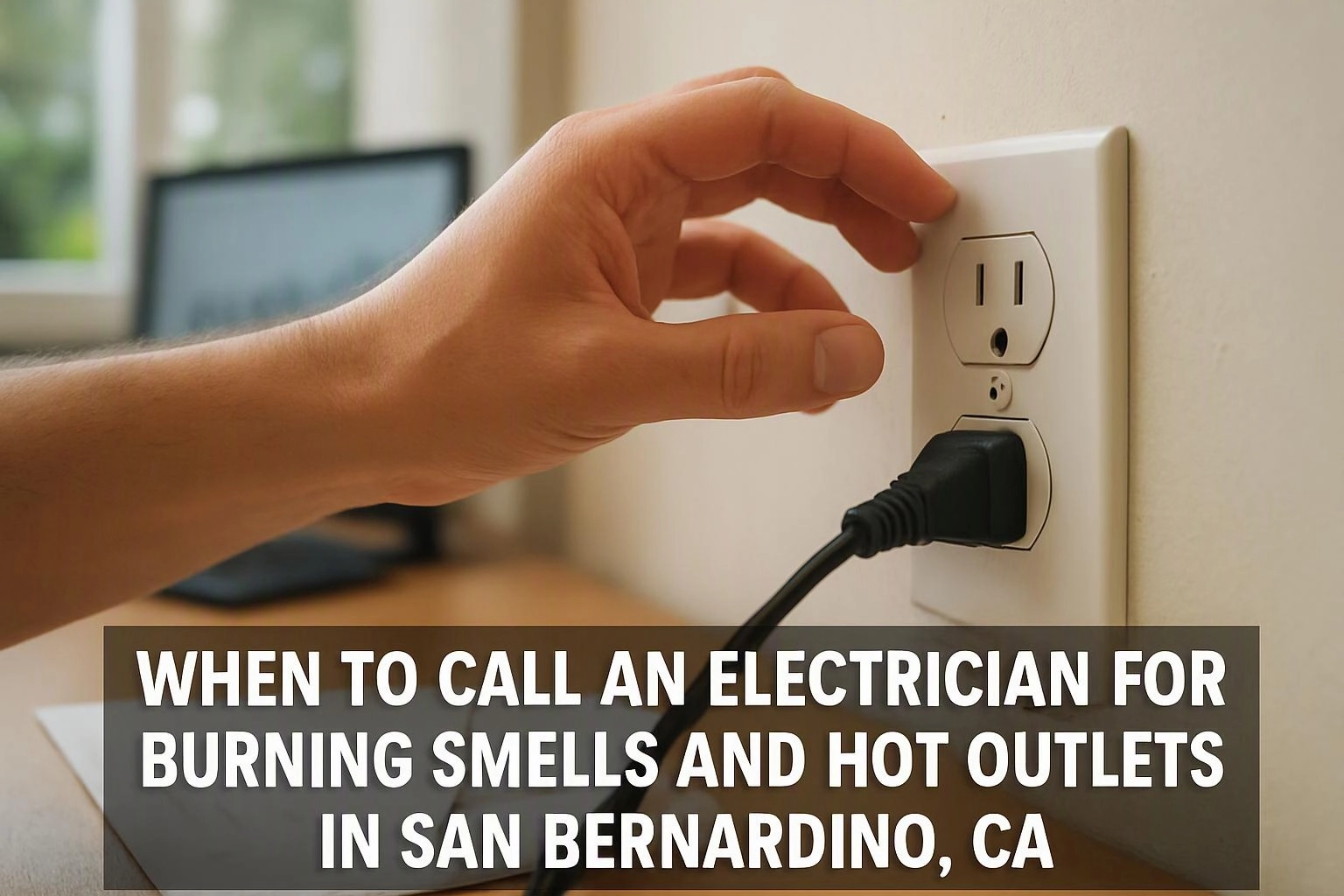
A burning smell or hot outlet needs San Bernardino Electrician when the condition persists, returns, or appears with discoloration, buzzing, smoke, sparks, or breaker trips.
A burning smell from an outlet can point to heat damage at the receptacle, wire connection, or circuit. We use electrical troubleshooting to locate the fault and protect electrical safety.
Warning Signs of an Overheating Outlet
An overheating electrical outlet often shows a burning odor and unusual heat before more visible damage appears. Our team treats each sign as a reason to stop using the outlet and assess the circuit.
What to Do Before Electrical Help Arrives
Stop using the affected outlet, keep combustible items away, and switch off the related circuit breaker only when doing so is safe.
Safe immediate action limits contact with a possible electrical safety problem. Our crew can then examine the outlet and circuit without relying on continued use as a test.
DIY Checks Compared With Calling San Bernardino Electrician
You can stop using the outlet and observe visible symptoms, while San Bernardino Electrician tests the circuit, identifies the failure point, and performs the required repair.
DIY electrical safety ends with observation and isolation. Our team handles testing, wiring repair, and circuit breaker repair when the fault is beyond a safe visual check.
| Factor | What you can do yourself | What we do |
|---|---|---|
| Outlet inspection | Look for heat, discoloration, melting, smoke, or sparks without opening the outlet. | We inspect the receptacle, cover, terminals, and surrounding condition. |
| Circuit breaker | Switch off the related breaker only when access is safe. | We test the breaker and determine whether circuit breaker repair is needed. |
| Wiring | Do not remove the cover or handle exposed wires. | We trace wiring connections and complete wiring repair when required. |
| Electrical troubleshooting | Record when the symptom appears and which devices were connected. | We identify the failure point and check the circuit load and protective equipment. |
How San Bernardino Electrician Diagnose a Burning Outlet or Hot Circuit
San Bernardino Electrician diagnoses a burning outlet by examining the outlet, wiring connections, circuit load, and protective breaker for the source of overheating.
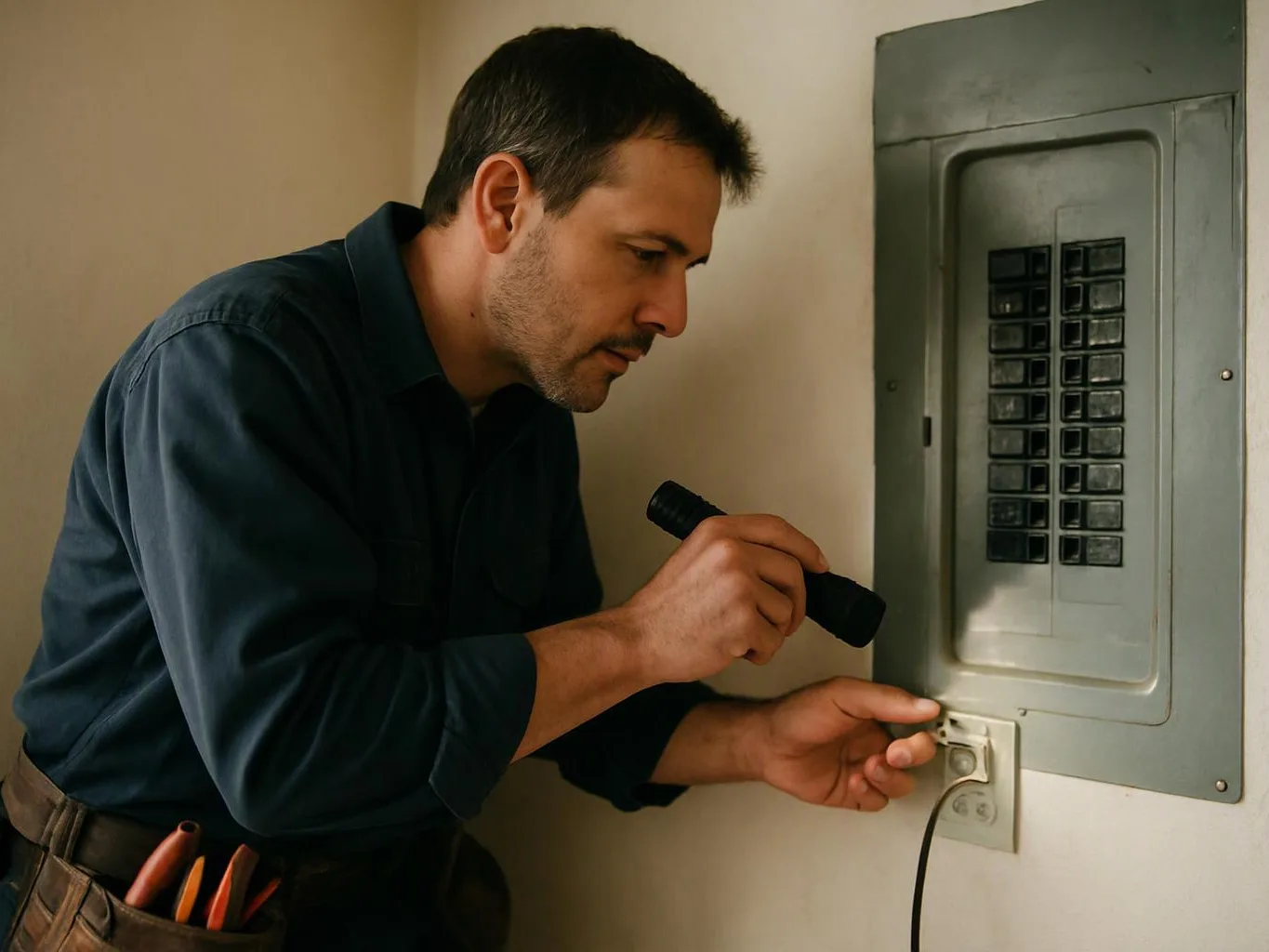
We begin with a visual inspection and electrical troubleshooting. Our team checks the outlet and wire connections for looseness, heat damage, or signs of arcing.
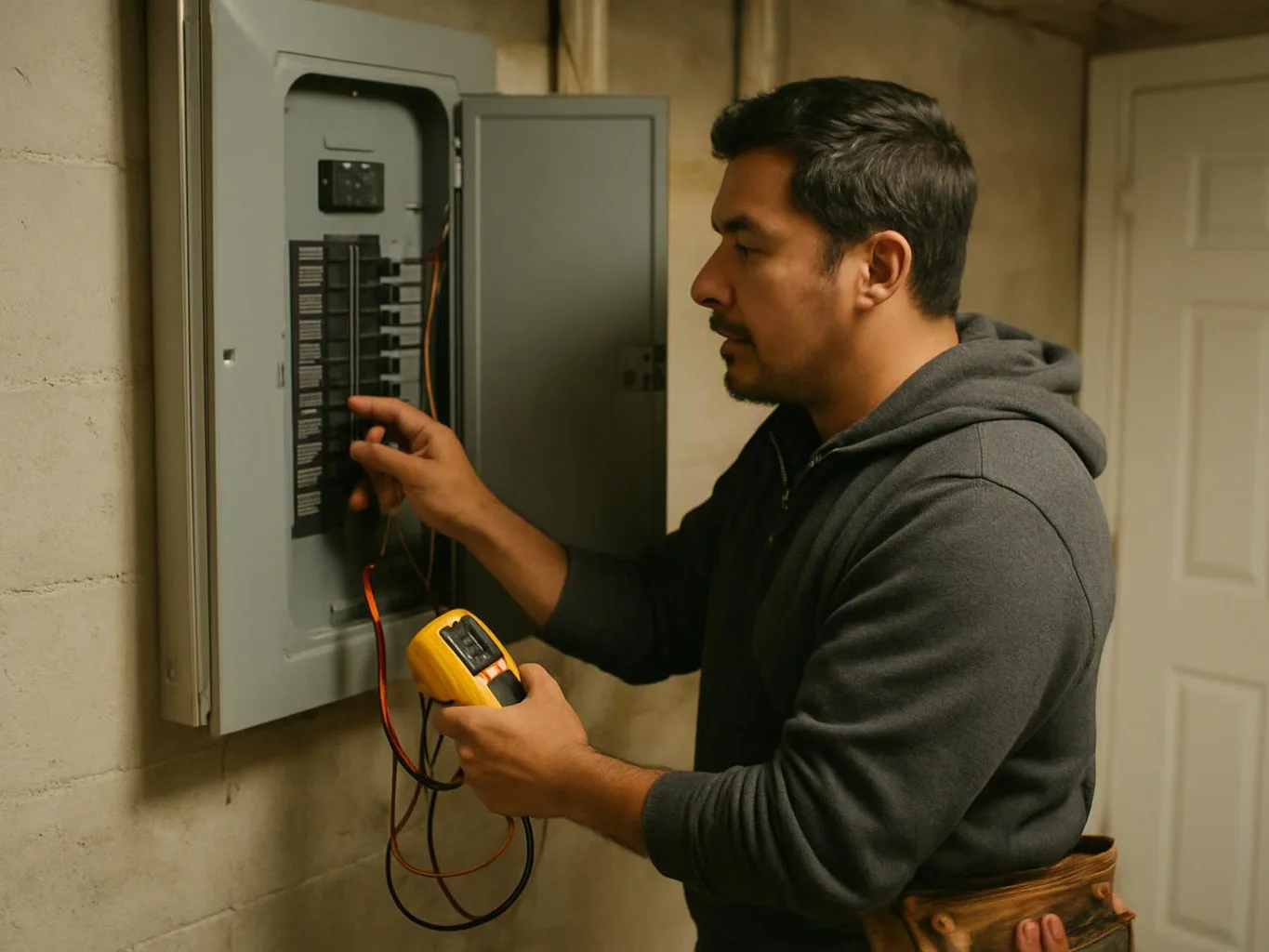
We also evaluate the circuit breaker and electrical panel for related faults. The inspection helps us separate an outlet repair from a wider circuit or panel concern.
Which Electrical Repair May Be Needed?
The needed repair depends on whether the fault is in the outlet, wiring, circuit breaker, lighting connection, or electrical panel.
We complete outlet repair when the receptacle or its terminals are damaged. Wiring repair may be needed when a loose connection or heat-damaged conductor causes the symptom.
A faulty protective device can call for circuit breaker repair. If the problem reaches a lighting connection, we address it through lighting repair, while panel damage may require electrical panel repair.
How San Bernardino Conditions Can Affect Electrical Demand
Hot, dry summers in lower-elevation developed areas can increase electrical demand and expose weaknesses in breakers, panels, wiring, and dedicated circuits.
Higher seasonal demand can make a circuit breaker trip or reveal an overloaded circuit. We assess the circuit load, panel condition, and dedicated circuit needs before recommending repair work.
What Determines the Repair Quote?
The repair quote depends on the failed component, wiring condition, circuit access, and whether the fault extends to the breaker or panel; Free Estimates Available from San Bernardino Electrician.
We review the outlet condition, wiring access, circuit breaker, and electrical panel before explaining the needed work. The quote reflects the actual failure point and the repair steps required to restore safe operation.
Free Estimates Available means you can request an assessment from our team before deciding on the repair.
Can I Keep Using an Outlet That Smells Burnt?
No, you should stop using an outlet that smells burnt because continued use can worsen heat damage or an electrical connection fault.
Stop using the outlet and switch off the circuit breaker only when doing so is safe. We inspect the outlet, circuit, and breaker to determine whether outlet repair or a broader electrical repair is needed.
What Causes an Outlet to Feel Hot?
A hot outlet can result from a loose connection, damaged receptacle, overloaded circuit, or a fault that requires electrical troubleshooting.
A loose electrical connection can create resistance and heat at the outlet. We inspect the wire connection and receptacle to find signs of overheating or damage.
An overloaded circuit can also make an outlet feel warm when connected equipment draws more power than the circuit safely handles. Our team checks the circuit breaker, circuit load, and electrical panel for related concerns.
Questions About Burning Smells and Hot Outlets
Should I turn off the breaker if an outlet smells burnt?
San Bernardino Electrician recommends turning off the related breaker only when you can reach it safely without approaching smoke, sparks, or damaged equipment.
Is a warm outlet always dangerous?
No, a warm outlet is not always dangerous, but unusual or increasing heat needs attention when it appears with a burning odor, discoloration, buzzing, smoke, or breaker trips.
Can a bad breaker cause a burning smell?
Yes, a bad breaker can contribute to overheating or a burning smell when the protective device or its connection has a fault. We test the breaker and inspect the panel and circuit before completing circuit breaker repair.
Why does an outlet smell burnt when nothing is plugged in?
An outlet can smell burnt when an internal wire connection, terminal, receptacle, or nearby circuit component is overheating even without a plugged-in device. Stop using the outlet and arrange electrical troubleshooting so we can locate the source.
Burning smells and hot outlets need prompt attention because hidden heat damage can spread through an outlet, wiring connection, breaker, or panel. San Bernardino Electrician checks the hazard and explains the repair needed for safe use.
Related Resources
Breaker Keeps Tripping? Causes, Risks, and Electrician Repairs
What It SolvesElectrical Sparks From an Outlet, Switch, or Panel: Emergency Repair Guide
What It SolvesDead Electrical Outlet With No Power: Troubleshooting and Repair
What It SolvesCeiling Fan Not Working: Electrical Faults and Repair Solutions