Electrical Wiring Warning Signs: When San Bernardino Homes Need an Electrician
Electrical wiring warning signs include repeated breaker trips, flickering lights, warm outlets, burning odors, buzzing, shocks, and visible damage. San Bernardino Electrician checks the wiring, breakers, fuse box, outlets, and lighting circuits to identify hazards and determine whether repair or replacement is needed.
Get a Free Estimate
Which Electrical Wiring Warning Signs Should San Bernardino Homeowners Take Seriously?
Electrical wiring warning signs that need prompt attention include repeated breaker trips, flickering or dimming lights, warm or discolored outlets, burning odors, buzzing sounds, shocks, and visible wire damage.
These signs can involve an electrical outlet, light switch, lighting circuit, circuit breaker, fuse box, or electrical panel. We trace the symptom to the affected component before deciding whether the work calls for repair or replacement.
Repeated Breaker Trips or Blown Fuses
Repeated breaker trips or a blown fuse can indicate an overloaded circuit, short circuit, or failing protective device. We perform circuit diagnosis and trace the load before completing Circuit Breaker Repair or Fuse Box Repair.
Hot, dry summers in lower-elevation developed areas can increase electrical demand and reveal weaknesses in breakers, panels, wiring, and dedicated circuits. Our team checks whether seasonal demand is exposing a circuit condition that needs repair or a dedicated circuit assessment.
Flickering, Dimming, or Buzzing Lights
Flickering lights, dimming lights, or a buzzing light fixture can point to a loose connection, faulty light switch, or problem in the lighting circuit. We inspect the fixture, switch, connections, and related wiring before completing Lighting Repair.
A symptom that appears in several fixtures may involve the shared circuit or an electrical panel connection. Our team checks the affected path so the repair addresses the cause rather than only the visible light.
Warm, Discolored, or Sparking Outlets
A warm, discolored, or sparking electrical outlet can indicate overheating, an arc fault, or damaged outlet wiring. We inspect the outlet and its connections, then isolate unsafe power before completing the needed repair.
Stop using an outlet that feels hot, smells unusual, or produces sparks. If the condition continues or involves nearby wiring, contact us for an electrical safety assessment.
Burning Odors, Buzzing, or Crackling Sounds
A burning smell, buzzing sound, or crackling sound can indicate electrical arcing, overheated wiring, or burning insulation. We inspect the electrical panel and connected circuits to locate the source before the damage spreads.
Turn off the affected circuit if you can do so safely without touching damaged parts. Leave the area and contact San Bernardino Electrician when smoke, active sparking, or strong burning odors are present.
Mild Shocks or Visible Wire Damage
An electrical shock or visible wire damage can indicate exposed wire, damaged insulation, or poor grounding. We make the circuit safe, inspect the affected wiring, and determine whether localized wiring repair or broader work is needed.
Do not touch exposed wiring or damaged insulation. Keep people away from the area until our crew can complete an electrical safety inspection.
When Do Warning Signs Mean the Wiring May Need Replacement?
Electrical wiring may need replacement when damage, overheating, recurring faults, or unsafe circuit conditions affect more than one accessible component.
A single failed outlet or switch may need a localized repair. Repeated faults across a branch circuit, widespread damaged insulation, or aging wiring can point to broader work, including whole-house rewiring.
We use an electrical safety inspection to assess the condition of the wiring, protective devices, connections, and accessible circuits. Our findings show whether repair or replacement is the safer path.
What Can You Safely Check Yourself Before Calling San Bernardino Electrician?
Homeowners can note which fixtures or outlets show symptoms and check whether a breaker has tripped, but homeowners should not open panels, handle exposed wiring, or investigate burning electrical components.
You can record whether the problem affects one outlet, one light, or several rooms. You can also keep appliances unplugged from a problem outlet and avoid resetting a breaker repeatedly.
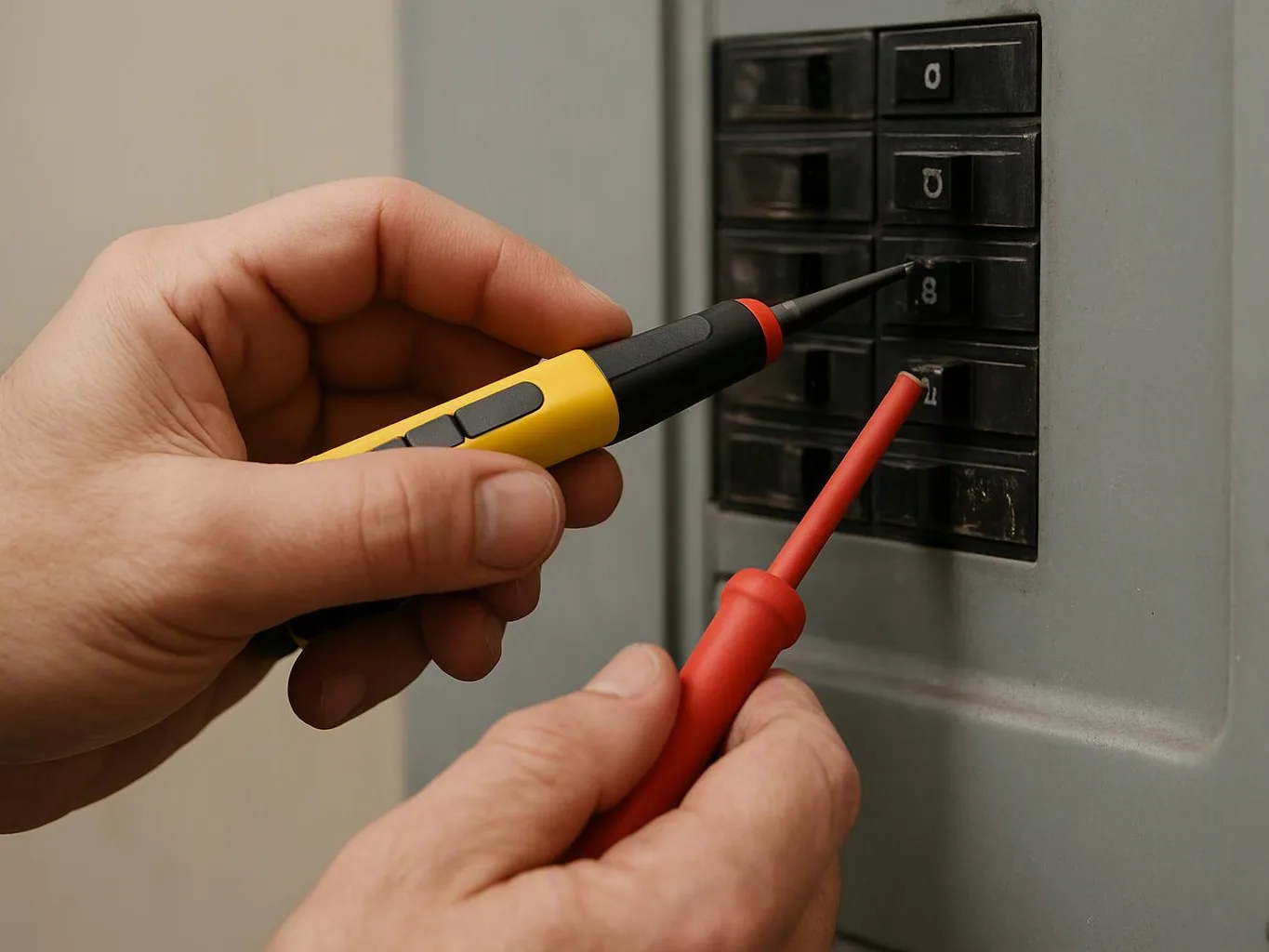
Do not remove an electrical panel cover or fuse box cover. We handle energized-circuit troubleshooting and inspect visible damage without asking you to take unsafe steps.
DIY Checks or Electrical Repair: Which Option Fits the Warning Sign?
DIY checks are limited to observing symptoms and identifying an accessible tripped breaker, while San Bernardino Electrician diagnoses energized circuits, repairs wiring, and determines whether replacement is necessary.
Use the comparison below to decide when observation is reasonable and when our crew needs to inspect the electrical system. Stop using the affected component if heat, burning odor, sparks, or exposed wiring is present.
| Factor | What you can do yourself | What we do |
|---|---|---|
| Symptom notes | Identify the outlet, switch, fixture, or room affected. | Trace the symptom through the affected circuit. |
| Circuit breaker | Look for an accessible breaker that has moved out of position. | Complete circuit breaker diagnosis and repair when the cause is not a simple reset. |
| Fuse box | Avoid opening the fuse box or touching a fuse. | Inspect the fuse box and complete Fuse Box Repair when appropriate. |
| Lighting repair | Note whether one light or several lights flicker. | Check the light switch, fixture, connections, and lighting circuit. |
| Wiring repair | Keep away from exposed wire, heat, sparks, and damaged insulation. | Make the circuit safe and complete wiring repair or recommend replacement. |
How San Bernardino Electrician Diagnose Electrical Wiring Problems in San Bernardino Homes
San Bernardino Electrician traces the reported symptom to the affected circuit, checks connected components and protective devices, and explains whether the work calls for repair, component replacement, or rewiring.
Our electrical troubleshooting process considers the circuit breaker, fuse box, electrical panel, outlets, switches, fixtures, and accessible wiring. We look for loose connections, overheating, short circuits, and other fault conditions.
When the condition extends across a branch circuit or multiple areas, we explain whether wiring repair or whole-house rewiring fits the safety needs of the home. We keep the recommendation tied to the condition we find.
What Changes the Cost of Fixing or Replacing Electrical Wiring?
The cost depends on the affected circuit, the extent of wiring damage, access to the wiring, the condition of the breaker or fuse box, and whether the job requires localized repair or broader rewiring.
Access can affect the work when wiring is behind finished surfaces or difficult to reach. Circuit condition also matters when a repair involves the electrical panel, protective devices, lighting circuit, or multiple connected components.
We provide Free Estimates Available after assessing the work. Our estimate explains the recommended wiring repair, whole-house rewiring, circuit breaker repair, fuse box repair, or lighting repair and the conditions that drive the scope.
How Can San Bernardino Homeowners Arrange an Electrical Wiring Assessment?
San Bernardino homeowners can contact San Bernardino Electrician to describe the warning sign and arrange an assessment for wiring, breaker, fuse box, or lighting problems.
Tell us whether you noticed a repeated trip, flickering light, warm outlet, burning smell, buzzing sound, shock, or visible wire damage. Our team uses those details to prepare for electrical troubleshooting and determine what needs inspection.
Contact us to discuss the symptom and request an electrical inspection, Circuit Breaker Repair, Fuse Box Repair, or Lighting Repair assessment.
Questions About Electrical Wiring Warning Signs
Can old electrical wiring cause breakers to keep tripping?
Yes, old electrical wiring can contribute to repeated breaker trips when insulation, connections, circuit capacity, or connected equipment no longer performs safely. San Bernardino Electrician checks the circuit and protective device to determine whether the problem needs repair or replacement.
Should I turn off power if an outlet smells like burning?
Yes, turn off the affected circuit only if you can do so safely without touching the outlet or damaged components. Keep away from smoke, heat, and sparks, and contact us for an electrical safety inspection.
Can flickering lights mean there is a wiring problem?
Yes, flickering lights can mean there is a loose connection, faulty switch, fixture issue, or lighting circuit problem. We inspect the affected components and trace the circuit before completing Lighting Repair.
What should I do if an electrical outlet feels warm?
Stop using a warm electrical outlet, unplug connected equipment only if it is safe, and avoid touching damaged parts. We inspect the outlet, wiring, connections, and circuit for overheating or an arc fault.
Can San Bernardino Electrician repair one damaged circuit without replacing all the wiring?
Yes, San Bernardino Electrician can repair one damaged circuit when the surrounding wiring and circuit conditions are safe for localized work. We recommend broader replacement only when damage, overheating, recurring faults, or unsafe conditions extend beyond that circuit.
Related Resources
Breaker Keeps Tripping? Causes, Risks, and Electrician Repairs
What It SolvesElectrical Sparks From an Outlet, Switch, or Panel: Emergency Repair Guide
What It SolvesDead Electrical Outlet With No Power: Troubleshooting and Repair
What It SolvesCeiling Fan Not Working: Electrical Faults and Repair Solutions