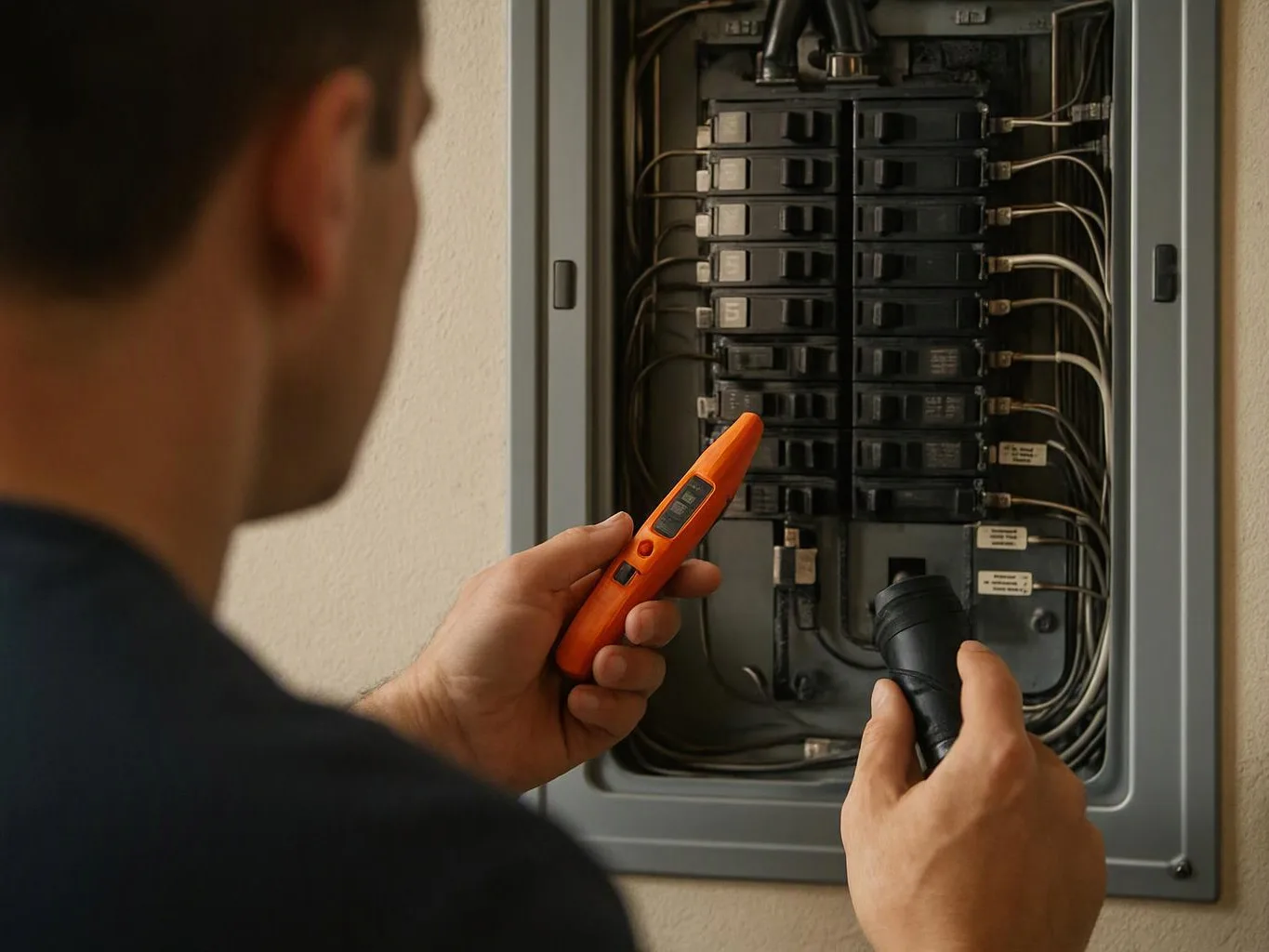
Chandelier Repair Mistakes: Common Wiring, Mounting, and Weight-Bearing Hazards
Chandelier installation and repair mistakes can create shock, fire, fall, and ceiling-damage hazards; San Bernardino Electrician checks the circuit, support, connections, and fixture weight before completing the work.
Get a Free EstimateWhy Chandelier Installation and Repair Mistakes Are Dangerous
Chandelier installation and repair mistakes are dangerous because electrical faults and inadequate support can injure people or damage the property.
A chandelier connects to an electrical circuit through a ceiling junction box and depends on mounting hardware to carry its fixture weight. A loose connection can cause heat or a short circuit, while weak support can lead to ceiling damage or a falling fixture.
We inspect the electrical wiring, ceiling structure, and fixture support together. Our team also checks whether the mounting method suits the light fixture and its load before we complete the repair.
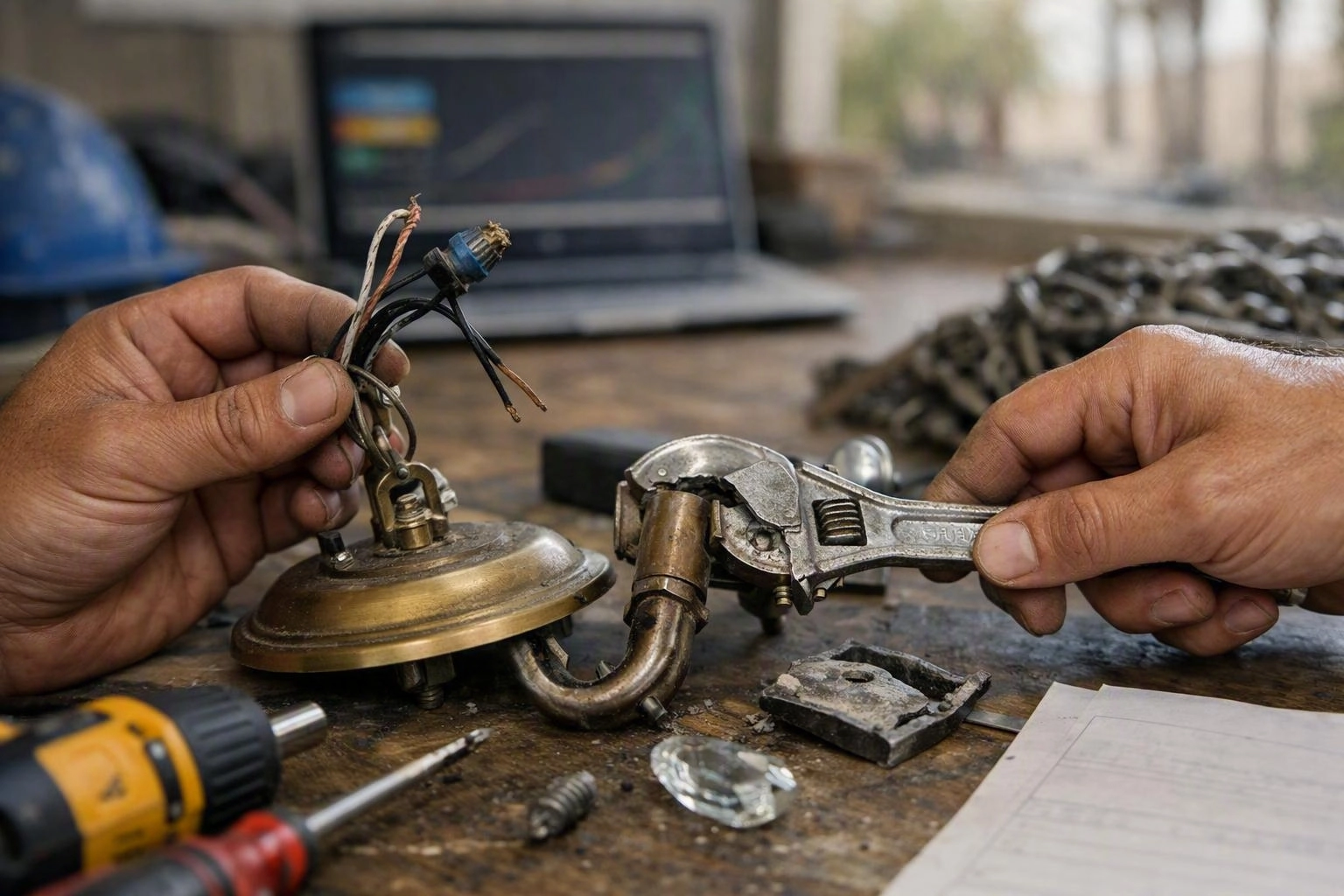
The Hazards We Check Before Repairing or Installing a Chandelier
Chandelier hazards become clearer when the wiring condition, mounting method, support structure, and fixture load are checked together.
We trace visible problems back to their electrical or structural cause. The inspection also helps us decide whether the existing junction box and mounting hardware can remain in service.
| Hazard | What can cause it | What we check |
|---|---|---|
| Electrical shock | An energized circuit or missing grounding path | Circuit isolation, voltage, polarity, and grounding |
| Short circuit | Damaged insulation or a loose connection | Wire connectors, conductor condition, and connections |
| Overheating | Overloaded parts, poor splices, or mismatched lamps | Fixture rating, sockets, bulbs, and dimmer compatibility |
| Ceiling damage | Movement, vibration, or inadequate box support | Ceiling structure, box support, and mounting points |
| Falling fixture | Failed hardware or an unsupported fixture load | Brackets, straps, chain, downrod, and locking hardware |
Mistake: Working on Energized Chandelier Wiring
Working on an energized circuit exposes the person handling the fixture to electrical shock. The mistake often happens when someone turns off only the wall switch and assumes the wires are safe.
We isolate the circuit at the circuit breaker and use voltage testing before touching conductors. Safe isolation protects the person doing the work and helps prevent accidental damage to the fixture.
The correction cost depends on the wiring condition, access, and damage found during testing. We include circuit isolation, inspection, and the required repair in the scope we explain before work begins.
Mistake: Connecting Wires Without Identifying Their Function
Connecting wires without identifying their function can reverse polarity or place the line wire on the wrong fixture lead. The mistake may result from faded markings, previous repairs, or confusion between the neutral wire and grounding conductor.
We identify the line wire, neutral wire, and ground wire before joining conductors with the correct wire connector. We also check polarity so the switch controls the intended part of the circuit.
The correction cost depends on the number of loose connections, damaged conductors, and repairs hidden inside the canopy. Our estimate explains whether the work involves a connection repair, conductor replacement, or further circuit testing.
Mistake: Ignoring Grounding and Bonding
Ignoring grounding and bonding leaves a metal fixture body without a dependable path for fault current. That condition increases the shock hazard if a live conductor contacts the fixture.
We connect the equipment grounding conductor to the ground screw and bond the metal fixture body as required by the fixture design. We test the grounding path before restoring normal operation.
The correction cost depends on the condition of the grounding conductor, the fixture connections, and the accessible junction box. We describe any grounding repair and related testing in the estimate.
Mistake: Attaching a Heavy Chandelier to an Inadequate Box
Attaching a heavy chandelier to an inadequate ceiling electrical box can pull the junction box loose or damage the ceiling structure. A standard-looking box may not provide the box support or fixture rating needed for the load.
We inspect the junction box, its attachment, and the surrounding ceiling structure before securing the fixture. If the existing support is unsuitable, we plan a replacement or reinforcement that matches the fixture weight.
The correction cost depends on access above the ceiling, box condition, mounting reinforcement, and the chandelier's weight. Our estimate separates support work from wiring work so the scope is clear.
Mistake: Relying on Decorative Hardware to Carry the Load
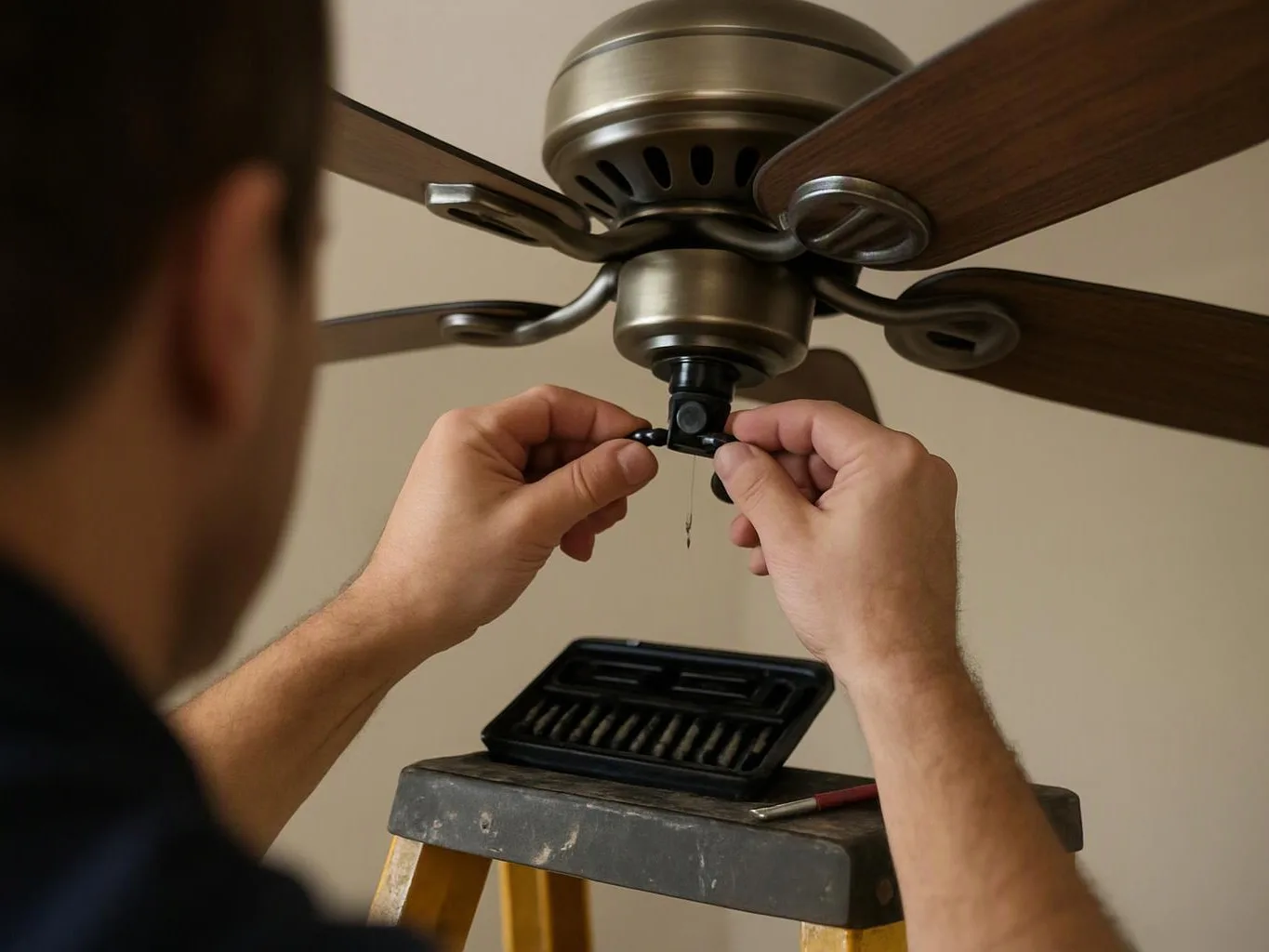
Relying on decorative hardware to carry a chandelier load can cause the fixture to shift or fall. A canopy may hide the mounting bracket, threaded screws, or support strap without providing the required load-bearing hardware.
We secure the fixture through the approved mounting bracket and load-bearing support. We check that threaded screws, the support strap, and the ceiling attachment work as one support system.
The correction cost depends on which hardware is damaged, the access to the ceiling structure, and the fixture weight. We identify replacement parts and reinforcement needs in the estimate.
Mistake: Leaving Wires Crowded or Poorly Secured in the Canopy
Leaving wires crowded inside the canopy can pinch conductor insulation or loosen a wire splice. Heat and movement can make a poor connection worse over time.
We arrange the wire connector and conductors so the canopy does not press against the splice. We also confirm strain relief and protect the insulation from sharp edges and mounting hardware.
The correction cost depends on insulation damage, the number of connections, and whether the canopy or fixture leads need repair. We test the repaired connections before closing the canopy.
Mistake: Skipping Chain, Rod, and Suspension Inspection
Skipping inspection of the chain, downrod, threaded nipple, or locking hardware can leave a weak suspension point hidden above the fixture. Wear, loose threads, or missing locking parts can allow movement and increase the chance of a falling fixture.
We inspect the chain, downrod, threaded nipple, and locking hardware from the ceiling connection to the chandelier body. We replace or secure failed parts before completing the electrical connections.
The correction cost depends on the suspension design, replacement hardware, and access to the mounting point. Our estimate states which suspension parts need attention.
Mistake: Installing Bulbs or Dimmers That Do Not Match the Fixture
Installing bulbs or a dimmer switch that does not match the fixture rating can cause flickering, heat, or premature component failure. The issue may involve an incompatible LED bulb, an incandescent bulb load, or a dimmer that does not support the fixture.
We check each lamp socket, the bulb type, and the dimmer switch against the fixture rating. We also inspect for signs of overheating before recommending compatible lighting parts.
The correction cost depends on the required bulbs, dimmer replacement, socket condition, and wiring access. We explain the compatible parts and related repair work in the estimate.
Mistake: Reassembling the Chandelier Without Testing Every Connection
Reassembling a chandelier without testing every connection can leave an intermittent fault hidden until the fixture is used. A light may work briefly while a loose connection remains inside the canopy or socket assembly.
We use continuity testing and voltage testing to check the repaired circuit, switch leg, and fixture connections. We then operate the light switch and inspect fixture operation for flickering or other irregular behavior.
The correction cost depends on the location of the intermittent fault and the parts that need repair. We include functional testing after the repair so the final scope accounts for the confirmed condition.
What Changes the Cost of Correcting a Chandelier Mistake?
The cost of correcting a chandelier mistake depends on the wiring fault, support condition, access, fixture weight, and replacement parts required; San Bernardino Electrician explains the work included in the estimate, and Free Estimates Available.
Wiring repair may be straightforward when connections are accessible, but hidden insulation damage or a ceiling box replacement can expand the scope. Mounting reinforcement may also be needed when the existing support does not match the fixture load.
Fixture access and chandelier condition affect the work because delicate, heavy, or damaged parts require careful handling. We inspect the fixture and explain the confirmed scope before preparing an estimate.
How We Correct Unsafe Chandelier Installation and Repair Work
San Bernardino Electrician corrects unsafe chandelier work by isolating the circuit, inspecting the wiring and support, repairing the fault, securing the fixture, and testing operation.
When to Call San Bernardino Electrician for Chandelier Work
Call San Bernardino Electrician when chandelier work involves exposed wiring, unstable mounting, heat or burn damage, or unsafe ladder access.
Visible warning signs can point to a fault that is not safe to investigate from a ladder. Our crew can isolate the circuit, inspect the fixture, and address the electrical or support problem.
What You Can Safely Check Before Chandelier Repair
You can check the wall switch, visible fixture movement, bulb condition, and obvious damage without opening the electrical box or handling energized wiring.
Look for a loose canopy, unusual movement, cracked bulbs, discoloration, burn marks, or flickering lights. You can also check whether the circuit breaker has tripped, but do not remove covers or touch wiring.
Stop checking if you smell burning, see exposed conductors, or cannot reach the fixture safely. Contact us for Chandelier Repair when the problem involves wiring, mounting, or ladder access.
Request a Chandelier Repair or Lighting Installation Estimate
San Bernardino Electrician can assess the chandelier, explain the wiring and mounting work needed, and prepare an estimate based on the confirmed scope.
Our team can address Chandelier Repair, Lighting Installation, or Lighting Repair when the inspection shows a problem with the circuit, fixture, support, or control. We connect the estimate to the inspection findings so you can understand which work is required.
Contact us to discuss the chandelier condition and the access available at the fixture. We will explain the scope of work before starting the repair or installation.
Questions About Chandelier Repair Hazards
Can a loose chandelier damage the ceiling?
Yes, a loose chandelier can damage the ceiling when movement transfers force to the junction box, mounting hardware, or surrounding ceiling structure. We inspect the support and fixture weight before securing the light.
Why does a chandelier flicker after installation?
A chandelier can flicker after installation because of a loose connection, incompatible bulb, faulty dimmer switch, damaged socket, or wiring problem. We use voltage testing and continuity testing to locate the fault.
What should I do if chandelier wiring shows burn marks?
Turn off the chandelier circuit at the circuit breaker and avoid touching the wiring if chandelier wiring shows burn marks. San Bernardino Electrician can inspect the damaged conductors, connections, fixture parts, and source of overheating.
Can a dimmer switch cause chandelier overheating?
Yes, a dimmer switch can contribute to chandelier overheating when the dimmer, bulbs, and fixture rating are not compatible. We check the control, lamp sockets, bulbs, and fixture wiring before correcting the problem.
How do I know whether a ceiling box can support a chandelier?
A ceiling box can support a chandelier only when its support method and fixture rating match the fixture weight and ceiling structure. We inspect the junction box, attachment, mounting hardware, and surrounding structure to confirm the support.
Related Resources
Signs You Need Circuit Breaker Repair in San Bernardino, CA
When You Need ItWhen to Call an Electrician for Burning Smells and Hot Outlets in San Bernardino, CA
When You Need ItElectrical Wiring Warning Signs: When San Bernardino Homes Need an Electrician
When You Need ItSigns Your Outdoor and Landscape Lighting Has Electrical Damage in San Bernardino, CA