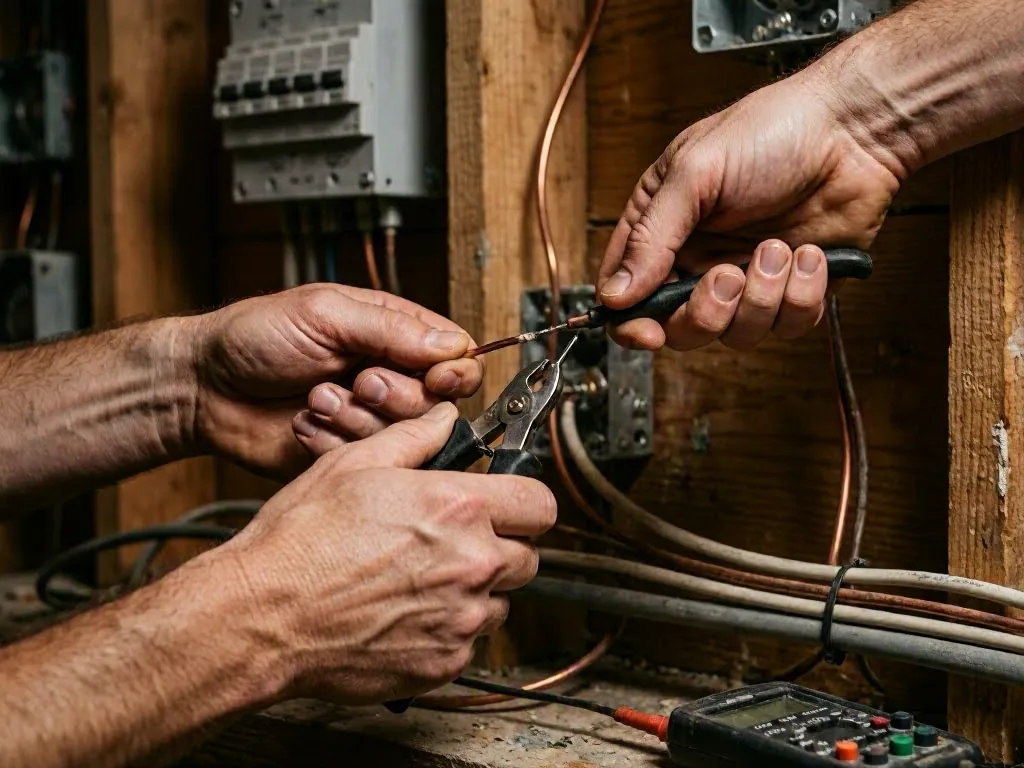
What Not to Do When a Circuit Breaker Keeps Tripping
A tripping breaker often signals an overloaded circuit, short circuit, or ground fault. It can also point to damaged wiring or a bad breaker. Don’t keep resetting it, install a larger breaker, or bypass its safety feature. Don’t ignore heat, burning smells, buzzing, or sparks. Unplug nonessential loads once, then note which appliances were connected. Stop if the breaker trips right away or shows damage. A qualified electrician can test the circuit and find the fault. They can also complete circuit breaker repair safely.
Get a Free EstimateCircuit Breaker Mistakes That Can Make the Problem Worse
Circuit breaker mistakes can worsen an electrical fault. They can also cause shock or fire hazards. Dangerous errors include repeated resets, larger breakers, and bypassed protection. Opening live equipment can also cause harm. Stop troubleshooting when symptoms continue. Then call a qualified electrician.
A circuit breaker is a safety device for electrical systems. It cuts power when current becomes too high. A trip may show an overload, short circuit, or ground fault. It may also show damaged wiring or a bad breaker. Reduce risk and note what changed. Don’t work inside the electrical panel.
| Warning or mistake | Possible cause | Safer correction |
|---|---|---|
| Frequent resets | Overcurrent or thermal trip | Remove nonessential loads once and monitor |
| Immediate trip | Short circuit or ground fault | Leave the breaker off and arrange testing |
| Warm panel or burning odor | Loose connection, damaged part, or arc fault | Keep clear and seek urgent professional help |
Mistake 1: Repeatedly Resetting a Tripping Breaker
Repeated resets can send power through a fault. One reset may help after a short overload. Repeated trips mean the problem remains. The breaker may sense too much current or rising heat. It may also sense a serious panel fault.
The appliance may work again after you move the handle. That can make the problem seem fixed. Yet the fault may overheat wires, harm equipment, or start a fire. Turn off or unplug nonessential loads once. Reset only when no warning signs appear. Stop if the breaker trips again. A qualified electrician should test the circuit.
Mistake 2: Installing a Larger Breaker to Stop the Trips
A breaker’s amp rating must match the circuit wiring. It must also match the connected equipment. A larger breaker doesn’t safely add power. It may let wires carry too much current. Those wires could overheat inside the walls.
Heaters, air conditioners, and power tools may cause frequent trips. A larger breaker may keep the circuit on. It also raises the risk of fire and equipment damage. Don’t change the amp rating yourself.
Mistake 3: Bypassing or Holding the Breaker On
Never tape, tie, wedge, or hold a breaker on. This removes the circuit’s safety protection. The breaker may fail to open during a dangerous fault. That can cause fire, shock, or severe injury.
Someone may try this to power a freezer or computer. They may need a work tool too. Short-term power isn’t worth hidden heat or damaged insulation. Leave the breaker handle alone. Keep people away from the panel. Arrange professional testing.
Mistake 4: Assuming Every Trip Means the Breaker Is Bad
A tripping breaker doesn’t always need replacement. A proper check must include the load and wiring. It must also include the outlets and appliances. Loose connections, short circuits, and ground faults can cause trips. A failing breaker can cause them too.
Replacing the breaker without finding the cause wastes money. It may also leave the danger in place. A damaged appliance can trip different outlets. Note which appliance or outlet was in use. Stop using it if the trip returns. A technician can find the right repair.
Mistake 5: Ignoring Heat, Buzzing, Burning Smells, or Sparks
Heat, burning odors, buzzing, sparks, smoke, or dark marks need quick action. These signs may show a loose terminal or bad breaker. They may also show arcing, which creates intense heat. Don’t touch a hot panel cover. Don’t tighten parts while power is on.
Some people ignore these signs because power still works. Waiting can melt insulation or damage the panel. It can also cause fire or injury. Keep clear of the panel. Turn off power only when it’s safe. Contact emergency electrical service.24 Hour Electrician for active smoke, sparks, or fire. Circuit Breaker Repair in San Bernardino should start with safe testing.
Mistake 6: Testing Live Wiring Without Proper Training
Live circuit tests need training, proper tools, and a safe method. A voltage tester can help trained workers check power. It doesn’t make exposed wires safe. Another source can still send power to the circuit. Contact may cause shock or an arc event.
Some homeowners open panels to find loose wires. Others try to test the breaker. One wrong move can cause serious harm. The main switch may not remove all danger. Don’t remove covers or probe terminals. Tell the electrician what happened. Also name any appliance involved.
Mistake 7: Ignoring a Breaker That Trips After One Appliance Starts
One appliance may trip a breaker for several reasons. The motor may draw extra power at startup. The appliance may also have damage. The circuit may be too small. Refrigerators, pumps, heaters, and air conditioners often need careful checks.
That appliance may need its own circuit. It may need proper overload protection or repair. Repeated resets can damage the motor and wiring. Unplug it if that’s safe. Don’t use extension cords for high-load equipment. Note when the trip occurs. An electrician can check the load, voltage, wiring, and connections.
Renters should report the issue to the landlord or property manager. Don’t open the panel or change wiring. Homeowners can disconnect nonessential loads. They should stop at the panel. Landlords and small-business owners should protect people and equipment. They should also arrange a prompt check.
Simple diagnostic visits often take one to several hours. The time depends on the fault’s location. Circuit breaker repair may include testing or replacement. It may also include fixing a loose connection. The measured fault decides the correct repair.
When Should You Call an Electrician for a Tripping Breaker?
Call an electrician when the breaker trips right away. Call after repeated trips too. Heat, burning odors, buzzing, sparks, smoke, or damage also need help. These signs may show a short circuit or ground fault. They may also show a loose connection or bad breaker.
We can arrange Circuit Breaker Repair and testing. You won’t need to work inside the panel. A 24 Hour Electrician may help with urgent hazards. Call for smoke, arcing, fire damage, or a hot panel. Use emergency electrical service when people or property face immediate risk.
Don’t use the affected circuit while waiting for help. Renters should notify the landlord right away. Property owners should keep children away from the panel. Small-business owners should shut down affected equipment. They should also follow the site’s emergency plan. An electrical panel inspection can find the cause.
Contact an electrician for safe troubleshootingQuestions About 24 Hour Electrician
Why Does My Circuit Breaker Keep Tripping with Nothing Plugged In?
The fault may be in fixed wiring, an outlet, a light, or the breaker. It may also involve a connected appliance. A short circuit, ground fault, moisture, or loose connection can remain. Leave the breaker off if it trips right away. Arrange testing by a qualified electrician.
Is It Safe to Keep Resetting a Tripped Breaker?
No. One reset may help after a short overload. Only reset when no warning signs appear. Repeated resets can send dangerous current through a fault. Stop if it trips again.
Should I Replace a Tripping Breaker with a Higher Amp Breaker?
No. The amp rating must match the wiring and equipment. A higher rating can send unsafe current through the wires. This can cause overheating or fire. Have an electrician find the cause. They can confirm the needed repair.
How Do I Know if a Breaker Is Bad or the Circuit Is Overloaded?
An overloaded circuit often trips when several loads run together. A fault may trip right away or with one appliance. These signs can overlap. Testing must check the load, wiring, connections, and breaker. It should also check arc-fault protection.
When Should I Call an Electrician for a Breaker That Keeps Tripping?
Call after repeated trips or trips with nothing plugged in. Also call for heat, burning odors, buzzing, sparks, smoke, or damage. Seek emergency help for active smoke, arcing, or fire risk. Don’t open the panel or test live wiring without training.
Related Resources
Signs You Need Circuit Breaker Repair in San Bernardino, CA
signs you need circuit breaker repair
When You Need ItWhen to Call an Electrician for Burning Smells and Hot Outlets.San Bernardino, CA
when to call an electrician for burning smell from outlet
When You Need ItElectrical Wiring Warning Signs: When San Bernardino Homes Need an Electrician
warning signs electrical wiring needs to be replaced
When You Need ItFlickering Lights: How to Know When You Need an Electrician
how do I know if flickering lights are an electrical problem