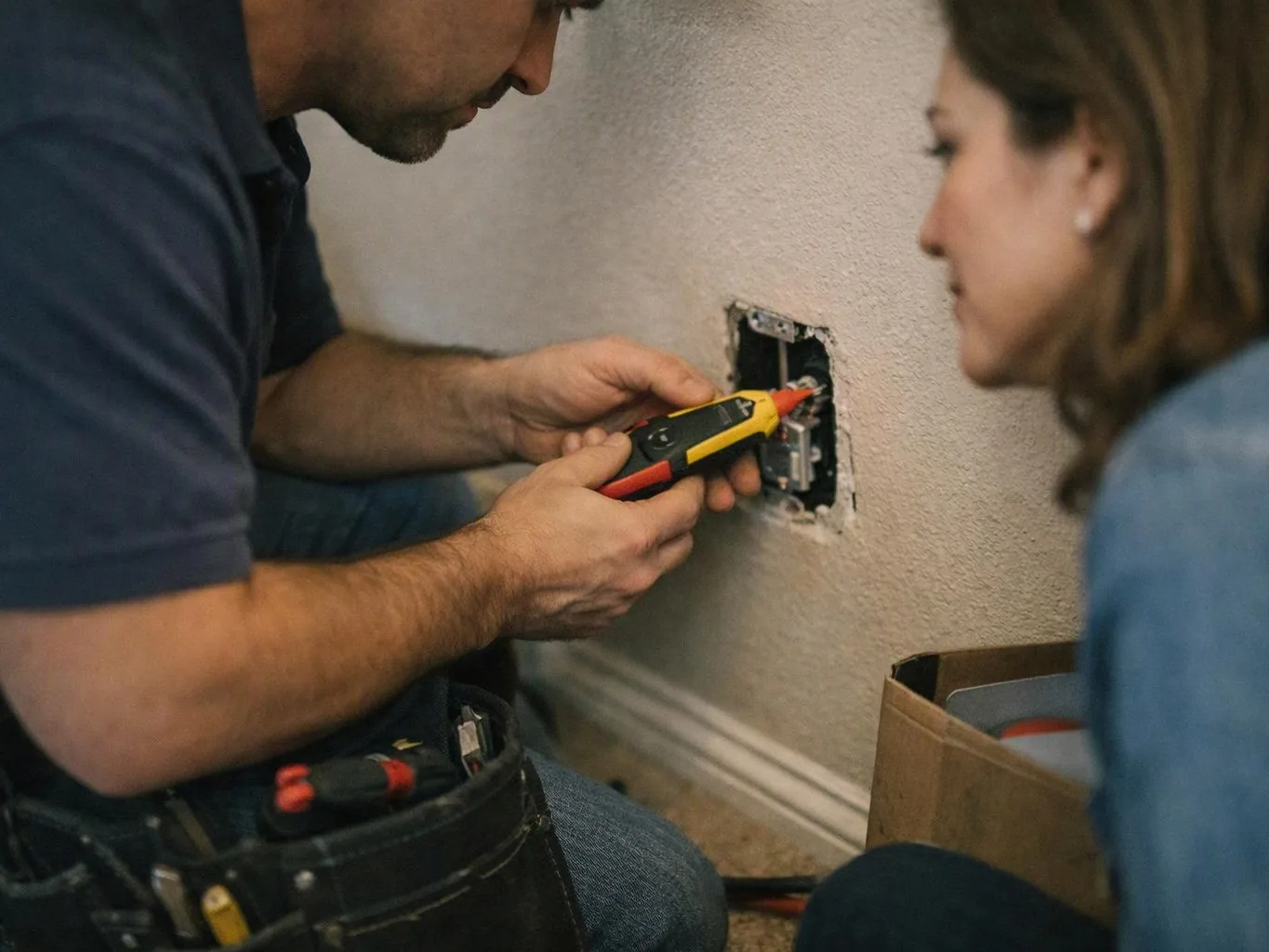
Flickering Lights: How to Know When You Need an Electrician
Flickering lights can be an electrical problem when they persist, affect multiple fixtures, or occur with heat, buzzing, burning odors, or breaker activity; San Bernardino Electrician checks the bulb, fixture, wiring, and circuit to identify the cause.
Get a Free EstimateWhen Do Flickering Lights Point to an Electrical Problem?
Flickering lights point to an electrical problem when the flicker continues after a secure bulb replacement, affects multiple fixtures, or occurs with other warning signs.
A loose light bulb can create a simple lighting issue, but persistent flickering can involve the light fixture, electrical circuit, or wiring. We inspect the source before recommending lighting repair.
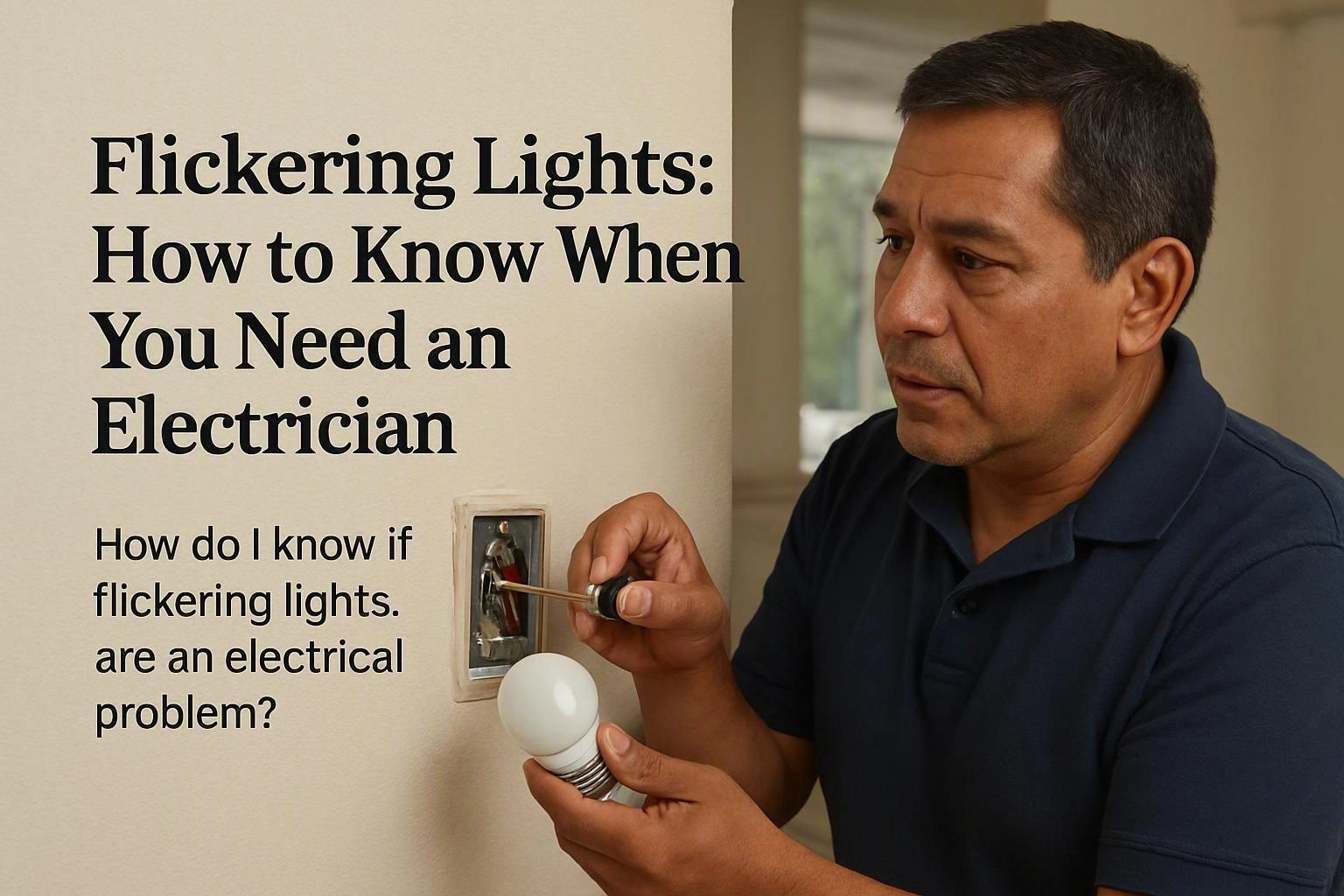
San Bernardino Electrician checks whether the problem is limited to one fixture or connected to a wider circuit fault. You can request Lighting Repair when the cause is not clear or the warning signs continue.
Warning Signs That Flickering Lights Need Attention
Flickering lights need attention when the change is repeated, affects more than one fixture, or appears with heat, sound, odor, or breaker activity. Each sign can help show whether the issue reaches beyond a loose bulb.
Our team uses these signs to decide whether the fixture, switch, wiring, or circuit needs closer inspection.
What Can Cause a Light to Flicker?
A flickering light can result from a loose bulb, incompatible dimmer, defective fixture, loose connection, damaged wiring, or a circuit problem.
A light bulb can flicker when it is defective or poorly seated. An LED bulb may also flicker when its driver does not work well with the dimmer switch.
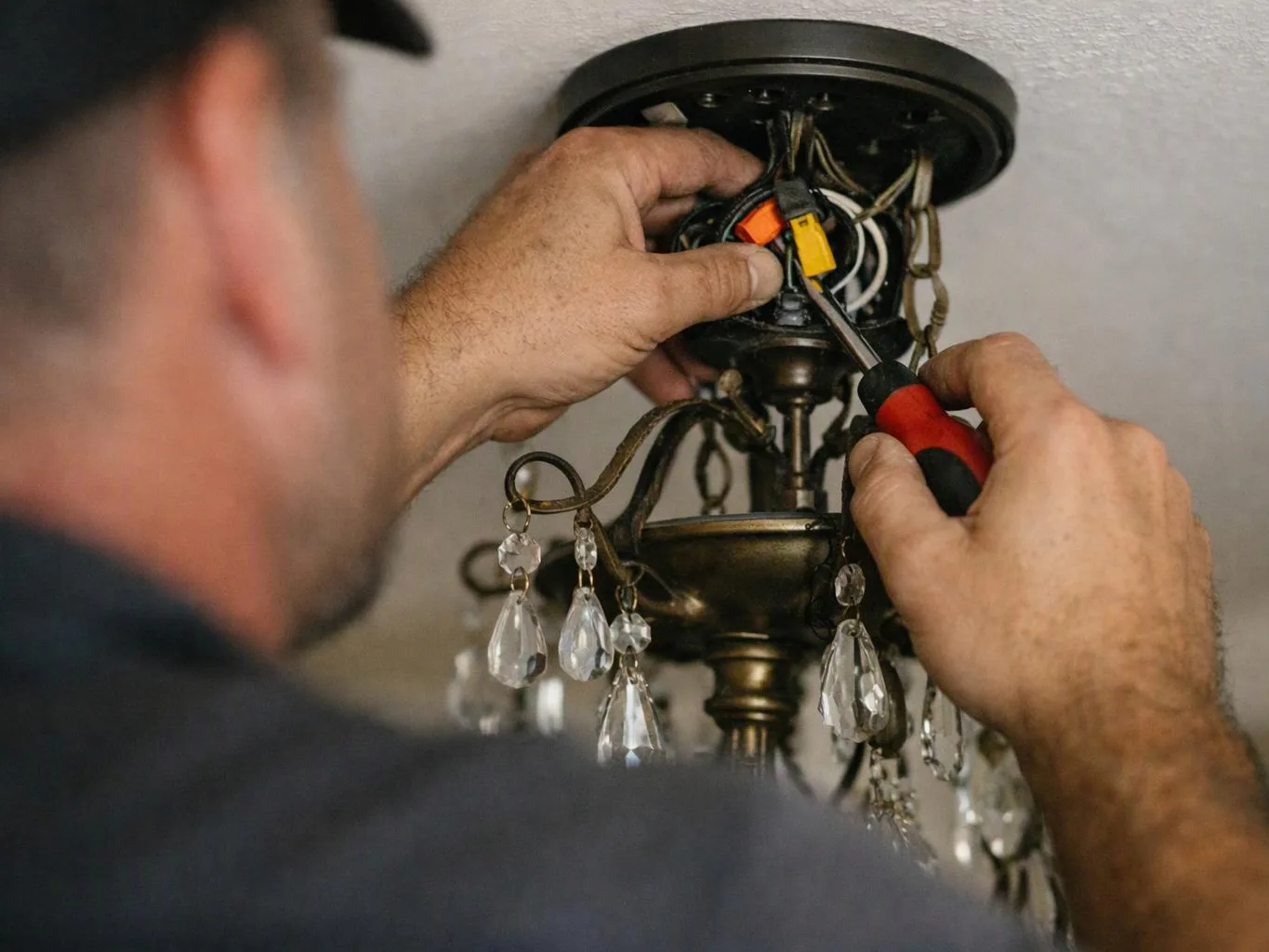
A light socket or fixture connection can loosen over time. We check the fixture, switch, and wiring connection for damage before completing lighting repair.
An electrical circuit can also flicker when its electrical load is too high or when the circuit breaker responds to a fault. Our team examines the breaker and electrical panel when the symptom reaches multiple fixtures.
What You Can Check Yourself and When We Should Inspect the Circuit
You can make a few safe visual checks when the light is cool and there is no smell, smoke, or sparking. We inspect the circuit when the problem continues or involves wiring, a breaker, or the electrical panel.
The comparison below separates simple checks from work that requires our team.
| Factor | What you can do yourself | What we do |
|---|---|---|
| Light bulb replacement | Turn off the switch, let the bulb cool, and fit a compatible replacement securely. | We confirm whether the bulb is causing the flicker and check the socket. |
| Light fixture | Look for visible damage without removing the fixture. | We test the fixture and its connection during lighting repair. |
| Dimmer switch | Check that the LED bulb and dimmer are listed as compatible. | We evaluate the dimmer switch and replace it when it is faulty or incompatible. |
| Electrical wiring | Do not remove covers or handle exposed wires. | We trace the wiring and secure or repair the connection safely. |
| Circuit breaker | Note whether the breaker has tripped without repeatedly resetting it. | We test the circuit and complete circuit breaker repair when needed. |
How We Diagnose Flickering Lights
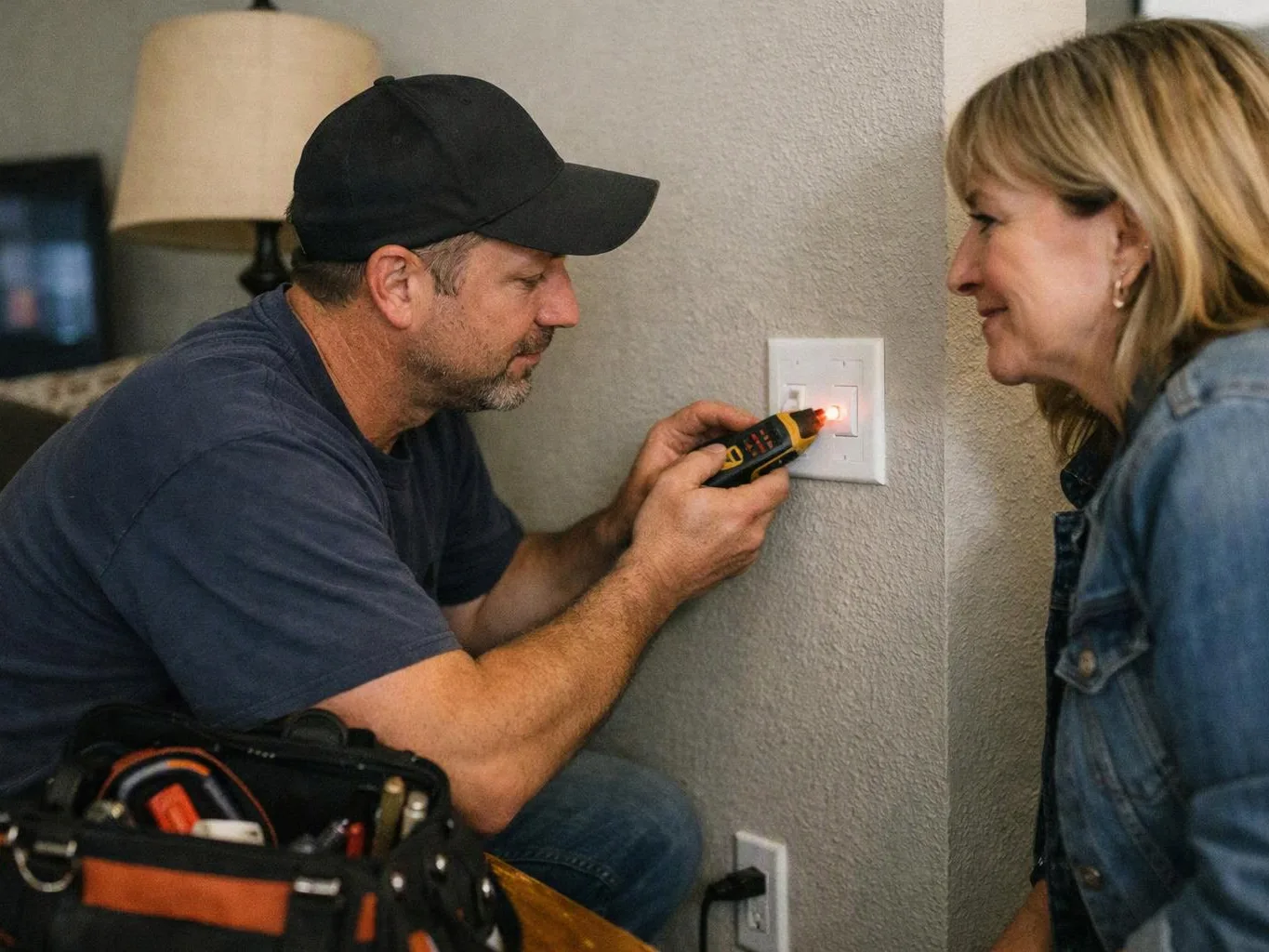
San Bernardino Electrician diagnoses flickering lights by checking the bulb, fixture, switch, wiring connections, circuit, and breaker for the source of the fault.
We begin with the light bulb and light fixture because those parts can create an isolated flicker. Our team then tests the switch and wiring connection for signs of heat, looseness, or damage.
When several lights are affected, we follow the circuit to the circuit breaker and electrical panel. This process helps us separate a fixture problem from a wider electrical issue before recommending lighting repair or light bulb replacement.
What to Do Before Flickering Lights Are Inspected
Electrical safety comes first when flickering lights appear with heat, odor, smoke, or sparks. Stop using the affected light and keep clear of damaged parts.
These steps can reduce risk while you arrange an inspection.
Which Repair Does the Flickering Light Need?
The required repair depends on the part that causes the flicker. We identify that part through inspection before planning the work.
Common repair paths include the following.
What Changes the Cost of Flickering Light Repair?
The cost of flickering light repair depends on whether the issue is the bulb, fixture, switch, wiring, or circuit breaker, and San Bernardino Electrician provides Free Estimates Available before the work is planned.
Light bulb replacement is usually a different scope from lighting repair or circuit breaker repair. The quote can change when the fixture is difficult to access, the wiring condition is poor, or the fault reaches the electrical panel.
We explain the cause, the recommended repair, and the work included before proceeding. Contact our team for an exact quote based on the inspection.
Questions About Flickering Lights
Can a loose light bulb make the lights flicker?
Yes, a loose light bulb can make one light flicker because the bulb is not making steady contact. San Bernardino Electrician checks the socket and fixture when securing or replacing the bulb does not solve the problem.
Should I turn off the breaker if a light is flickering?
Turn off the breaker when flickering occurs with a burning smell, smoke, sparking, heat, or repeated breaker trips, provided you can do so safely. We inspect the circuit before it is used again.
Can LED bulbs flicker because of a dimmer switch?
Yes, LED bulbs can flicker when the bulb and dimmer switch are incompatible or when the dimmer is failing. We check both parts and recommend a compatible repair.
Why do several lights flicker at the same time?
Several lights can flicker together when they share a circuit with a loose connection, unstable load, or breaker problem. Our team traces the affected circuit and checks the electrical panel.
Can flickering lights damage electrical appliances?
Flickering lights can signal unstable power that may affect sensitive electrical appliances. We inspect the circuit so the source of the unstable lighting can be addressed.
Get Flickering Lights Inspected
San Bernardino Electrician checks persistent flickering, warning signs, fixture connections, wiring, and circuit components before recommending repair. Contact our team to discuss the symptoms and request an exact quote.
Related Resources
Breaker Keeps Tripping? Causes, Risks, and Electrician Repairs
What It SolvesElectrical Sparks From an Outlet, Switch, or Panel: Emergency Repair Guide
What It SolvesDead Electrical Outlet With No Power: Troubleshooting and Repair
What It SolvesCeiling Fan Not Working: Electrical Faults and Repair Solutions