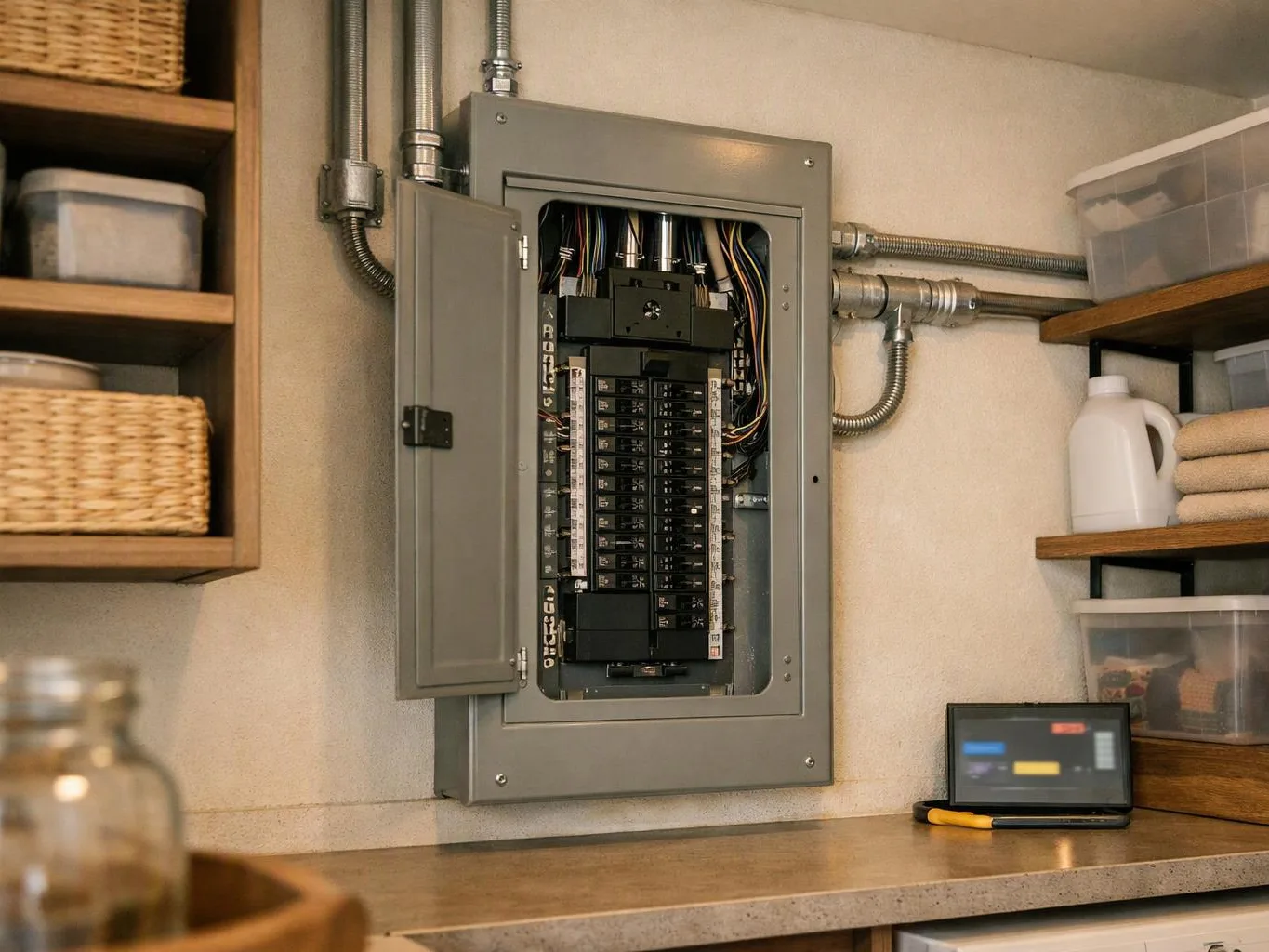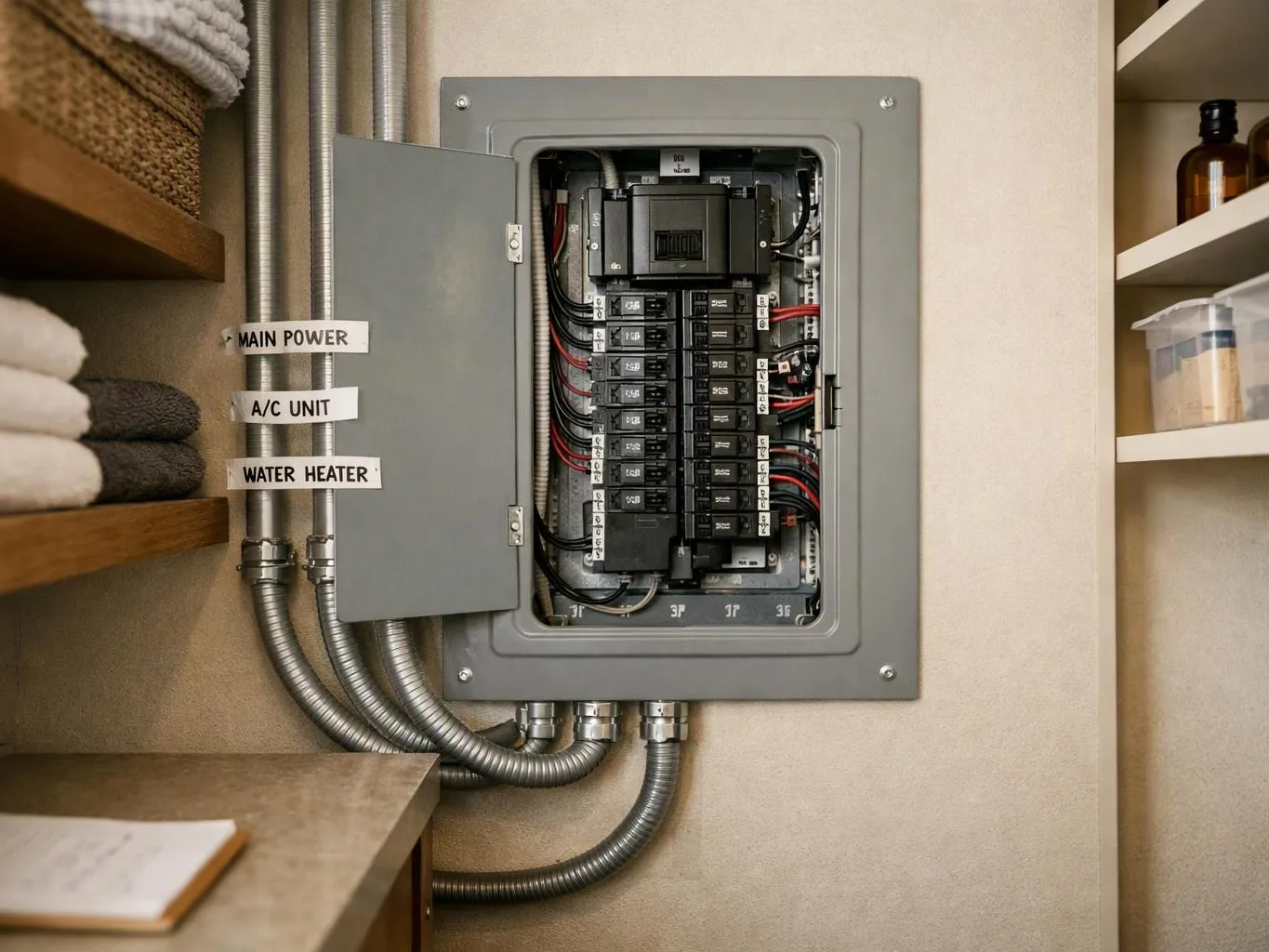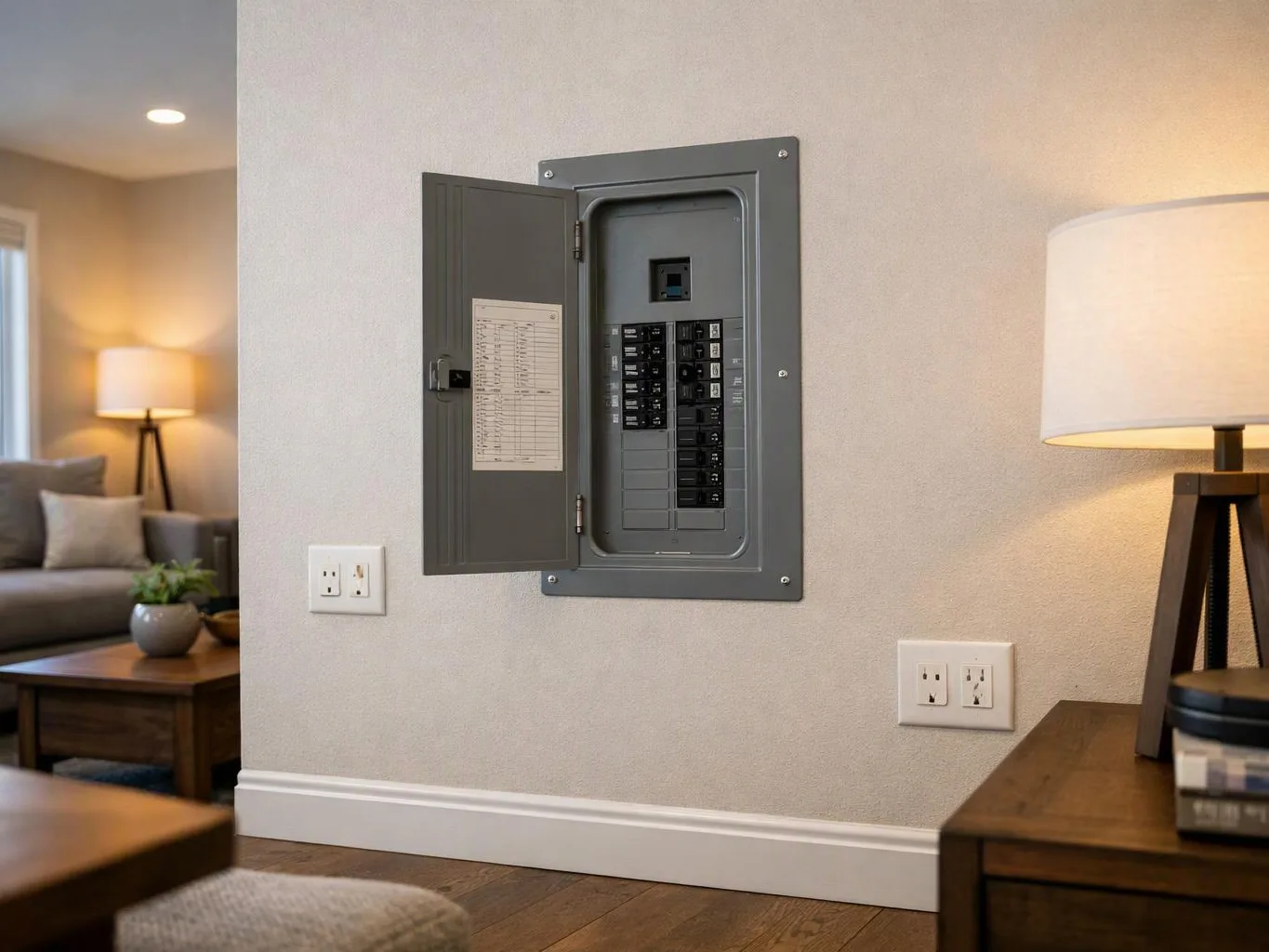
Circuit Breaker Repair Mistakes: What Not to Do When a Breaker Keeps Tripping
Circuit breaker repair mistakes include repeated resetting, using a larger breaker, ignoring burning signs, and testing damaged wiring; San Bernardino Electrician identifies the cause and repairs the electrical fault safely.
Get a Free EstimateWhy Does a Circuit Breaker Keep Tripping?
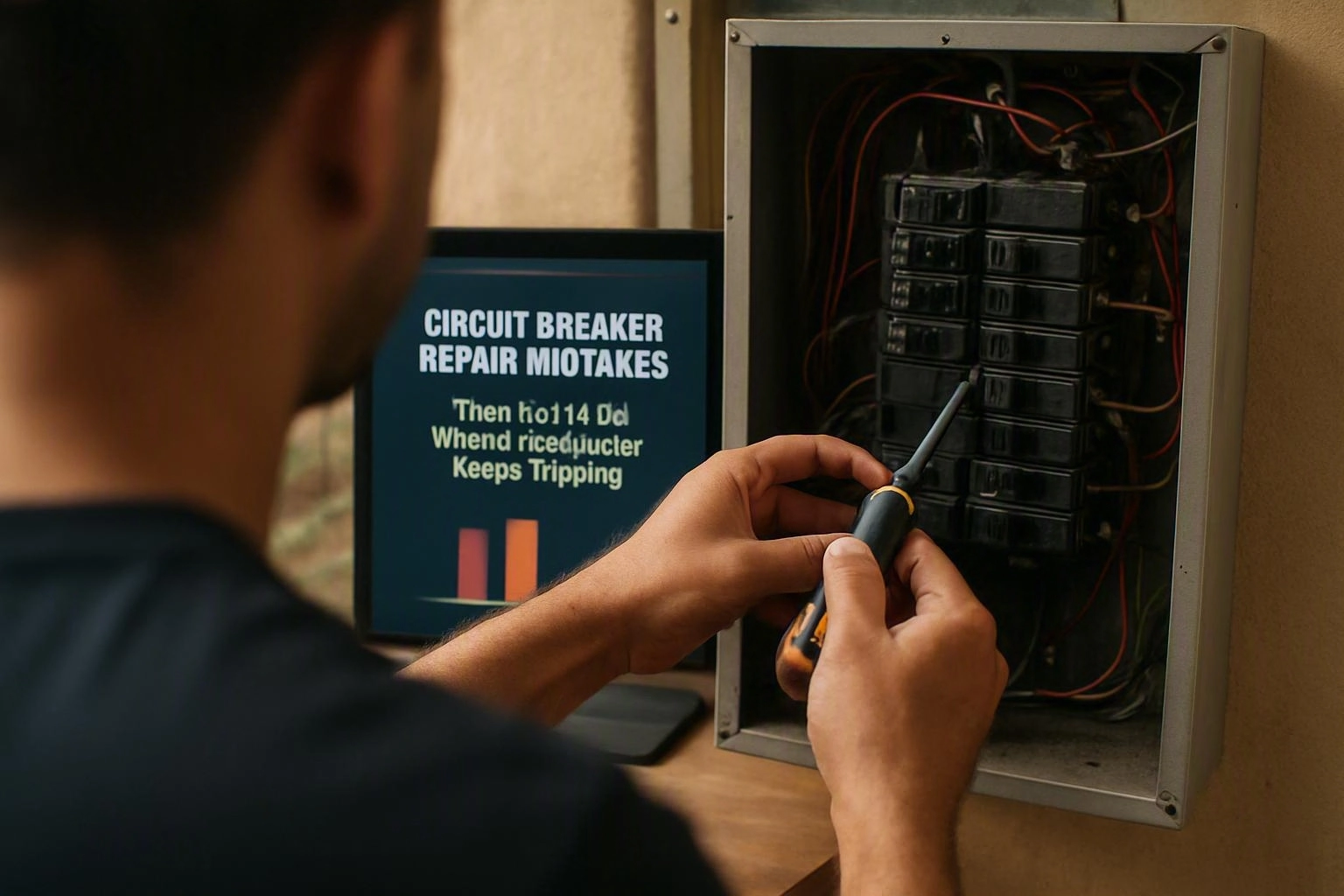
Circuit breakers trip when they detect an electrical condition that could damage equipment or create a safety hazard. San Bernardino Electrician identifies whether the cause is an overload, short circuit, ground fault, or problem with the electrical wiring.
An overload occurs when the appliance load exceeds what the branch circuit can safely carry. A short circuit creates an unintended path for current, while a ground fault sends current toward ground through an unsafe path. We inspect the affected circuit and repair the source of the electrical fault.
Circuit Breaker Repair Mistakes to Avoid
Breaker troubleshooting becomes unsafe when a reset hides the reason for the trip. Electrical safety depends on identifying the circuit fault before equipment or wiring is placed back under load.
We trace the interruption to the breaker, connected equipment, outlet, or circuit wiring. That approach helps define the repair scope and prevents a temporary fix from masking a developing problem.
Mistake: Resetting the Breaker Repeatedly
A repeated breaker reset can keep an overcurrent condition active. The reset may seem convenient, but it can hide an electrical fault and increase the chance of damage.
Repeated trips can change the diagnostic repair cost because the fault may affect wiring, terminals, or connected equipment. We use a safe shutdown and inspect the circuit before testing it again.
Mistake: Installing a Larger Breaker
An oversized circuit breaker can allow more current than the circuit wiring is designed to carry. That mismatch can cause wire overheating before the breaker provides protection.
We check wire ampacity, panel compatibility, and the intended load before selecting a correct breaker replacement. A larger breaker is not a repair for an overloaded circuit.
Mistake: Replacing the Breaker Without Finding the Cause
A failed circuit breaker is only one possible cause of a tripped circuit. A short circuit, ground fault, damaged terminal, or excessive load can trip a new breaker as well.
We inspect the circuit and use load testing to separate a bad breaker from a wiring or equipment problem. The repair scope follows the test results, not just the position of the breaker handle.
Mistake: Ignoring Burning Smells, Heat, or Discoloration
A burning odor, hot electrical panel, or scorch mark can indicate a loose connection or damaged component. These signs can create a fire hazard when the circuit remains energized.
Turn off the affected circuit if you can do so safely and avoid touching the panel. We provide emergency electrical repair by isolating the hazard and inspecting the panel, terminals, and wiring.
Mistake: Using a Breaker That Does Not Match the Panel
A compatible circuit breaker must match the electrical panel and its approved breaker manufacturer. A mismatched part may not fit the bus bar correctly or provide dependable protection.
We verify the panel label, breaker type, connection points, and replacement part before installation. Breaker compatibility matters for both safe operation and reliable circuit protection.
Mistake: Unplugging Appliances Without Checking the Circuit
Unplugging one appliance does not prove that an appliance circuit is safe. A shared circuit, leaking appliance, damaged receptacle, or another connected load may still cause the trip.
We use circuit isolation to identify which equipment and outlets are connected. Our inspection follows the circuit path instead of assuming the most obvious appliance caused the problem.
Mistake: Opening the Electrical Panel Without Proper Testing
An electrical panel can contain live electrical parts behind the cover. Without voltage testing, opening the panel can expose you to arc flash or electrical shock.
Keep the panel cover in place and avoid touching wiring or terminals. We use appropriate testing methods before working inside the panel and confirm that the circuit is safe to handle.
Mistake: Assuming a Tripping Breaker Is Always an Appliance Problem
A branch circuit can trip because of damaged wiring, an outlet fault, or moisture intrusion. The appliance may be operating normally while the fault exists elsewhere on the circuit.
We perform circuit diagnosis from the panel through the outlets and connected loads. This process helps locate wiring damage and prevents unnecessary appliance replacement.
Mistake: Delaying Repair After the Breaker Starts Tripping
An intermittent breaker trip can signal a deteriorating connection or developing electrical damage. Waiting can allow heat, insulation damage, or equipment stress to progress.
We use a service assessment to identify the pattern and recommend preventive repair. Early inspection can clarify whether the issue is a connection, load, breaker, or branch-circuit fault.
What Can You Safely Check Before Circuit Breaker Repair?
Electrical safety allows you to gather useful information without removing the panel cover or touching wiring. San Bernardino Electrician can use those observations to begin a more focused inspection.
Do not remove the electrical panel cover or test exposed parts yourself. Stop using the circuit when visible damage, heat, moisture, or a burning smell is present.
When Should You Call San Bernardino Electrician?
Circuit breaker repair is appropriate when a breaker trips again after a safe reset, shows heat or damage, or leaves a circuit without power. We inspect the electrical panel and connected circuit to identify the electrical hazard.
San Bernardino Electrician performs licensed electrical work and explains the repair before work begins. For urgent hazards, use our 24 Hour Electrician contact option.
How We Diagnose a Circuit Breaker That Keeps Tripping
Circuit diagnosis starts by identifying the affected load and inspecting the breaker, panel, and wiring. We then test for overloads and electrical faults that could cause the breaker to trip.
Our process can include a circuit inspection, load assessment, voltage testing, continuity testing, and ground fault testing. We compare the results with the circuit design before recommending breaker replacement or another repair.
This method helps separate a thermal-magnetic circuit breaker issue from a GFCI breaker, AFCI breaker, main breaker, or branch-circuit breaker problem. We also inspect terminals, the bus bar, the breaker handle, and the panel enclosure when those parts are relevant.
What Changes the Cost of Circuit Breaker Repair?
Circuit breaker repair cost drivers include the condition of the breaker, connected equipment, branch-circuit wiring, and electrical panel. Access requirements and the extent of wiring damage can also change the work involved.
We explain whether the repair requires breaker replacement, wiring repair, panel work, or correction of an appliance load. Our team provides Free Estimates Available and describes what the quote includes before work begins.
A clear quote should identify the failed part or fault, the repair steps, required replacement parts, and any access work. The guide “Electrical Repair Estimate Mistakes That Lead to Surprise Costs” also shows why a written repair scope matters.
How to Request a Circuit Breaker Repair Estimate
Circuit breaker service estimates are easier to prepare when you describe when the breaker trips, what equipment was running, and any heat, odor, noise, or visible damage. San Bernardino Electrician uses those details to plan the inspection.
Send the breaker location, affected rooms, recent electrical changes, and whether the breaker resets. Do not open the panel to gather information if doing so could expose you to live parts.
Our team can explain the inspection and repair scope before work starts. Contact us through Circuit Breaker Repair to request an estimate.
Get a Free EstimateQuestions About Breakers That Keep Tripping
Can I reset a circuit breaker that keeps tripping?
Yes, you can try one safe reset when there are no signs of heat, burning, smoke, moisture, or visible damage. San Bernardino Electrician should inspect the circuit if the breaker trips again.
Is a repeatedly tripping breaker dangerous?
Yes, a repeatedly tripping breaker can indicate an overload, short circuit, ground fault, loose connection, or wiring damage. Stop resetting it and arrange circuit diagnosis when the problem continues.
Can a bad appliance cause the circuit breaker to trip?
Yes, a leaking or damaged appliance can trip a circuit breaker. We also test the receptacle, shared circuit, and wiring because the appliance may not be the only possible cause.
Should I replace a tripping breaker myself?
No, replacing a tripping breaker without testing can leave the original electrical fault active. We verify breaker compatibility and inspect the circuit before completing a breaker replacement.
What does a burning smell from the electrical panel mean?
A burning smell can mean that a connection, breaker, wire, or other panel part is overheating. Turn off the affected circuit if safe, avoid touching the panel, and request emergency electrical repair.
Can a loose wire cause a circuit breaker to trip?
Yes, a loose wire can create heat, arcing, or an unstable connection that causes a breaker to trip. We locate the connection, inspect related wiring, and complete the repair safely.
Related Resources
Signs You Need Circuit Breaker Repair in San Bernardino, CA
When You Need ItWhen to Call an Electrician for Burning Smells and Hot Outlets in San Bernardino, CA
When You Need ItElectrical Wiring Warning Signs: When San Bernardino Homes Need an Electrician
When You Need ItFlickering Lights: How to Know When You Need an Electrician