Denied Electrical Insurance Claim: When an Electrician Can Help
An electrical insurance claim requires policy review, cause assessment, inspection findings, and repair scope. San Bernardino Electrician can inspect circuit breakers, fuse boxes, and lighting damage, explain the electrical findings, and provide a repair scope for the claim process.
Get a Free Estimate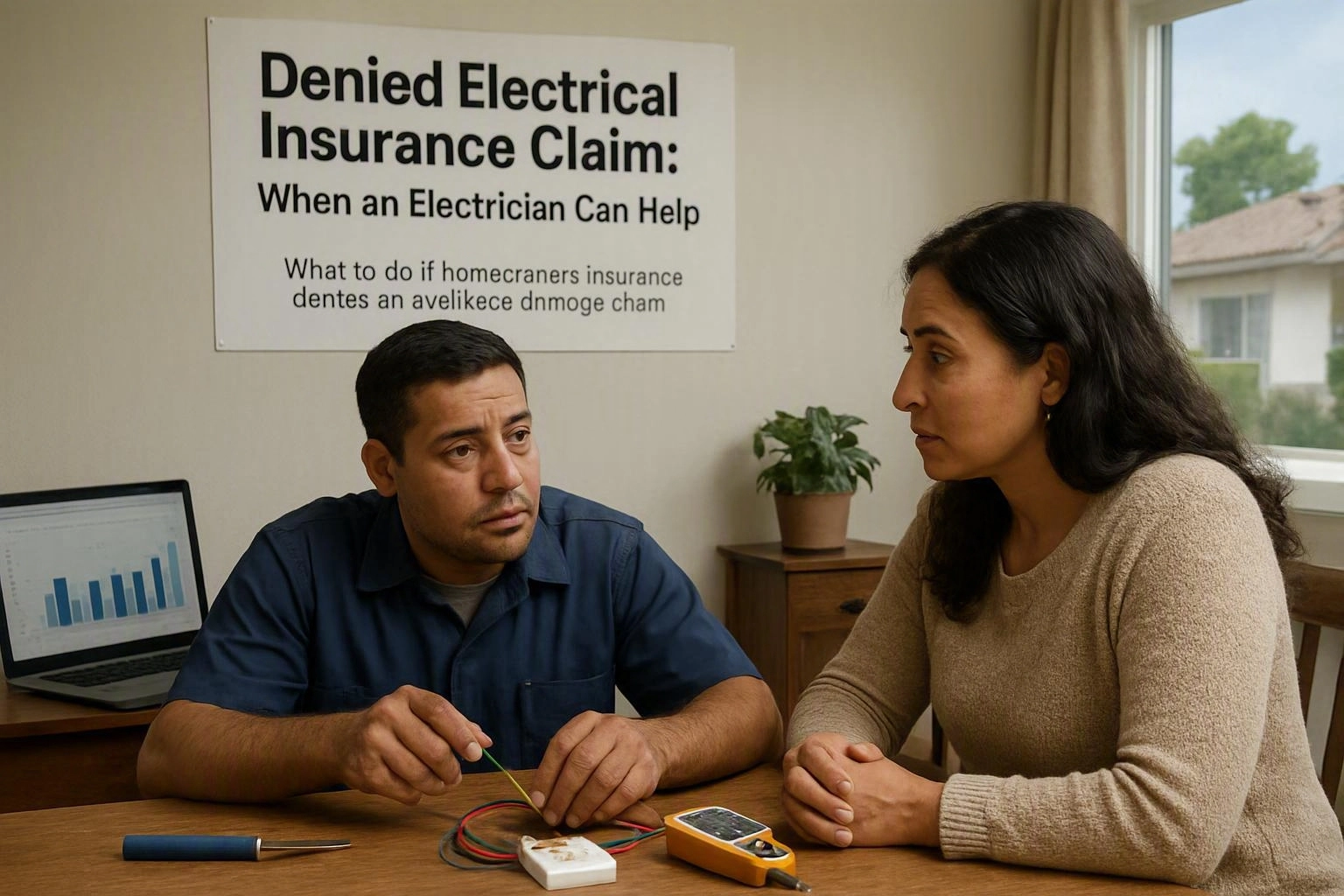
Why Homeowners Insurance May Deny Electrical Damage
An electrical damage claim may be denied when the insurer applies an exclusion, attributes the condition to maintenance or wear, or finds that the reported cause does not match the policy. A coverage exclusion may address wear and tear, a maintenance issue, or an electrical fault that developed over time.
Homeowners insurance may treat a power surge, fire damage, or smoke-related loss differently from damage caused by aging equipment. We review the visible condition of the affected electrical system and document facts that may help explain the cause of loss.
Policy language controls the coverage decision. Our inspection findings do not guarantee coverage, but they can help show whether the observed damage is consistent with the cause described in the claim.
What to Do After an Electrical Insurance Claim Is Denied
A denied electrical claim should be handled by documenting the damage, contacting the insurer, arranging an adjuster inspection, preparing the electrical scope and estimate, seeking approval, completing the work, and submitting the final invoice for review.
Keep the denial letter with your claim records because the stated reason guides the next steps. We can prepare electrical documentation that addresses the equipment and repair work within our scope.
How San Bernardino Electrician Can Support an Electrical Claim
San Bernardino Electrician can inspect the affected electrical equipment, identify visible damage and safety concerns, document repair needs, and prepare a scope and estimate that helps explain the electrical portion of the claim.
We inspect circuit breaker damage, fuse box damage, lighting damage, exposed wiring, and related electrical components that may have been affected by the reported loss. Our team separates observed conditions from suspected causes so the claim record remains clear.
Our written estimate can describe the proposed labor, materials, repair steps, and replacement needs. When appropriate, we can also explain whether the observed condition calls for circuit breaker repair, fuse box repair, lighting repair, or additional evaluation.
Electrical Claim Mistakes That Can Jeopardize Coverage
Electrical claim mistakes can weaken coverage when they remove evidence, obscure the cause, or create work that the insurer has not reviewed. We help preserve useful electrical information while addressing immediate safety concerns.
Contact the insurer and discuss the required process before making permanent changes when the property is safe. A temporary safety repair may be necessary, but it should be documented clearly.
What Evidence Helps an Insurer Reconsider Electrical Damage?
Evidence can support reconsideration when it connects the documented electrical damage to a covered cause and addresses the reason stated in the denial letter. The insurance policy and the denial letter should guide which facts require more support.
Useful records may include photographs taken before repairs, inspection findings, descriptions of the cause of loss, and a repair scope that matches the visible damage. We organize the electrical portion of the record so the insurer can compare the observed condition with the proposed work.
An itemized estimate can identify affected components, labor, materials, and repair or replacement needs. The insurer may also request a proof of loss or other claim forms, so submit the electrical records in the format requested by the insurance adjuster.
How the Electrical Repair Estimate Fits the Claim
An electrical repair estimate explains the affected components, necessary work, materials, labor, and the relationship between the observed damage and the proposed repair.
We identify whether the scope involves a circuit breaker, fuse box, lighting fixture, wiring, or another electrical component. The estimate can distinguish repair from replacement when the inspection supports that distinction.
Code-related work may be included when it is required to complete the approved electrical repair safely and lawfully. Our written scope describes the work that we observe and recommend, while the insurer decides coverage under the insurance policy.
When to Request an Electrical Inspection
An electrical inspection is appropriate when the home has visible damage, recurring breaker or fuse problems, lighting failure, burning evidence, or a safety concern after the reported loss.
Burn marks, a tripped circuit breaker, a damaged fuse box, flickering lights, exposed wiring, and smoke damage can indicate conditions that require electrical review. Do not touch damaged wiring or energized equipment.
We inspect the accessible affected areas, document safety concerns, and explain which repairs may be needed. If the property is unsafe, follow the insurer’s instructions and use emergency services when required before arranging claim documentation.
What to Ask Before Electrical Claim Repairs Begin
Before electrical repairs begin, confirm what the insurer has approved, which damage is included, what documentation is required, and how the final invoice should be submitted.
Ask the insurance adjuster whether claim approval covers the full electrical scope or only specific components. Confirm whether the insurer requires a written repair authorization, additional photographs, an inspection report, or a revised estimate.
We can explain our electrical scope and estimate before work begins. After completion, keep the final invoice and related records so the insurer can compare the completed work with the approved coverage decision.
Free Estimates Available. Contact San Bernardino Electrician to discuss the electrical inspection and claim documentation.
Get a Free EstimateQuestions About Denied Electrical Insurance Claims
Can an electrician help appeal a denied electrical insurance claim?
Yes, San Bernardino Electrician can support a claim appeal with electrical inspection findings, cause documentation, photographs, and a repair scope. The insurer still decides coverage under the insurance policy.
What should I do if my insurer says electrical damage is wear and tear?
Ask the insurer to identify the policy language supporting the wear and tear decision, then preserve the damaged condition and arrange an electrical inspection. We can document visible conditions and explain whether the repair scope is consistent with the reported cause of loss.
Should I repair electrical damage before the insurance adjuster inspects it?
No, permanent electrical repairs should wait until the insurance adjuster has reviewed the damage when the condition is safe to leave in place. A temporary safety repair may be necessary, but document the original condition and keep damaged parts when possible.
What documents should I send after an electrical claim denial?
Send the denial letter, photographs, inspection findings, cause of loss information, repair scope, itemized estimate, proof of loss, and requested claim forms. Use the insurer’s submission instructions and keep copies of everything sent.
Can a repair estimate explain the cause of electrical damage?
Yes, a repair estimate can describe observed damage and explain how the proposed electrical work relates to the reported loss. An estimate supports the claim record, but it does not by itself establish coverage.
Related Resources
Signs You Need Circuit Breaker Repair in San Bernardino, CA
When You Need ItWhen to Call an Electrician for Burning Smells and Hot Outlets in San Bernardino, CA
When You Need ItElectrical Wiring Warning Signs: When San Bernardino Homes Need an Electrician
When You Need ItSigns Your Outdoor and Landscape Lighting Has Electrical Damage in San Bernardino, CA