What Documents Do You Need for an Electrical Insurance Claim?
An electrical insurance claim usually needs photos and videos of the damage. You’ll also need your policy and claim number. Include a written event summary, electrician findings, repair estimates, receipts, invoices, and ownership proof. Keep messages with your insurer, too. Keep damaged parts when it’s safe. Avoid permanent repairs before the adjuster sees the damage. Send records in date order. The report can say if parts need repair or replacement. It can also note code issues or larger electrical failures. Your insurer and policy decide what supports coverage. They also decide exclusions, deductibles, and payment. At SanBernardino-Electrician.com, we help organize clear technical records. This support helps when safety and claim proof overlap.
Get a Free EstimateWhat Documents Support an Electrical Insurance Claim?
Electrical insurance claim documentation includes damage photos, videos, the insurance policy, and event details. It also includes electrician findings, repair estimates, receipts, invoices, and ownership proof. These records should connect the electrical event to the damaged property. They should show the property before and after the event. They should also show the fair cost of repairs.
Start with a written incident report. List the date, time, and likely cause of the loss. Note weather, utility issues, warning signs, and steps taken afterward. Add the claim number and a copy of your policy. That document explains coverage, exclusions, limits, and your deductible.
Use before-and-after photos and videos to show the damage. Include the room, equipment, wiring, panel, fixtures, and nearby property. Don’t touch parts that may still have power. The report can list failed parts, hazards, code concerns, and needed repairs.
Keep an itemized repair estimate and emergency service receipts. Save repair records and the final repair invoice. Manufacturer details, model numbers, warranties, and purchase receipts can help. Appraisals and ownership records can show age and value. Landlords should add lease records and duty terms. Tenants should list their own belongings and notify the owner. Homeowners should keep property ownership and care records.
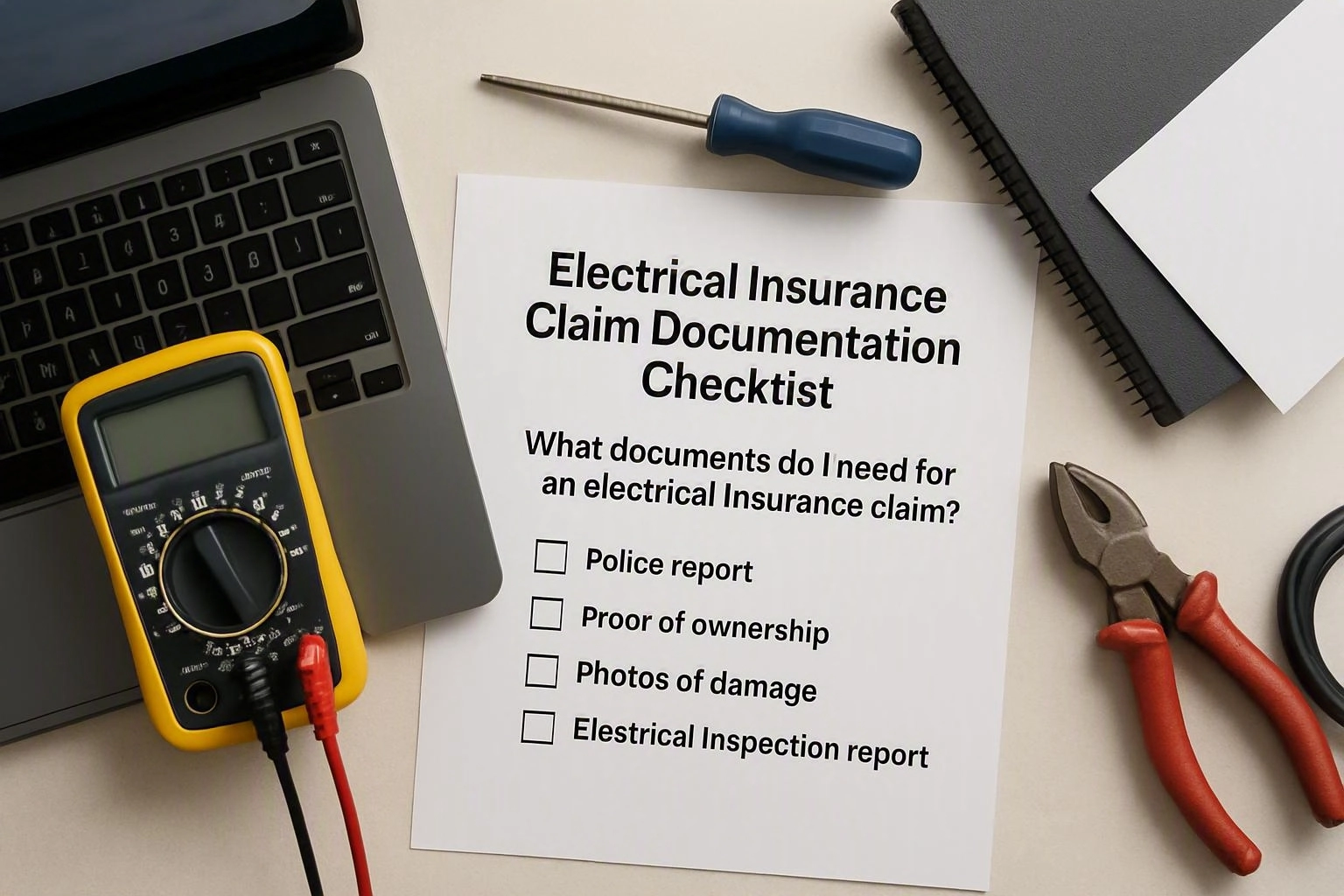
Electrical Insurance Claim Document Checklist
Electrical damage evidence should answer each insurance question. Photos and videos show the damage. An electrician report explains the cause and safety risks. Estimates show repair costs. Receipts prove what you paid. Policy records, ownership proof, warranties, and messages help review coverage and value.
| Document | What it helps prove | Useful details |
|---|---|---|
| Damage photographs | Condition and location of loss | Wide views, close-ups, and safe before-and-after photographs |
| Video evidence | Extent, sound, smoke, or visible failure | Record only from a safe position |
| Electrician inspection report | Cause, hazards, failed parts, and repair needs | List panels, wires, fixtures, detectors, and testing performed |
| Itemized estimate | Reasonable repair scope and cost | Separate labor, materials, testing, permits, and emergency work |
| Emergency service receipt | Expense needed to prevent further harm | Date, task, parts, and reason for urgent service |
| Manufacturer information | Identity, age, and replacement details | Brand, model, serial number, and product description |
| Warranty records | Existing repair or replacement rights | Terms, purchase date, and prior service history |
Most claim files include several photos for each damaged area. They also include records from each work stage. This is only a common guide, not a fixed rule. The claims adjuster may ask for more or fewer records. The request can depend on the damage cause and policy terms. Keep damaged equipment when it’s safe. Preserve it for possible review.
How to File an Electrical Insurance Claim Step by Step?
Insurance claim notification should happen after immediate safety risks are controlled. Preserve basic evidence first when it’s safe. The electrical insurance claim process then moves through several steps. These steps include adjuster review, technical checks, approval, repairs, and payment. Follow your insurer’s instructions at each step. Ask for written answers before changing approved work.
Some hazards need quick action before full records are ready. A 24 Hour Electrician can make damaged systems safe. This may include a live circuit, damaged panel, or fire-damaged wiring. Limit work to needed safety steps when possible. Record all work in detail.
Which Electrical Repairs Need Specific Supporting Records?
Lighting repair, smoke detector service, and circuit breaker repair need clear records. These records should name the failed part, safety issue, cause, and finished work. An electrician should separate damage from normal upkeep. This includes fixtures, detectors, breakers, panels, and wires. Clear findings help insurers review the claim cause.
For fixture or control damage, record the fixture type and wiring condition. List switches, dimmers, and signs of heat or water entry. For smoke detector work, keep the model, age, and test result. Note the reason for replacement and disposal details. Records may also need to show that linked alarms still work together.
Circuit breaker repair should list the breaker rating and panel model. Include trip symptoms and test results. State if the panel itself was damaged. An electrical panel report should separate sudden failure from other issues. These issues may include rust, heat, loose connections, overloads, or past repairs.
Fire or surge damage may reach hidden wires and connected equipment. Electrician findings should explain what was tested and isolated. They should also list unsafe parts and code-related work. Lighting Repair in San Bernardino may need the same records as work elsewhere. Clear part names and a written damage cause remain useful.
Coverage-Voiding Mistakes to Avoid
Coverage-voiding mistakes can harm a claim. They may destroy proof or delay notice. They may also create unsafe conditions. Protect the property from more damage. Don’t change the facts. Record each emergency step, cost, and insurer message.
Don’t add old upkeep needs to a sudden loss. Don’t exaggerate the damage. If emergency work is needed, take photos first when safe. Keep removed parts. Ask the insurer how to protect the evidence.
How to Organize and Submit Your Claim File?
Claim number labels make an insurance claim file easier to review. Put the event summary, policy, photos, report, estimates, receipts, invoices, and messages in date order. Use clear file names. Keep the original files. Record when you sent each item. Keep a digital backup.
A simple folder system can separate “01 Incident,” “02 Photos,” “03 Inspection,” “04 Estimates,” “05 Repairs,” and “06 Insurer Messages.” Name files with the date and subject. Use names such as “2026-09-04-panel-inspection.pdf.” Don’t edit original photos. Put marked copies in another folder.
Ask the claims adjuster which file type and forms they need. Ask which records should support the final package. Send files through the approved channel. Save delivery proof and the receiver’s name. Landlords, tenants, and homeowners should keep separate copies. Each person should keep records tied to their property and duties.
When Should an Electrician Help with Insurance Documentation?
Electrical safety assessment matters when damage creates shock or fire risks. It also helps when the cause isn’t clear. Hidden wires may need review. The insurer may need a clear repair plan. They can separate emergency work from permanent repairs. They can also prepare an itemized estimate. They can’t decide if your policy covers the loss.
Ask for help before opening a damaged panel. Get help before touching fire-damaged wiring or wet equipment. Repeatedly tripping circuits also need professional review. The electrician can record code concerns and explain the likely failure cause. The cause may involve sudden damage, old wear, overloads, or past care. The insurer and policy terms decide coverage.
Our team can provide a clear inspection report and repair estimate. We can also provide the final invoice for completed work. Use the contact form to ask about safe documentation support.
Questions About 24 Hour Electrician
What Documents Do I Need to File an Electrical Insurance Claim?
Usually provide the policy, claim number, event description, photos, videos, and inspection report. Include an itemized estimate, emergency receipts, repair invoice, ownership proof, warranty records, and insurer messages. Your policy and adjuster may request more proof of loss.
How Do I Prove Electrical Damage for an Insurance Claim?
Show the property before and after the event. Record the loss date and likely cause. Get an electrician’s written findings. Photos, test results, damaged parts, ownership records, and an itemized estimate can connect the event to the damage and cost.
Will Insurance Pay for an Electrician to Inspect Damage?
Payment depends on the policy, loss cause, deductible, and insurer approval. Ask the claims adjuster before booking non-emergency work. If a hazard needs quick service, record the reason. Keep the receipt and technical report.
Should I Repair Electrical Damage Before the Insurance Adjuster Arrives?
Take only steps needed to prevent injury or more property damage. Photograph the condition first when safe. Avoid permanent repairs before inspection when possible. Keep removed parts and get written insurer guidance.
Does Homeowners Insurance Cover Circuit Breaker or Electrical Panel Damage?
It may cover sudden damage from a covered event. Normal wear, overloads, rust, code upgrades, and upkeep may not qualify. The insurer reviews the cause, proof, limits, deductible, and repair plan before deciding payment.
Related Resources
Signs You Need Circuit Breaker Repair in San Bernardino, CA
signs you need circuit breaker repair
When You Need ItWhen to Call an Electrician for Burning Smells and Hot Outlets in San Bernardino, CA
when to call an electrician for burning smell from outlet
When You Need ItElectrical Wiring Warning Signs: When San Bernardino Homes Need an Electrician
warning signs electrical wiring needs to be replaced
When You Need ItSigns Your Outdoor and Landscape Lighting Has Electrical Damage in San Bernardino, CA
signs outdoor lighting wiring is bad