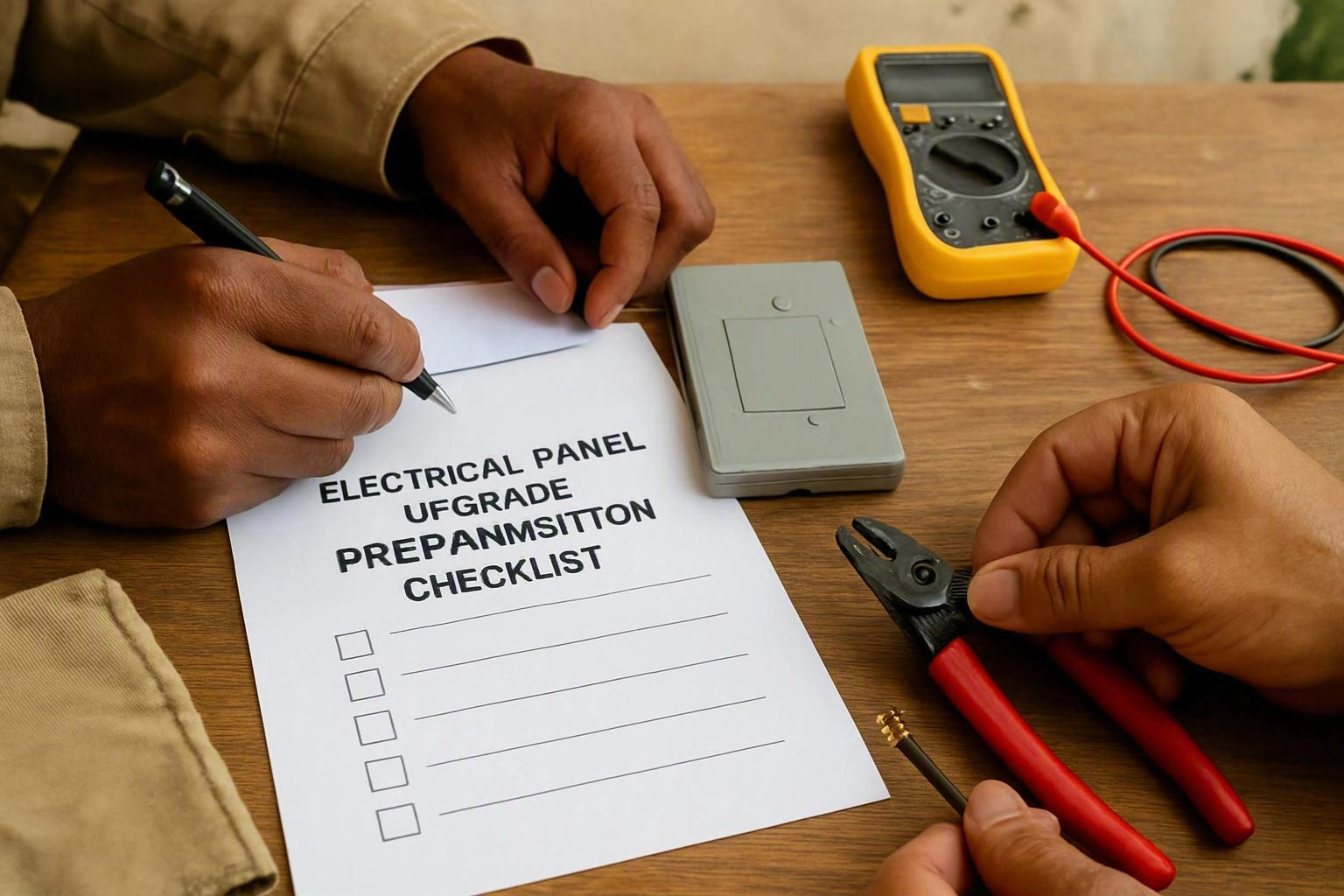
Electrical Panel Upgrade Preparation Checklist
Electrical panel upgrade preparation checklist guidance helps you organize electrical records, clear the work area, identify safety concerns, and prepare questions; San Bernardino Electrician uses those details to assess the existing panel, define the upgrade scope, and explain the next steps.
Get a Free EstimateWhat to Confirm Before Planning a Panel Upgrade
An electrical panel upgrade plan starts with confirming the existing panel condition, service capacity, circuit layout, and the electrical demands the property needs to support.
The electrical panel distributes power to branch circuits through circuit breakers or fuses. We review the panelboard, main breaker, and available service capacity before we define panel replacement work.
Your electrical load includes the equipment and appliances the property uses. We use property records, past electrical work details, and your planned additions to understand whether the existing electrical service can support the expected load.
Before the Electrical Panel Upgrade
Preparation helps us inspect the existing equipment and plan the work with fewer access problems. You can complete the following steps without opening the panel or handling energized parts.
Do not remove the panel cover or move wires to improve access. We handle the inspection and identify any power interruption needed for safe electrical work.
What Our Electrical Panel Assessment Covers
Our electrical panel assessment checks the existing equipment, connected circuits, conductors, grounding, bonding, and available service capacity so we can define the work safely.
We inspect the panel enclosure, main breaker, bus bars, neutral bar, ground bar, and overcurrent protection. We also review the service entrance and feeder conductors for condition, compatibility, and termination concerns.
Our team traces branch circuits and checks branch-circuit conductors, electrical connections, grounding, and bonding. We use those findings to determine whether the panel can support the intended electrical load or whether related repairs are needed.
Panelboard condition matters because heat damage, corrosion, loose connections, or obsolete equipment can affect safe operation. We explain the observed condition and connect it to the recommended electrical installation steps.
During the Electrical Panel Upgrade
The upgrade process includes controlled removal, installation, testing, and documentation. We explain planned power interruption before work begins and keep the work area organized while we complete the installation.
We do not treat circuit identification as a paperwork step only. Our crew checks the connected circuits so the breaker arrangement and circuit labeling match the equipment in the property.
Red Flags That Need Attention Before Work Begins
Visible or noticeable warning signs can point to a fault that needs attention before an upgrade proceeds. Stop using affected equipment when safe to do so, and contact San Bernardino Electrician for an assessment.
We investigate the cause of these conditions before planning panel replacement. Do not touch damaged wiring or attempt to reset equipment that shows heat or burning damage.
After the Electrical Panel Upgrade
After installation, we check the new equipment and organize the records you may need for future maintenance. Keep the area clear so the panel remains accessible for safe operation and inspection.
We explain the completed work and identify any follow-up inspection process that applies to the project. Keep the panel directory and inspection records available for future electrical service work.
How the Upgrade Scope and Quote Are Determined
The upgrade scope and quote depend on the existing panel, service capacity, circuit condition, grounding, access, and required project steps; San Bernardino Electrician provides Free Estimates Available after reviewing those conditions.
We review the electrical panel condition, number of circuits, service entrance, feeder conductors, and rewiring needs. We also check whether grounding and bonding work, permit requirements, or inspection steps affect the electrical installation.
Access conditions can change how we remove equipment, route conductors, protect the work area, and complete testing. Our estimate explains the planned work, included materials, related repairs, permit steps, and any conditions that need a decision.
Requesting an exact quote starts with an assessment of the existing equipment. You can share panel photos from a safe distance, property records, your electrical load list, and details about planned additions before we review the project.
When a Panel Upgrade May Include Circuit Breaker or Fuse Box Repair
Circuit breaker repair or fuse box repair may address an immediate fault, while an electrical panel upgrade addresses broader capacity, safety, compatibility, or equipment-condition concerns.
A failed breaker, loose connection, or overheated fuse box can interrupt power and create a focused repair need. We inspect the affected equipment and explain whether a repair can address the fault safely within the existing electrical system.
Obsolete electrical equipment may have condition or compatibility concerns that a temporary repair does not resolve. We compare the immediate fault with the broader service capacity, circuit condition, grounding, bonding, and panelboard needs.
Our team can explain whether the work involves circuit breaker repair, fuse box repair, panel replacement, or a combination of related electrical service work. We define the work from the inspection findings instead of treating every fuse box or breaker issue as the same problem.
Questions to Ask Before Approving the Work
Clear questions help you understand the proposed electrical panel upgrade before work begins. Ask us to connect each answer to the condition of your equipment and the planned installation.
We answer these questions from the assessment and the written scope. Ask us to explain any technical term that affects safety, access, testing, or future maintenance.
Questions About Preparing for an Electrical Panel Upgrade
Can I prepare for an electrical panel upgrade without turning off the power?
Yes, you can prepare records, clear work area access, and make a load list without turning off the power. San Bernardino Electrician handles power interruption, panel access, circuit testing, and energized equipment precautions.
What information should I give the electrician before a panel upgrade?
Provide panel photos taken from a safe distance, the circuit directory, property records, a list of major electrical loads, and details about planned additions. Include any history of breaker trips, heat, burning odors, or previous electrical service work.
Should a fuse box be repaired or replaced during an electrical panel upgrade?
A fuse box should be repaired when the inspection shows a focused fault that can be safely corrected, while replacement may be appropriate when capacity, compatibility, safety, or equipment condition creates a broader concern. We determine the scope from the fuse box condition and the property’s electrical load.
What happens if the existing wiring is not compatible with the new panel?
Incompatible wiring may require conductor repairs, rewiring, adjusted overcurrent protection, or changes to the upgrade scope. We identify the affected branch circuits and explain the safe installation steps before proceeding.
What should I keep after an electrical panel upgrade?
Keep the updated breaker directory, panel information, permit and inspection records, test details, and warranty documentation. These records help with future electrical maintenance and later service work.
San Bernardino Electrician can review your existing panel, electrical load, circuit condition, grounding, bonding, access, and permit requirements before defining the upgrade scope.
Request an assessment and explain your property records, safety concerns, and planned electrical changes so our team can prepare the next steps.
Get a Free EstimateRelated Resources
Signs You Need Circuit Breaker Repair in San Bernardino, CA
When You Need ItWhen to Call an Electrician for Burning Smells and Hot Outlets in San Bernardino, CA
When You Need ItElectrical Wiring Warning Signs: When San Bernardino Homes Need an Electrician
When You Need ItFlickering Lights: How to Know When You Need an Electrician