Breaker Keeps Tripping? Causes, Risks, and Electrician Repairs
A breaker that keeps tripping usually signals an overload, short circuit, ground fault, or failing electrical component; San Bernardino Electrician can diagnose the circuit, identify the hazard, and complete the needed circuit breaker or fuse box repair.
Get a Free Estimate
What Does a Repeatedly Tripping Breaker Mean?
A repeatedly tripping circuit breaker means the circuit is detecting an unsafe electrical condition that needs diagnosis before continued use.
A circuit breaker is an overcurrent protection device inside an electrical panel. The breaker opens the circuit when current, heat, or another fault reaches an unsafe level.
We inspect the panel and affected circuit to determine whether the problem is a circuit overload, a wiring fault, a connected device, or the breaker itself. Resetting the breaker without finding the cause can leave the electrical fault unresolved.
What Signs Should You Look For?
Warning signs around a tripped breaker can show that the problem involves heat, damaged parts, or an unsafe connection. Stop using the affected circuit and contact us when these signs appear.
We trace these symptoms during our inspection so the visible sign is not mistaken for the underlying cause. For related spark hazards, our guide “Electrical Sparks From an Outlet, Switch, or Panel: Emergency Repair Guide” explains when immediate action is needed.
What Causes a Breaker to Keep Tripping?
Common causes include excessive circuit demand, a fault in the wiring, or a component that no longer operates safely.
We use circuit testing to separate an overloaded circuit from a short-circuit trip or ground-fault trip. That distinction determines whether we correct the load, repair wiring, replace a device, or complete breaker replacement.
When Is a Tripping Breaker a Safety Risk?
A tripping breaker becomes an urgent safety concern when the panel, wiring, outlet, or connected appliance shows heat, burning, moisture, sparks, or visible damage.
An electrical fire hazard can develop when overheated wiring or damaged insulation continues carrying current. An arc fault can also create heat across a damaged connection without leaving an obvious path.
Electric shock is a concern when water intrusion reaches an outlet, panel, appliance, or exposed conductor. We inspect the affected area and advise you to keep away from the panel when it shows active sparking, smoke, strong burning odor, or signs of water.
What Can You Safely Check Before Calling for Repair?
You can make a limited visual and load check when the panel is dry, cool, and free of visible damage. Do not remove the panel cover or touch exposed wiring because electrical safety depends on keeping energized parts enclosed.
A breaker that trips again after appliances are unplugged may point to damaged wiring, a ground fault, or a failing breaker. We handle the electrical testing when the safe checks do not identify a clear appliance load.
How Do We Diagnose the Electrical Fault?
We diagnose a repeatedly tripping breaker by inspecting the panel, isolating the affected circuit, testing connected loads, and tracing the fault through the wiring and devices.
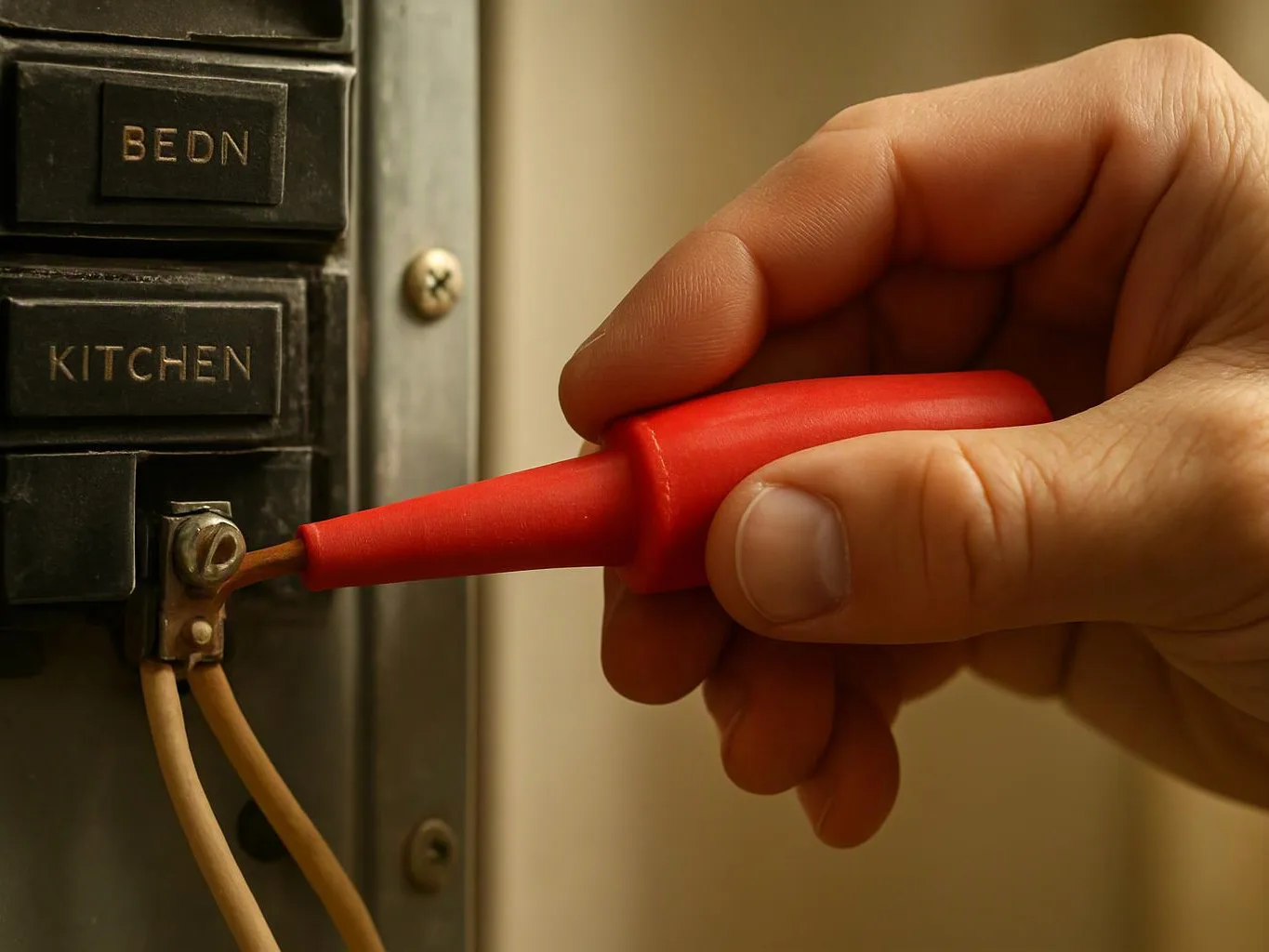
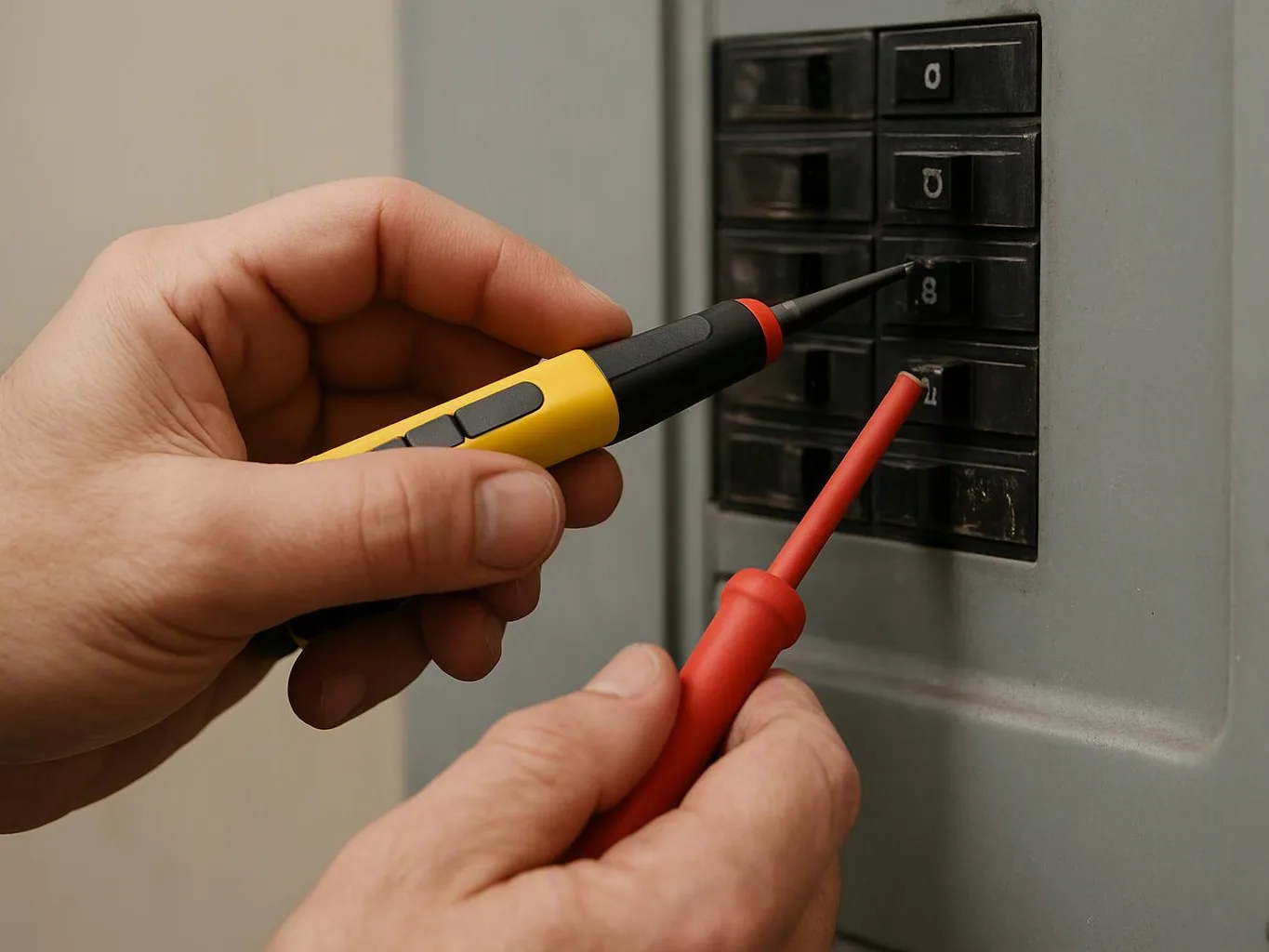
Our electrical panel inspection checks the breaker handle, bus bar, panel enclosure, neutral conductor, grounding conductor, and visible signs of heat. We then use circuit testing, load testing, and voltage testing to understand how the circuit behaves under demand.
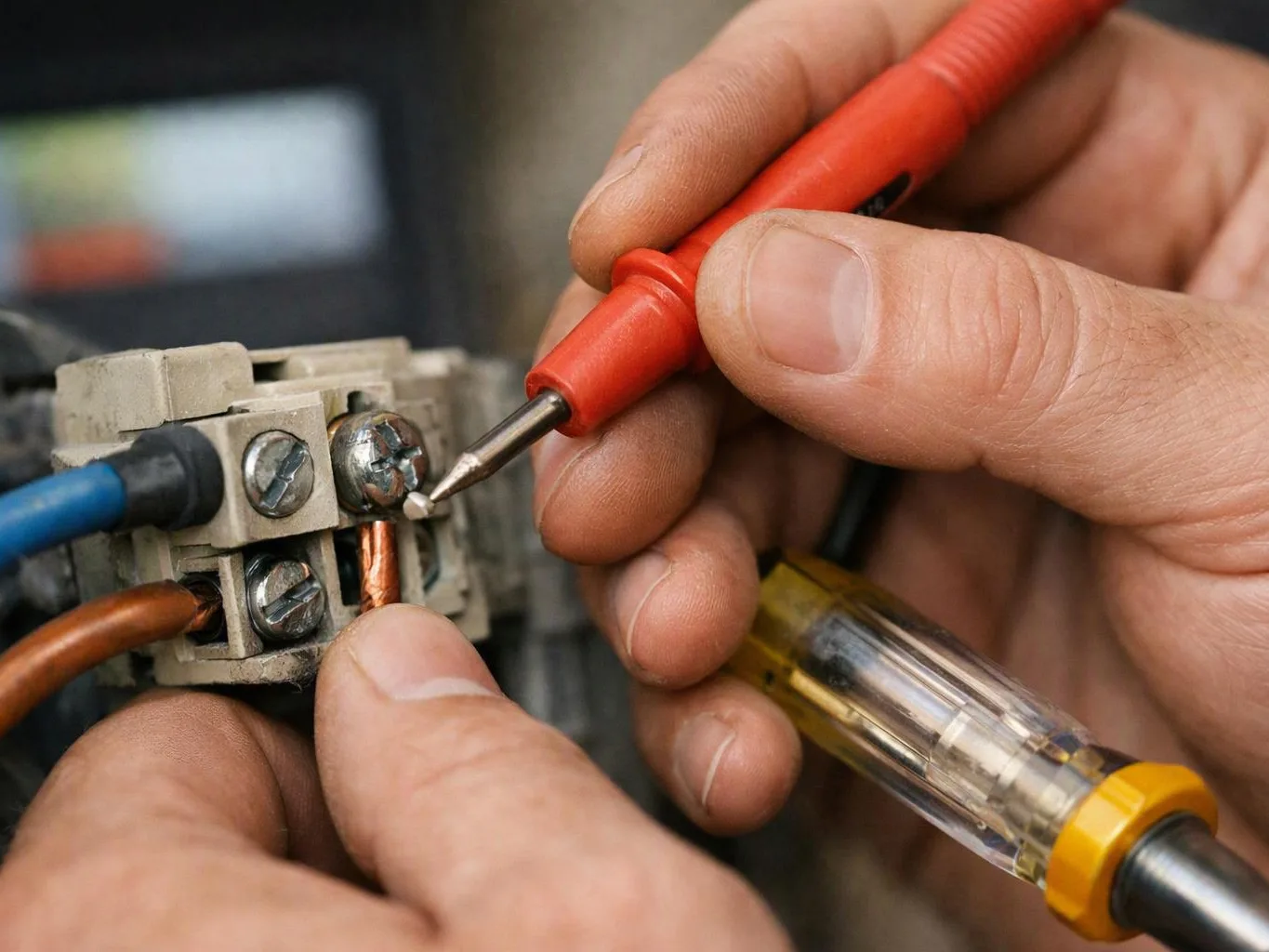
Continuity testing helps identify breaks or unintended paths in de-energized wiring. A wiring inspection follows the circuit to outlets, switches, junctions, and connected appliances so we can locate the fault before recommending repair.
What Repairs Can Stop the Breaker from Tripping?
The correct repair depends on what our testing finds at the breaker, fuse box, circuit, wiring, outlet, or connected appliance. We explain the repair path before work begins.
| Finding | Possible repair path |
|---|---|
| Failed or damaged circuit breaker | Circuit breaker replacement with a correctly matched component. |
| Blown fuse or damaged fuse holder | Fuse replacement or fuse box repair after identifying why the fuse failed. |
| Damaged outlet, switch, or connection | Outlet repair or replacement and correction of the affected connection. |
| Damaged circuit wiring or insulation | Wiring repair with attention to safe routing, connections, and insulation. |
| Excessive demand or faulty appliance | Circuit load correction or isolation of the appliance fault. |
Our Circuit Breaker Repair service addresses breaker and circuit faults identified during diagnosis. We also complete Fuse Box Repair when the equipment uses fuses or the fuse box needs related correction.
How Can You Help Prevent Future Trips?
Future trips are less likely when circuit demand, appliance condition, moisture, and panel connections receive regular attention. We can explain which prevention steps fit the circuit after completing the repair.
These steps reduce stress on overcurrent protection, but they cannot correct concealed damaged wiring or a failed breaker. We test the system when trips continue.
What Determines the Repair Quote?
The repair quote depends on the fault location, damaged components, wiring access, panel condition, and whether the repair involves the breaker, fuse box, circuit, outlet, or connected appliance.
Diagnostic testing helps define the work before we prepare the quote. A simple component replacement has different requirements from wiring repair, circuit load correction, or work in a deteriorated panel.
We explain what our inspection found, which parts or access the repair needs, and what the quoted work includes. Free Estimates Available.
How Do You Request Circuit Breaker Repair?
You can request circuit breaker repair by describing when the breaker trips, what equipment is connected, and any heat, smell, noise, sparks, or visible damage; we use that information to plan the inspection and provide a quote.
Tell us whether the breaker trips under load, trips immediately after resetting, or trips when no appliance is running. Include any information about recent water exposure, electrical changes, damaged cords, or flickering lights.
San Bernardino Electrician uses those details to prepare for electrical diagnosis and determine whether circuit breaker repair or fuse box repair is the appropriate service. Contact us through our repair request page to arrange the next step.
Questions About a Breaker That Keeps Tripping
Should I keep resetting a breaker that keeps tripping?
No, repeated resetting can leave an electrical fault energized and can increase heat at a damaged connection. San Bernardino Electrician diagnoses the circuit when the breaker trips again after a safe reset.
Can one appliance cause a circuit breaker to trip repeatedly?
Yes, one appliance can cause repeated trips when it has an internal fault, damaged cord, or unusually high electrical demand. We isolate the appliance from the circuit and test the circuit to confirm the cause.
Why does the breaker trip when no appliance is running?
A breaker can trip with no appliance running when the circuit has damaged wiring, moisture, a ground fault, or a failing breaker. We inspect the circuit and panel, then use testing to locate the fault.
When should I stop using the electrical panel?
Stop using the electrical panel when you see sparks, smoke, water, scorch marks, melted parts, or feel unusual heat. Keep away from the panel and contact us for safe diagnosis.
Can a faulty breaker cause repeated power outages?
Yes, a faulty breaker can open the circuit repeatedly and interrupt power to connected outlets or lights. We test the breaker and circuit together before completing the appropriate repair.
Related Resources
Signs You Need Circuit Breaker Repair in San Bernardino, CA
When You Need ItWhen to Call an Electrician for Burning Smells and Hot Outlets in San Bernardino, CA
When You Need ItElectrical Wiring Warning Signs: When San Bernardino Homes Need an Electrician
When You Need ItFlickering Lights: How to Know When You Need an Electrician