Emergency Electrical DIY Mistakes That Increase Danger
Homeowners should avoid exposed wires and repeated breaker resets. Never replace fuses with the wrong size or material. Keep water away from electrical equipment. Don’t remove safety covers or bypass safety devices. Don’t check live circuits during an emergency. These actions can cause shocks, fires, burns, or equipment damage. They can also make the service call more dangerous. Turn off power only when the disconnect is safe to use. Keep people away from the area. Call a qualified 24-hour electrician for active hazards, burning smells, sparks, flooding, repeated trips, or damaged service equipment. At SanBernardino-Electrician.com, we help families, renters, landlords, and property managers handle home electrical problems safely.
Get a Free EstimateWhat to Do Before Help Arrives?
Electrical emergencies need distance, power control, and expert help. Stop using damaged equipment. Keep everyone away from the area. Use a clearly labeled main breaker only when it’s safe. Don’t approach water, sparks, smoke, or damaged parts. Call a 24-hour electrician for active hazards or repeated breaker trips. Call right away for burning odors or exposed live wires.
| Situation | Safe first action | What to avoid |
|---|---|---|
| Smoke, sparks, or an electrical fire | Leave the area. Call emergency services if needed. Keep others away. | Don’t use water or approach the source. |
| Power loss with no visible damage | Check nearby homes or shared areas. Look only from a dry, safe place. | Don’t reset breakers again and again. |
| Flooding near a panel | Move everyone away. Wait for trained power shutoff help. | Don’t touch the panel, water, or nearby appliances. |
| A clearly labeled main disconnect | Turn it off only when the handle and area are dry. | Don’t open covers or reach near damaged parts. |
A safe main disconnect may stop power. Never touch damaged service equipment. Water, smoke, exposed wires, heat, or missing covers raise the danger. Most emergency visits start with a safety check. The electrician may shut off power and test the system. Visit time depends on access and damage. Utility or fire crews may also need to respond. Renters should notify the landlord after everyone is safe. Landlords and managers should protect the area and record what happened. They should arrange an inspection instead of asking occupants to investigate.
Resetting a Tripped Breaker Again and Again
A tripped circuit breaker is a warning. Don’t keep switching it on. The breaker may detect too much power, a short circuit, or a ground fault. Each reset may send power into damaged wiring or equipment. It may also heat a bad outlet or appliance. The result can be more damage or an electrical fire.
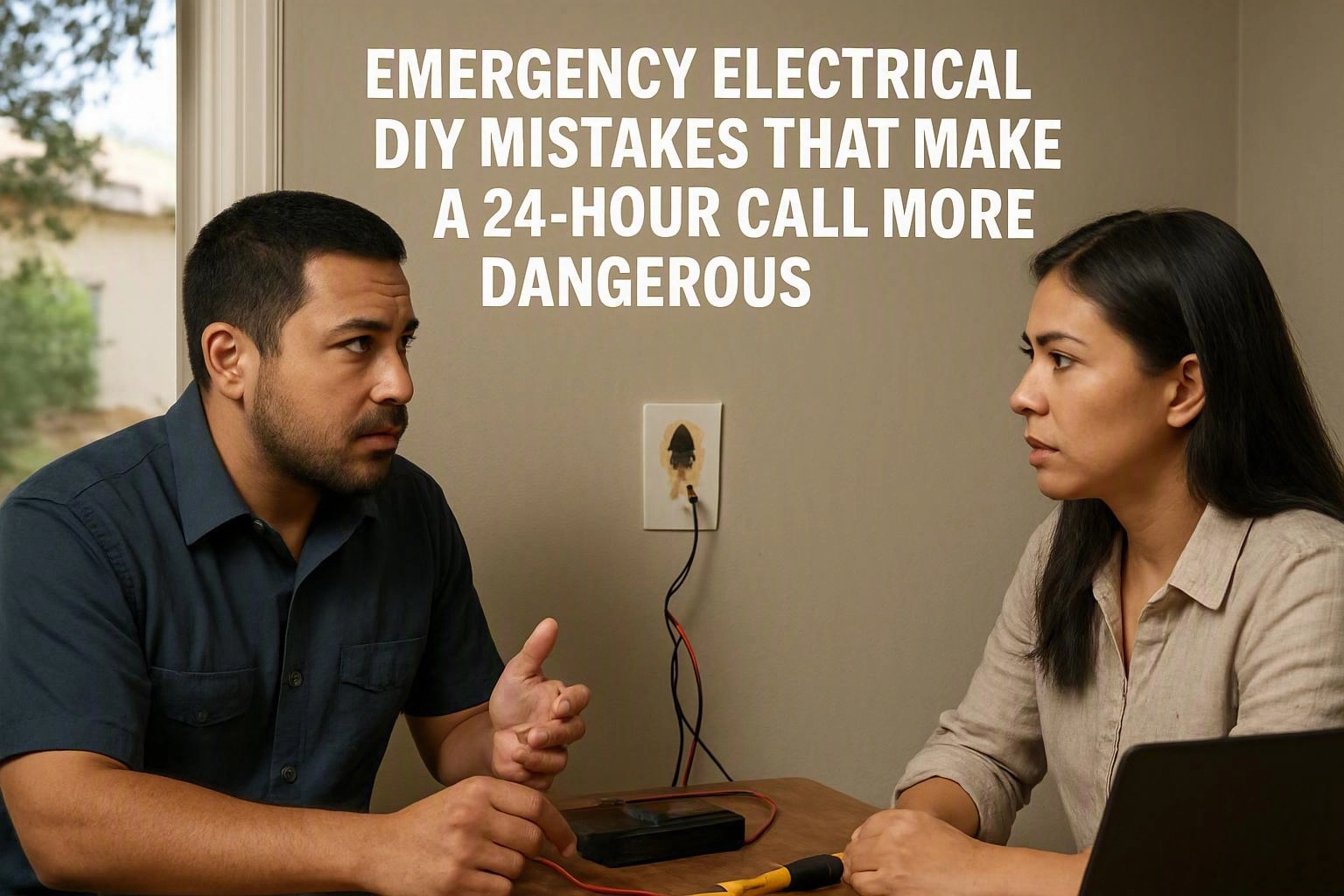
Unplug normal loads only when the area is dry and safe. Then leave the breaker off. Write down what was running. One trip may follow too many appliances. Repeated trips point to a deeper problem. Don’t remove the panel cover or repair the breaker yourself. Our team can test the circuit and find the fault. We can check the breaker, wiring, and connected appliance. An AFCI breaker detects unsafe arc patterns. Bypassing it hides the warning instead of fixing the problem.
Replacing a Fuse with the Wrong Size or Material
In an older fuse box, a blown fuse has a reason. It stopped too much power from moving through the circuit. A larger fuse, foil, or wire removes that protection. Wiring may then carry unsafe current. Heat can build inside the walls. Damage may include melted wires, smoke, ruined equipment, or fire.
Never use a larger fuse because the first one keeps blowing. The replacement must match the equipment rating. Repeated failures still need a cause check. Older fuse boxes may serve overloaded circuits. They may also contain old or changed wiring. Leave if you notice heat, smoke, or a burning smell. Arrange Fuse Box Repair when safe access isn’t clear. We can inspect the box, wiring, and connections. We can then suggest safe protection.
Touching Exposed Wires or Testing an Energized Circuit
An exposed wire may stay live when a nearby switch is off. Touching or moving it can cause electric shock or burns. It can also cause an arc flash. An arc flash is a burst of heat, light, and pressure. It can hurt someone without direct contact. The damage may include serious injury, fire, or broken service equipment.
Don’t use a tool or household item to check the wire. Don’t use an untested voltage tester. A tester only helps when used correctly. The safe choice is to keep your distance. A trained person must shut off and test the circuit. De-energize means shutting off the source and checking that power is gone. A wall switch doesn’t prove the circuit is safe. Our crews can find the source and repair exposed wiring safely.
Using Water or Wet Hands near Electrical Equipment
Water can turn normal equipment into a shock danger. Wet hands, floors, or panels can carry current through your body. A ground fault may trip a safety device. That device doesn’t make wet parts safe to touch. Damage may include shocks, bad outlets, rust, hidden faults, and later failure.
Don’t spray, wipe, open, or unplug equipment in standing water. Keep people and pets away. Don’t touch a panel near wet floors or walls. GFCI protection lowers shock risk in damp areas. It doesn’t replace distance or expert help. Flood repairs may need drying and part replacement. They may also need wiring tests and panel checks. If water reached service equipment, wait for trained power shutoff help.
Removing Panel Covers or Protective Components
A service panel contains live parts. Some parts stay live even when breakers are off. Removing a panel cover exposes busbars and other live parts. This can cause contact, an arc flash, or a dropped tool. Later damage may include bad terminals or an unsafe panel. It may also cause a failed inspection or larger repair.
Residents should use only clearly labeled handles. Don’t remove a cover to check a loose wire or noise. A dead front helps block contact with live parts. It isn’t just a cover for looks. If it’s missing, bent, hot, or damaged, keep away. Request an electrical safety check. We can inspect the panel after power is safely off. We check breakers, busbars, and grounding. This matters in older homes and mixed fuse systems.
Bypassing a Breaker, Fuse, GFCI, or Other Safety Device
Never defeat a safety device to keep power running. A breaker, fuse, GFCI outlet, or AFCI device serves a purpose. It responds to excess power, leaks, or arcs. Bypassing it removes that protection. The result can be hot wiring, shocks, arcs, or fires. It can also damage appliances and hide the real problem.
Unsafe fixes include taping a reset button or using a larger fuse. Replacing an AFCI breaker with a standard breaker is unsafe, so is using an outlet after GFCI protection trips. These actions may hide the cause. Leave the device in its safe state. Disconnect equipment only when it’s dry and easy to reach. We can test the load, wiring, and device. The repair may need a new outlet or breaker. It may also need corrected wiring or a smaller load.
Investigating Burning Smells, Sparks, or Buzzing Without Help
Burning smells, sparks, crackling, and buzzing need distance and expert help. These signs may show an arc fault or loose connection. They may also point to a bad appliance or overloaded outlet. The fault could be inside a wall. Searching for it can expose you to heat, smoke, shock, or an arc flash. Stop using the area. Call a 24-hour electrician when the danger is active.
Don’t open the outlet or pull a hot plug. Don’t move a smoking appliance or use water. Leave at once if there’s fire or heavy smoke. Call emergency services from a safe place. You may turn off the main disconnect if it’s dry and clearly safe. Otherwise, wait for trained responders. Power loss can affect medical devices or security systems. Use a safe backup plan only if you understand it. Never connect a generator through an unsafe cord.
Renters should call for immediate help first. Then notify the landlord or property manager. Managers should block access to the affected area. They should protect occupants and keep records. Our team can trace the fault and check nearby circuits. We can explain whether the repair involves an outlet, circuit, panel, or appliance. A buzzing outlet isn’t a small issue. Heat may continue while the circuit still works.
When to Call a Professional?
Call a qualified electrical professional when danger is active. Call when the cause isn’t clear. Call when safe power shutoff isn’t available. Don’t wait for a small warning to become a fire.
Circuit Breaker Repair helps when a breaker keeps tripping. It also helps when a breaker won’t reset or feels hot. Fuse Box Repair helps when fuses blow again and again. It’s also needed for heat damage or unsafe fuse changes. Circuit Breaker Repair in San Bernardino follows the same safety rule. Isolate only equipment that’s clearly safe. Leave damaged service parts alone.
Questions About 24 Hour Electrician
What Should You Not Do During an Electrical Emergency?
Don’t touch exposed wires, use water, or remove panel covers. Don’t bypass safety devices or reset breakers repeatedly. Keep people away. Leave if there’s smoke or fire.
Is It Safe to Keep Resetting a Tripped Breaker?
No. Repeated resets can power an overload, short circuit, or damaged appliance. Leave the breaker off. Disconnect only safe and dry loads. Request professional testing if it trips again.
Can I Replace a Blown Fuse Myself?
Only a correctly rated fuse may be suitable. Repeated failure needs expert help. Never use foil, wire, or an oversized fuse. Older equipment may need Fuse Box Repair and wiring checks.
When Should I Call a 24-Hour Electrician?
Call for arcs, smoke, burning odors, or flooding near electrical equipment. Call for exposed live wires, repeated trips, or damaged service equipment. Call when critical systems lose power. Leave first if danger is immediate.
What Should I Do if an Outlet Is Sparking or Smells Burnt?
Stop using it and keep everyone away. Don’t open or spray the outlet. Leave if there’s smoke or fire. Call emergency services from a safe place. A qualified electrician must inspect the outlet, wiring, and circuit.
Related Resources
Signs You Need Circuit Breaker Repair in San Bernardino, CA
signs you need circuit breaker repair
When You Need ItWhen to Call an Electrician for Burning Smells and Hot Outlets.San Bernardino, CA
when to call an electrician for burning smell from outlet
When You Need ItElectrical Wiring Warning Signs: When San Bernardino Homes Need an Electrician
warning signs electrical wiring needs to be replaced
When You Need ItFlickering Lights: How to Know When You Need an Electrician
how do I know if flickering lights are an electrical problem